
Loading, please wait...
LOT 0014
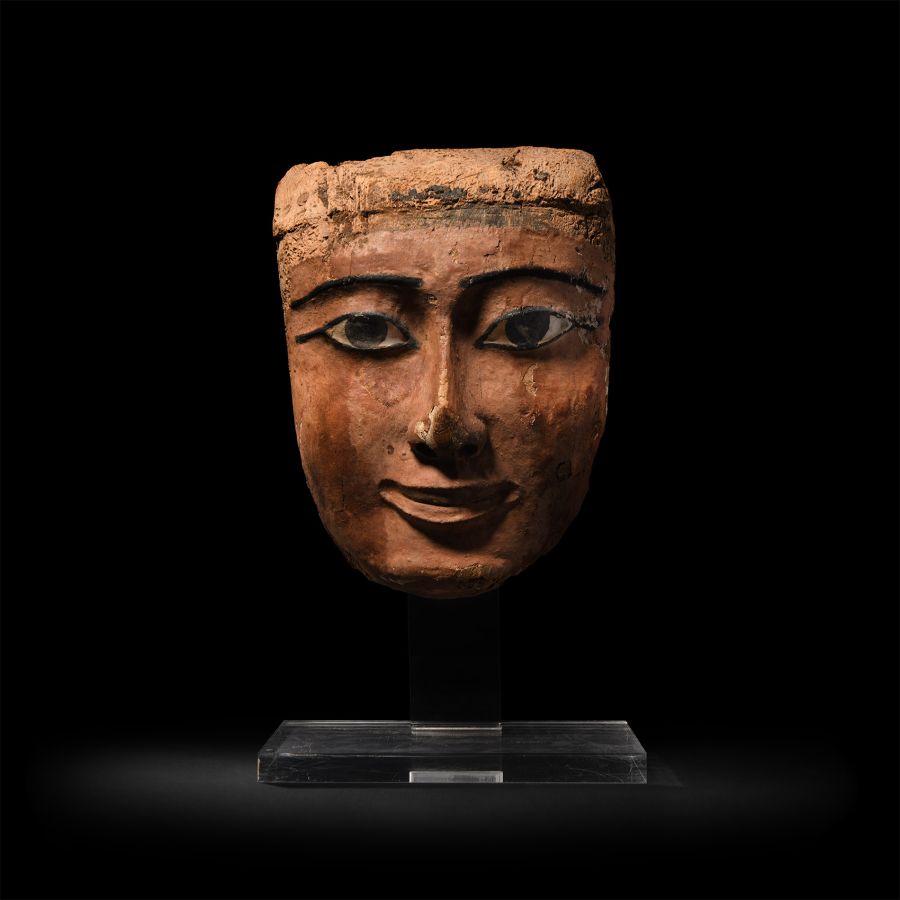
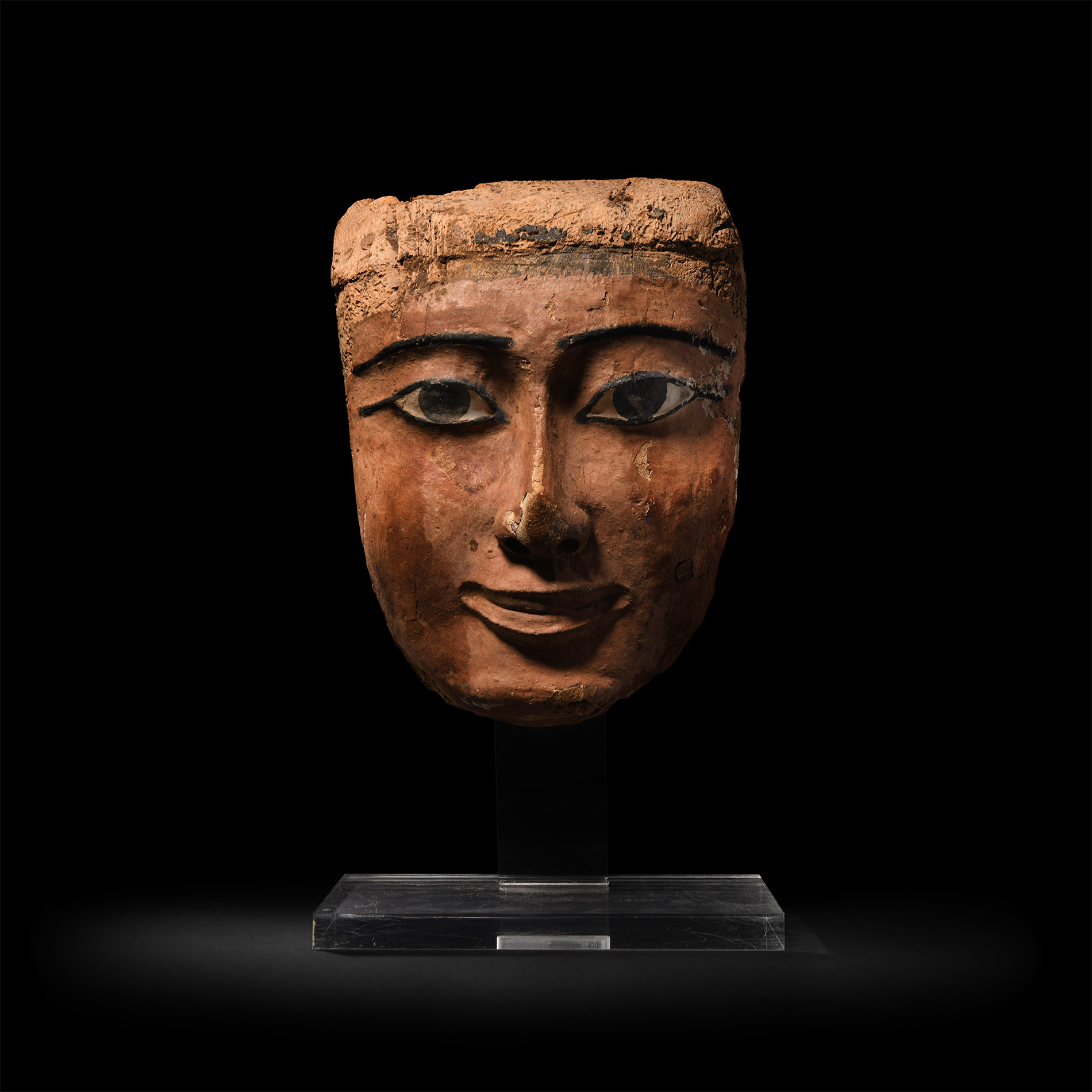
Egyptian Wooden Painted Mask
LATE NEW KINGDOM, 1350-1070 B.C.
12 3/4 in. (1.14 kg, 32.5 cm high including stand).
A wooden funerary mask with finely delineated painted eyes and eyebrows on a gesso ground; holes to accept attachment pegs to the reverse; mounted on a custom-made display stand.
ProvenanceEx private Swiss collection, before 1960.
This lot has been checked against the Interpol Database of stolen works of art and is accompanied by search certificate no.11600-199042.
Cf. similar item in the British Museum, London, under accession number EA46631.
FootnotesThe mask is typical of Phoenician-Punic production and likely had a funerary purpose.
CONDITIONTimeLine Auctions follows a vetting process to ensure the authenticity and legality of all items, reinforcing our commitment to integrity and responsible trading. Each antiquity, antique, and coin lot undergoes thorough examination by a vetting committee of at least ten external specialists, professional trade association members, scientists, and archaeologists: Our Vetting Process
AUCTIONS:
TimeLine is a leading auction house specialising in antiquities, ancient art, collectables, natural history, coins, medals, and books. Our auctions offer museums, collectors, historians, and enthusiasts the opportunity to acquire unique and historically significant pieces.
-
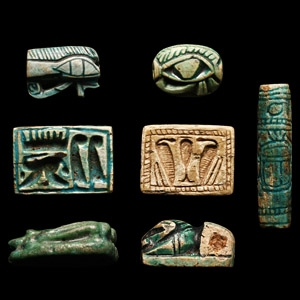
Egyptian Amulet Collection
New Kingdom-Late Period, 1550-332 B.C.Estimate: £2,000 - 3,000 (‡+bp*)
Opening Bid: £1,000
A mixed group of glazed composition amulets and beads comprising: white rectangular bead with Tilapia fish in high-relief and two cobras flanking a hem ideogram; turquoise frog on heater-shaped base with serpent to the underside; green scaraboid with wedjat to the carapace, Hathor sistrum with cow's horns to the underside; green ram-headed scaraboid with hieroglyphs to the underside; green cylinder with scarab motif; green wedjat with a cartouche of Thutmose III to the reverse; green rectangular bead with djed pillar flanked by ostrich feathers and incuse hieroglyphs to the reverse. 14.3 grams total, 14-27 mm
Two amulets with Bonhams, London, Knightsbridge, UK, 3 October 2000, lot 385 [Part]. Private Swiss collection. This lot has been checked against the Interpol Database of stolen works of art and is accompanied by search certificate no.11593-198956. Accompanied by a copy of the relevant Bonhams catalogue pages. -
.jpg)
Egyptian Blue Faience Shabti Group
Late Period-Ptolemaic Period, 664-30 B.C.Sold for (Inc. bp): £208
A group of four blue-glazed faience shabtis. 18.2 grams total, 43-46 mm
Fair condition.
Acquired 1930s-1950s. Ex Ciapara collection. -
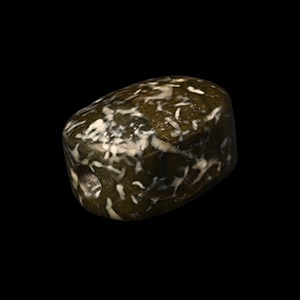
Phoenician Scaraboid
6th-4th century B.C.Estimate: £100 - 140 (+bp*)
Opening Bid: £50
A polished stone scaraboid drilled horizontally for suspension; incuse schematic animal on base. 1.5 grams, 12 mm
Acquired 1969-1999. London collection of the late Mr S.M., thence by descent.
