
Loading, please wait...
LOT 0002
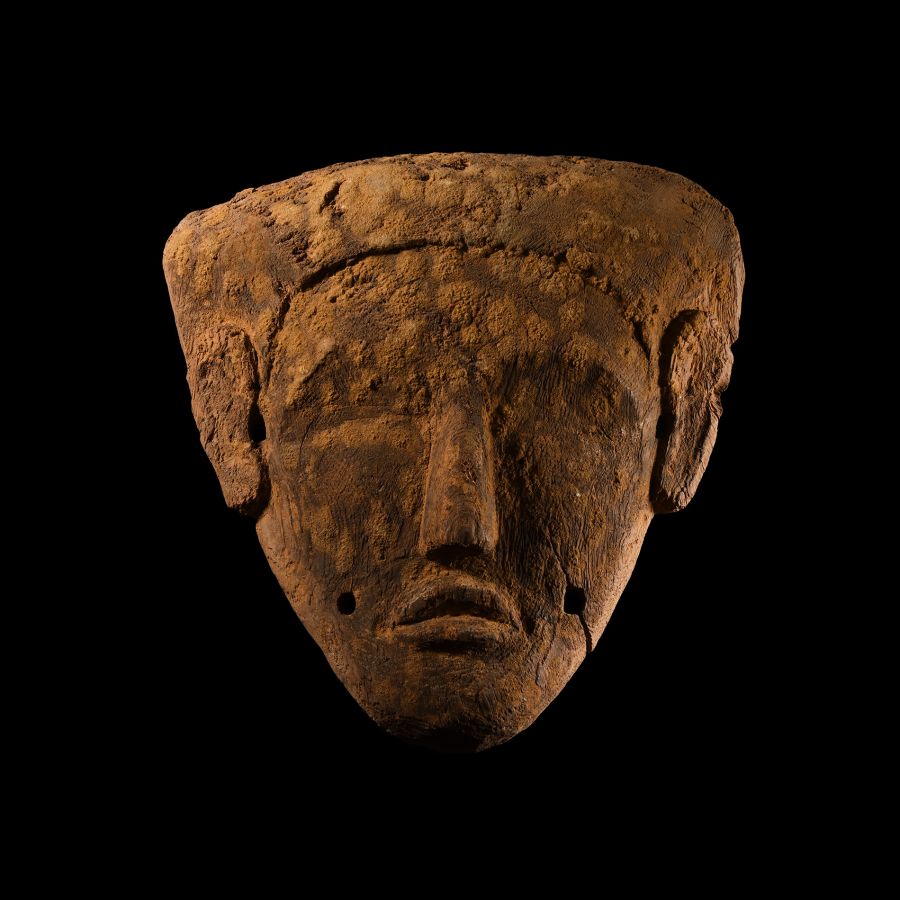
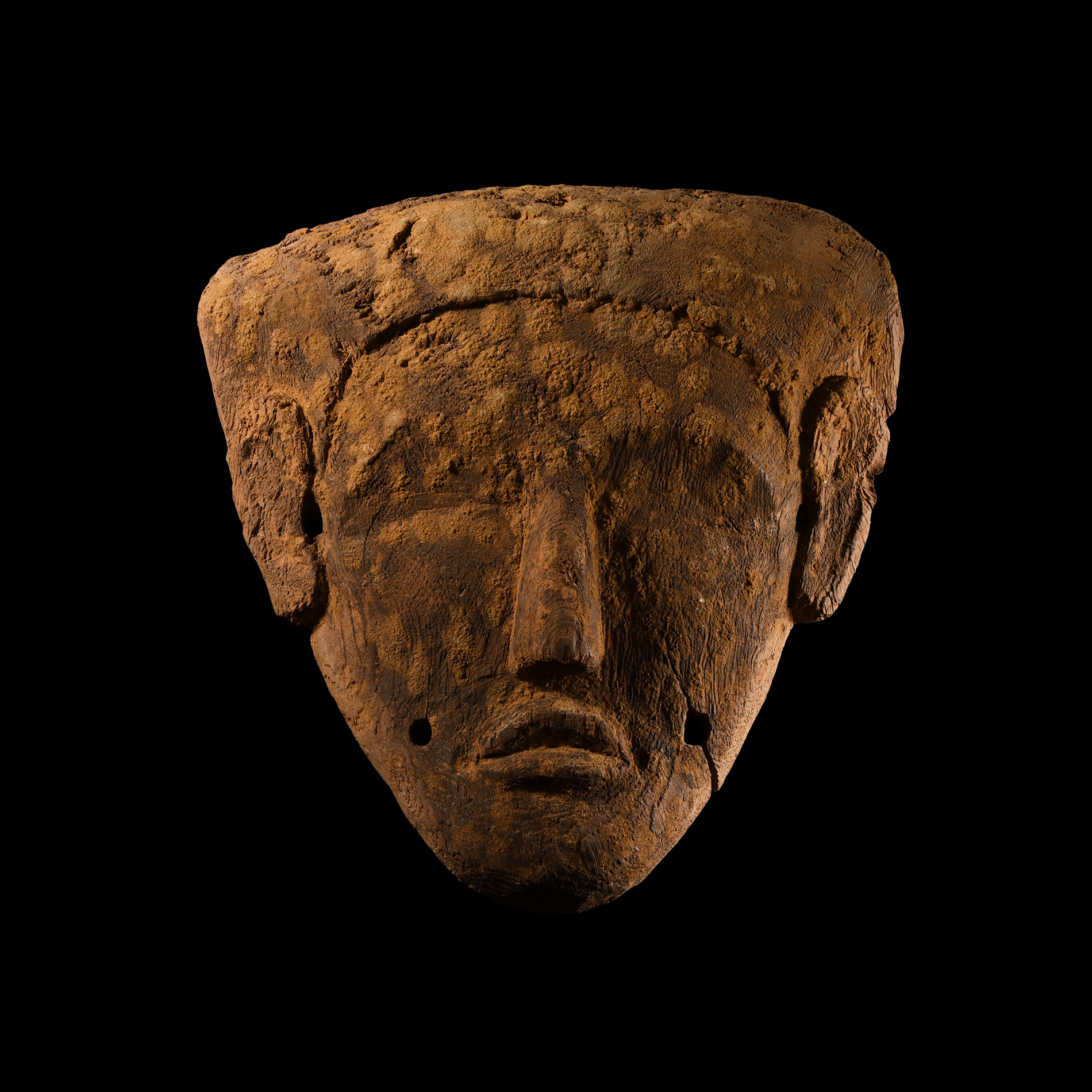
Egyptian Wooden Mummy Face Mask
LATE DYNASTIC PERIOD, AFTER 500 B.C.
10 7/8 in. (716 grams, 27.5 cm).
Triangular in form with carved facial detailing, thick tousled hair, full lips; pierced in four places for attachment. [No Reserve]
ProvenanceAcquired 1970s-1996.
Property of a North American collector.
London collection, 2016.
TimeLine Auctions follows a vetting process to ensure the authenticity and legality of all items, reinforcing our commitment to integrity and responsible trading. Each antiquity, antique, and coin lot undergoes thorough examination by a vetting committee of at least ten external specialists, professional trade association members, scientists, and archaeologists: Our Vetting Process
AUCTIONS:
TimeLine is a leading auction house specialising in antiquities, ancient art, collectables, natural history, coins, medals, and books. Our auctions offer museums, collectors, historians, and enthusiasts the opportunity to acquire unique and historically significant pieces.
-
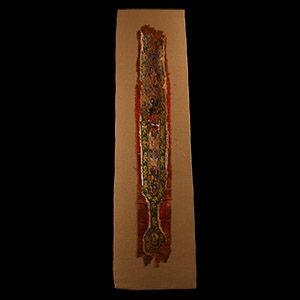
Egyptian Mounted Coptic Textile with Animals
Circa 6th-7th century A.D.Sold for (Inc. bp): £169
Comprising a clavus decorated with various bright colours (green, brown, pink, blue, yellow) with stiff animal figures (dragons and stylised eagles) and a cockerel(?) inside the orbiculus. 138 grams, 70 x 18.2 cm
Acquired 1970s-1996. Property of a North American collector. London collection, 2016.
Tabby technique on linen and wool. It is highly probable that this tapestry was part of a tunic decoration, the clavus with preserved orbiculus, running vertically on the breast and on the back of it. -
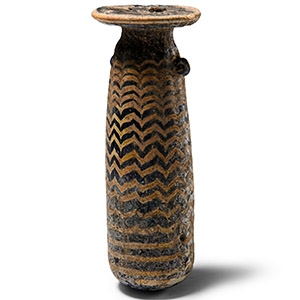
Phoenician Glass Alabastron
6th-5th century B.C.Estimate: £800 - 1,000 (+bp*)
Opening Bid: £444
Core formed with rounded base, dragged trail pattern in blue, white and yellow, two lateral lug handles below the everted rim. 39.8 grams, 91 mm high
Acquired 1980-2015. Ex Abelita family collection. -
.jpg)
Egyptian Faience Fish Amulet with Hieroglyphs
Second Intermediate Period, circa 1650 B.C.Sold for (Inc. bp): £546
Green glazed composition plaque with two tilapia fish placed tête-bêche, two groups of hieroglyphs to the underside. 5.43 grams, 23 mm
From a family collection formed 1900-1950; by descent circa 1980.
