
Loading, please wait...
LOT 0008
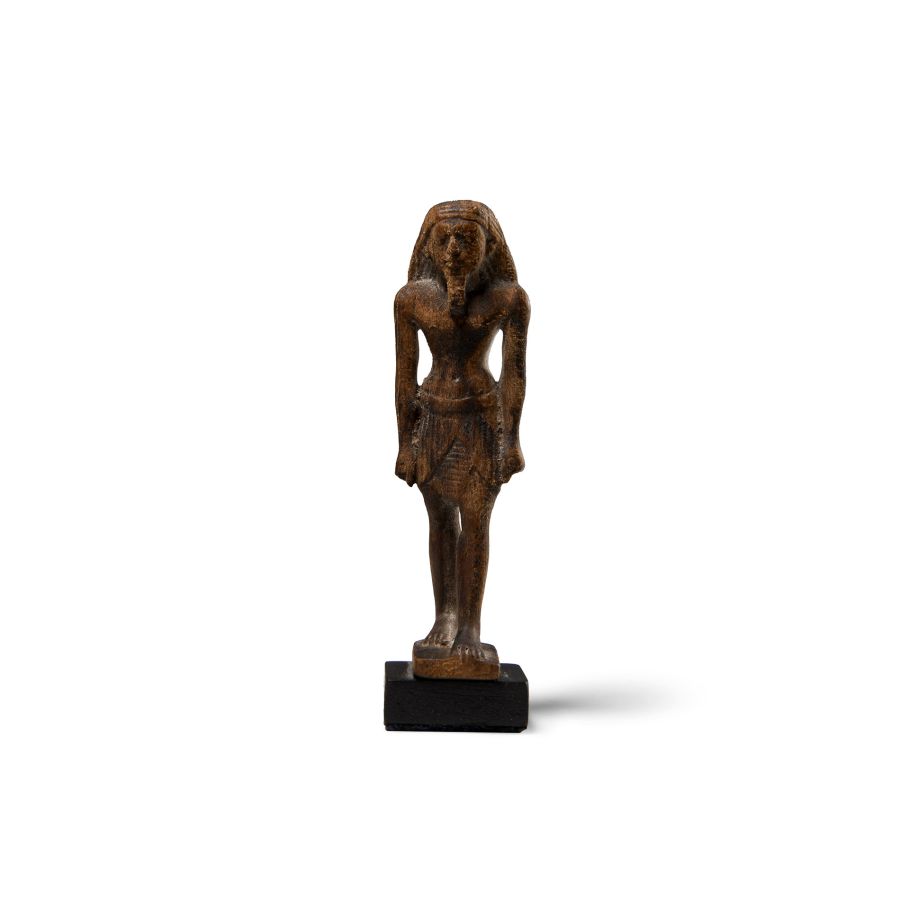
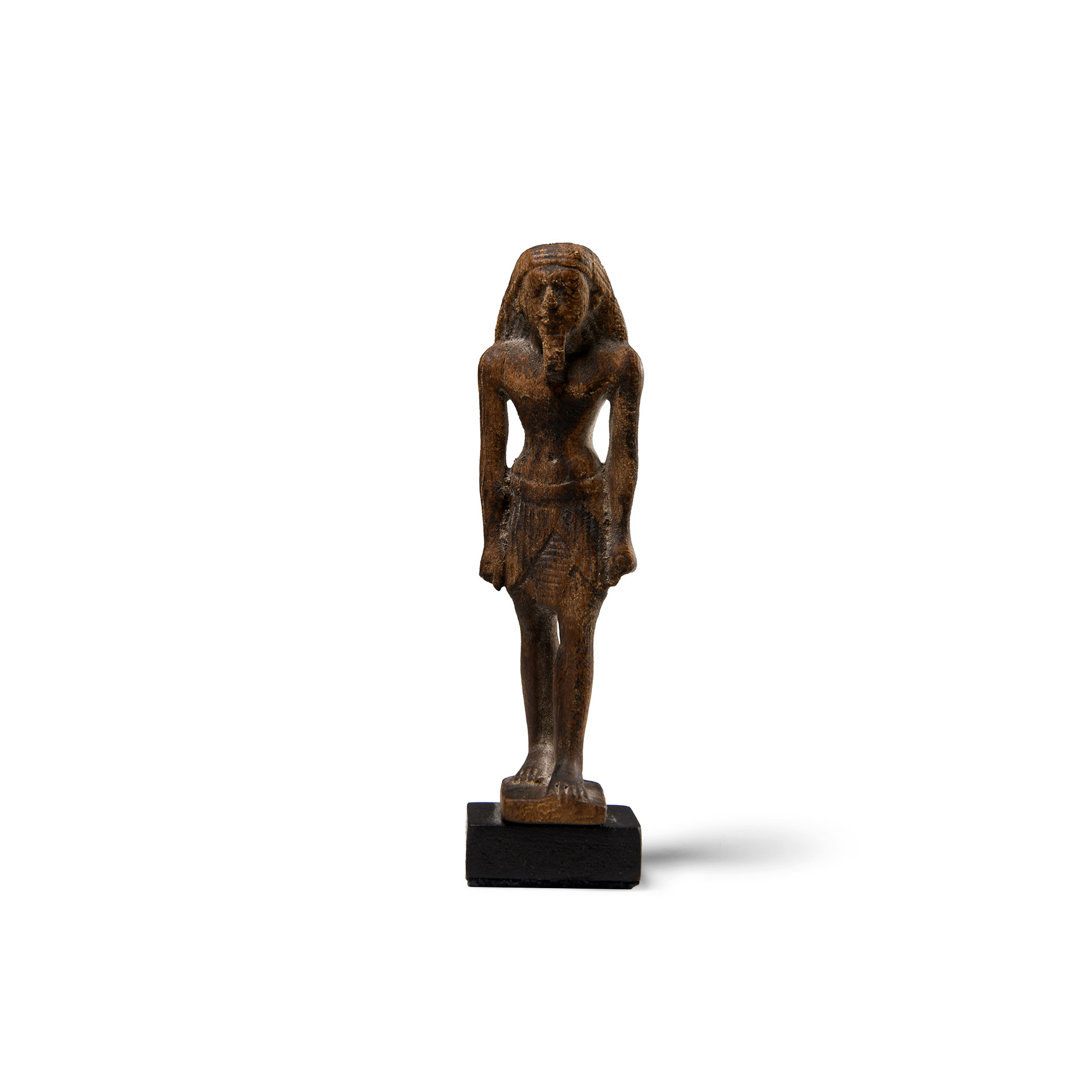
Egyptian Wooden Male Figure
THIRD INTERMEDIATE PERIOD, CIRCA 1070-730 B.C.
4 3/8 in. (19 grams total, 11 cm high including stand).
Striding on a rectangular base, wearing a belted kilt, bag wig and with short beard; mounted on a custom-made display stand.
ProvenancePart of an old collection dating back to the 19th century.
Ex property of a gentleman, acquired before the 1980s.
Private collection of Mr T.H., Norfolk, UK.
Cf. similar in the collection of the British Museum under accession no.EA55722, the nude figure of Meryrahashtef.
CONDITIONTimeLine Auctions follows a vetting process to ensure the authenticity and legality of all items, reinforcing our commitment to integrity and responsible trading. Each antiquity, antique, and coin lot undergoes thorough examination by a vetting committee of at least ten external specialists, professional trade association members, scientists, and archaeologists: Our Vetting Process
AUCTIONS:
TimeLine is a leading auction house specialising in antiquities, ancient art, collectables, natural history, coins, medals, and books. Our auctions offer museums, collectors, historians, and enthusiasts the opportunity to acquire unique and historically significant pieces.
-
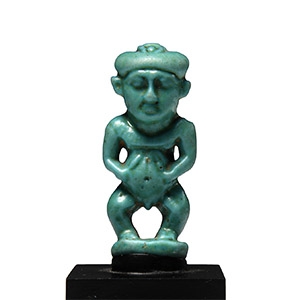
Egyptian Faience Pataikos Amulet
Ptolemaic Period, 4th-3rd century B.C.Estimate: £1,000 - 1,400 (‡+bp*)
Opening Bid: £500
Depicting the creator god in the form of the dwarf god Pataikos, modelled nude with stylised anatomical detailing, holding two knives to his stomach, squatting on an oval base; a scarab on the top of his cap; ribbed suspension loop to reverse; mounted on a custom-made display base. 29.6 grams total, 66 mm high including stand
Ex private French collection. with Thierry Maigret, Hotel Drouot, Paris, 12 July 2005, 76.
The Egyptian deity Pataikos is a special manifestation of the creator god Ptah, and the dwarf-like appearance symbolises his magical power. As a protective deity, amulets of Pataikos were worn for their apotropaic qualities; Pataikos was often depicted subjugating poisonous animals such as snakes and scorpions, and Pataikos amulets were probably worn to protect the wearer from such animals. -
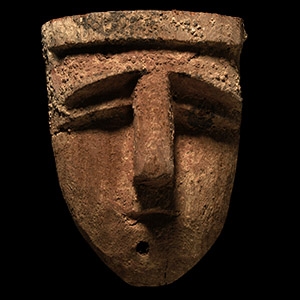
Egyptian Wooden Face Mask
Late Period, 664-332 B.C.Sold for (Inc. bp): £312
With painted detailing to the eyebrows, eyes and headband; flesh coloured pigment remaining on the nose and forehead; prominent nose and small mouth; pierced through the chin and forehead to accept attachment dowels. 223 grams, 18.5 cm high
Acquired 1970s-1996. Property of a North American collector. London collection, 2016. -
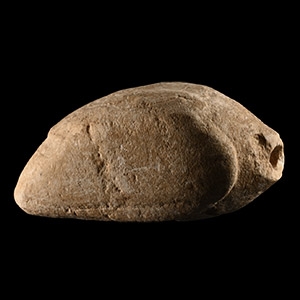
Egyptian Limestone Ibis Body
Late Period-Ptolemaic Period, 664-30 B.C.Sold for (Inc. bp): £124
Carved limestone body of an ibis with hole above the shoulders for the bronze neck and head casting, and two angled holes beneath for the legs. 55 grams, 58 mm
Private collection formed in the 1990s. Acquired from a central London gallery. Property of an Essex gentleman.
