
Loading, please wait...

LOT 0503
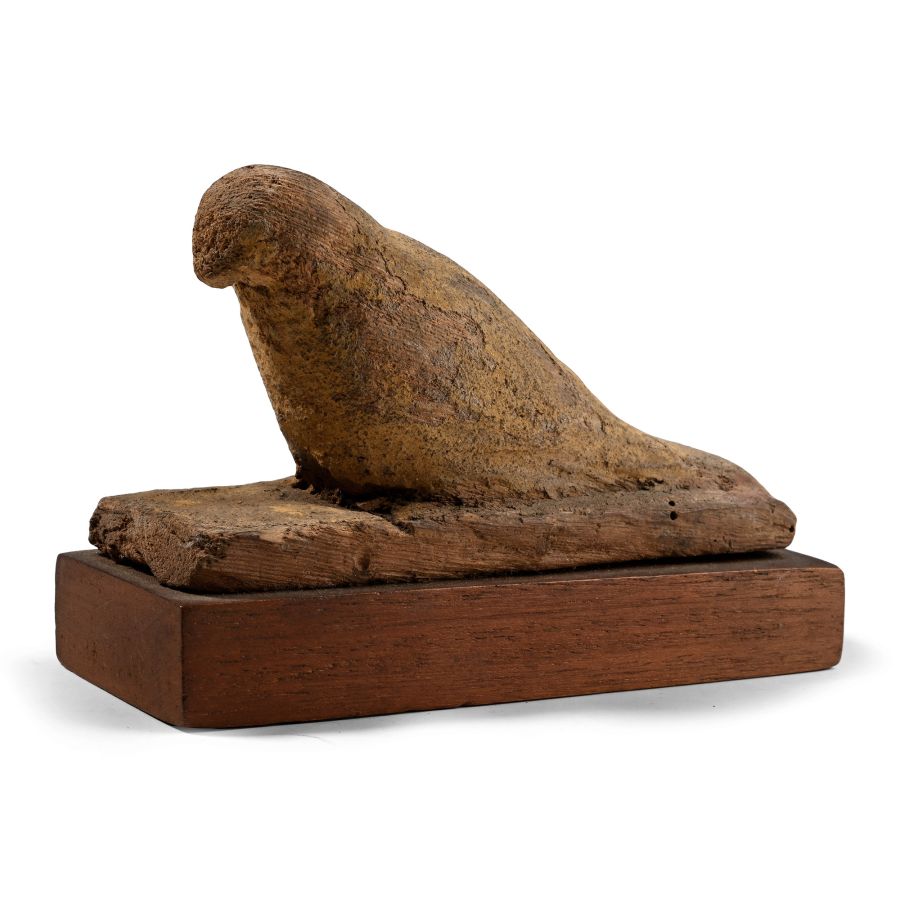
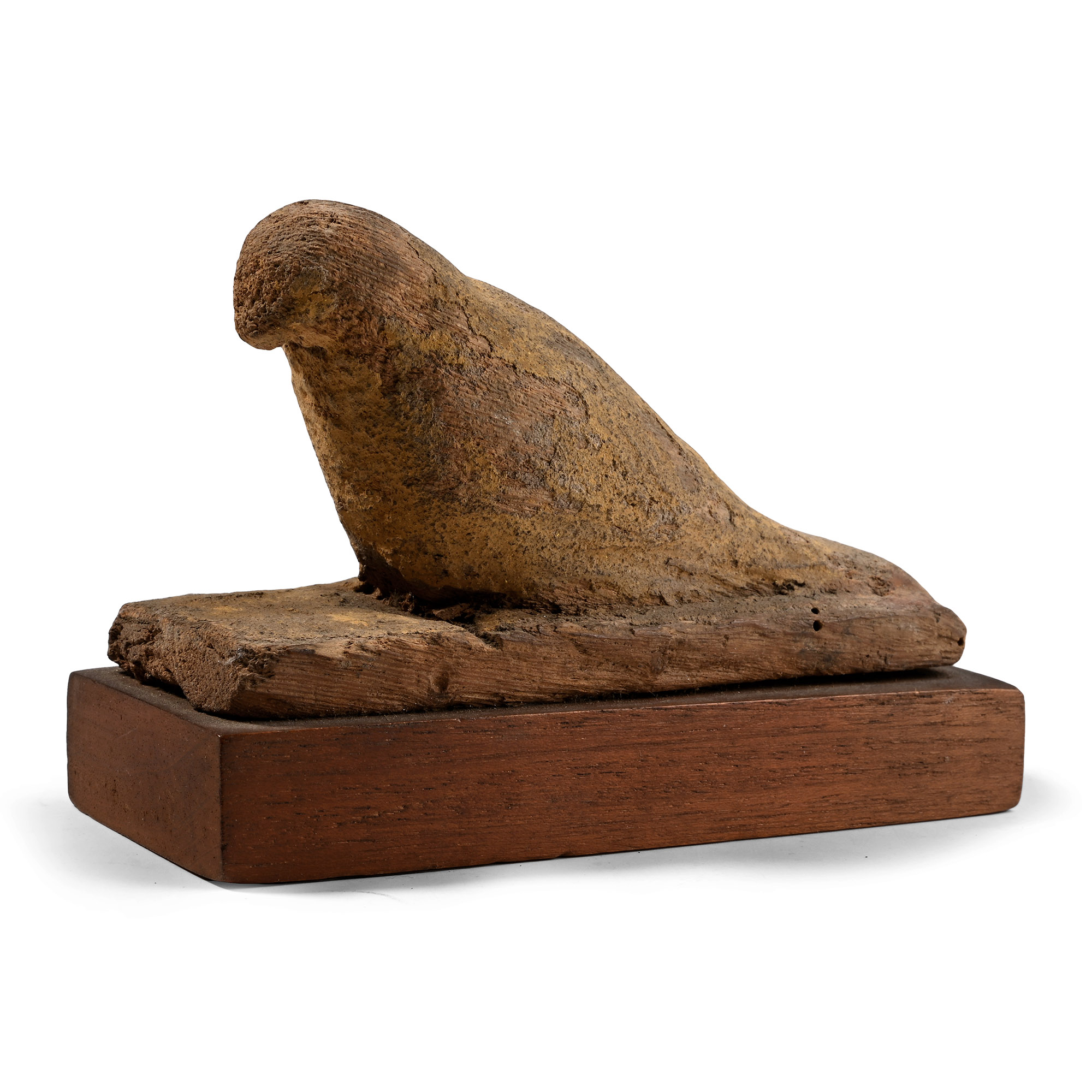
Egyptian Wooden Hawk
LATE PERIOD-PTOLEMAIC PERIOD, 664-30 B.C.
5 1/2 in. (146 grams total, 14 cm wide including stand).
Carved in the round, perched on a rectangular base, coated with gesso and bearing traces of gilding. [No Reserve]
ProvenanceFrom the estate of a deceased Sussex private collector since the early 20th century.
FootnotesSuch figures decorated the tops of canopic chests, shabti boxes, and coffins.
CONDITIONTimeLine Auctions follows a vetting process to ensure the authenticity and legality of all items, reinforcing our commitment to integrity and responsible trading. Each antiquity, antique, and coin lot undergoes thorough examination by a vetting committee of at least ten external specialists, professional trade association members, scientists, and archaeologists: Our Vetting Process
AUCTIONS:
TimeLine is a leading auction house specialising in antiquities, ancient art, collectables, natural history, coins, medals, and books. Our auctions offer museums, collectors, historians, and enthusiasts the opportunity to acquire unique and historically significant pieces.
LOT 0503
Egyptian Wooden Hawk
Estimate £80 - 100€93 - 116 (for guidance only)$108 - 135 (for guidance only)
Opening Bid
£5 (EUR 6; USD 7) +BP*
-
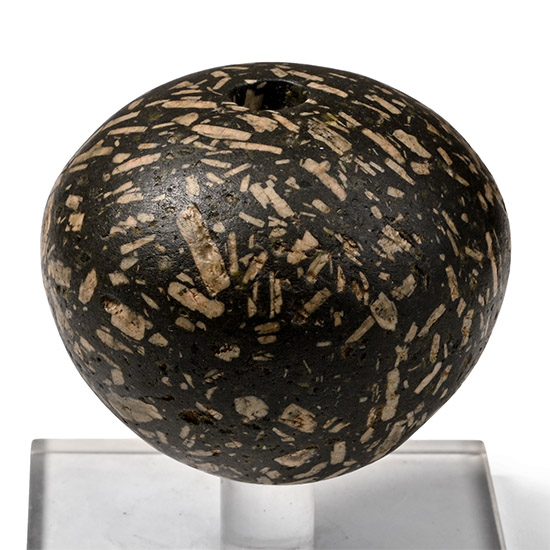
Egyptian Speckled Black and White Breccia Polished Macehead
Early Dynastic, circa 3000 B.C.Estimate: £300 - 400 (+bp*)
Opening Bid: £5
Biconvex in profile with central vertical socket; mounted on a custom-made stand. 305 grams total, macehead: 61 mm wide, 74 mm including stand
Acquired in April 1963, for £36 shillings. A present from John Kearne. From the private collection of Peter Clayton, FCILIP, Dip, Arch, FSA, FRNS, Hemel Hempstead, Hertfordshire, UK; formed since the late 1950s. Accompanied by an old handwritten information card by Peter Clayton, collection no.105. -
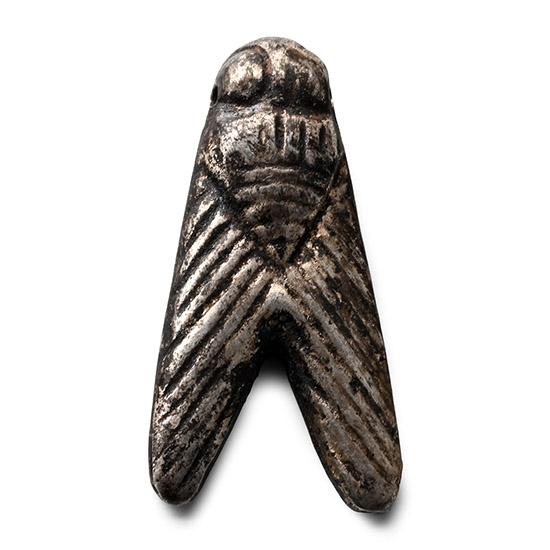
Egyptian Silver Fly Amulet
Late Period, 664-332 B.C.Estimate: £80 - 100 (+bp*)
Opening Bid: £5
With detailing to the body and head, ribbed suspension loop above the head. 1.09 grams, 17 mm
London, UK, gentleman, 1990s.
Fly amulets were believed to protect against insect bites and to ward off troublesome flying creatures through apotropaic magic. Some believe they may have even symbolised the fly’s fecundity. Additionally, pharaohs bestowed gold fly-shaped pendants as military awards to honour soldiers' bravery and persistence in battle. -
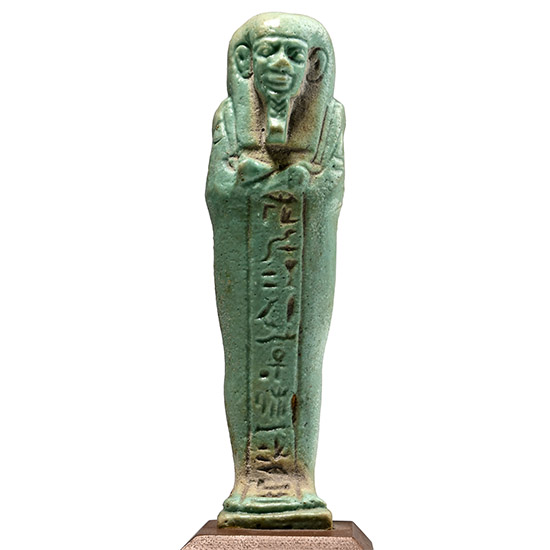
Egyptian Blue Glazed Faience Shabti of Djed-Bastet-Iuef-Ankh
Late Period, 664-332 B.C.Estimate: £400 - 600 (+bp*)
Opening Bid: £5
Mummiform figure standing on a square plinth, wearing a long lappet wig, a false beard, and fine facial detailing, with crossed arms, the left hand holding a pick and the right a hoe, with the cord of a seed bag suspended from the bag; a plain dorsal pillar; the lower front bearing a vertical panel containing an impressed hieroglyphic text reading: 'The Osiris, Djed-Bastet-iuef-ankh, born to Iset-ir-dis'; mounted on a display stand. 99 grams total, 13.1 cm including stand
Acquired from Richardson, February 1965, for £2.00. From the private collection of Peter Clayton, FCILIP, Dip, Arch, FSA, FRNS, Hemel Hempstead, Hertfordshire, UK; formed since the late 1950s. Accompanied by an old handwritten information card by Peter Clayton, collection no.112.
