
Loading, please wait...
LOT 0030
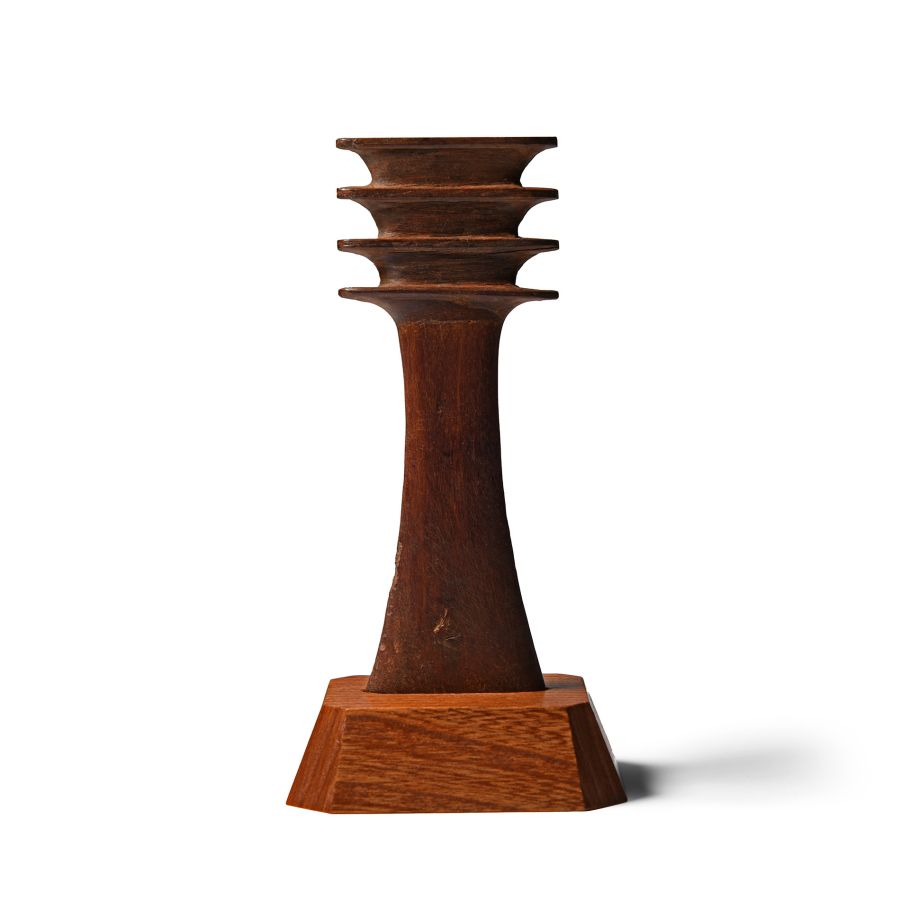
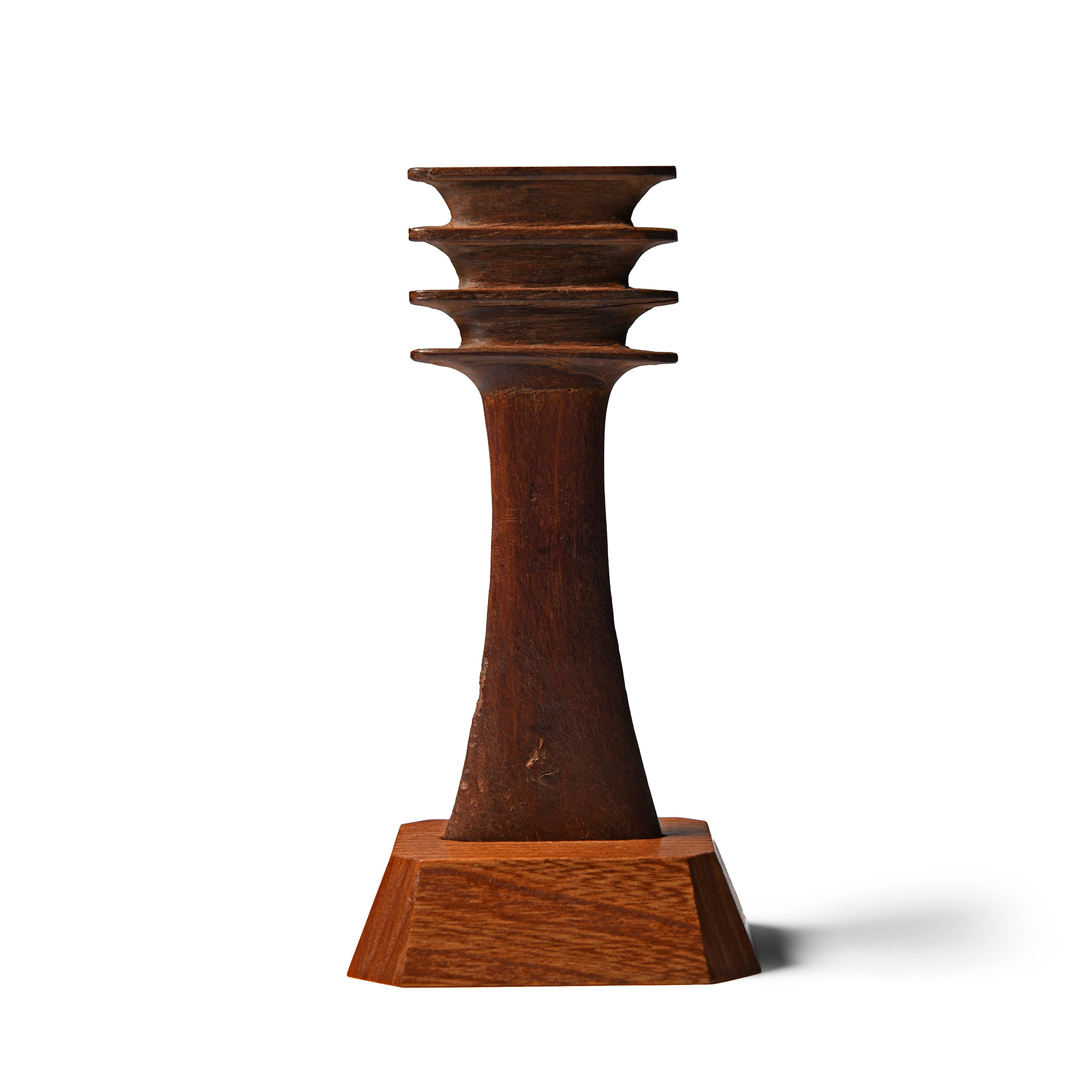
Egyptian Wooden Djed Pillar Amulet
SAITE PERIOD, 7TH-5TH CENTURY B.C.
6 3/4 in. (106 grams, 17 cm high).
Finely-made amuletic djed pillar; old collector's accession number 'E.436' to underside; mounted on a custom-made display stand.
Provenancewith ink inscribed 'E.436' to base.
Acquired in 1970.
Ex private European collection.
This lot has been checked against the Interpol Database of stolen works of art and is accompanied by search certificate no.11602-199041.
The djed pillar symbolises stability and is usually understood to be the spine of the god Ptah although its origins are more probably in cult practices involving sheaves of reeds which were revered due to the general absence of trees from the Egyptian landscape. The djed later came to be symbolise Seker, the falcon god of Memphis and Ptah, the Memphite god of craftsmen, who carried a sceptre formed as a combination of the djed and the ankh. The cult of Ptah waned and gave way to that of Osiris so that by the New Kingdom (16th century B.C.), the djed had become associated with Osiris, part of whose cult included a ceremony for raising the djed representing Osiris's triumph over Seth.
CONDITIONTimeLine Auctions follows a vetting process to ensure the authenticity and legality of all items, reinforcing our commitment to integrity and responsible trading. Each antiquity, antique, and coin lot undergoes thorough examination by a vetting committee of at least ten external specialists, professional trade association members, scientists, and archaeologists: Our Vetting Process
AUCTIONS:
TimeLine is a leading auction house specialising in antiquities, ancient art, collectables, natural history, coins, medals, and books. Our auctions offer museums, collectors, historians, and enthusiasts the opportunity to acquire unique and historically significant pieces.
LOT 0030
Egyptian Wooden Djed Pillar Amulet
Estimate £1,500 - 2,000€1,740 - 2,320 (for guidance only)$2,030 - 2,700 (for guidance only)
-
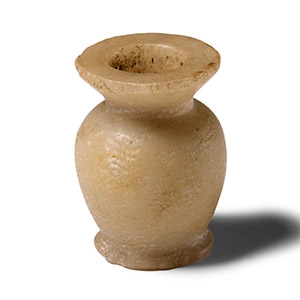
Egyptian Alabaster Cosmetic Vessel
Middle Kingdom, 12th Dynasty, circa 1985-1773 B.C. or laterSold for (Inc. bp): £286
With globular body and flared trumpet-shaped mouth; textile fragment inside. 40.8 grams, 38 mm
From the Peter Negus collection. Ex R. Gill Esq. collection, Wimbledon, London, UK. Ex Artemission, London SW5, UK. Private collection of Mr T.H., Norfolk, UK. Accompanied by a previous dealer's certificate of authenticity and invoice. -
.jpg)
Egyptian Multi-Stranded Faience Mummy Bead Necklace
Late Period, 664-525 B.C.Sold for (Inc. bp): £156
Composed of polychrome composition beads of mainly annular and tubular types. 29.3 grams, 75 cm long
Acquired before 1979. From the private collection of Mr F. A., South Kensington, London, UK; thence by descent 2014. -
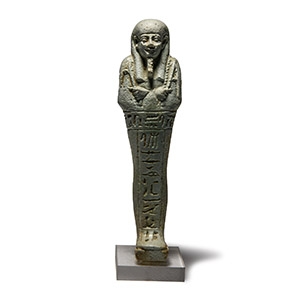
Egyptian Pale Blue Faience Shabti for Padiosiris
Late Period, 664-525 B.C.Sold for (Inc. bp): £1,105
Finely modelled face with false beard and tripartite wig; hands holding the pick and the hoe; a seed bag over the left shoulder; plain back pillar; a T-shape arrangement of hieroglyphic text to the front: sḥḏ wsir sm n mnw pꜢ-di wsir(?) ms s(sic) r.t-ir.t-Ꜣst-n-wr.t mꜢʾ ḫrw ‘The illuminated, the Osiris, Sem-(priest ) of Min, God’s Servant, Pa-di-Osiris, born (to) Ret-iret-Isis-en-weret true of voice’; mounted on a custom-made stand. 98.6 grams, 14.5 cm including stand
French collection, 1990s. Acquired from St James's Ancient Art, London SW1, circa 2019. Private collection of Professor Kenneth Graham, London, UK. Accompanied by a St James's Ancient Art certificate of authenticity.
