
Loading, please wait...
LOT 0033
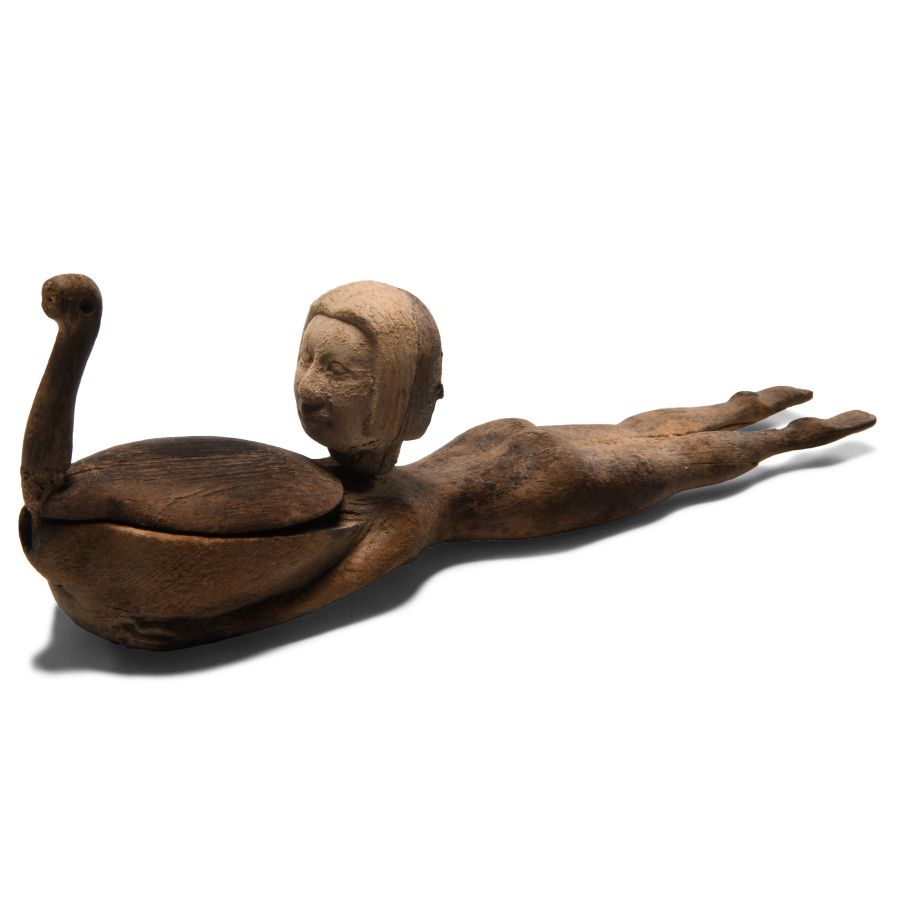
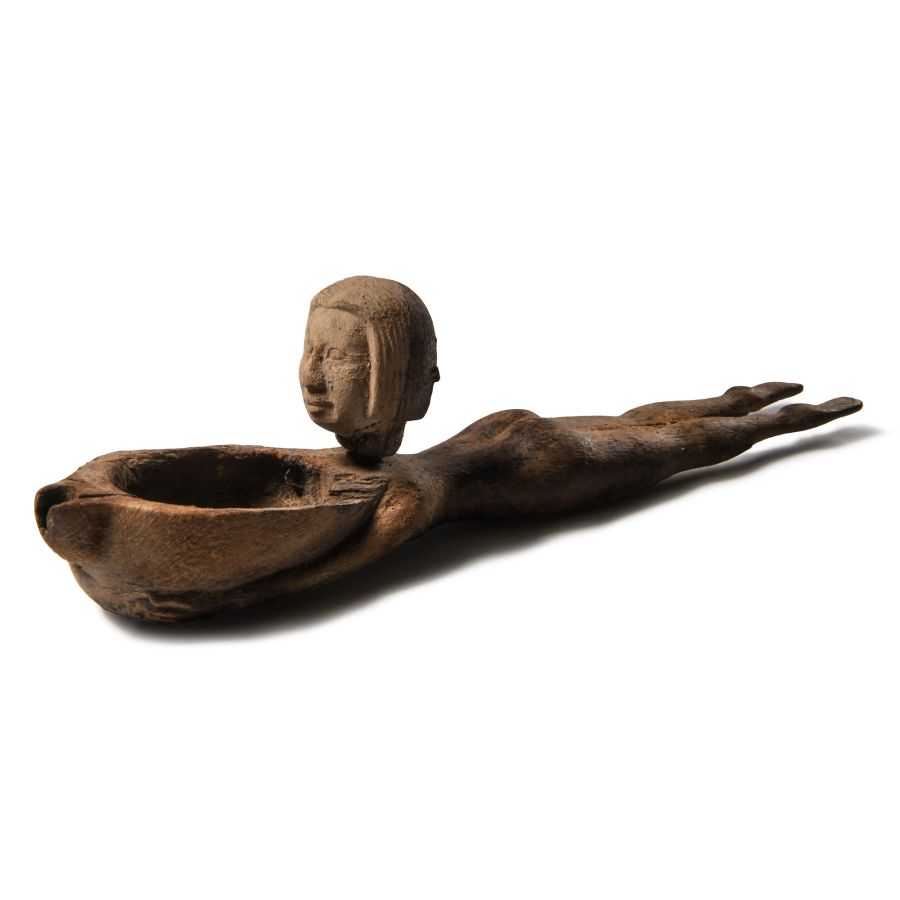
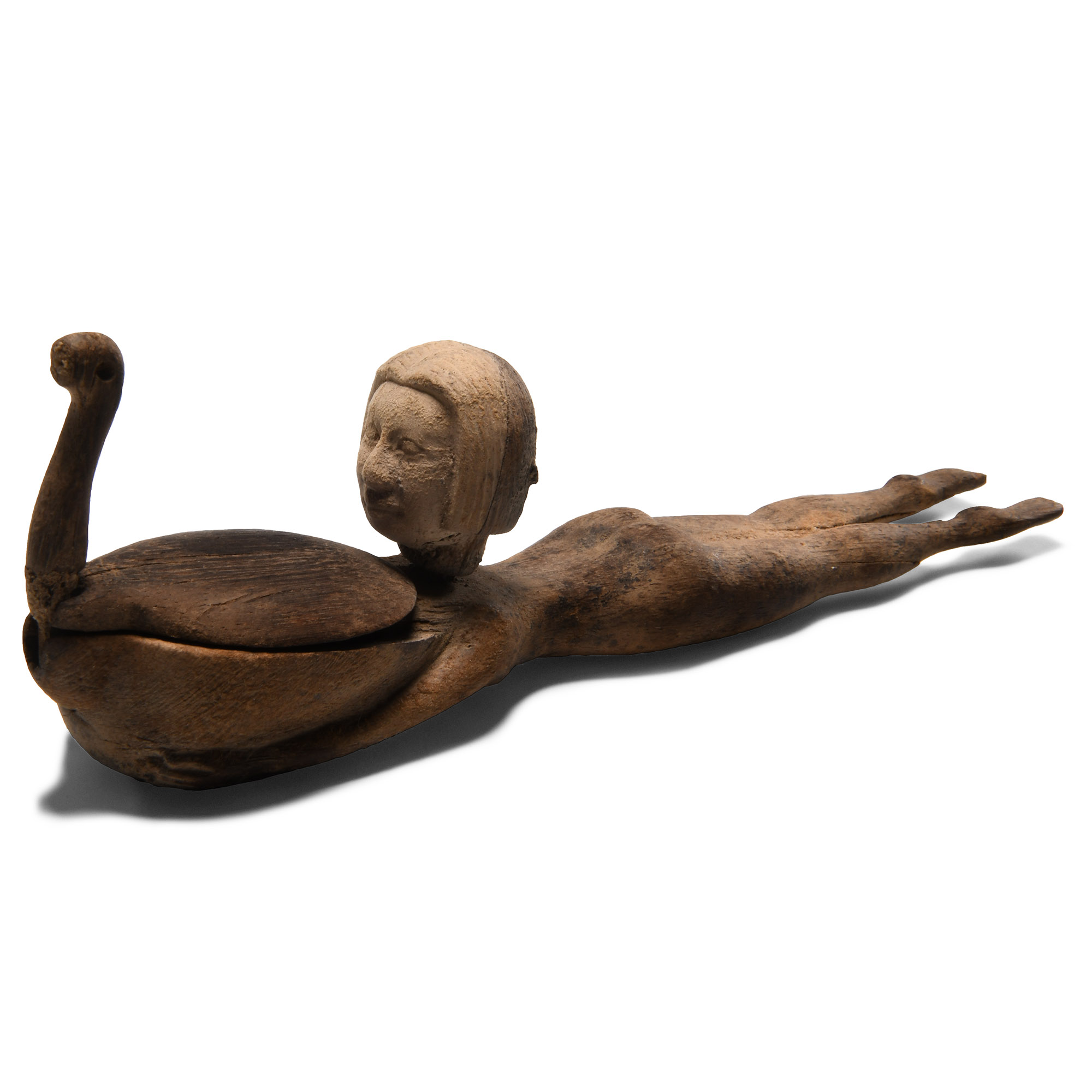
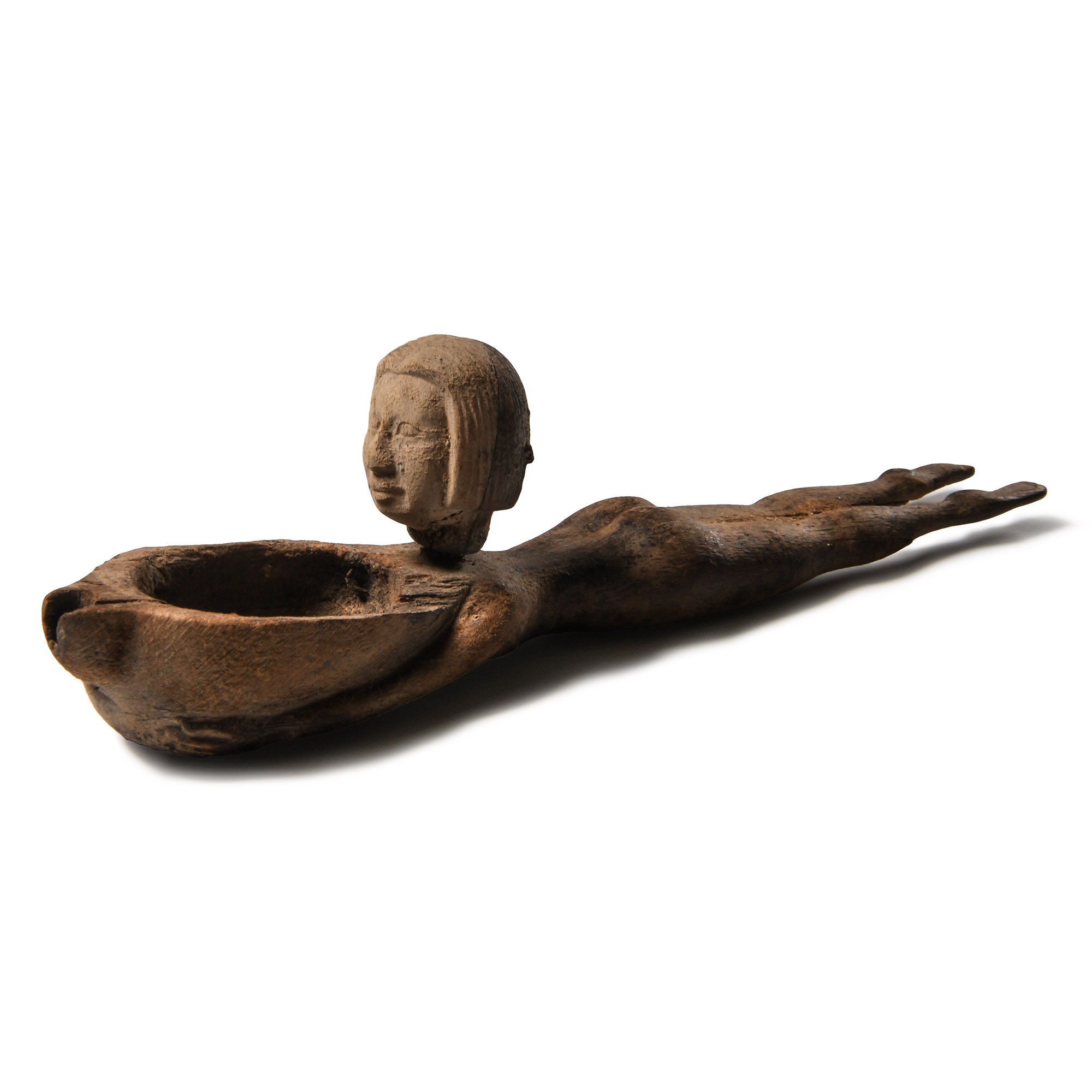
Egyptian Wooden Cosmetic Spoon
NEW KINGDOM, 1550-1070 B.C.
6 7/8 in. (42 grams, 17.5 cm).
Carved in the round, the handle formed as the extended nude female body, the extended arms holding out a pear-shaped bowl; separate carved head with bobbed hair; offered with a flattish lid with attached goose's neck and partial head; female head possibly a later addition.
ProvenancePart of an old collection dating back to the 19th century.
Ex property of a gentleman, acquired before the 1980s.
Private collection of Mr T.H., Norfolk, UK.
Cf. Vandier d’Abbadie, J., Les objets de toilette égyptiens au Musée du Louvre, Paris, 1972, pp.10-11 nos. 1-3, for three similar cosmetic spoons with the bowl and lid in the form of a goose.
CONDITIONTimeLine Auctions follows a vetting process to ensure the authenticity and legality of all items, reinforcing our commitment to integrity and responsible trading. Each antiquity, antique, and coin lot undergoes thorough examination by a vetting committee of at least ten external specialists, professional trade association members, scientists, and archaeologists: Our Vetting Process
AUCTIONS:
TimeLine is a leading auction house specialising in antiquities, ancient art, collectables, natural history, coins, medals, and books. Our auctions offer museums, collectors, historians, and enthusiasts the opportunity to acquire unique and historically significant pieces.
-
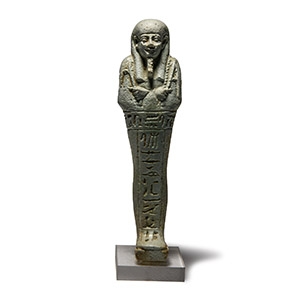
Egyptian Pale Blue Faience Shabti for Padiosiris
Late Period, 664-525 B.C.Sold for (Inc. bp): £1,105
Finely modelled face with false beard and tripartite wig; hands holding the pick and the hoe; a seed bag over the left shoulder; plain back pillar; a T-shape arrangement of hieroglyphic text to the front: sḥḏ wsir sm n mnw pꜢ-di wsir(?) ms s(sic) r.t-ir.t-Ꜣst-n-wr.t mꜢʾ ḫrw ‘The illuminated, the Osiris, Sem-(priest ) of Min, God’s Servant, Pa-di-Osiris, born (to) Ret-iret-Isis-en-weret true of voice’; mounted on a custom-made stand. 98.6 grams, 14.5 cm including stand
French collection, 1990s. Acquired from St James's Ancient Art, London SW1, circa 2019. Private collection of Professor Kenneth Graham, London, UK. Accompanied by a St James's Ancient Art certificate of authenticity. -
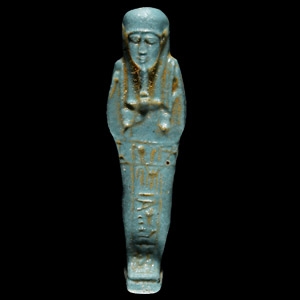
Egyptian Blue Faience Shabti with Hieroglyphic Inscription
Late Period, 664-332 B.C.Sold for (Inc. bp): £286
Pale blue glazed composition with T-shaped hieroglyphic inscription to the lower body incorporating mother's name. 23 grams, 81 mm
Acquired from a private UK collection in the late 1990s. Private collection of Mr T.H., Norfolk, UK. -
.jpg)
Egyptian Alabaster Hedgehog Vessel
Late Period, 664-332 B.C.Estimate: £600 - 800 (+bp*)
Opening Bid: £240
Carved in the round with four stubby feet and hatched body, broad lip and with lug on the reverse. 99 grams, 45 mm
Part of an old collection dating back to the 19th century. Ex property of a gentleman, acquired before the 1980s. Private collection of Mr T.H., Norfolk, UK.
