
Loading, please wait...
LOT 0681
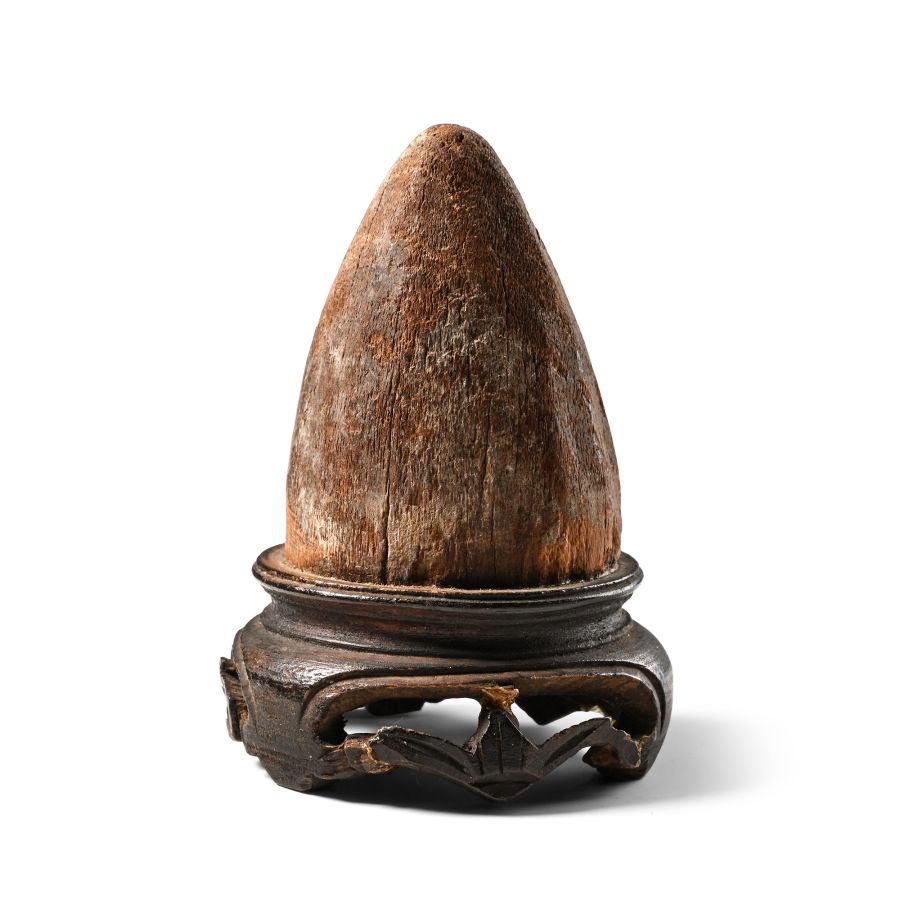
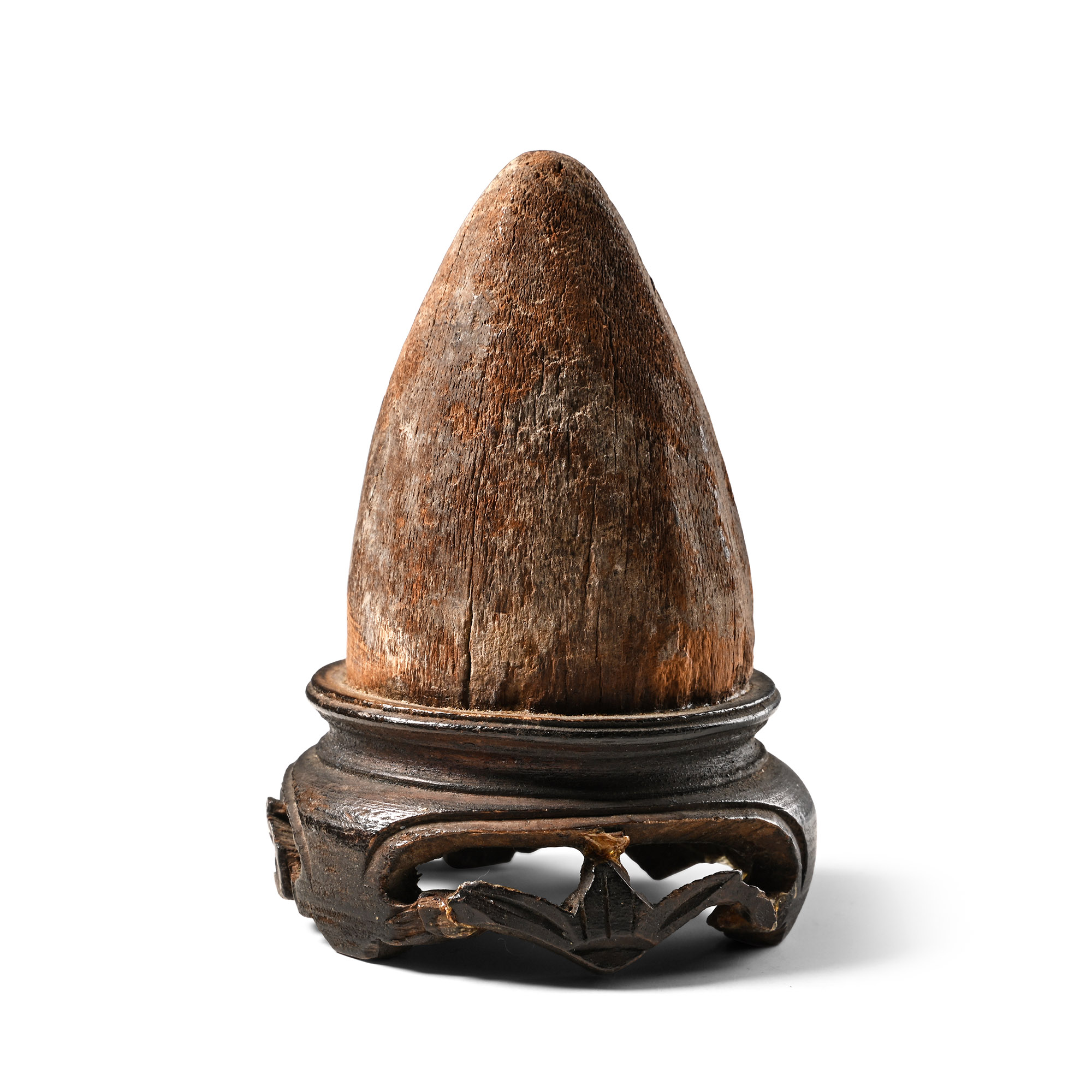
Egyptian Wooden Bread Model on 19th Century Base
LATE-PTOLEMAIC PERIOD, CIRCA 664-30 B.C.
3 1/8 in. (55 grams, 80 mm high including stand).
Carved model of a conical loaf; mounted on a later Chinese-style stand. [No Reserve]
Provenancewith a privately curated collection, 1980s-early 2000s.
From the private collection and estate of Christine Simons (1943-2025), West Midlands, UK.
TimeLine Auctions follows a vetting process to ensure the authenticity and legality of all items, reinforcing our commitment to integrity and responsible trading. Each antiquity, antique, and coin lot undergoes thorough examination by a vetting committee of at least ten external specialists, professional trade association members, scientists, and archaeologists: Our Vetting Process
AUCTIONS:
TimeLine is a leading auction house specialising in antiquities, ancient art, collectables, natural history, coins, medals, and books. Our auctions offer museums, collectors, historians, and enthusiasts the opportunity to acquire unique and historically significant pieces.
LOT 0681
Egyptian Wooden Bread Model on 19th Century Base
Estimate £180 - 240€210 - 280 (for guidance only)$240 - 320 (for guidance only)
Opening Bid
£100 (EUR 116; USD 135) +BP*
-
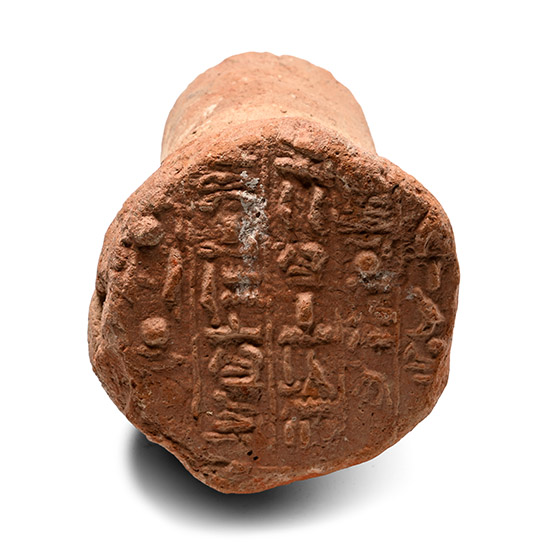
Egyptian Terracotta Funerary Cone of Amunhotep, called Huy
New Kingdom, 18th Dynasty, circa 1350 B.C.Estimate: £300 - 400 (+bp*)
Bids: 4 | Current Bid: £85
Front portion of a tapering funerary cone, with the circular flat end impressed with five columns of hieroglyphic text, reading: 'Honoured before Osiris, hereditary prince, Amunhotep, called Huy, this famous person in the entire land, born of the dignitary Hepu'. 220 grams, 71 mm
Acquired from Abdoul Rassoul on the West Bank at Luxor, 1974-1980 when a guest lecturer. From the private collection of Peter Clayton, FCILIP, Dip, Arch, FSA, FRNS, Hemel Hempstead, Hertfordshire, UK; formed since the late 1950s.
Although funerary cones of Amenhotep have been in circulation for a long time, his Theban tomb was not documented until 1996, when the German Egyptologist Friederike Kampp-Seyfried recorded it and assigned it the number 396. -
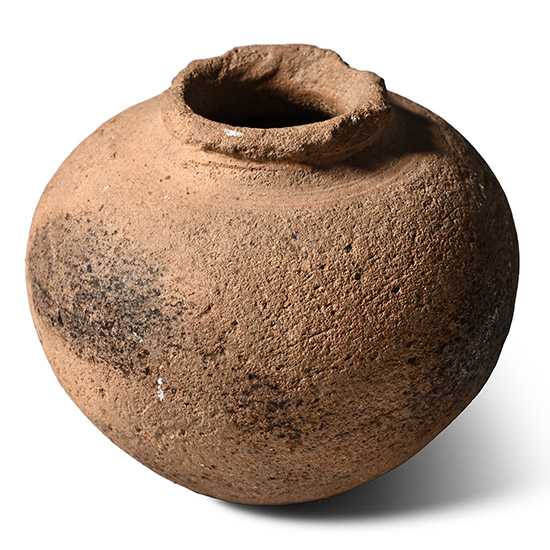
Romano-Egyptian Terracotta Pot
Roman Period, 30 B.C.-323 A.D.Estimate: £40 - 60 (+bp*)
Opening Bid: £5
Squat in profile with low rim to the mouth; old collector's label 'Roman pot found at Aswan'. 75.8 grams, 63 mm wide
Found at Aswan, Egypt. From the private collection of Peter Clayton, FCILIP, Dip, Arch, FSA, FRNS, Hemel Hempstead, Hertfordshire, UK; formed since the late 1950s. -
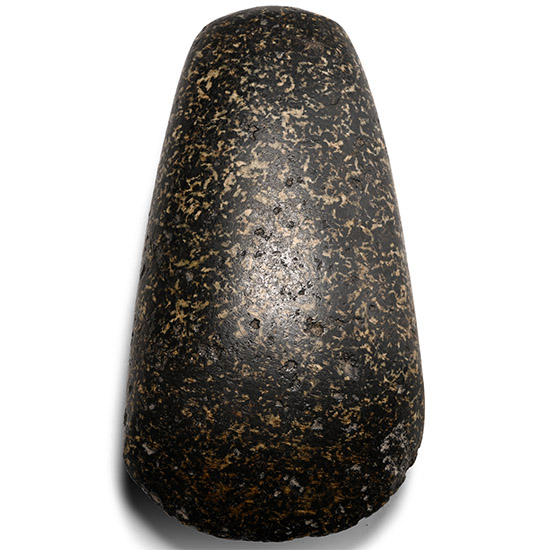
Egyptian Stone Age Diorite Polished Axehead
Early Dynastic Period, circa 3,000 B.C.Estimate: £400 - 600 (+bp*)
Bids: 1 | Current Bid: £5
Polished to a high standard with curved cutting edge. 551 grams, 12.7 cm
Acquired Glyn Antiques, Portabello Road, 26 November 1960, for £2.00. From the private collection of Peter Clayton, FCILIP, Dip, Arch, FSA, FRNS, Hemel Hempstead, Hertfordshire, UK; formed since the late 1950s. Accompanied by an old handwritten information card by Peter Clayton, collection no.78.
The great British Egyptologist Flinders Petrie recovered numerous polished stone axes from various sites in Egypt. Flint was rarely used, though it was popular for other tools. Instead, other hardstones were favoured (Petrie, W.M.F., Prehistoric Egypt, London, 1920, p. 24, for a brief discussion; pl. XXVII, for illustrated examples).
