
Loading, please wait...
LOT 0452
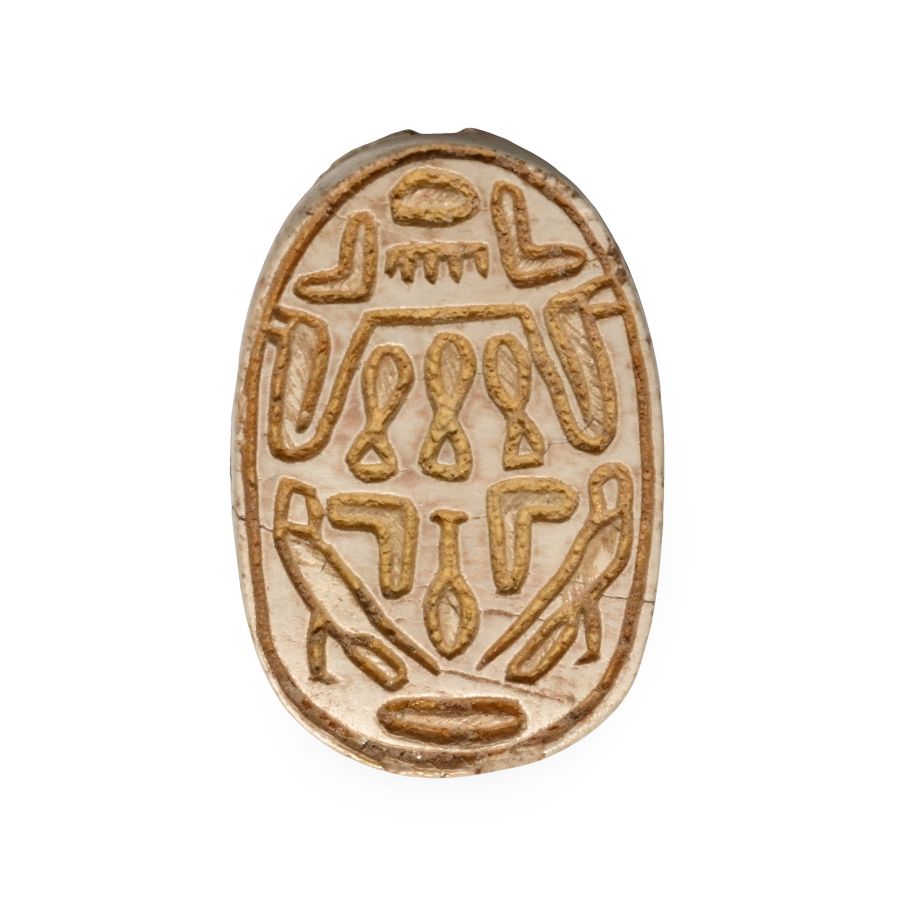
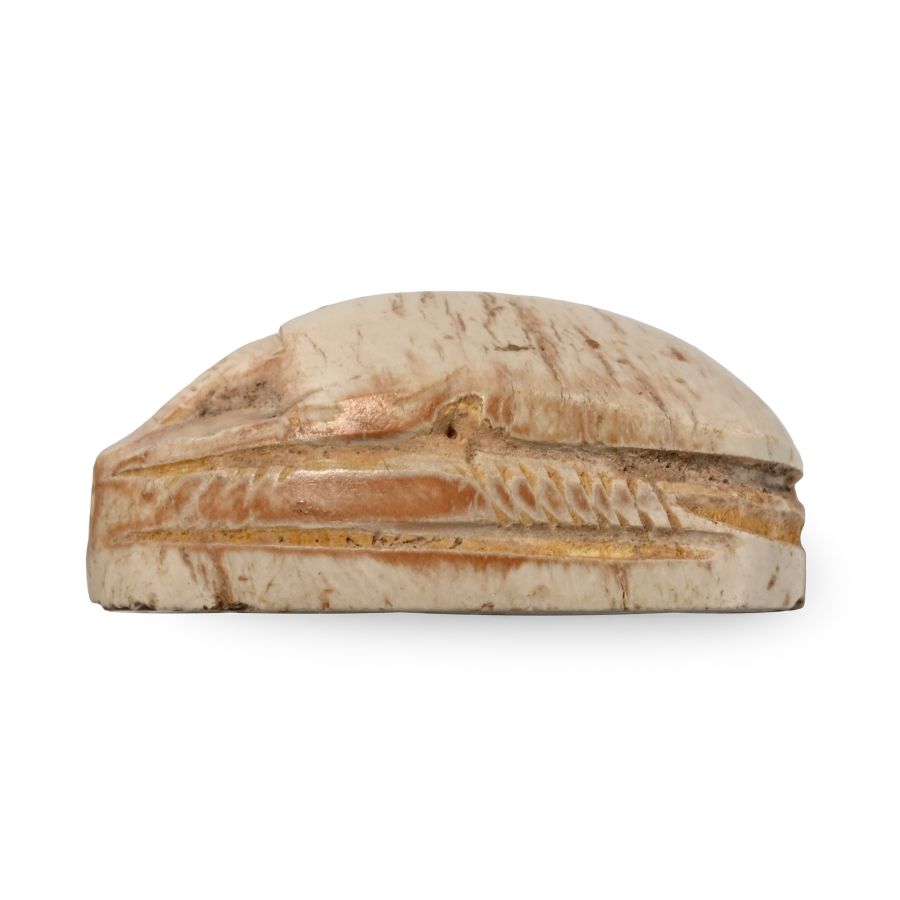
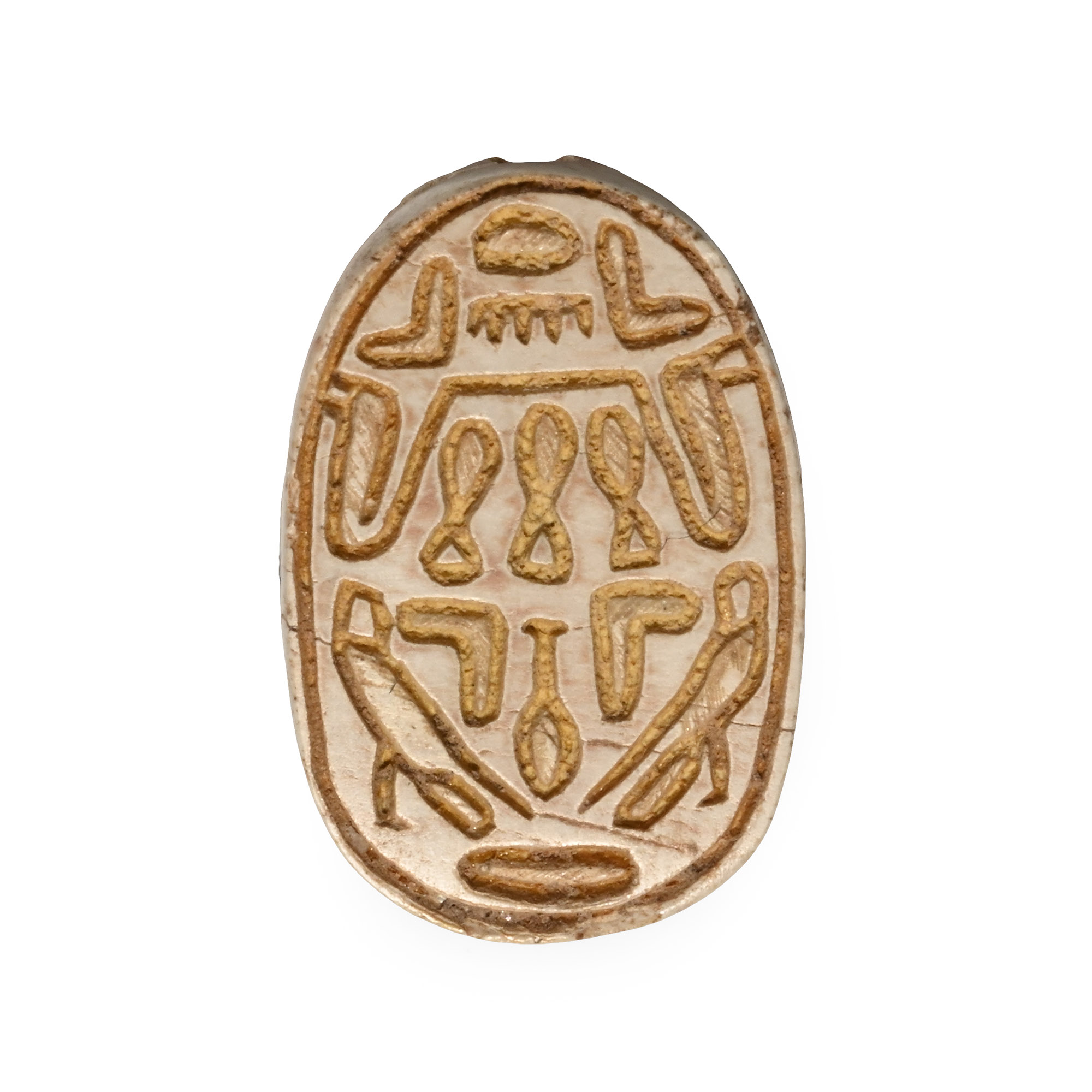
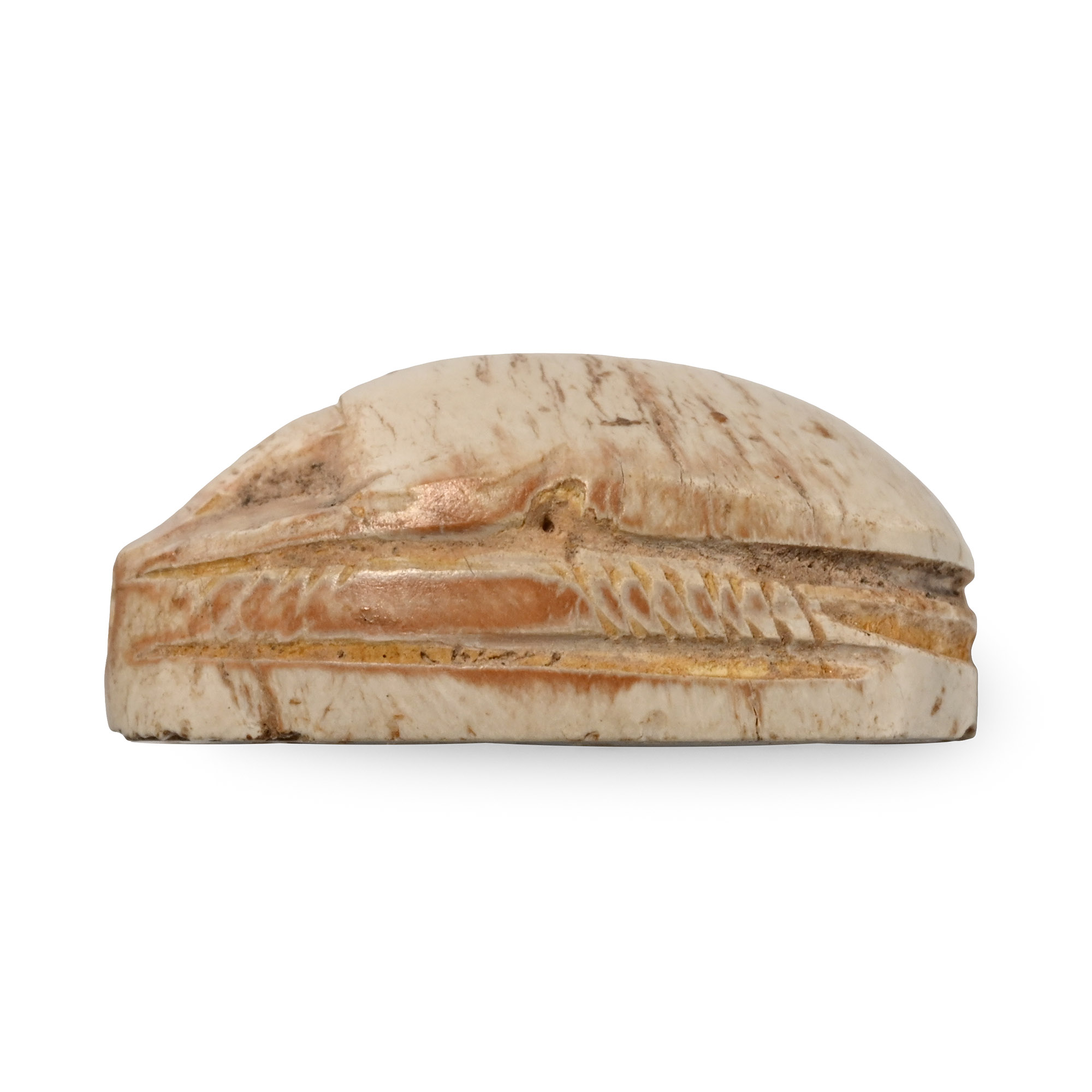
Egyptian White Stone Scarab with Hieroglyphs
HYKSOS PERIOD, 15TH DYNASTY, CIRCA 1650-1550 B.C.
7/8 in. (3.79 grams, 21 mm).
Scarab with incised detailing on the upper face; underside featuring incised hieroglyphs, including addorsed hawks and right-angled netjer signs; pierced longitudinally. [No Reserve]
ProvenanceEx A. H. collection, 1990s.
LiteratureCf. Bietak, M., Czerny, E. (eds.), Scarabs of the Second Millennium BC from Egypt, Nubia, Crete and the Levant: Chronological and Historical Implications, Vienna, 2004, p. 123, fig. 9 (nos. 6-7), for scarab designs employing the hawk and netjer signs in the motif, found in a scarab workshop at Tell el-Dab'a.
CONDITIONTimeLine Auctions follows a vetting process to ensure the authenticity and legality of all items, reinforcing our commitment to integrity and responsible trading. Each antiquity, antique, and coin lot undergoes thorough examination by a vetting committee of at least ten external specialists, professional trade association members, scientists, and archaeologists: Our Vetting Process
AUCTIONS:
TimeLine is a leading auction house specialising in antiquities, ancient art, collectables, natural history, coins, medals, and books. Our auctions offer museums, collectors, historians, and enthusiasts the opportunity to acquire unique and historically significant pieces.
-
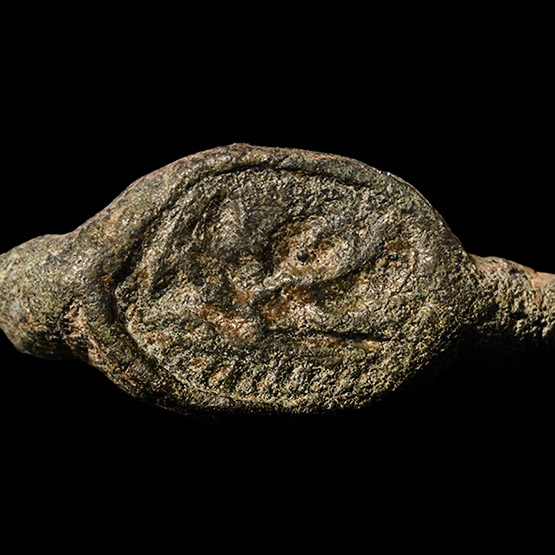
Phoenician Inscribed Bronze Scaraboid Seal
600-400 B.C.Sold for (Inc. bp): £65
With ribbed loop and ellipsoid face, gryphon motif. 10.9 grams, 26 mm wide
Ex London, UK, gentleman, 1990. -
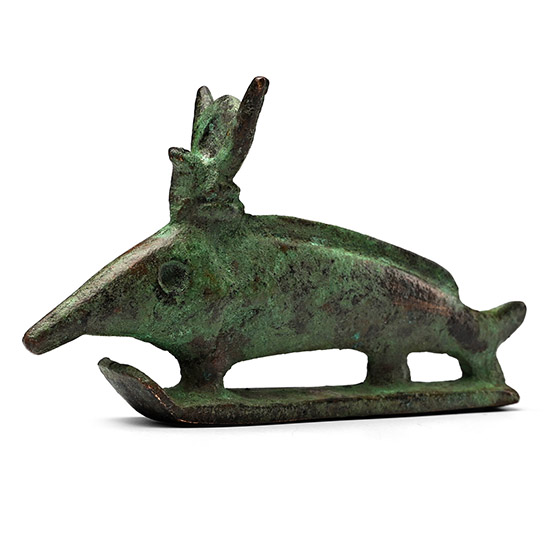
Egyptian Bronze Oxyrhynchus Fish
Late Period, 664-332 B.C. or laterSold for (Inc. bp): £1,235
Modelled in the round on a sledge attached by ventral and pectoral fins; with forked tail, a dorsal ridge, and a tapering nose, featuring recessed circular eyes to accept an insert, a horned sun disc headdress fronted by a uraeus, and a suspension loop behind. 203 grams, 11.5 cm
From the collection of a gentleman, acquired on the London art market in the 1990s. -
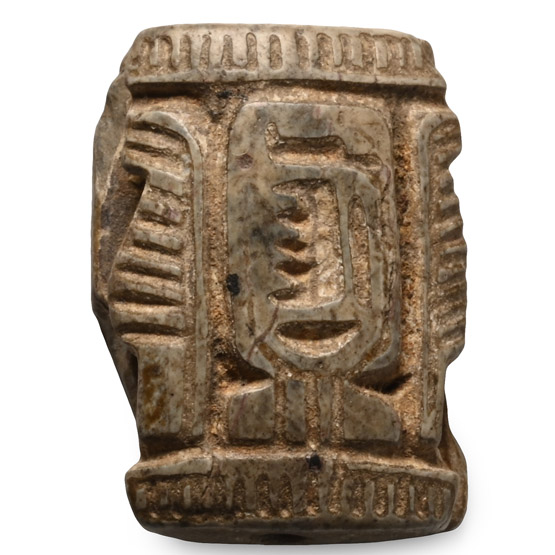
Egyptian Steatite Bifacial Amulet
Late Period, 664-332 B.C.Sold for (Inc. bp): £78
A double-sided rectangular amulet; one side features a central cartouche with the hieroglyphic name of the god “Amun” and a neb sign, flanked by two Maat feathers, all framed by a hatched border at the top and bottom; the other side depicts the reclining ram of Amun-Re with the seated figure of Maat in front, and the word "Amun" in hieroglyphs above the ram; drilled for suspension. 2.26 grams, 18 mm
Ex Constable collection, 1990s. Ex P. Morris collection.
An amulet with a similar overall design was discovered in a Ramesside-period tomb at Tell el-Retaba, an important production centre involved in trade with Syria-Palestine and protected by a fortress (Petrie, W.M.F., Duncan, J.G., Hyksos and Israelite Cities, London, 1906, pl. XXXIV, Tomb 8).
