
Loading, please wait...
LOT 0068
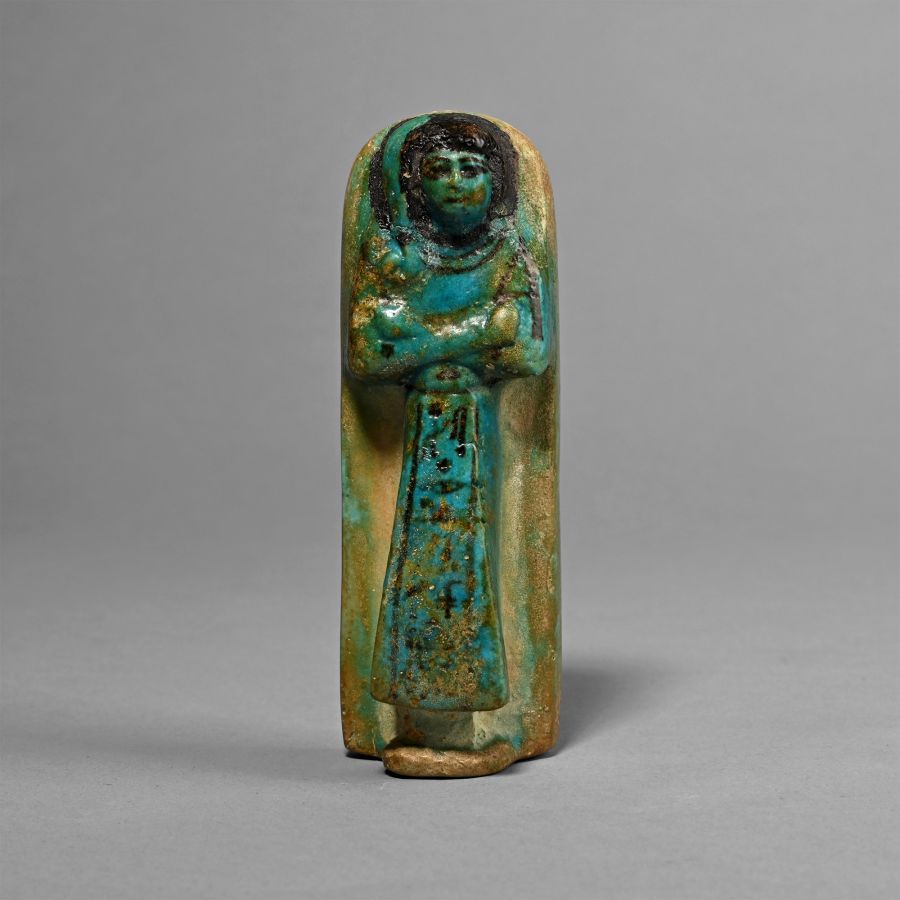
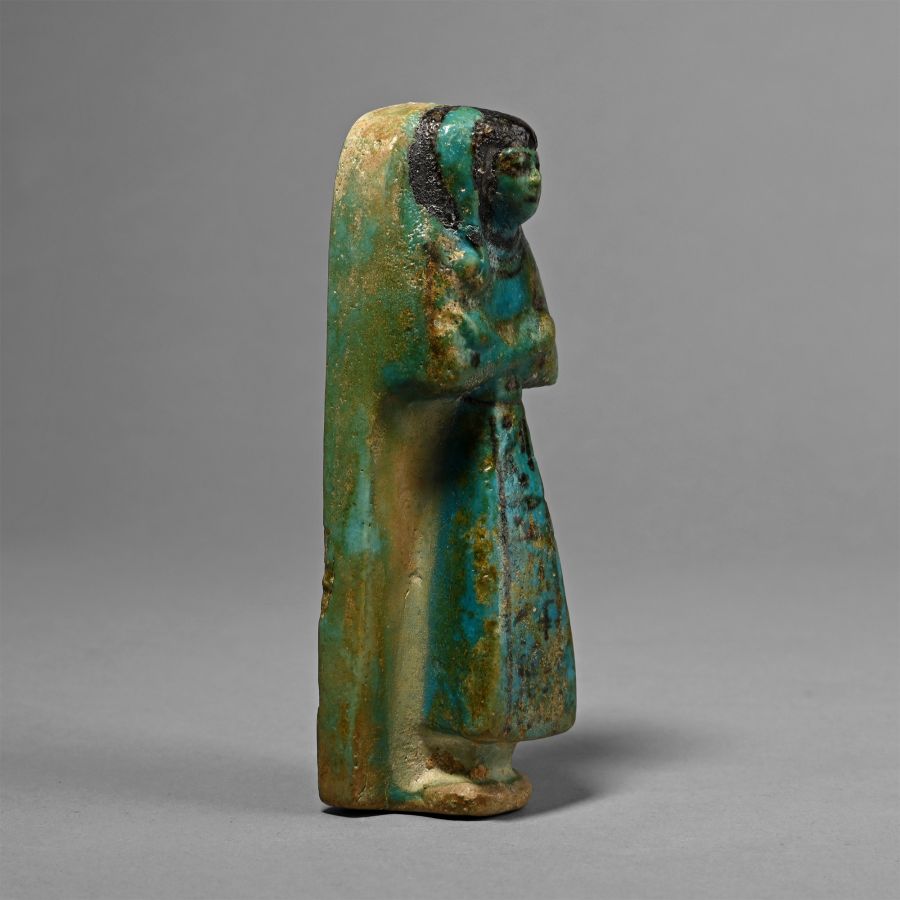
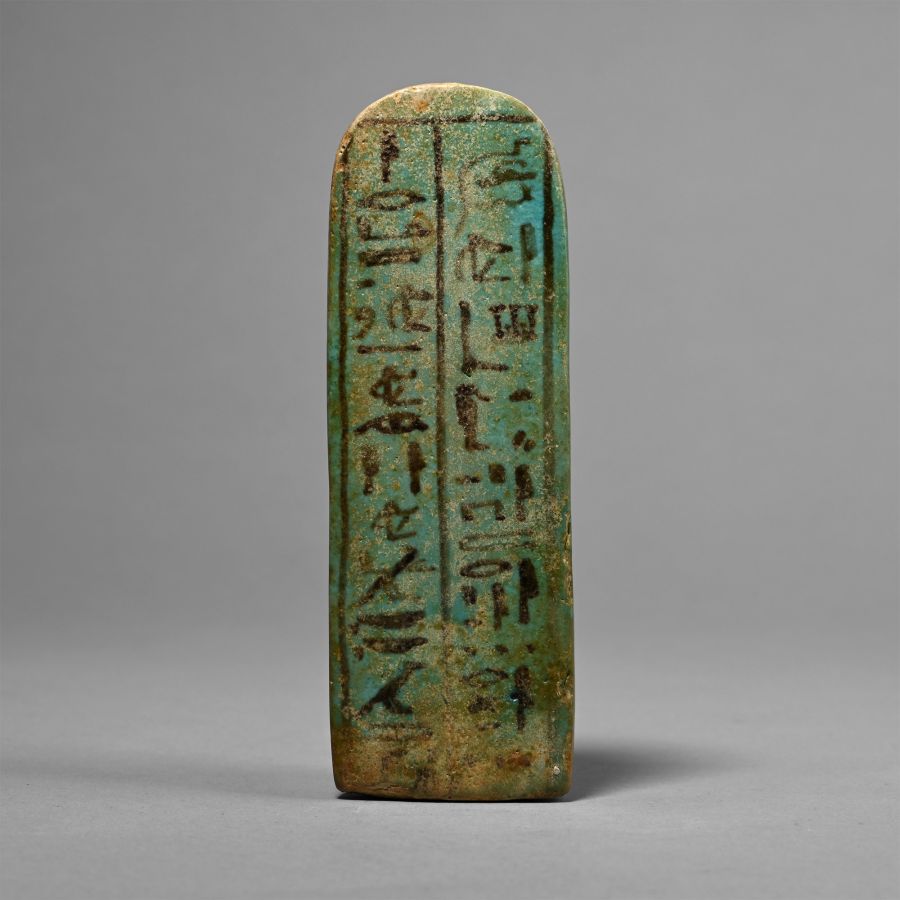
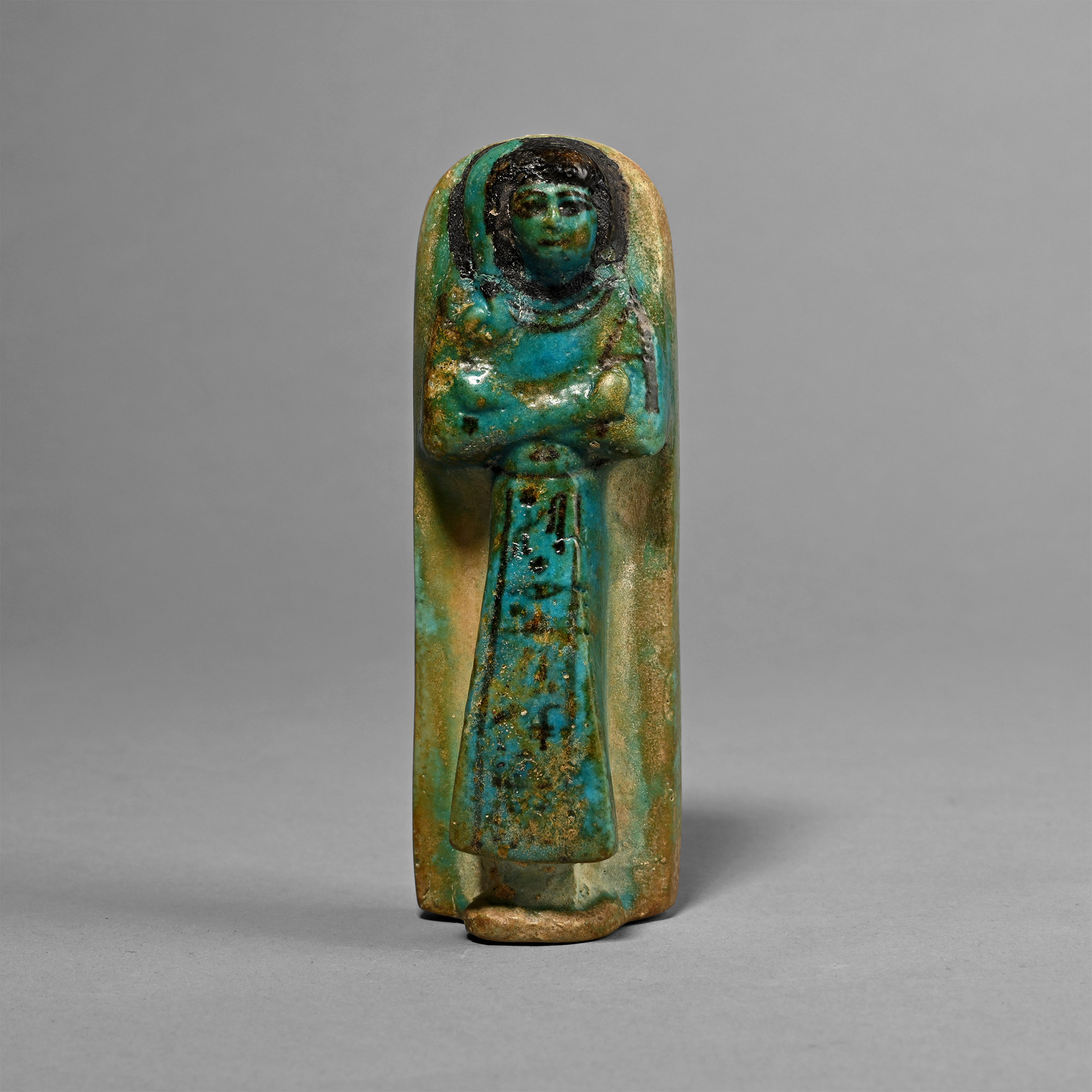
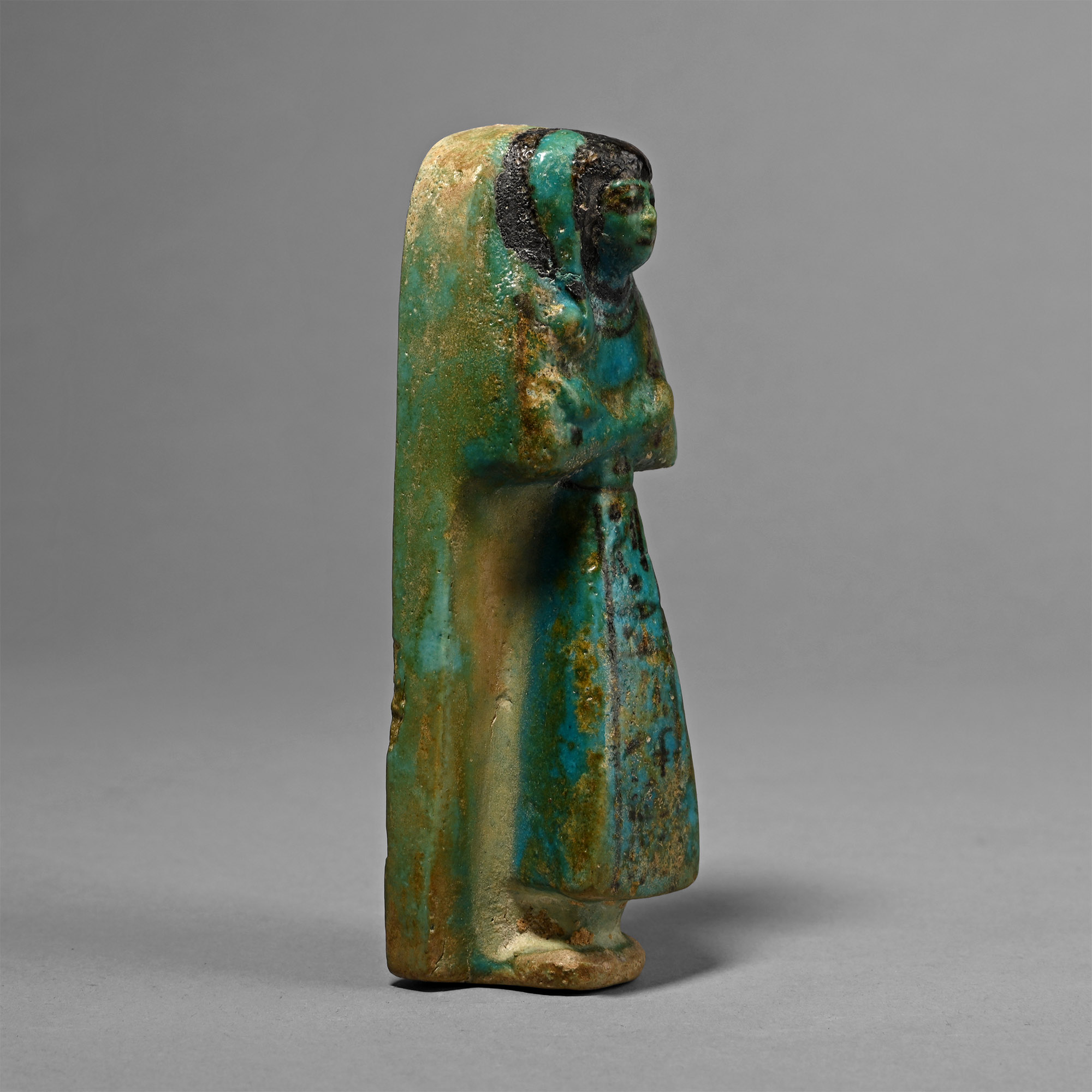
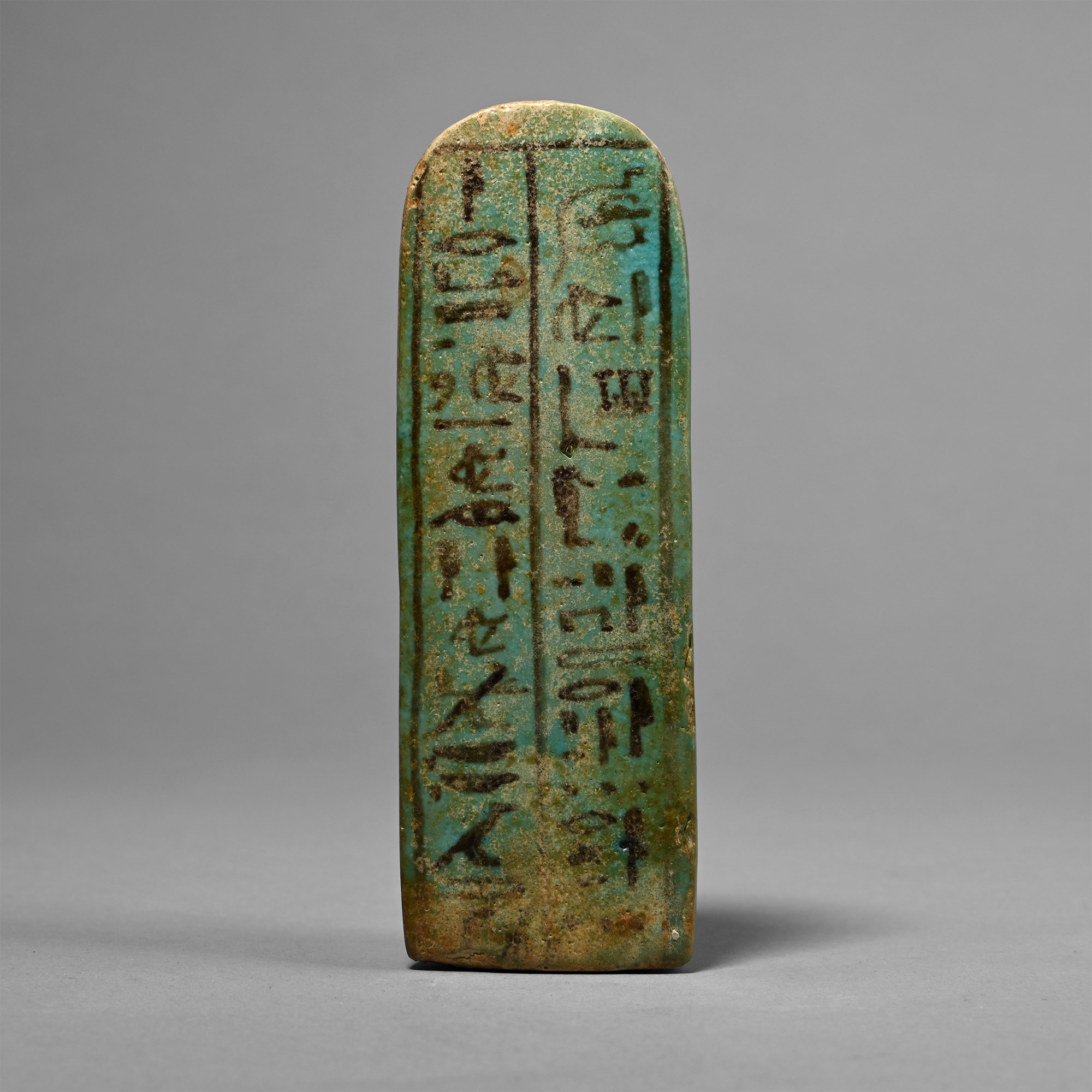
Egyptian Turquoise Faience Shabti of Prince Khaemwaset
NEW KINGDOM, 19TH DYNASTY, CIRCA 1292-1185 B.C.
6 in. (284 grams, 15.1 cm).
Wearing daily dress and carrying agricultural implements, with dark blue details including his short wig with side-lock, designating him as a Sem-priest of Ptah at Memphis, the text on the kilt naming him as 'Sem-priest and King's son Khaemwaset'; with round-topped back support, the reverse with two columns of hieroglyphs with part of the shabti formula: "He says: O shabti, if one counts, if one is reckoned to do all the works that are to be done there in the God’s land—now indeed obstacles are implanted therewith—as a man at his duties, ‘Here I am,’ you shall say when you are counted off to cultivate the fields, transport by boat the sand of the east to the west and vice versa; ‘Here I am,’ you shall say".
ProvenanceWith Barakat, Beverly Hills: reputed to be from the Omar Pasha Sultan collection, (1806-1871) but unpublished in the 1929 catalogue of the collection, nor in Aubert's 1976 article on the shabtis in the collection.
Bonhams, London, 1 May 2013, no.282.
Accompanied by copies of the relevant Bonhams catalogue pages.
Accompanied by an academic report by Egyptologist Paul Whelan.
This lot has been checked against the Interpol Database of stolen works of art and is accompanied by search certificate number no.12938-243536.
See the Cairo Museum see inv.7701, for a similar example.
FootnotesPrince Khaemwaset was the fourth-ranked son of Ramesses II and the second born to Queen Isetnofret. More is known about Khaemwaset than any other son of Ramesses II, attested by over 150 objects, ranging from statues to temple reliefs. He is traditionally regarded as the “first Egyptologist” for his restoration of monuments belonging to earlier kings, including the pyramids at Giza and Saqqara. Recent reassessment, however, suggests that some of these activities involved dismantling parts of ancient structures for reuse in his father’s temple constructions.
CONDITIONTimeLine Auctions follows a vetting process to ensure the authenticity and legality of all items, reinforcing our commitment to integrity and responsible trading. Each antiquity, antique, and coin lot undergoes thorough examination by a vetting committee of at least ten external specialists, professional trade association members, scientists, and archaeologists: Our Vetting Process
AUCTIONS:
TimeLine is a leading auction house specialising in antiquities, ancient art, collectables, natural history, coins, medals, and books. Our auctions offer museums, collectors, historians, and enthusiasts the opportunity to acquire unique and historically significant pieces.
LOT 0068
Egyptian Turquoise Faience Shabti of Prince Khaemwaset
Sold for (Inc. bp): £6,552
-
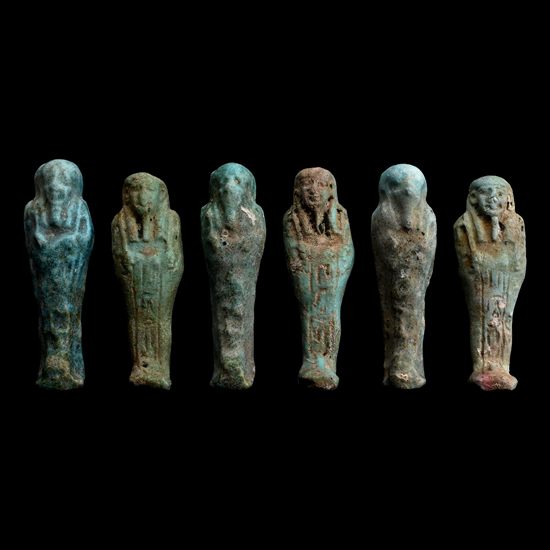
Egyptian Faience Shabti Collection
Late Period-Ptolemaic Period, 664-30 B.C.Sold for (Inc. bp): £468
Comprising mainly D-section types with moulded facial detailing some with vertical band of hieroglyphs to the lower body. 11.1 grams total, 67-72 mm
From the collection of a gentleman, acquired on the London art market in the 1990s. -
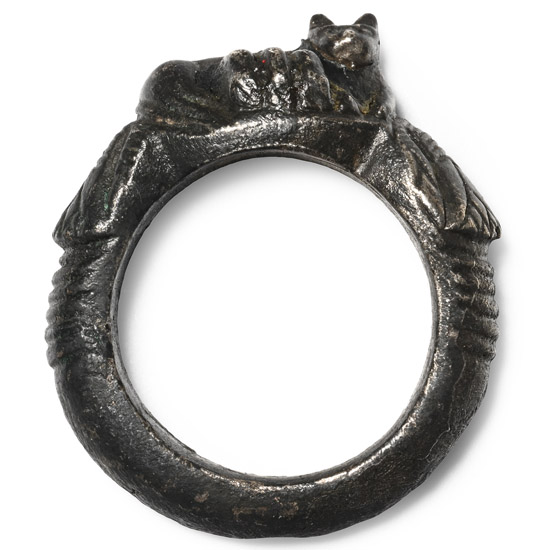
Romano-Egyptian Silver Ring with Cat and Kittens
Roman Period, 30 B.C.-323 AD.Sold for (Inc. bp): £468
D-section hoop with ribbed shoulder, papyrus-stem detailing and reclining cat with suckling kittens. 14.92 grams, 28.49 mm overall, 17.35 mm internal diameter (approximate size British M1/2, USA 6 1/4, Europe 13.09, Japan 12)
Ex Essex, UK, gentleman's collection, 1990s. -
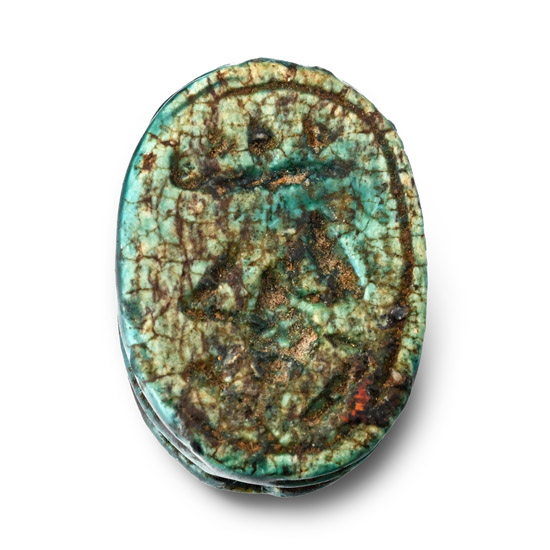
Egyptian Faience Scarab
Late Period-Ptolemaic Period, 664-30 B.C.Sold for (Inc. bp): £78
With anatomical detailing and hieroglyphs on the underside. 2.2 grams, 16 mm
From the collection of a late Gloucestershire, UK, collector.
