
Loading, please wait...
LOT 0027
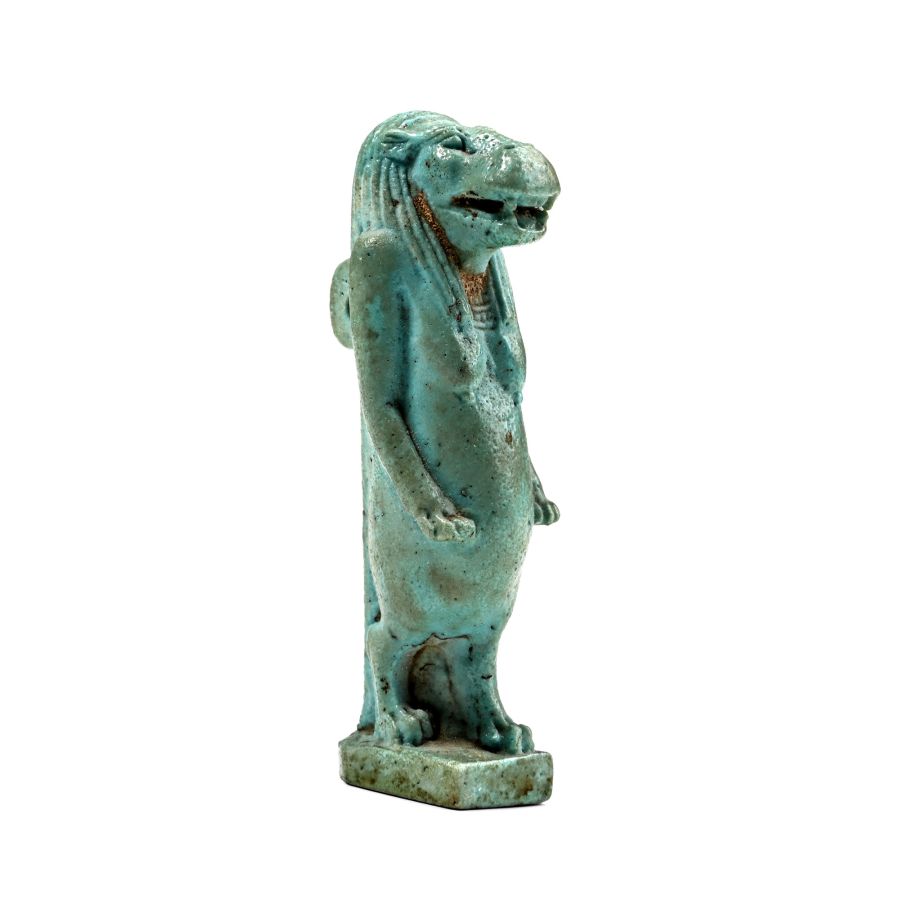
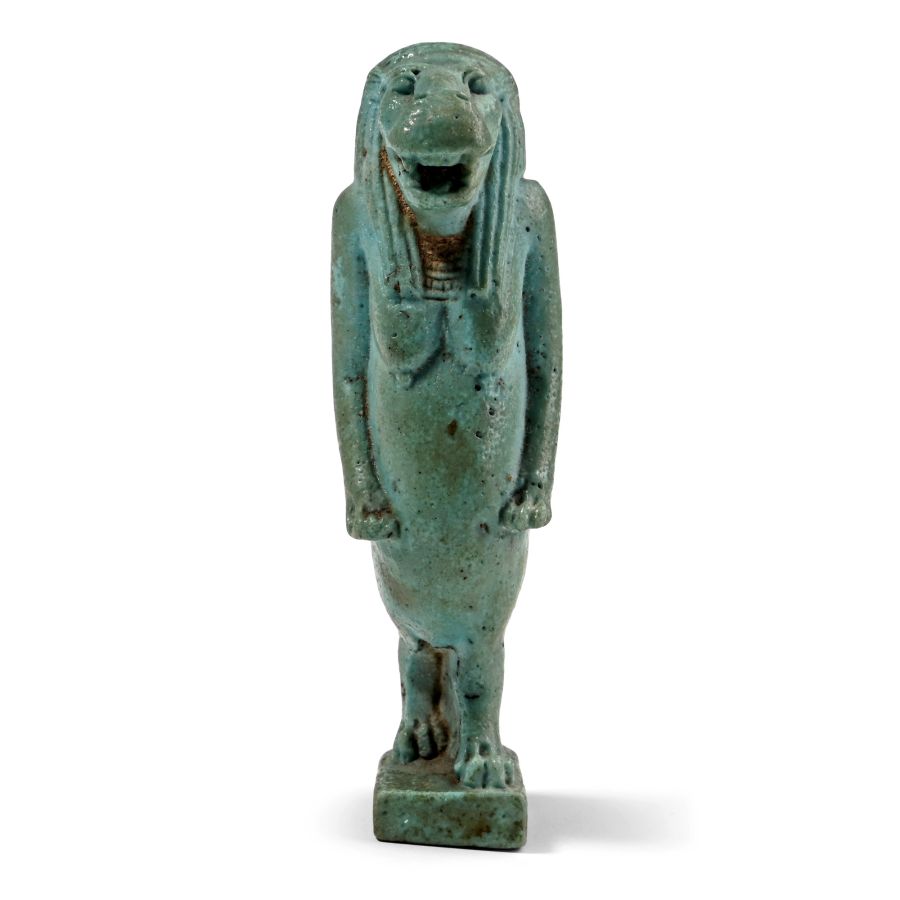
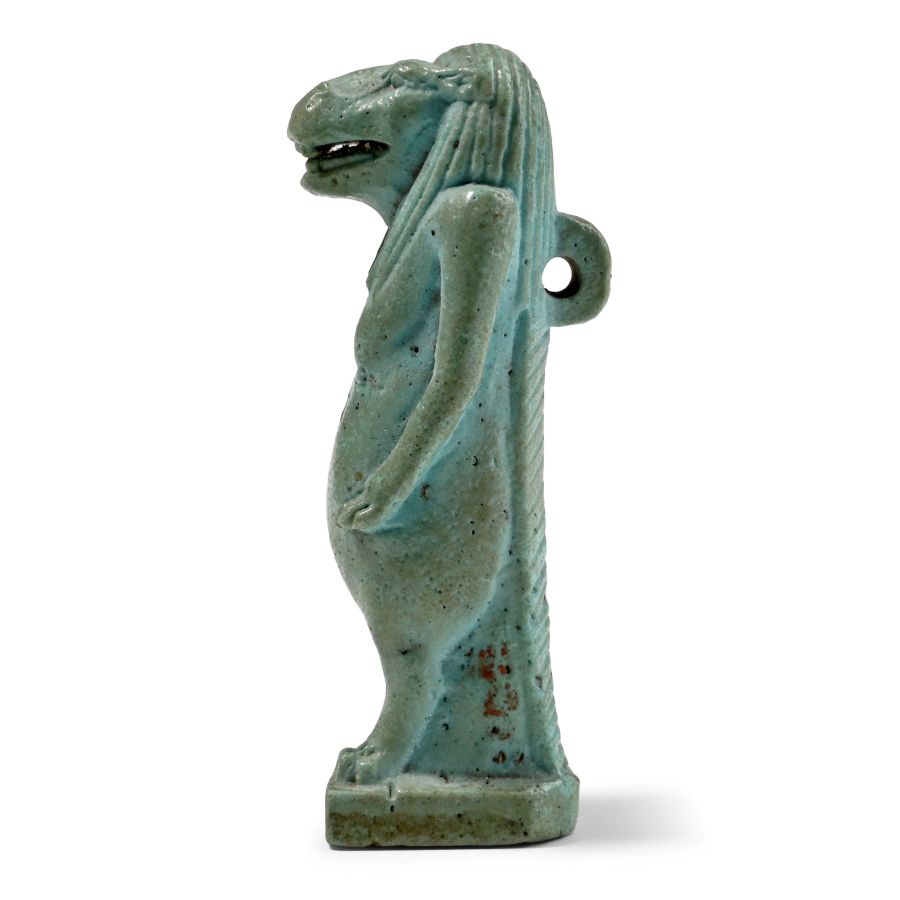
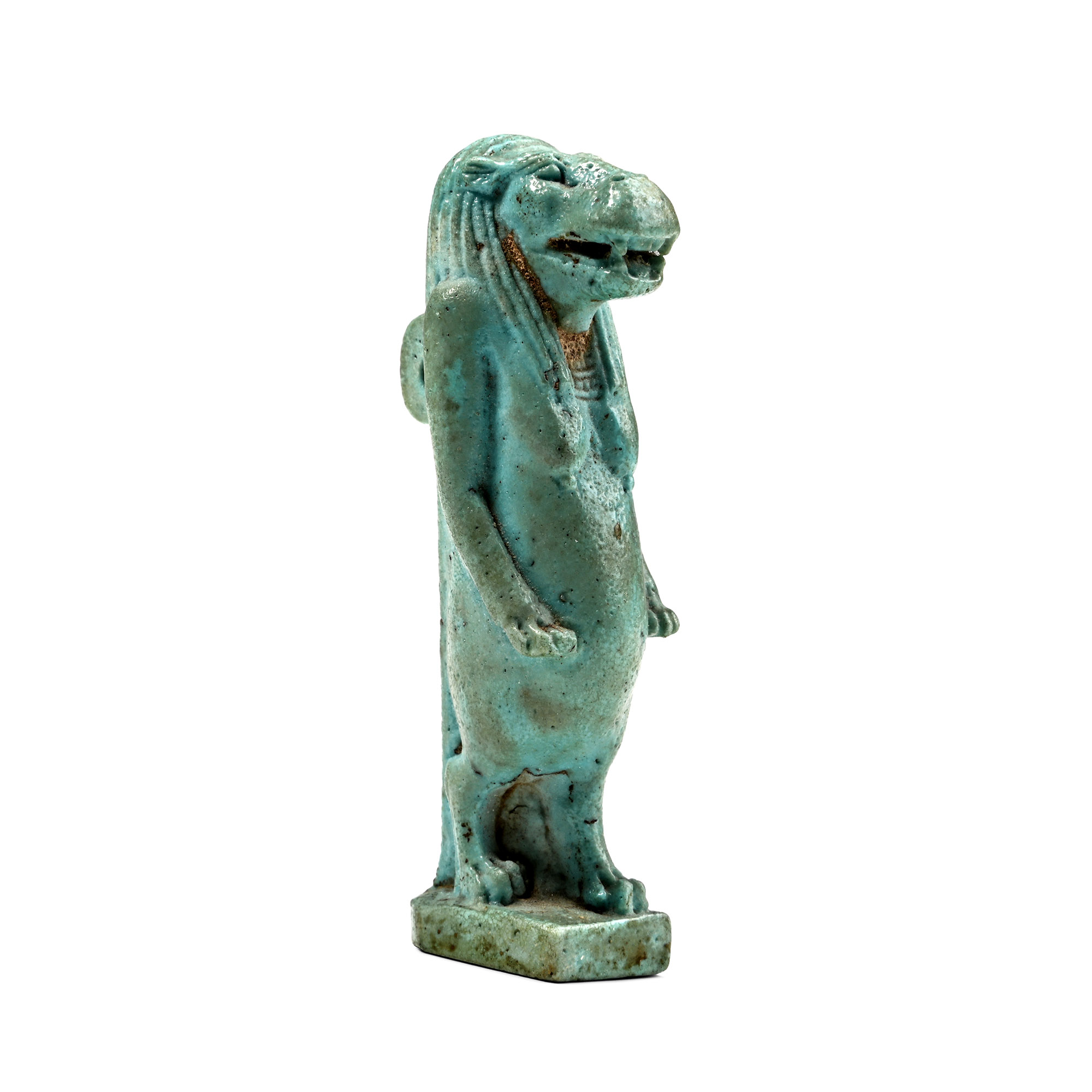
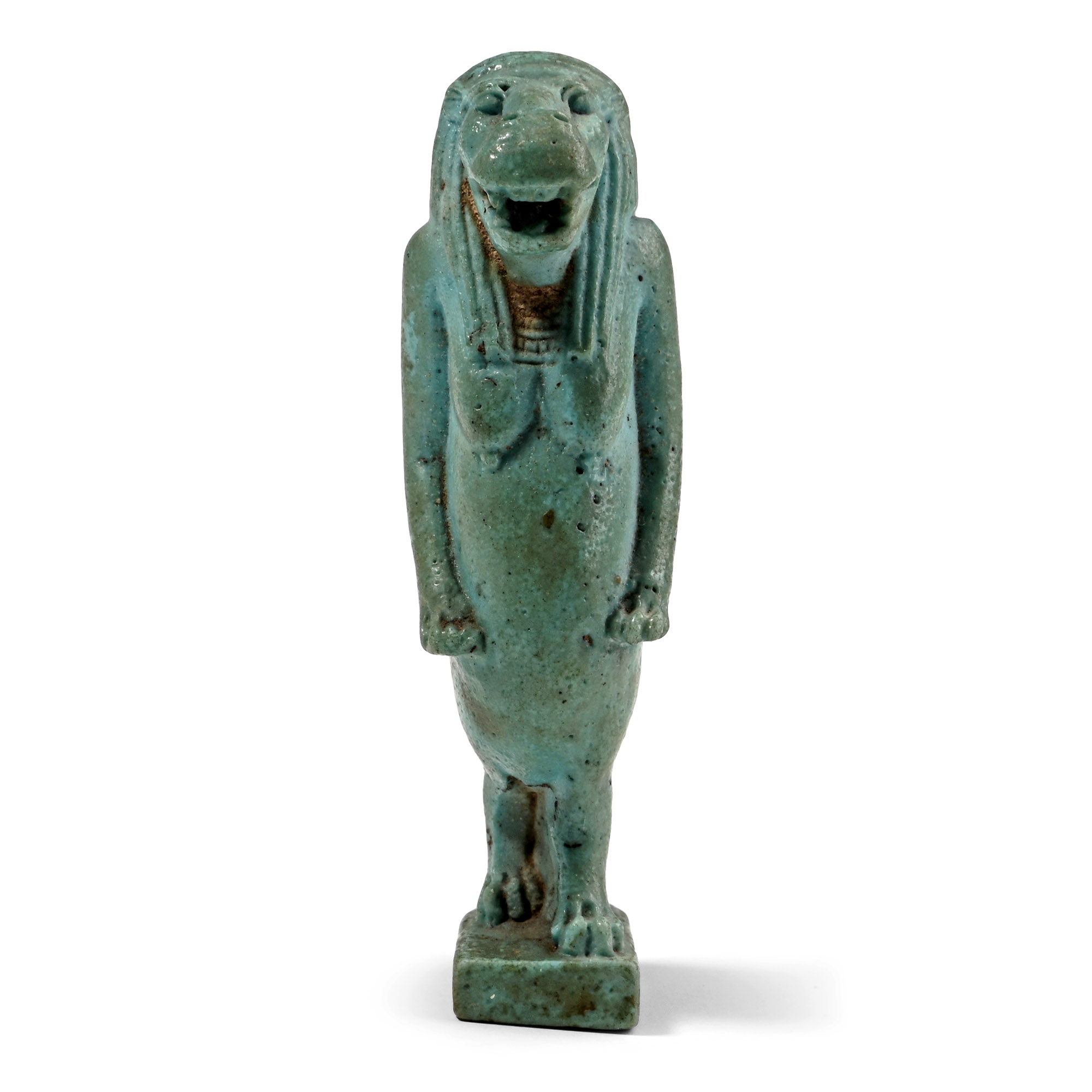
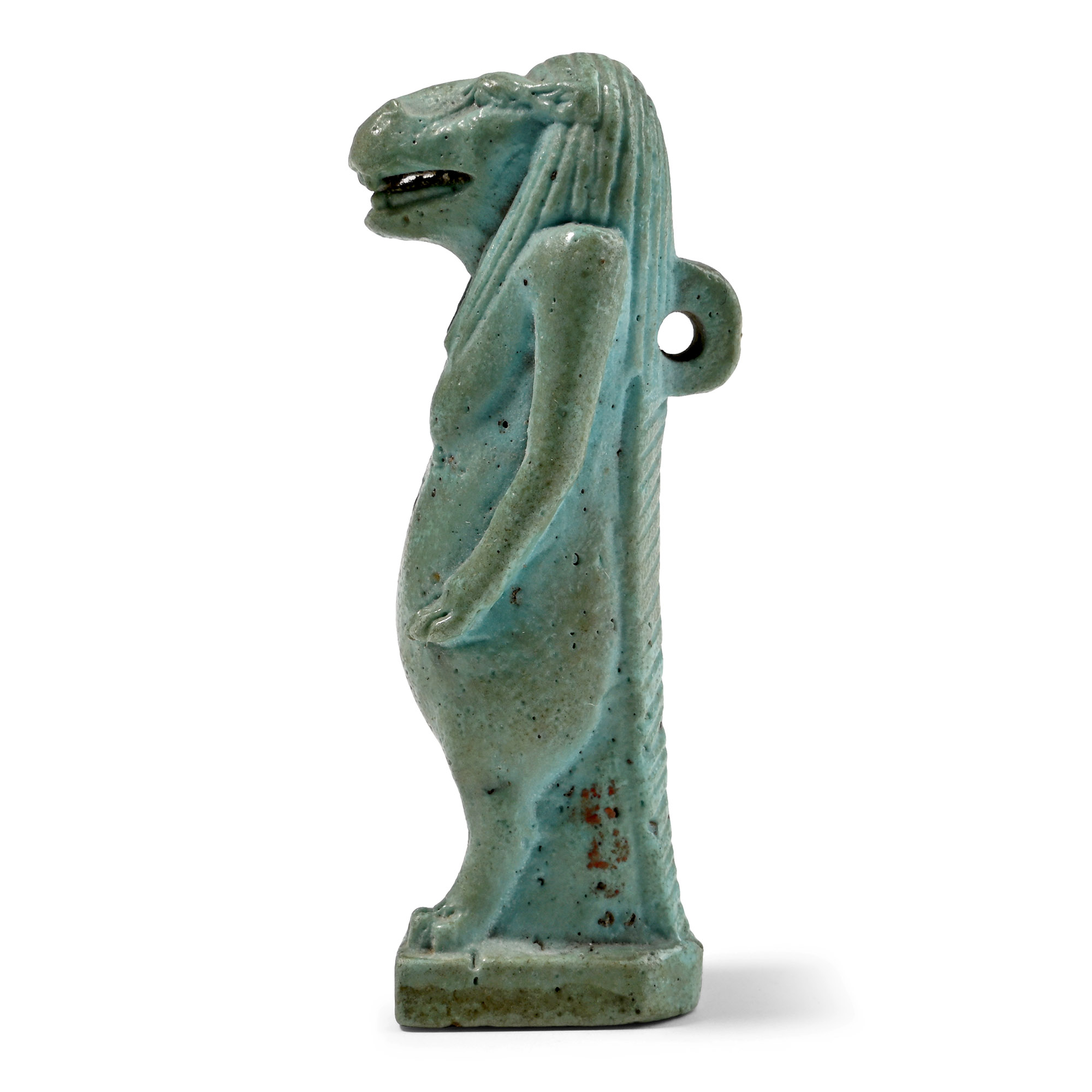
Egyptian Turquoise Blue Glazed Faience Amulet of Taweret
LATE PERIOD, CIRCA 664-332 B.C.
2 3/8 in. (16.58 grams, 61 mm).
Amuletic pendant with the deity's characteristic hybrid animal elements, dominated by its hippopotamus head, with a plain dorsal pillar with a loop. [No Reserve]
ProvenanceReceived as a gift from archaeologist Cyril Aldred, April 1970, when expecting their son Rupert.
From the private collection of Peter Clayton, FCILIP, Dip, Arch, FSA, FRNS, Hemel Hempstead, Hertfordshire, UK; formed since the late 1950s.
Accompanied by an old handwritten information card by Peter Clayton, collection no.124.
Cf. Petrie, W.M.F., Amulets. Illustrated by the Egyptian Collection in University College, London, 1914, pl. XL, no.236w, for a similarly large and detailed Taweret amulet.
FootnotesTaweret is an ancient Egyptian goddess associated with fertility, childbirth, motherhood, and protecting women during pregnancy and labour. She is depicted as a composite being with animal features and stands out as one of the most distinctive and striking deities in the Egyptian pantheon. Taweret’s name derives from the Egyptian word for "great" or "large" (tꜣwꜣrt), emphasising her formidable and protective nature.
Cyril Aldred (1914-1991) was a British Egyptologist and art historian who served at the Royal Scottish Museum, Edinburgh, from 1937 until his retirement in 1974. He published widely on Egyptian art, including Old Kingdom Art in Ancient Egypt (1949) and Akhenaten, Pharaoh of Egypt (1968), and became a leading authority on Amarna Period art, notably through his 1973 Brooklyn Museum exhibition catalogue, Akhenaten and Nefertiti.
TimeLine Auctions follows a vetting process to ensure the authenticity and legality of all items, reinforcing our commitment to integrity and responsible trading. Each antiquity, antique, and coin lot undergoes thorough examination by a vetting committee of at least ten external specialists, professional trade association members, scientists, and archaeologists: Our Vetting Process
AUCTIONS:
TimeLine is a leading auction house specialising in antiquities, ancient art, collectables, natural history, coins, medals, and books. Our auctions offer museums, collectors, historians, and enthusiasts the opportunity to acquire unique and historically significant pieces.
LOT 0027
Egyptian Turquoise Blue Glazed Faience Amulet of Taweret
Estimate £600 - 800€700 - 930 (for guidance only)$810 - 1,080 (for guidance only)
Opening Bid
£5 (EUR 6; USD 7) +BP*
-
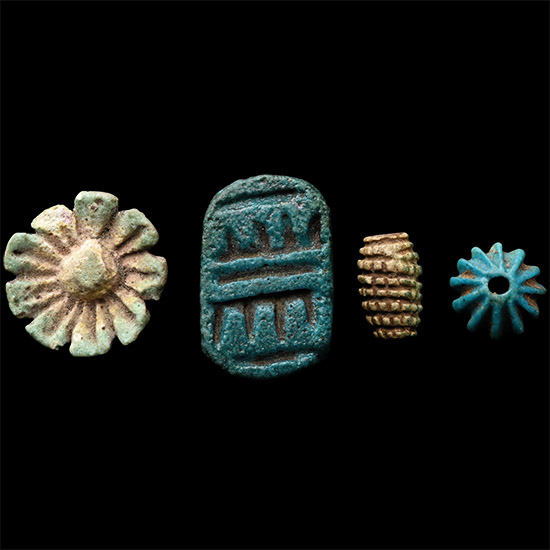
Egyptian Decorative Glazed Faience Amulet Collection
Late Period, 664-332 B.C.Estimate: £100 - 140 (‡+bp*)
Opening Bid: £45
Comprising: two rosette beads, one tubular bead and a stamp-seal amulet, all with a drill hole; one rosette bead slightly worn. 5.77 grams total, 11-24 mm
with Tajan Auction, 22 October 2004, no.172. -
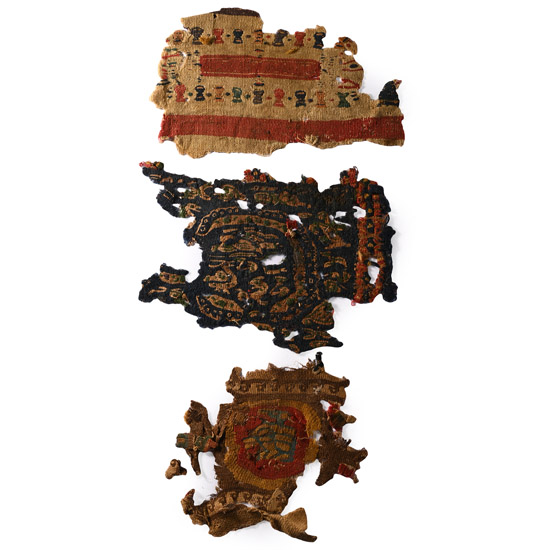
Egyptian Coptic Tunic and Tapestry Textile Fragments with Animals and Geometric Ornamets
Circa 7th-8th century A.D.Estimate: £80 - 100 (+bp*)
Opening Bid: £5
Comprising: a tapestry fragment (part of a pillow?) decorated with red bands and alternating figures of cups in green, red, blue, purple and yellow wool on linen; a large fragment of a segmentum from a tunic in coarse wool, consisting of a central medallion with a bird in red, yellow, light blue and yellow colour, with the borders decorate with meanders, tapestry, S-swift; a large portion of a tapestry with a central medallion ornamented with animals (lion, fish, birds) surrounded on the outside by dancing human figures and birds, one side circumscribed by a red stripe with vegetal ornaments, in red, blue-purple and yellow wool. 27 grams total, 15-22 cm
Acquired 1970s-1996. Property of a North American collector. London collection, 2016.
Large fragments of Coptic textiles display figures associated with the Dionysian retinue (lions, birds); however, they may date to the early period of the Islamic conquest, when tunic ornamentation began to take on an increasingly abstract and geometric character, preserving only stylised traces of the ancient Pagan symbology. -
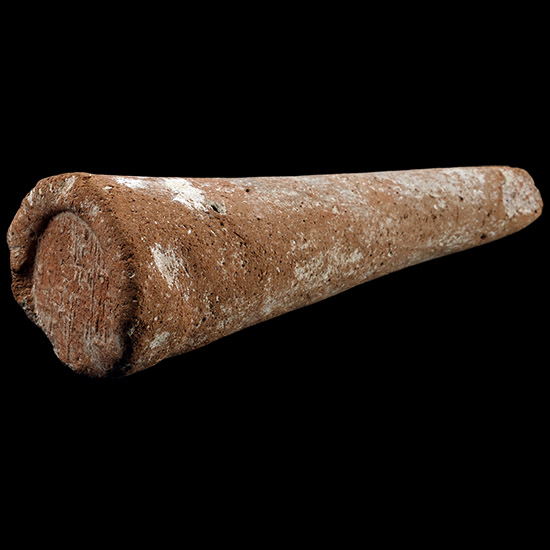
Egyptian Terracotta Funerary Cone of Qenamun
New Kingdom, mid-18th Dynasty, circa 1479-1425 B.C.Estimate: £400 - 600 (+bp*)
Opening Bid: £5
Complete cone, preserving its slender tapering form, with the flat circular end faintly impressed with four horizontal lines of abraded hieroglyphic text reading: 'An offering which the king gives to Osiris, lord of eternity, may he give a voice offering of all good purified things, for the ka of the scribe of documents of the god's wife, Qenamun, true of voice'. 450 grams, 21.4 cm
Acquired from Abdoul Rassoul on the West Bank at Luxor, 1974-1980 when a guest lecturer. From the private collection of Peter Clayton, FCILIP, Dip, Arch, FSA, FRNS, Hemel Hempstead, Hertfordshire, UK; formed since the late 1950s.
Qenamun's title indicates that he was responsible for the legal correspondence, decrees, and official documentation issued by or sent to the institution of the royal priestess of Amun. Although abraded, this cone is clearer in certain areas of the inscription than the one recorded by Davies and Macadam in their 1957 catalogue of funerary cones. Qenamun's tomb in the Theban necropolis has not yet been identified.
