
Loading, please wait...
LOT 0075
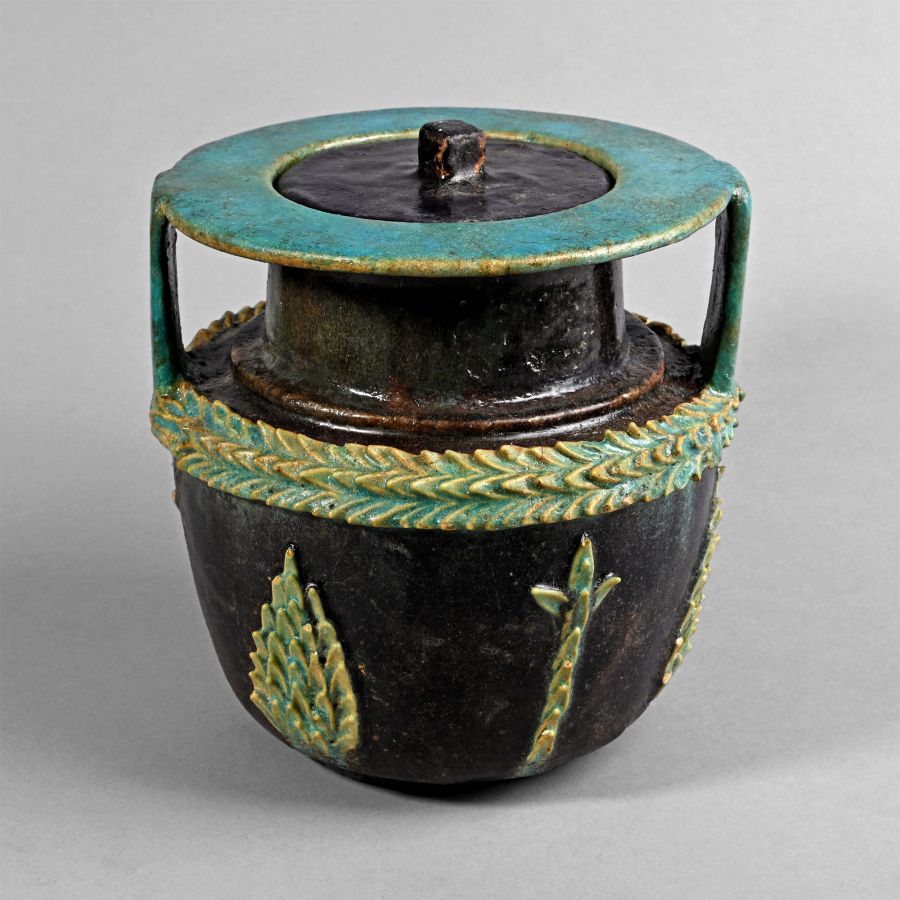
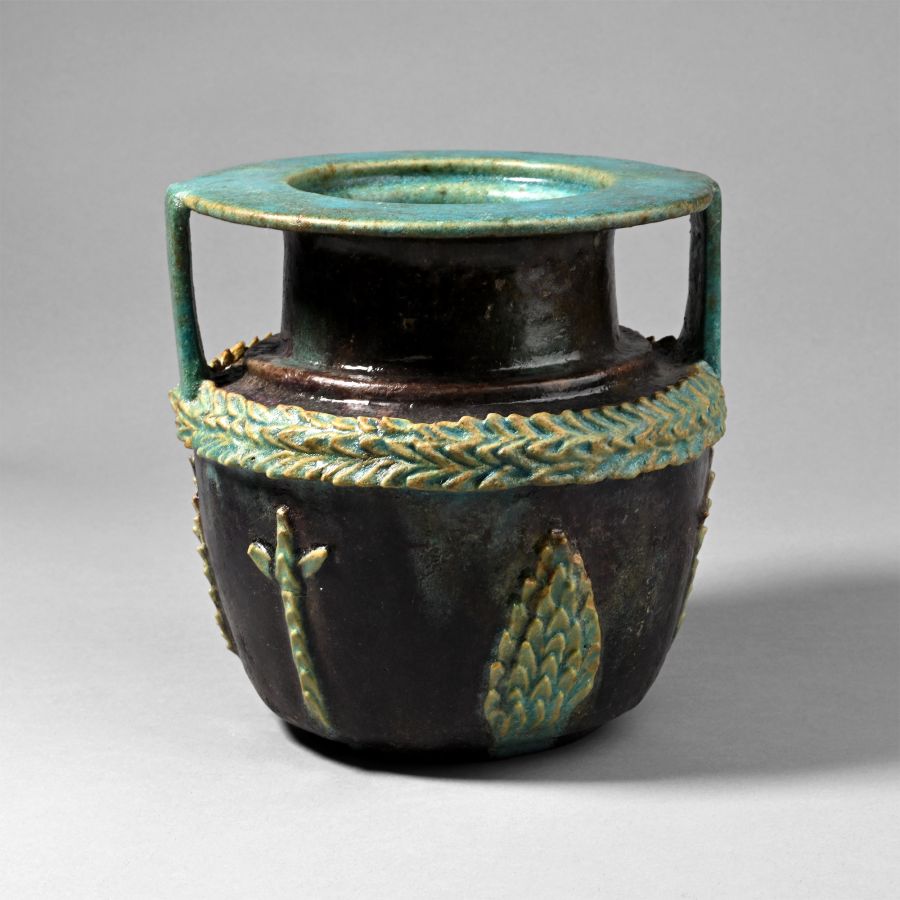
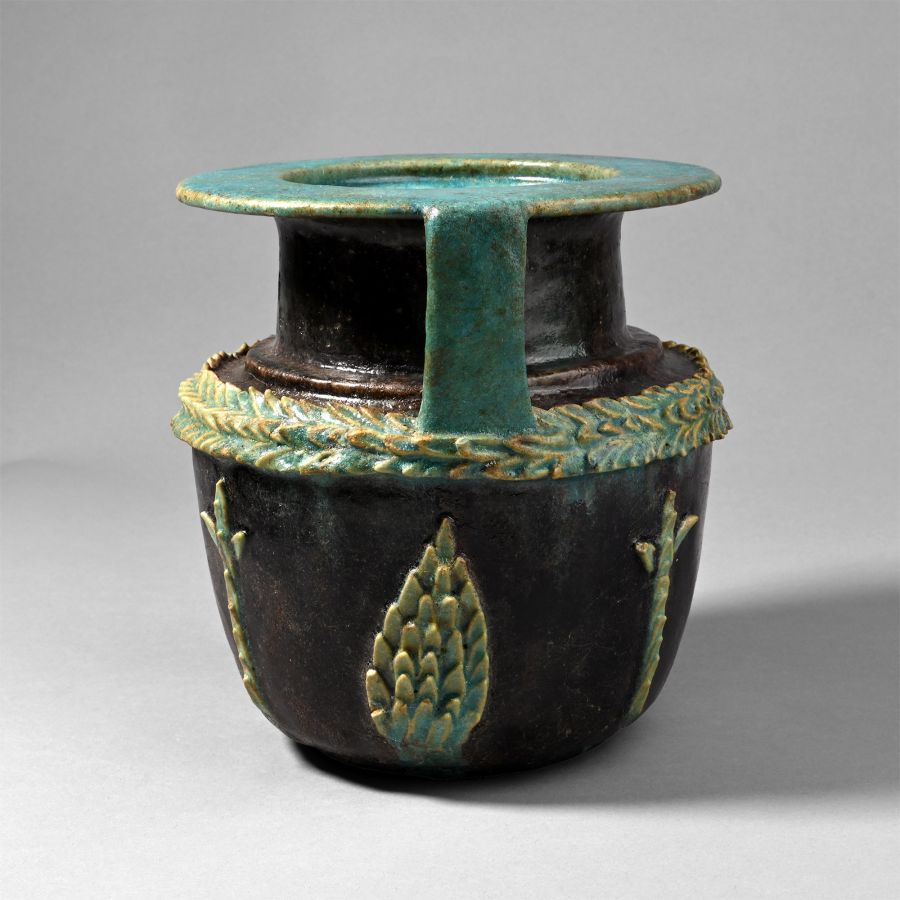
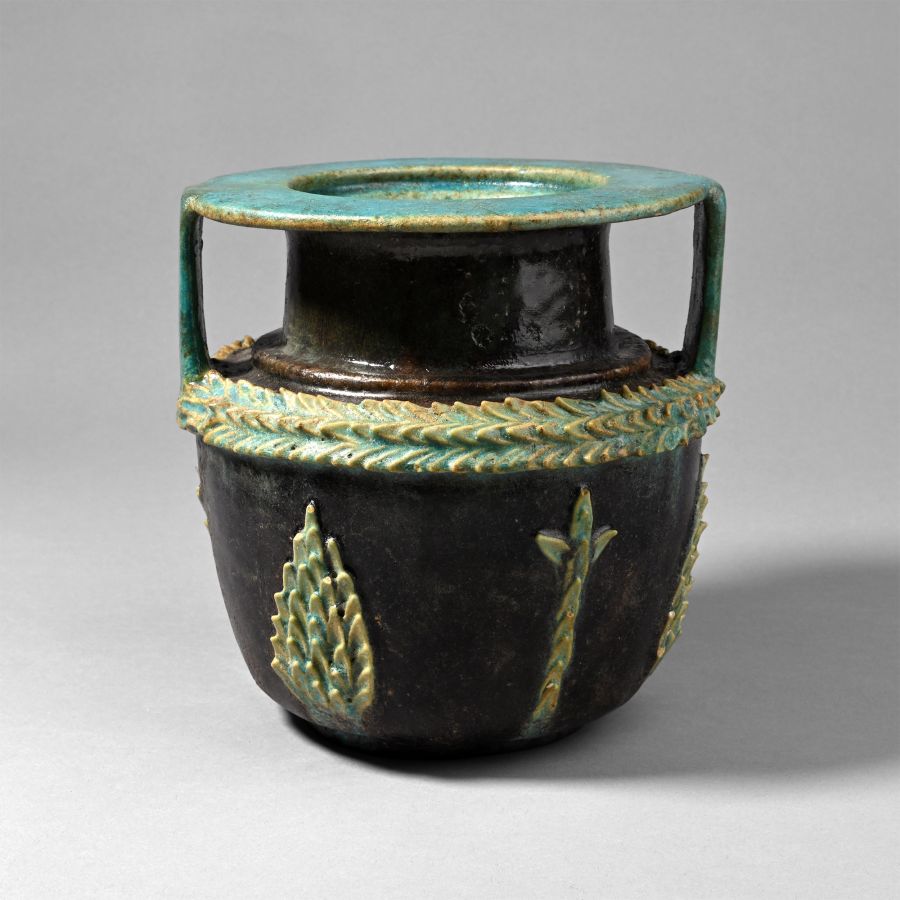
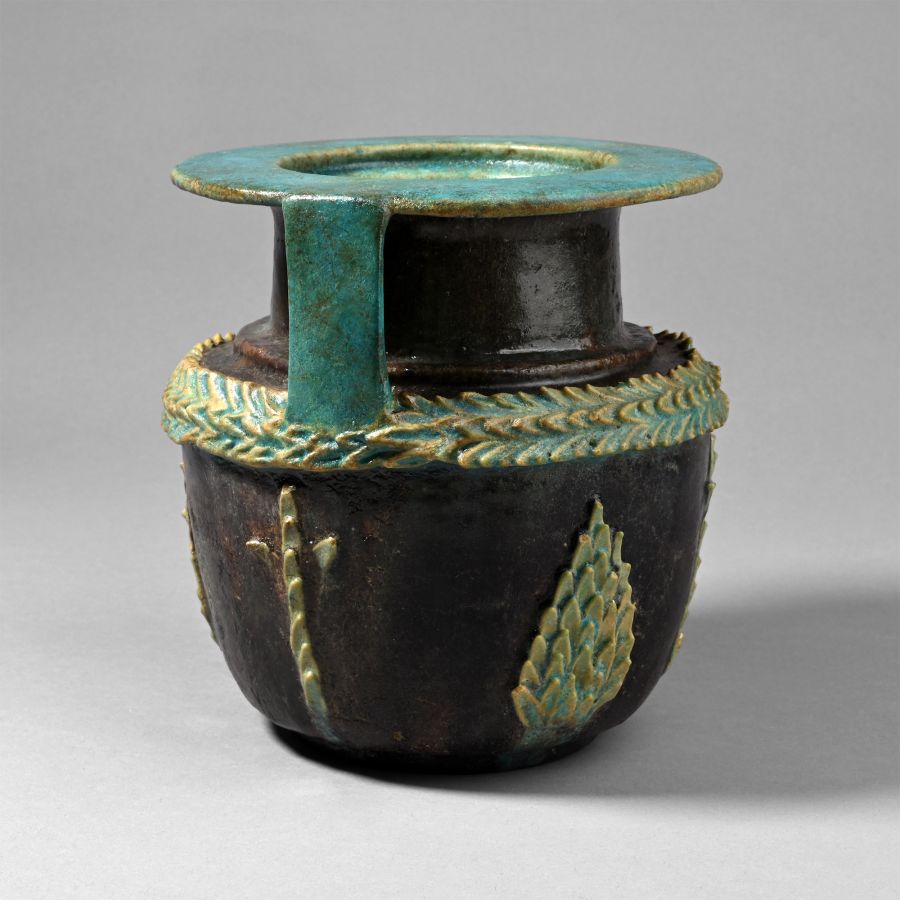
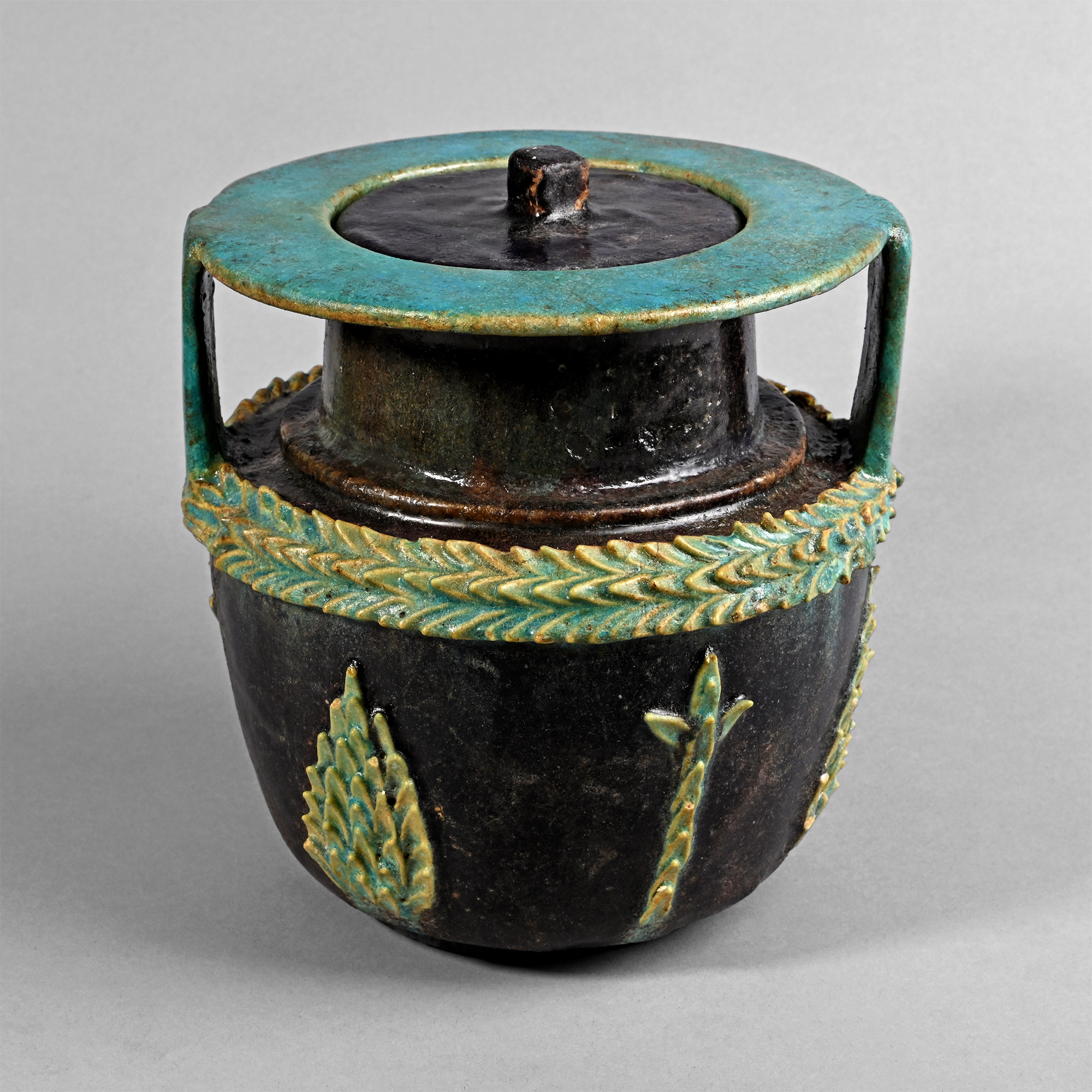
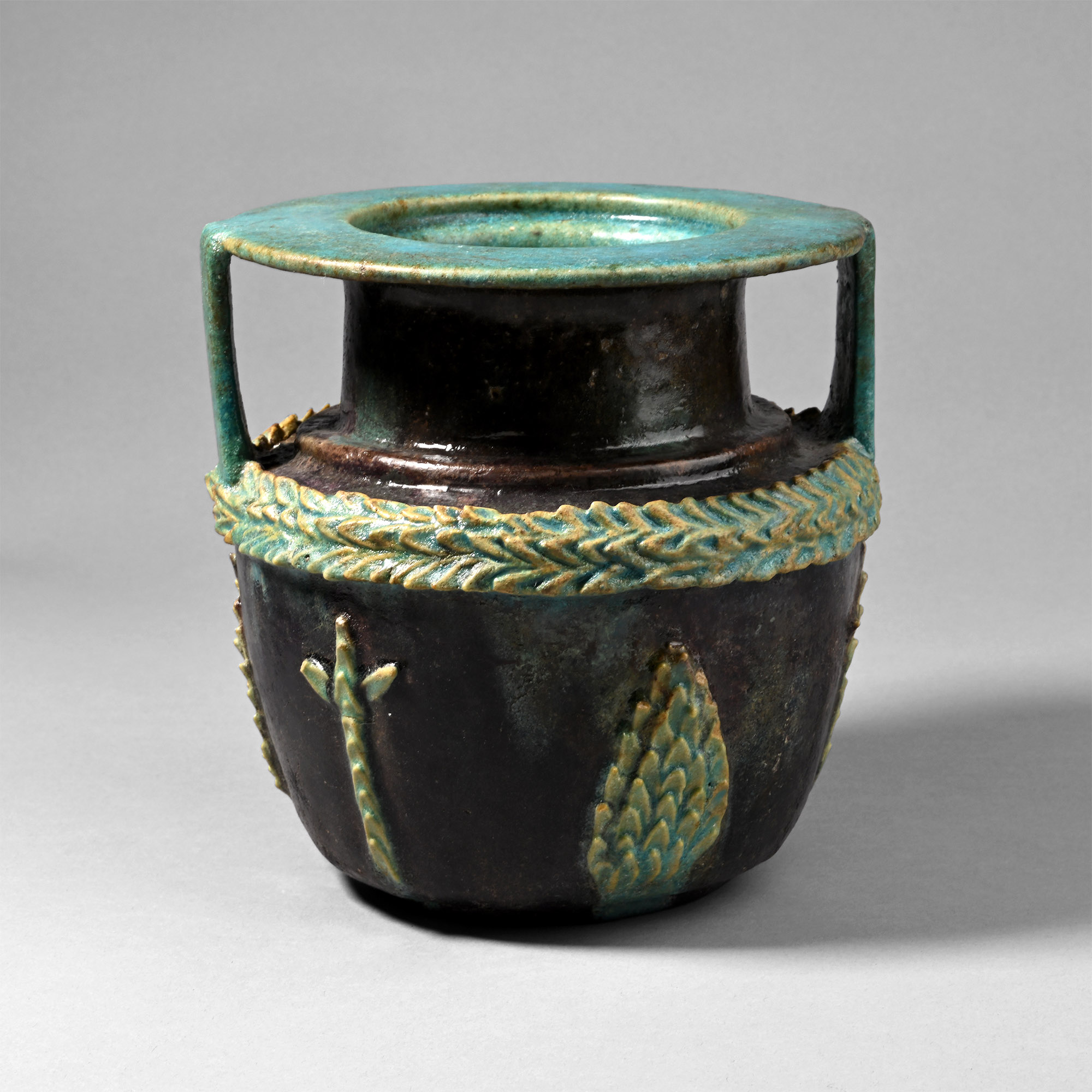
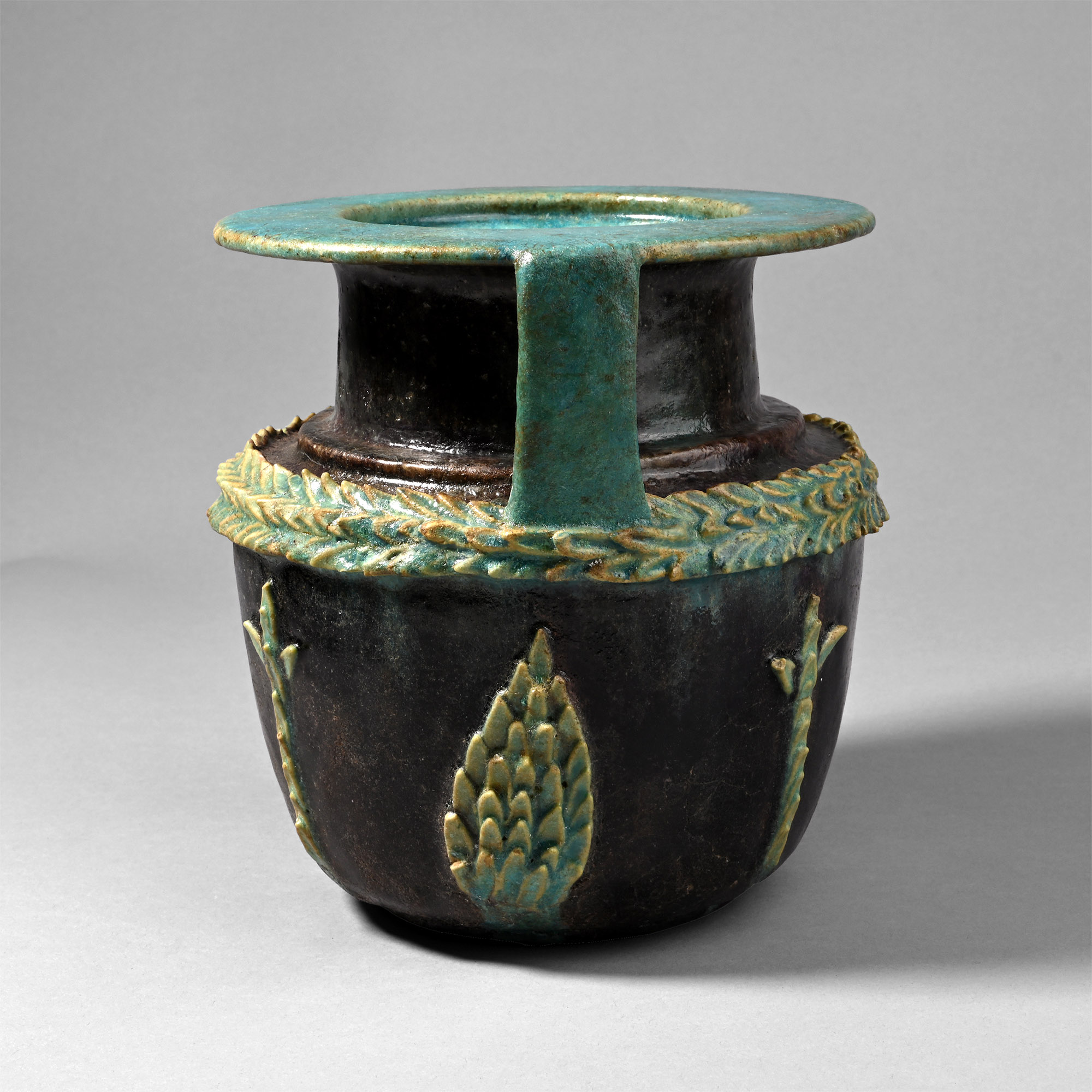
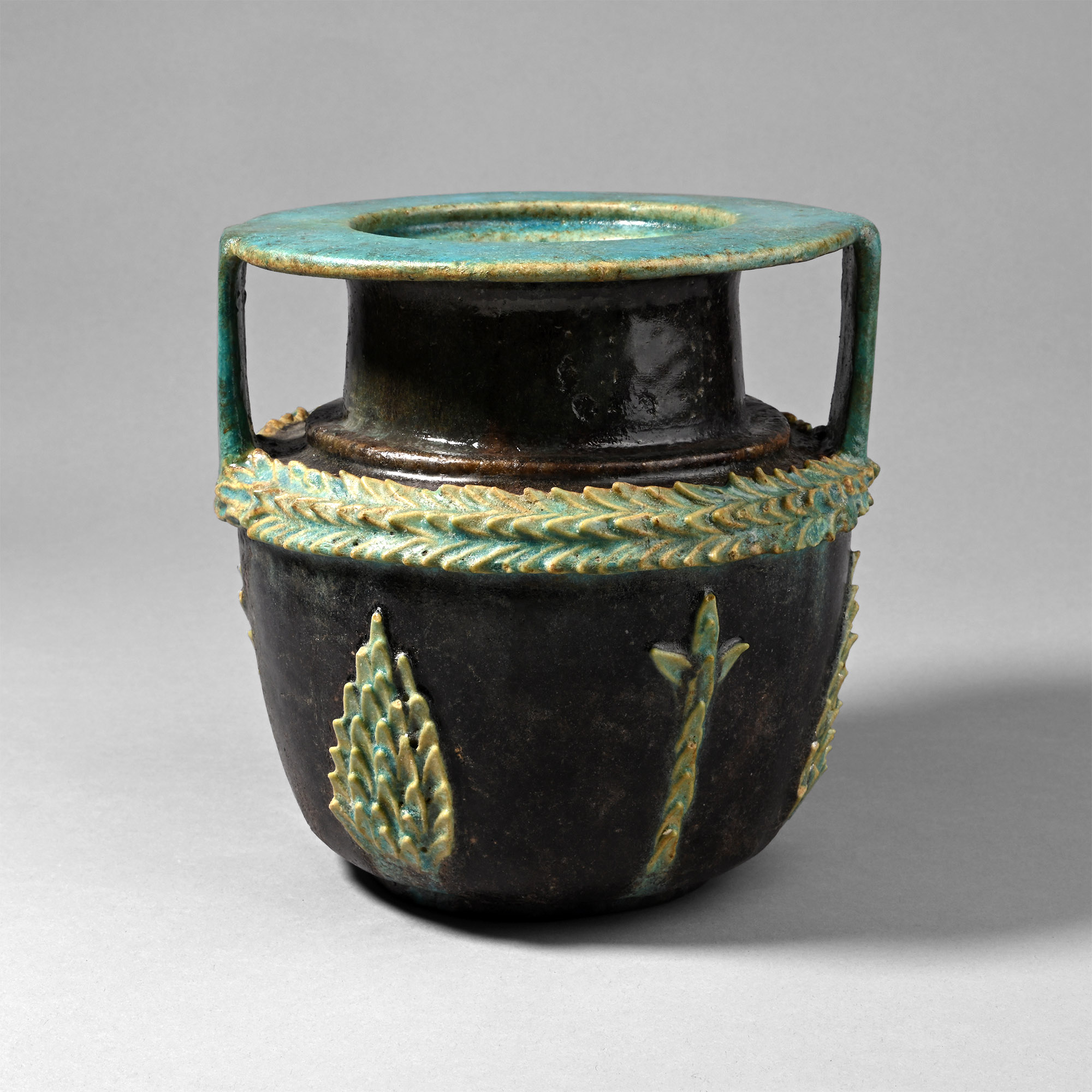
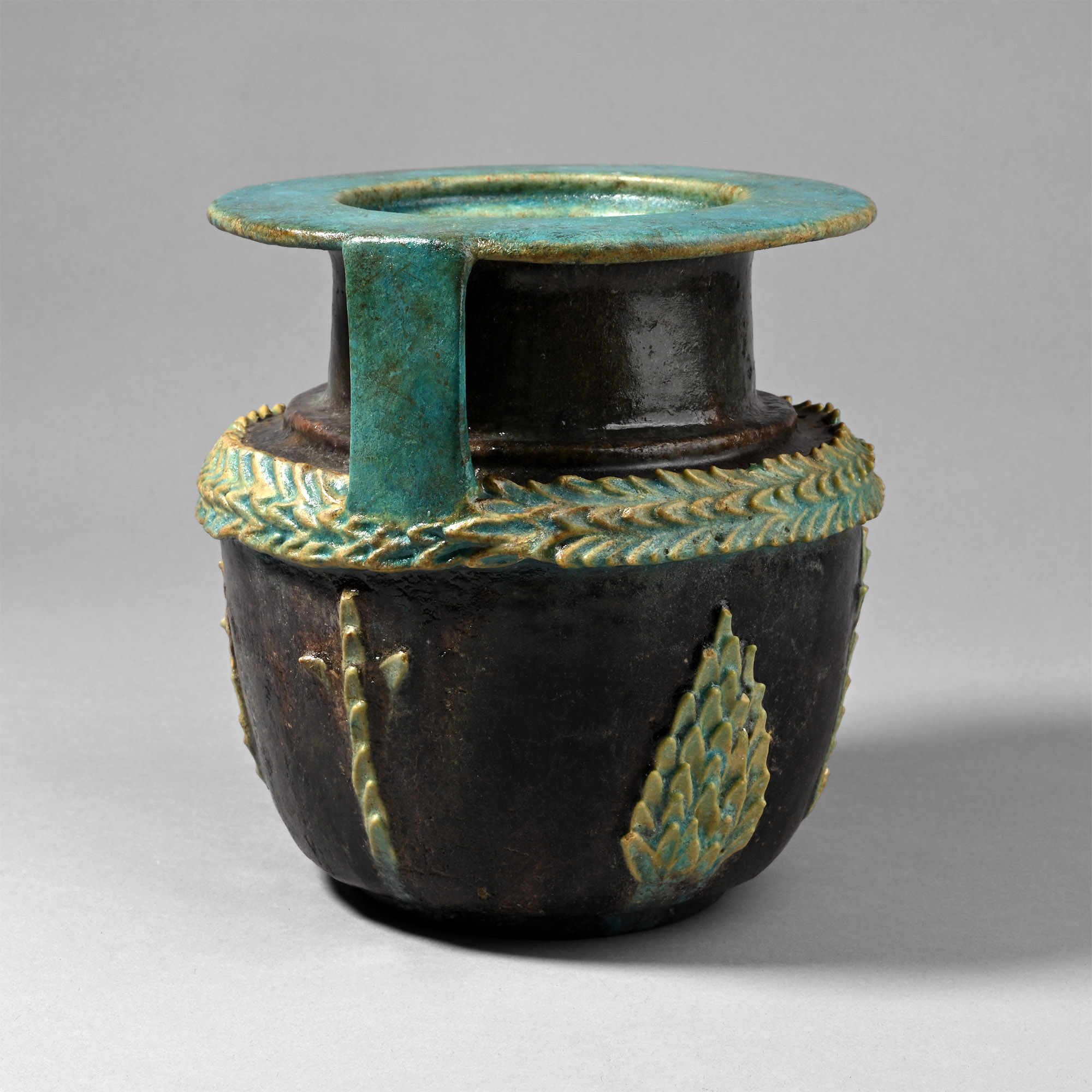
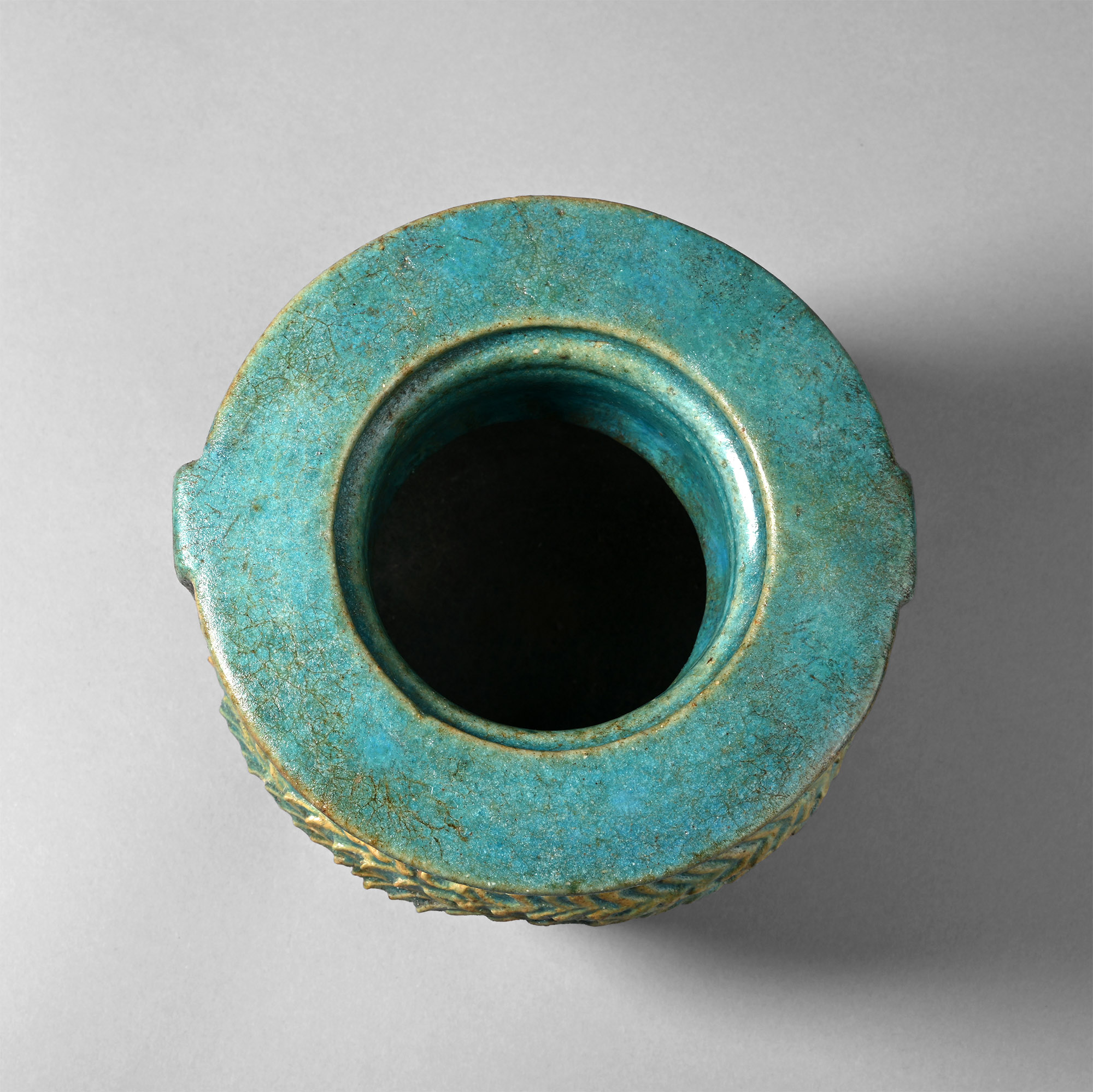
Egyptian Turquoise and Cobalt Blue Faience Amphora
ROMAN PERIOD, CIRCA 2ND CENTURY A.D.
7 in. (1.48 kg, 17.8 cm high).
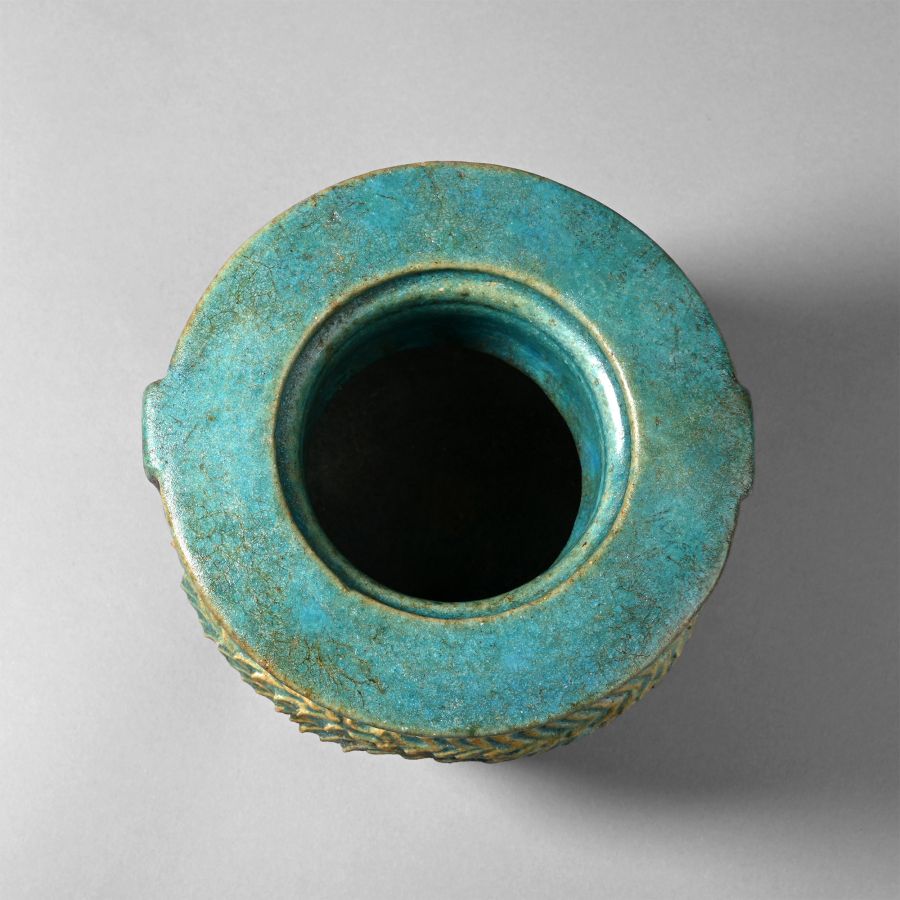
Barrel-shaped in profile, with a stepped shoulder, wide neck, and broad, flared flange rim at the mouth, supported by two lateral strap handles; applied wreath decoration to the outer edge of the shoulder and vertical fronds to the lower body; restored.
ProvenanceStift Neuberg (Neuberg Abbey) collection, Heidelberg, Germany, by 1893 and into the 20th century.
Anonymous sale; Münzen und Medaillen, Auktion 41, 1972, no.151.
Fiorella Cottier-Angeli collection, Geneva, 1981-2007.
Herbert A. Cahn, acquired from the above.
With Galerie Günter Puhze, Freiburg, 2007.
Private collection, Midwest USA, acquired in 2007.
This lot has been checked against the Interpol Database of stolen works of art and is accompanied by search certificate no.13477-262436.
Stift Neuberg was privately owned from 1798 until 1926. By 1893, a collection of antiquities had been assembled there, and its Greek and Roman holdings were published. It is believed that the amphora was acquired as part of this collection by Friedrich Alexander von Bernus (1838–1908), who inherited Stift Neuberg from his relative Johann Friedrich Schlosser (1780-1851), a nephew of Goethe. In 1926, the abbey was sold to the Benedictines and has remained a religious establishment ever since.
CONDITIONTimeLine Auctions follows a vetting process to ensure the authenticity and legality of all items, reinforcing our commitment to integrity and responsible trading. Each antiquity, antique, and coin lot undergoes thorough examination by a vetting committee of at least ten external specialists, professional trade association members, scientists, and archaeologists: Our Vetting Process
AUCTIONS:
TimeLine is a leading auction house specialising in antiquities, ancient art, collectables, natural history, coins, medals, and books. Our auctions offer museums, collectors, historians, and enthusiasts the opportunity to acquire unique and historically significant pieces.
LOT 0075
Egyptian Turquoise and Cobalt Blue Faience Amphora
Estimate £8,000 - 10,000€9,280 - 11,600 (for guidance only)$10,800 - 13,500 (for guidance only)
Opening Bid
£4,000 (EUR 4,640; USD 5,400) +BP*
-
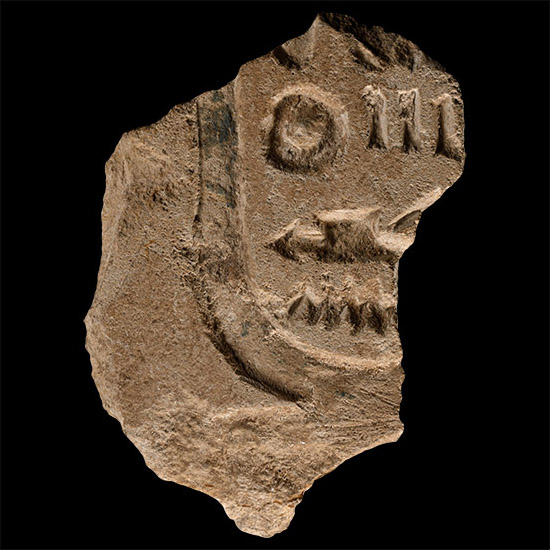
Egyptian Limestone Fragment with Cartouche of Pharaoh Akhenaten
New Kingdom, 18th Dynasty, Amarna Period, 1353-1332 B.C.Estimate: £800 - 1,000 (+bp*)
Bids: 3 | Current Bid: £65
Irregular fragment with a partial cartouche in sunk relief, containing the final part of Akhenaten's throne name, Nefer-kheperu-Re (meaning 'Beautiful are the Manifestations of Re'), with traces of blue and white pigment. 157 grams, 10.5 cm
Acquired in March 1977. From the private collection of Peter Clayton, FCILIP, Dip, Arch, FSA, FRNS, Hemel Hempstead, Hertfordshire, UK; formed since the late 1950s. Accompanied by an old handwritten information card by Peter Clayton, collection no.128.
Due to the destruction of Akhenaten's royal city, Akhetaten, most monuments and statuary were recovered in fragmentary condition (for example, Peet, T.E., Woolley, C.L., The City of Akhenaten, Part I, Excavations of 1921 and 1922 at el-'Amarneh, London, 1923, pls. XXXII-XXXIV, for several fragmentary architectural elements bearing Akhenaten's cartouches). -
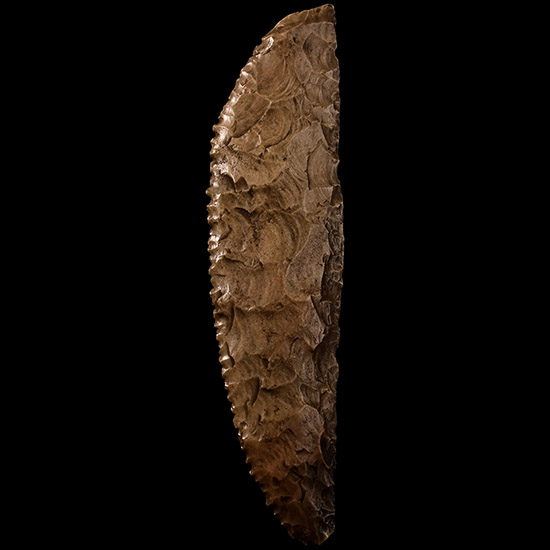
Large Egyptian Stone Age Knapped Curved Saw Blade from Thebes
Neolithic Period, 11,000-5,200 B.P.Estimate: £400 - 600 (+bp*)
Bids: 13 | Current Bid: £130
Large ripple-flaked blade with a curving, serrated cutting edge. 80.5 grams, 17 cm
Found Thebes. From the collection of A.D. Passmore (1879-1958); his collection of flints for the area of Stonehenge was donated to the Ashmolean Museum in the 1950s. From the private collection of Peter Clayton, FCILIP, Dip, Arch, FSA, FRNS, Hemel Hempstead, Hertfordshire, UK; formed since the late 1950s. Accompanied by a copy of an old handwritten information card by Peter Clayton. -
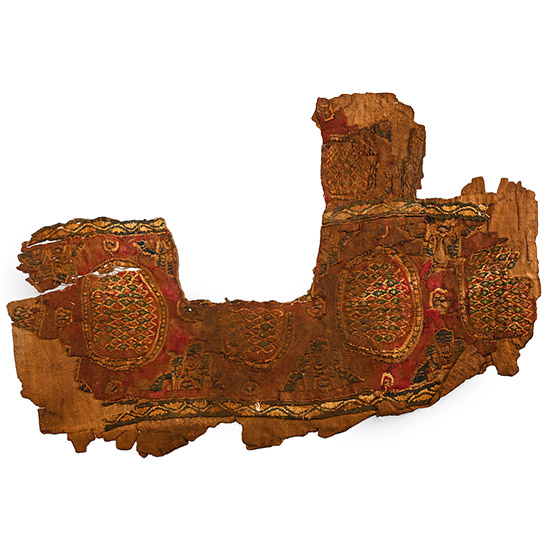
Large Egyptian Coptic Textile Fragment of a Tunic Collar Embroidered with Geometric Patterns
Circa 5th century A.D.Estimate: £80 - 100 (+bp*)
Bids: 3 | Current Bid: £20
The complete collar section (maniakion) ornamented with decorative circular bands, filled with geometric patterns of floral elements, bordered with stripes of interlaced vegetal motifs in yellow-orange, green, red, yellow and purple wool warp on linen; a part of the right clavus still preserved, decorated in the same manner. 142 grams total including paper folder, 49 cm
Acquired 1970s-1996. Property of a North American collector. London collection, 2016.
In Late Roman Egypt, this type of tunic, with wide decorative collars around the neck, was worn by rich aristocratic women and was part of the decoration of rich garments like the tunica talaris.
