
Loading, please wait...
LOT 0624
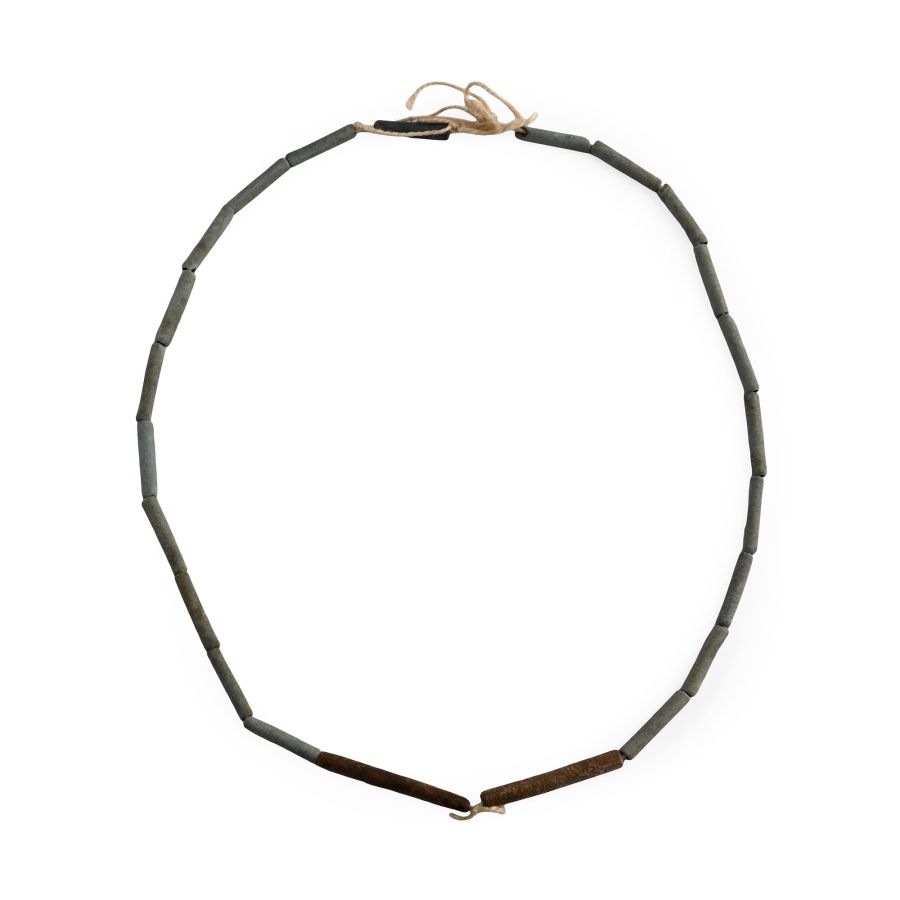
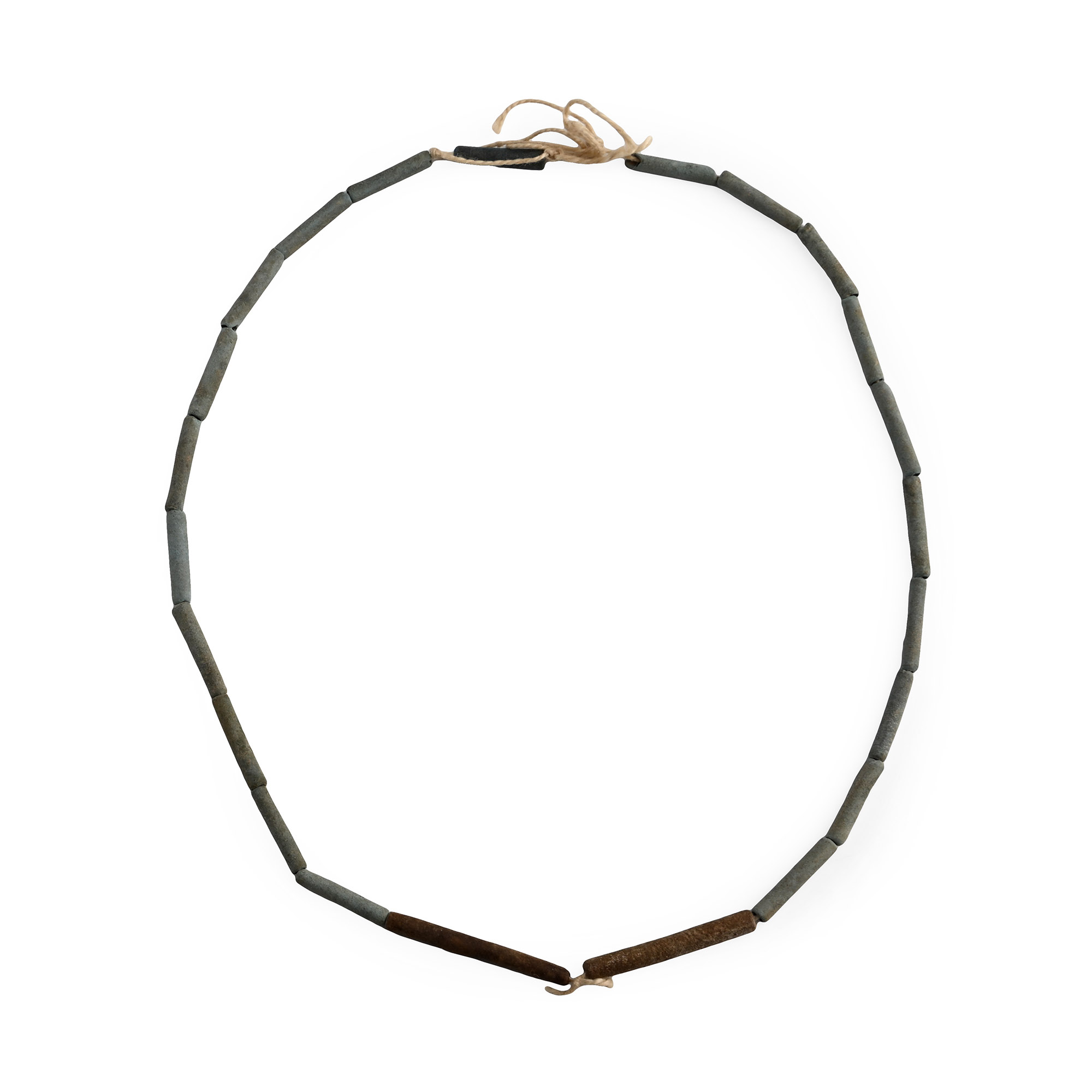
Egyptian Tubular Faience Mummy Bead String
LATE PERIOD-PTOLEMAIC PERIOD, CIRCA 664-30 B.C.
14 1/8 in. (2.63 grams, 36 cm).
Comprising mostly green-glazed tubular beads, restrung. [No Reserve]
ProvenanceExcavated from Egypt in 1914.
From the private collection of Mr David Sams and his wife Elizabeth Kate Sams, gentry and amateur archaeologists who travelled to Egypt in 1914 with their daughter Ethel. Mr Sams and his wife led digging expeditions from which these items come from the family estate of Mr and Mrs Sams, by direct descent to their granddaughter.
TimeLine Auctions follows a vetting process to ensure the authenticity and legality of all items, reinforcing our commitment to integrity and responsible trading. Each antiquity, antique, and coin lot undergoes thorough examination by a vetting committee of at least ten external specialists, professional trade association members, scientists, and archaeologists: Our Vetting Process
AUCTIONS:
TimeLine is a leading auction house specialising in antiquities, ancient art, collectables, natural history, coins, medals, and books. Our auctions offer museums, collectors, historians, and enthusiasts the opportunity to acquire unique and historically significant pieces.
LOT 0624
Egyptian Tubular Faience Mummy Bead String
Estimate £30 - 40€35 - 46 (for guidance only)$41 - 54 (for guidance only)
Opening Bid
£5 (EUR 6; USD 7) +BP*
-
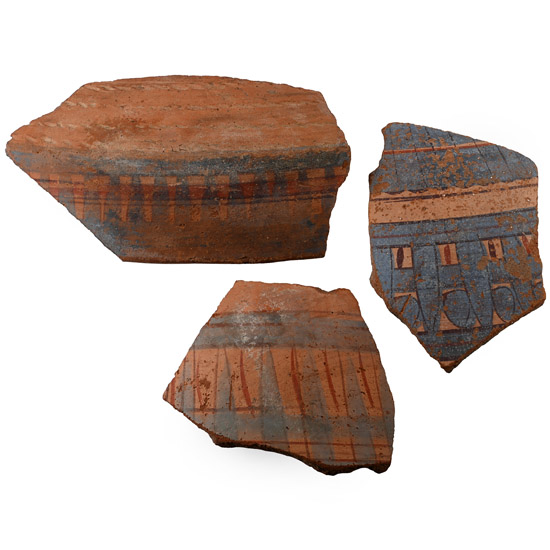
Large Egyptian Painted Bowl Fragments
New Kingdom, 18th Dynasty, Amarna Period, 1379-1362 B.C.Estimate: £80 - 100 (+bp*)
Bids: 1 | Current Bid: £5
Three fragments from three highly decorated blue-painted vessels. 545 grams total, 11.5-18 cm
Acquired in February 1978. From the private collection of Peter Clayton, FCILIP, Dip, Arch, FSA, FRNS, Hemel Hempstead, Hertfordshire, UK; formed since the late 1950s. Accompanied by an old handwritten information card by Peter Clayton, collection no.140.
The distinctive blue colour on these pottery fragments came from a cobalt-and-aluminium slip that reacted during firing. -
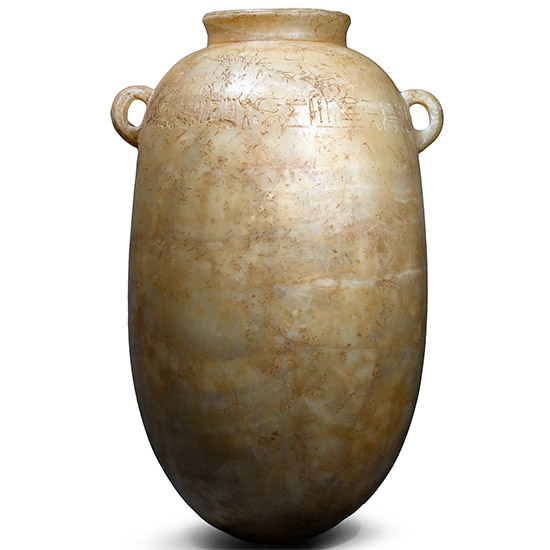
Very Large Egypto-Phoenician Alabaster Alabastron with Hieroglyphic Inscription
Third Intermediate Period-Late Period, circa 1077-525 B.C.Estimate: £12,000 - 17,000 (‡+bp*)
Opening Bid: £6,000
Crafted from banded calcite or alabaster, the vessel is characterised by a barrel-shaped profile, broad shoulders, a short, flared neck, a rounded base, and two lateral loop handles near the shoulders, with a localised row of incised hieroglyphs around the upper shoulder, naming a priest of Amun, Nespakhashuty, and a partially preserved filiation that may be restored as Djed[djehuty-]iu-[ef-]ankh. 420 grams, 37 cm
Formerly in a private collection, Beirut, Lebanon, 1990s. Swiss private collection, acquired from Mr H., Geneva, 2010. Accompanied by a copy of an Art Loss Register certificate, no.S00059830 This lot has been checked against the Interpol Database of stolen works of art and is accompanied by search certificate number no.13221-249178.
Nespakhashuty and Djed-djehuty-iu-ef-ankh are names associated with a powerful family dynasty from the late New Kingdom to the end of the Third Intermediate Period. The vessel’s style supports a Third Intermediate Period dating, as it compares with a similarly large example inscribed with the cartouches of the 22nd Dynasty pharaoh Osorkon I (Montet, P., Les constructions et le tombeau d’Osorkon II à Tanis, Paris, 1947, p. 82, pl. XLVI). In the Phoenician necropolises of Andalusia, the deceased's ashes were enclosed in luxurious alabaster urns of Egyptian manufacture. At Almuñécar, for example, some urns in the Phoenician necropolis preserved inscriptions and emblems of various Egyptian pharaohs, who ruled the Nile region between the 16th and 8th centuries B.C. Alabaster vessels of this type, originally containing fine wines, have been discovered, albeit in smaller numbers, in the royal palaces of Assur and Samaria in the East, as part of war booty or gifts exchanged between royal houses. -
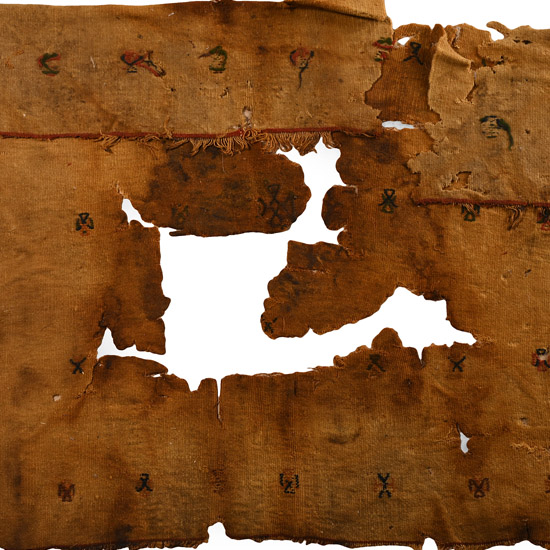
Large Egyptian Coptic Wall Tapestry Textile Fragment with Geometric Ornaments
Circa 7th century A.D.Estimate: £150 - 200 (+bp*)
Bids: 1 | Current Bid: £5
Fragment from a tapestry or a cloak in light fabric, S-twist tapestry, embroidered with red, green, yellow, and blue geometric ornaments in wool and linen. 236 grams total including paper folder, 55 cm wide
Acquired 1970s-1996. Property of a North American collector. London collection, 2016.
Most of the linen or wool garments found by A. Gayet in the Antinoe necropolis were woven in a specific pattern, in a single piece, on a horizontal warp. Another relatively common pattern for linen garments consisted of assembling three pieces woven on a single warp and forming the upper part of the garment, with the collar and sleeves.
