
Loading, please wait...
LOT 0454
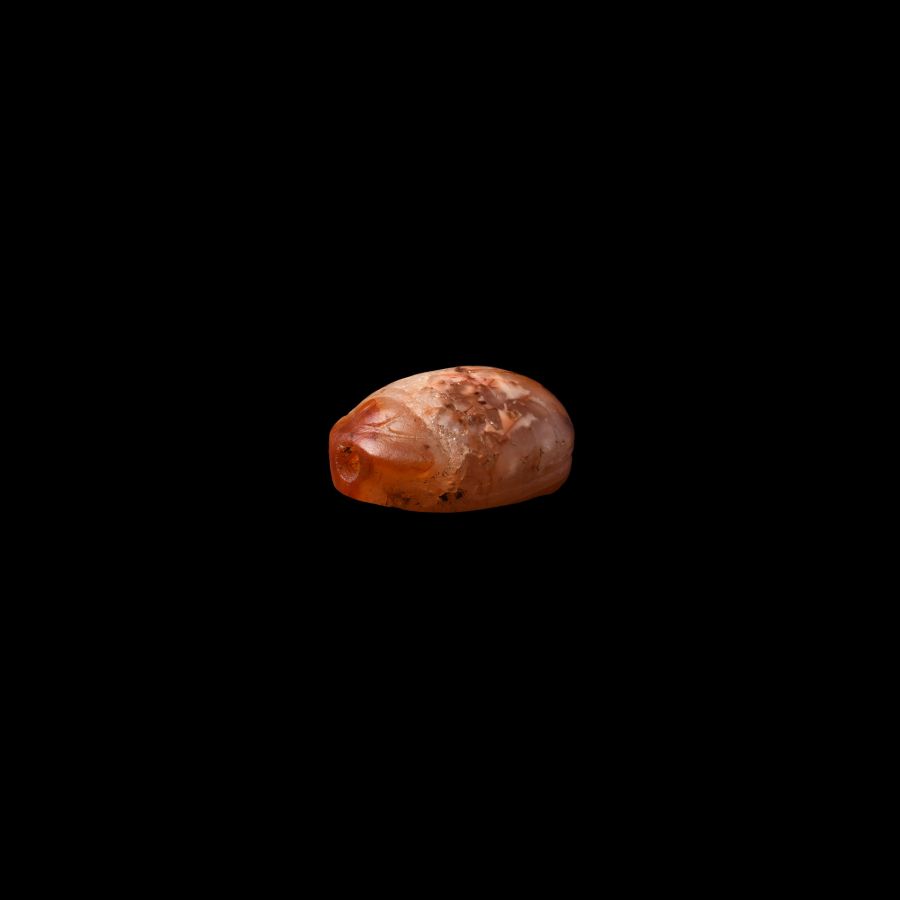
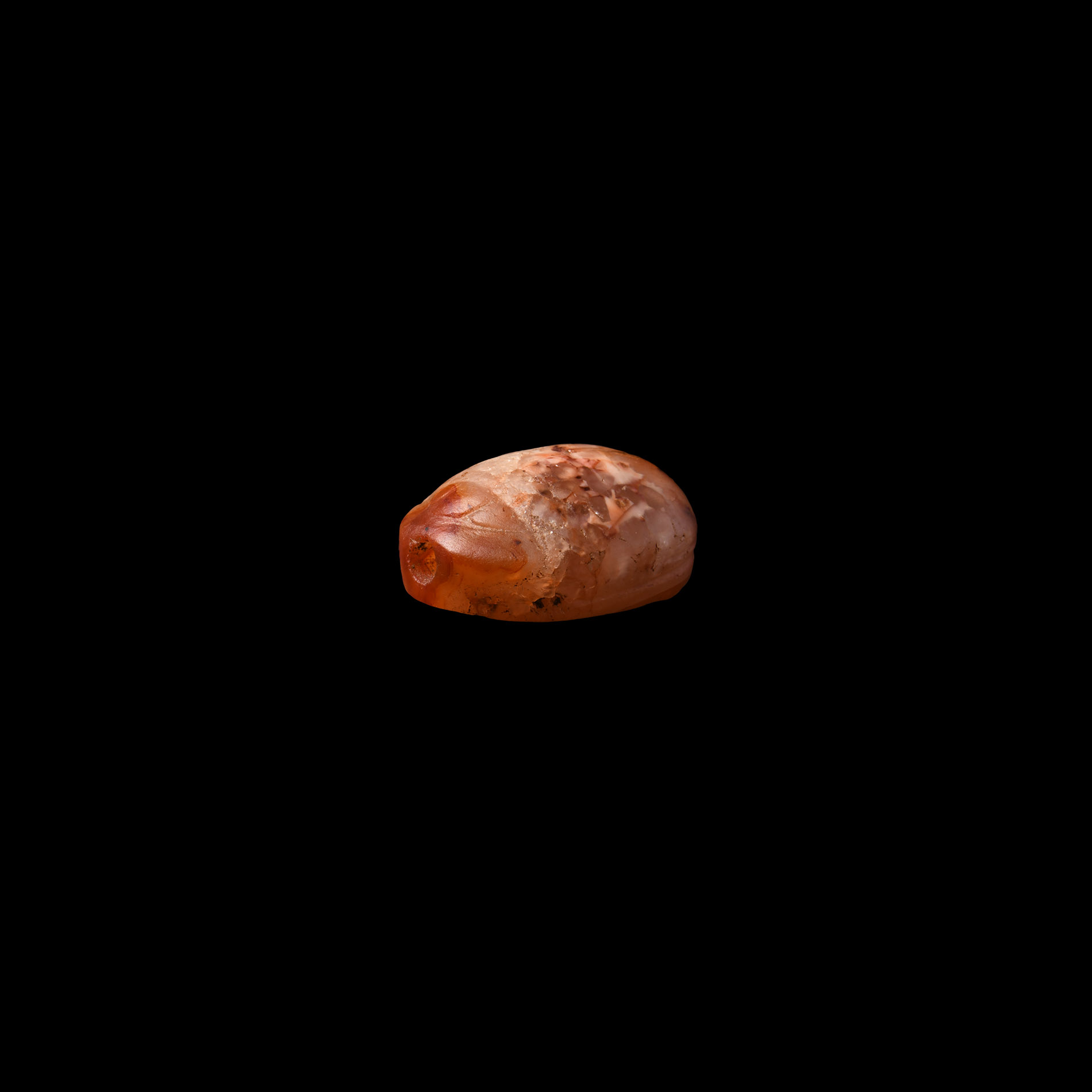
Egyptian Translucent Carnelian Scarab
MIDDLE KINGDOM–SECOND INTERMEDIATE PERIOD, 2133-1550 B.C.
7/8 in. (5.98 grams, 22 mm).
A translucent carnelian scarab with detailing to the head, body and legs; drilled for suspension.
ProvenanceAcquired 1979-1999.
London collection of the late Mr S.M., thence by descent.
TimeLine Auctions follows a vetting process to ensure the authenticity and legality of all items, reinforcing our commitment to integrity and responsible trading. Each antiquity, antique, and coin lot undergoes thorough examination by a vetting committee of at least ten external specialists, professional trade association members, scientists, and archaeologists: Our Vetting Process
AUCTIONS:
TimeLine is a leading auction house specialising in antiquities, ancient art, collectables, natural history, coins, medals, and books. Our auctions offer museums, collectors, historians, and enthusiasts the opportunity to acquire unique and historically significant pieces.
-
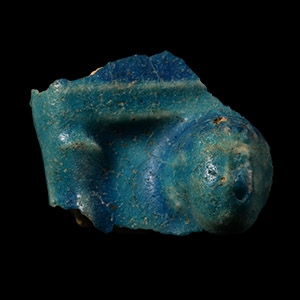
Egyptian Blue Faience Plaque Fragment
Ptolemaic Period, 332-30 B.C.Sold for (Inc. bp): £33
A fragment of a glazed composition frieze with corner-angle frame and head wearing a tripartite wig, possibly from a divine triad group; set within a kiosk with supporting papyrus columns. 4.68 grams, 31 mm
From a UK private collection, 1975-1978. -
.jpg)
Egyptian Translucent Carnelian Scarab
Middle Kingdom–Second Intermediate Period, 2133-1550 B.C.Sold for (Inc. bp): £483
A translucent carnelian scarab with detailing to the head, body and legs; drilled for suspension. 5.98 grams, 22 mm
Fine condition.
Acquired 1979-1999. London collection of the late Mr S.M., thence by descent. -
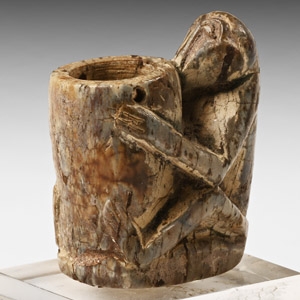
Egyptian Seated Monkey Kohl Pot
New Kingdom, 1225-1070 B.C.Estimate: £1,800 - 2,400 (‡+bp*)
Opening Bid: £900
A carved steatite monkey holding a kohl pot of roughly cylindrical form; set on an integral oval base; rim of kohl perforated twice; mounted on a custom-made display base. 21.2 grams total, 37 mm high including stand
with François de Riqules, Archéologie, 11-12 November 2001, lot 198.
