
Loading, please wait...
LOT 0003
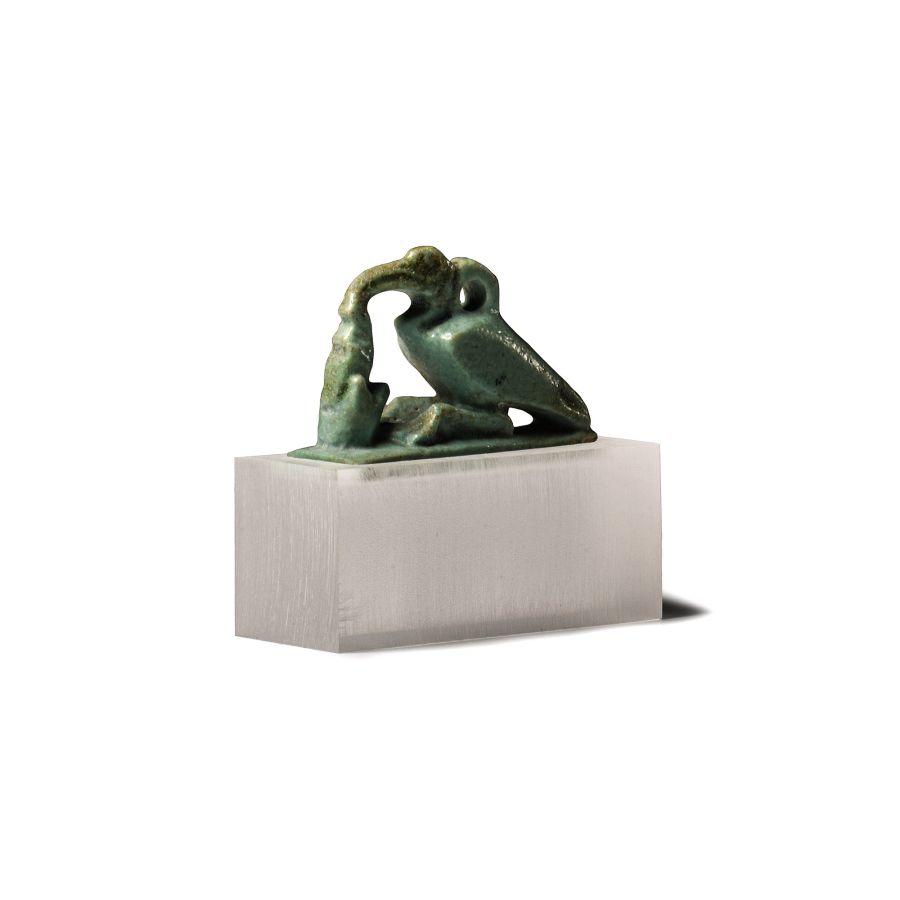
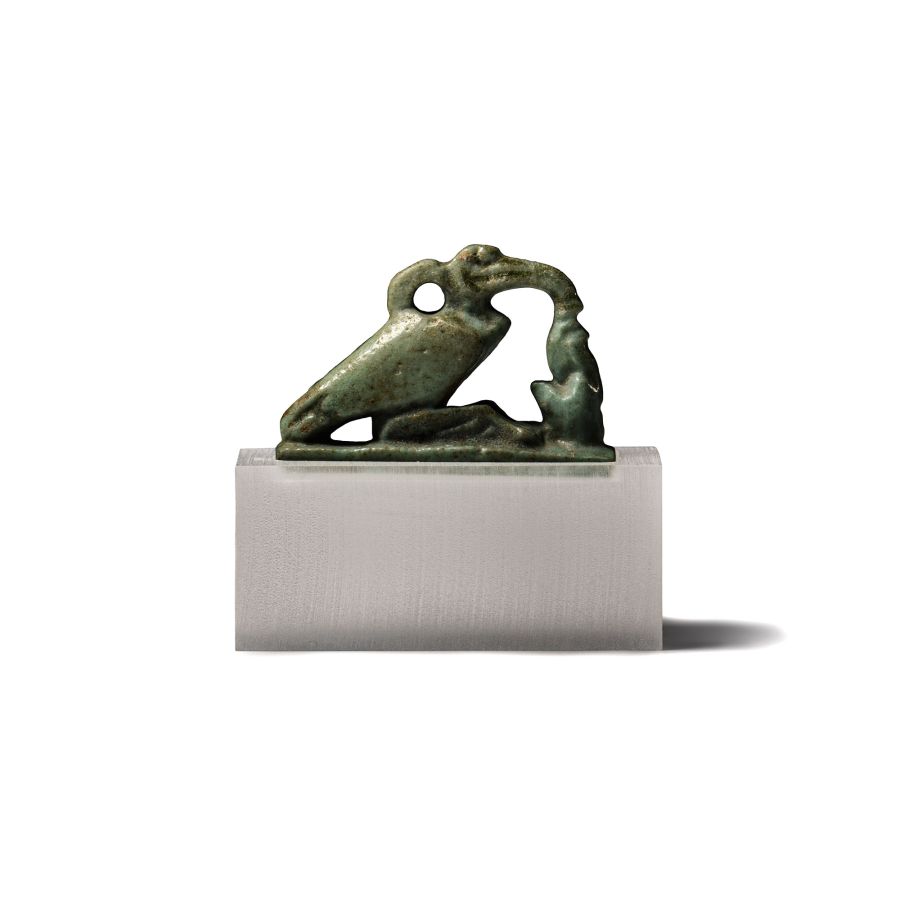
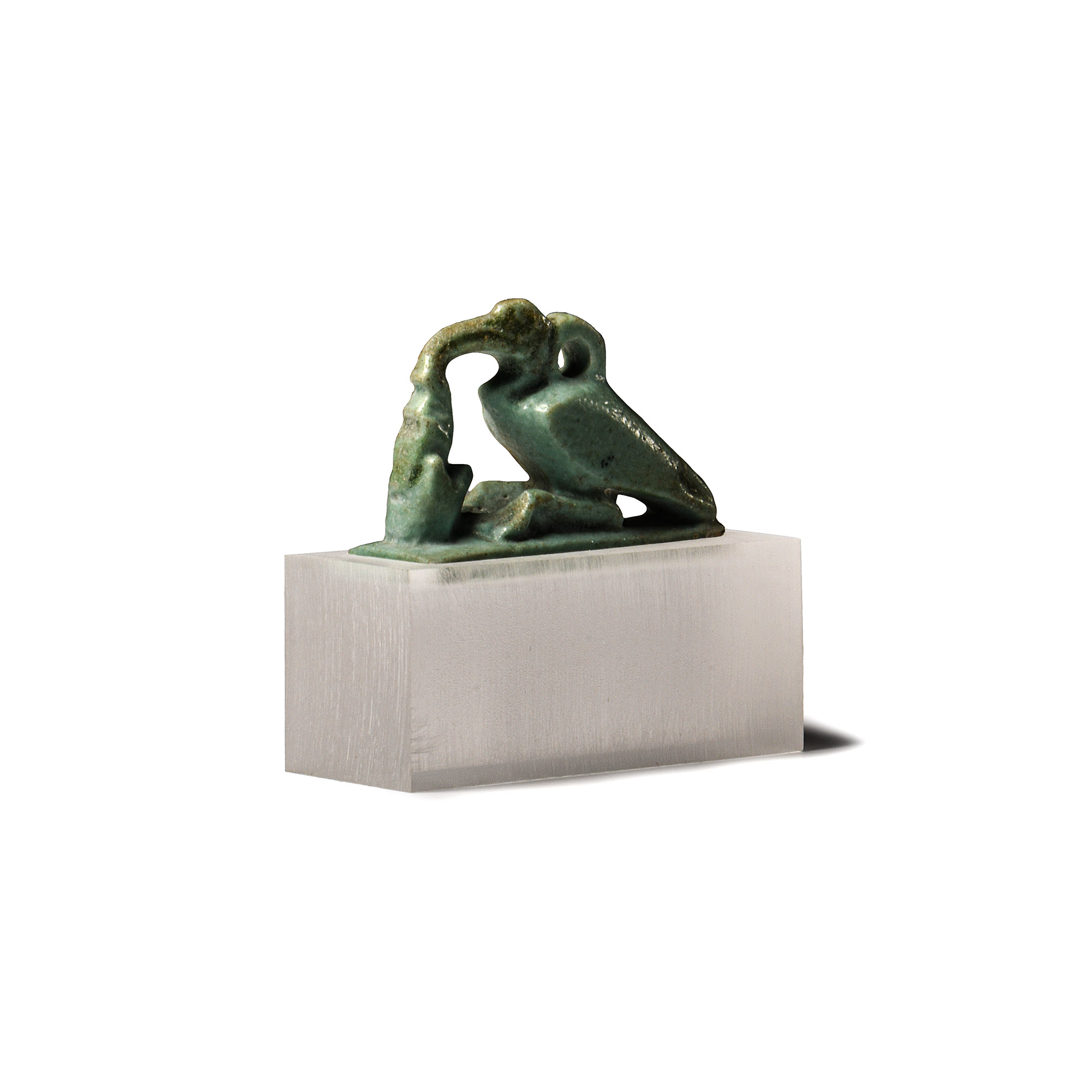
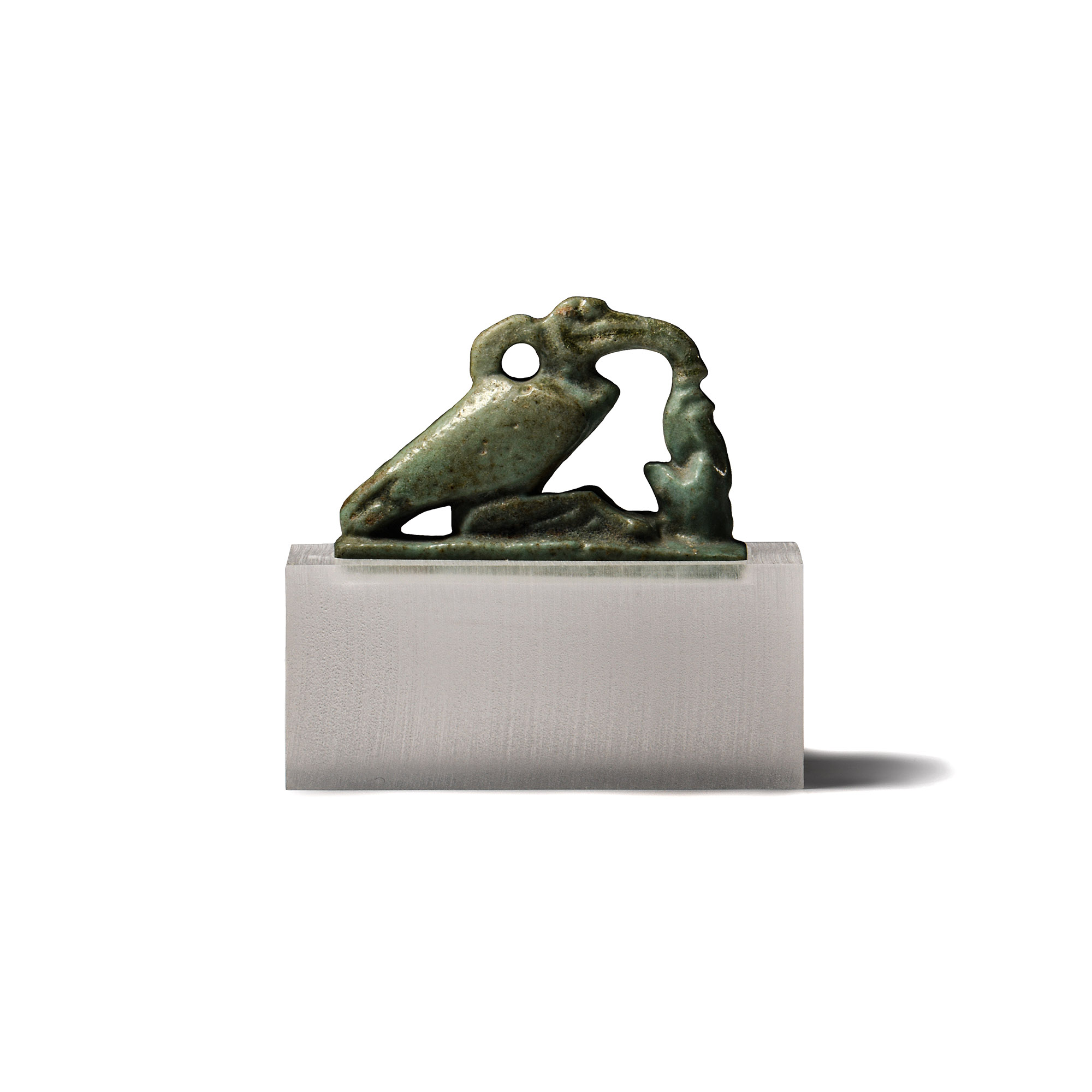
Egyptian Thoth as Ibis and Maat Faience Amulet
PTOLEMAIC PERIOD, 332-30 B.C.
1 5/8 in. (22 grams total, 43 mm wide including stand).
On a wedge-shaped base and decorated in turquoise glaze; the ibis's beak resting on a diminutive figure of the goddess Maat; suspension loop on the neck of the bird; collector's inventory number E509' on the underside; accompanied by a custom-made display base.
ProvenanceEx Reine Margot, 1973.
Ex R. Liechti (1934-2010) Geneva, Switzerland, collection between 1950-1990s.
This lot is accompanied by an illustrated lot declaration signed by the Head of the Antiquities Department, Dr Raffaele D’Amato.
Cf. Andrews, C., Amulets of Ancient Egypt, London, 1994, p.25, fig.21f, for similar.
FootnotesIn the judgment of the dead (Book of the Dead, saying 125), Thoth, who is often represented in ibis form, records the result of weighing the heart of the deceased. The god is therefore mostly depicted in connection with the goddess Maat, whose feather was used as a counterbalance to the purity of the heart; such amulets were thus aimed at protecting the deceased from failing in the decision of the court of the dead.
CONDITIONTimeLine Auctions follows a vetting process to ensure the authenticity and legality of all items, reinforcing our commitment to integrity and responsible trading. Each antiquity, antique, and coin lot undergoes thorough examination by a vetting committee of at least ten external specialists, professional trade association members, scientists, and archaeologists: Our Vetting Process
AUCTIONS:
TimeLine is a leading auction house specialising in antiquities, ancient art, collectables, natural history, coins, medals, and books. Our auctions offer museums, collectors, historians, and enthusiasts the opportunity to acquire unique and historically significant pieces.
-
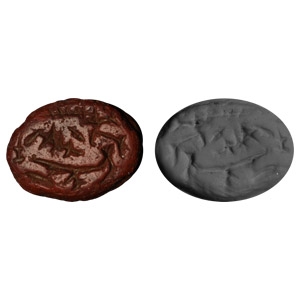
Phoenician Stone Scaraboid Seal
Levant, circa 10th century B.C.Estimate: £400 - 600 (+bp*)
Opening Bid: £200
Engraved stylised detailing to the domed carapace, the underside with quadrupeds and caterpillars in exergue; pierced longitudinally; accompanied by a museum-quality impression. 3.35 grams, 18 mm
From the 'S' collection, acquired 1970-1990s. The collection was seen and studied by W.G. Lambert, late Professor of Assyriology at the University of Birmingham, 1970-1993. Accompanied by a copy of a report from Peter Gert Van der Veen, senior lecturer of Levantine Archaeology Johannes Gutenberg-Universität Mainz. This lot is accompanied by an illustrated lot declaration signed by the Head of the Antiquities Department, Dr Raffaele D’Amato. -
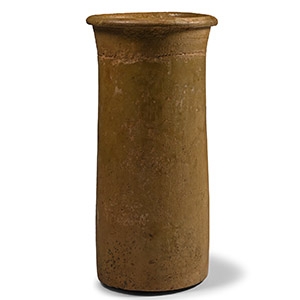
Egyptian Terracotta Cylindrical Jar
Early Dynastic Period, Naqada IIIC, circa 3100 B.C.Estimate: £300 - 400 (‡+bp*)
Opening Bid: £135
Band of imitation rope-twist decoration encircling the top of the jar, the mouth slightly flaring with a slightly damaged rolled lip. 950 grams, 22 cm
with Bonhams, London, 1 May 2008, no.432 [Part]. Accompanied by a copy of an Art Loss Register certificate no.S00035996. Accompanied by a copy of relevant Bonhams catalogue pages. This lot is accompanied by an illustrated lot declaration signed by the Head of the Antiquities Department, Dr Raffaele D’Amato.
These vessels often exhibit different surface treatments; the rim and area above the rope twist show marks where the vessel was rotated to produce the rim, and below, the rest of the jar has a scrape-smoothed surface. -
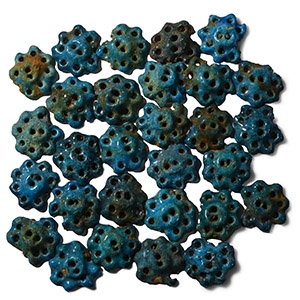
Egyptian Blue Faience Clothing Mounts
Roman Period, 30 B.C.-323 A.D.Estimate: £300 - 400 (+bp*)
Opening Bid: £135
Group of rosette mounts, each plano-convex in profile with two attachment holes to the centre and pierced loops to the rim. 124 grams total, 25-30 mm
UK private collection, formed in the 1980s. This lot is accompanied by an illustrated lot declaration signed by the Head of the Antiquities Department, Dr Raffaele D’Amato.
