
Loading, please wait...


LOT 0440
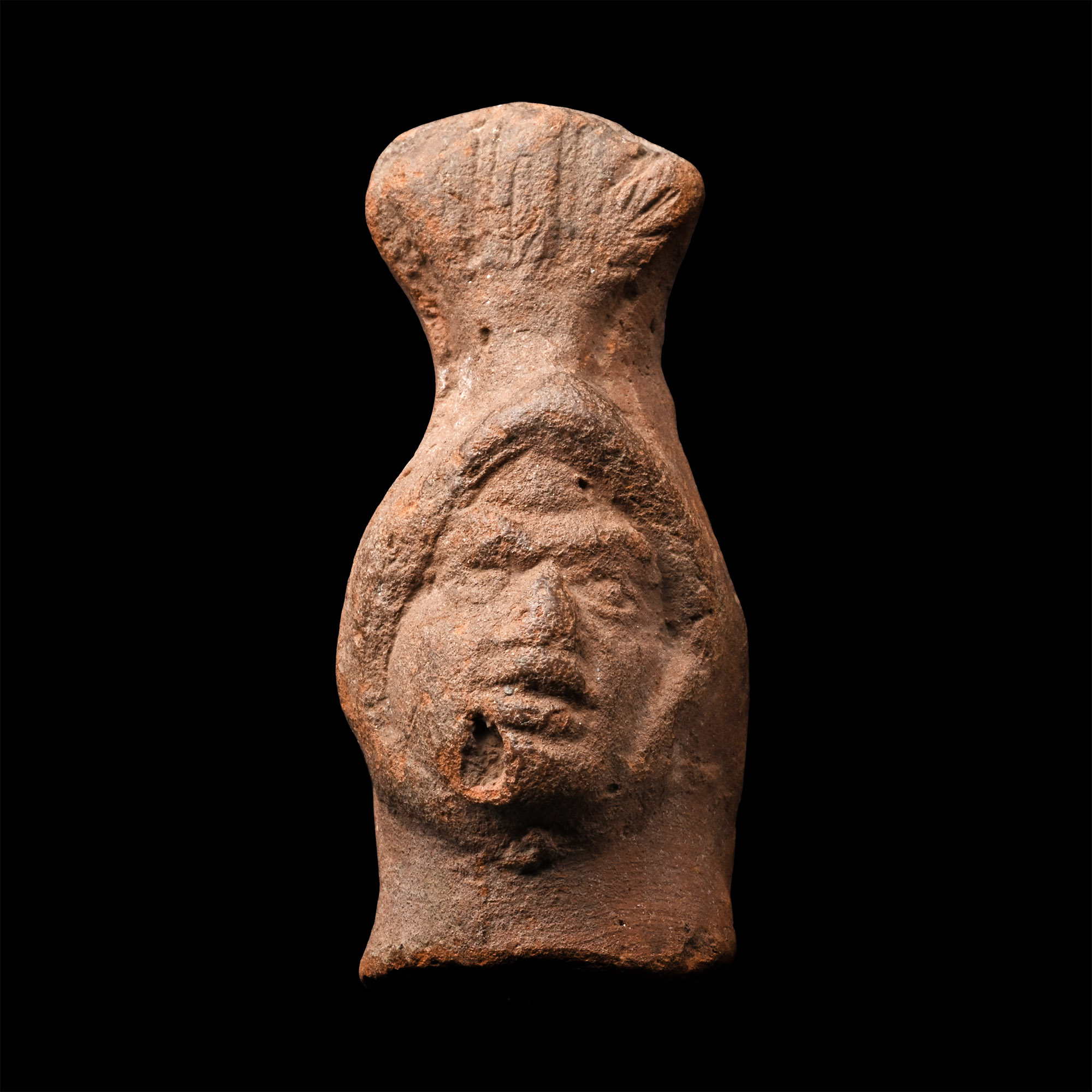
Egyptian Terracotta Statuette Head of the God Harpocrates
GRAECO-ROMAN PERIOD, CIRCA 2ND-3RD CENTURY A.D.
2 3/4 in. (58.16 grams, 70 mm).
Boldly modelled facial features, wearing a tall lotus flower crown. [No Reserve]
ProvenanceFrom the private collection of Peter Clayton, FCILIP, Dip, Arch, FSA, FRNS, Hemel Hempstead, Hertfordshire, UK; formed since the late 1950s.
CONDITIONTimeLine Auctions follows a vetting process to ensure the authenticity and legality of all items, reinforcing our commitment to integrity and responsible trading. Each antiquity, antique, and coin lot undergoes thorough examination by a vetting committee of at least ten external specialists, professional trade association members, scientists, and archaeologists: Our Vetting Process
AUCTIONS:
TimeLine is a leading auction house specialising in antiquities, ancient art, collectables, natural history, coins, medals, and books. Our auctions offer museums, collectors, historians, and enthusiasts the opportunity to acquire unique and historically significant pieces.
LOT 0440
Egyptian Terracotta Statuette Head of the God Harpocrates
Estimate £40 - 60€46 - 70 (for guidance only)$54 - 81 (for guidance only)
-
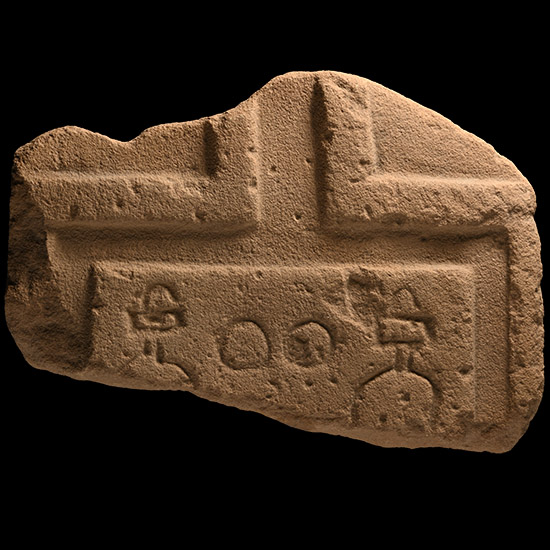
Egyptian Sandstone Offering Table Fragment
Late Period-Ptolemaic Period, 664-30 B.C.Estimate: £300 - 400 (+bp*)
Bids: 1 | Current Bid: £5
Fragment of a rectangular offering table with incised drainage channels forming a segmented surface, creating a spout at the top end and feeding channels around a central raised panel, bearing incised depictions of two circular loaves flanked by beer jugs; the underside dressed. 1.62 kg, 21.5 cm
Acquired in April 1963. From the private collection of Peter Clayton, FCILIP, Dip, Arch, FSA, FRNS, Hemel Hempstead, Hertfordshire, UK; formed since the late 1950s. Accompanied by an old handwritten identification card written by Peter Clayton.
Offering tables shaped like the hieroglyphic sign for a mat with a loaf of bread, meaning “offering,” were common throughout much of dynastic history and were essential to the funerary cult. They were usually placed near the deceased's tomb, in an offering niche or chapel. If the cult ceased to function, the carved images of food and drink on the table served as magical substitutes, ensuring the continued sustenance and survival of the deceased's ka, or spirit. -
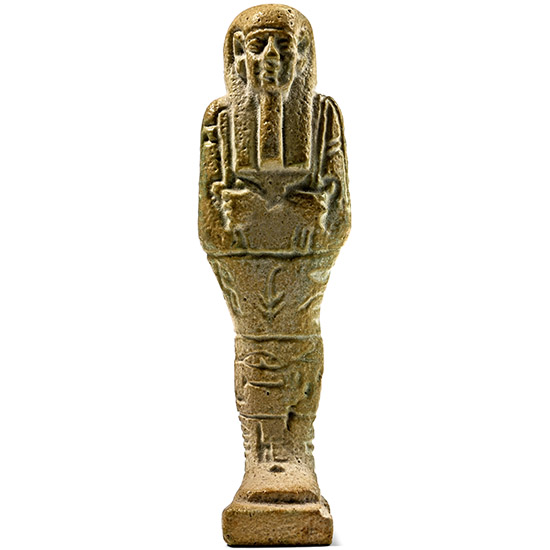
Egyptian Faience Shabti of the Overseer of Royal Children Horirani
Late Period, 26th Dynasty, 664-525 B.C.Estimate: £600 - 800 (+bp*)
Bids: 11 | Current Bid: £70
Mummiform figure standing on a square plinth, wearing a plain, long lappet wig and a long false beard, with a finely modelled face; crossed arms, the left hand holding a pick and the right a hoe and a cord belonging to a plain seed bag suspended over the left shoulder; three horizontal lines of hieroglyphic text on the lower body. 32.1 grams, 88 mm
Acquired from Portobello Road, 18th March 1967, for 30 shillings. From the private collection of Peter Clayton, FCILIP, Dip, Arch, FSA, FRNS, Hemel Hempstead, Hertfordshire, UK; formed since the late 1950s. Accompanied by an old handwritten information card by Peter Clayton, collection no.120. -
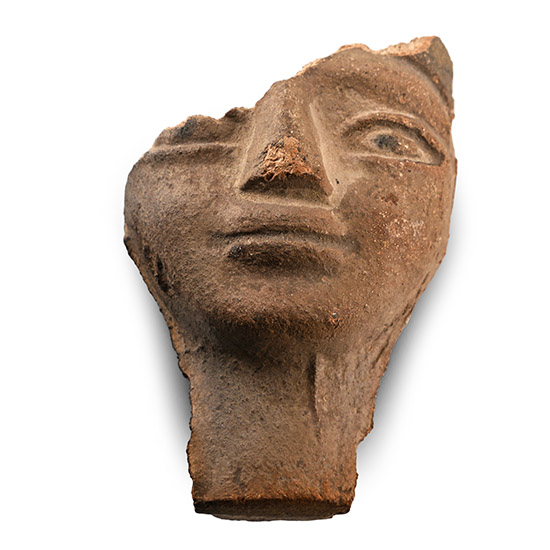
Graeco-Egyptian Terracotta Head of a Lady
Hellenistic Period, circa 2nd century B.C.Estimate: £100 - 140 (+bp*)
Bids: 1 | Current Bid: £5
Moulded in the half-round with fine facial detailing. 35.4 grams, 62 mm
Acquired 21st March 1965. From the private collection of Peter Clayton, FCILIP, Dip, Arch, FSA, FRNS, Hemel Hempstead, Hertfordshire, UK; formed since the late 1950s. Accompanied by an old handwritten information card by Peter Clayton, collection no.109.
