
Loading, please wait...

LOT 0428
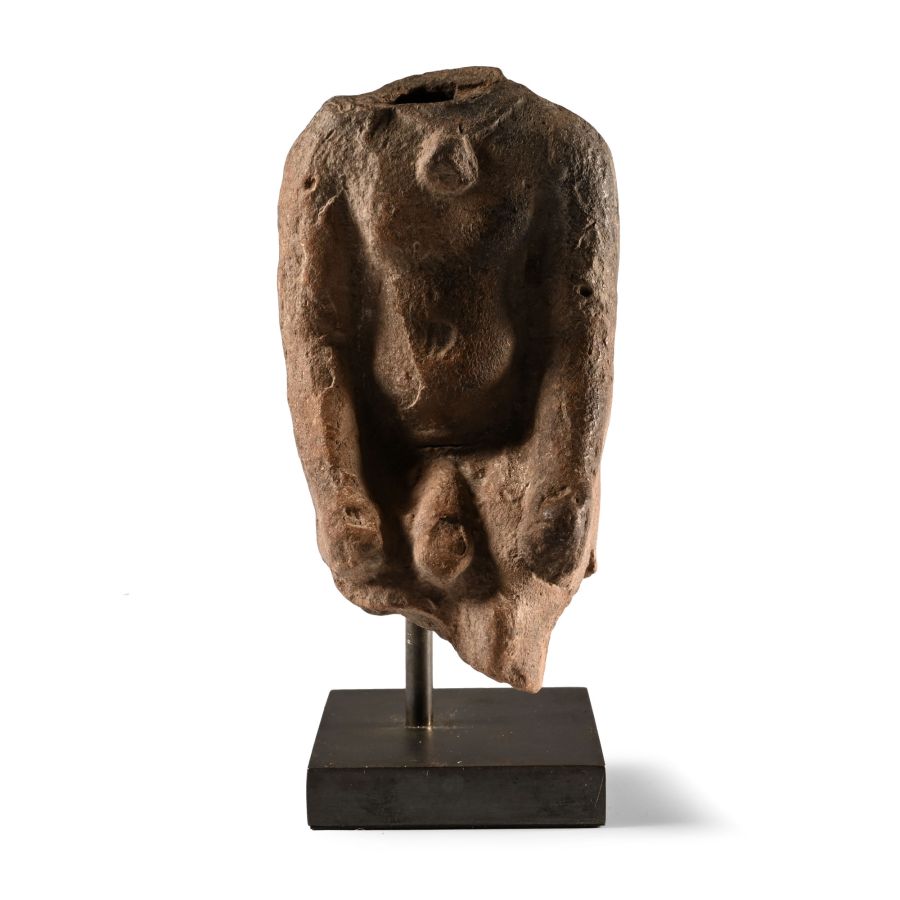
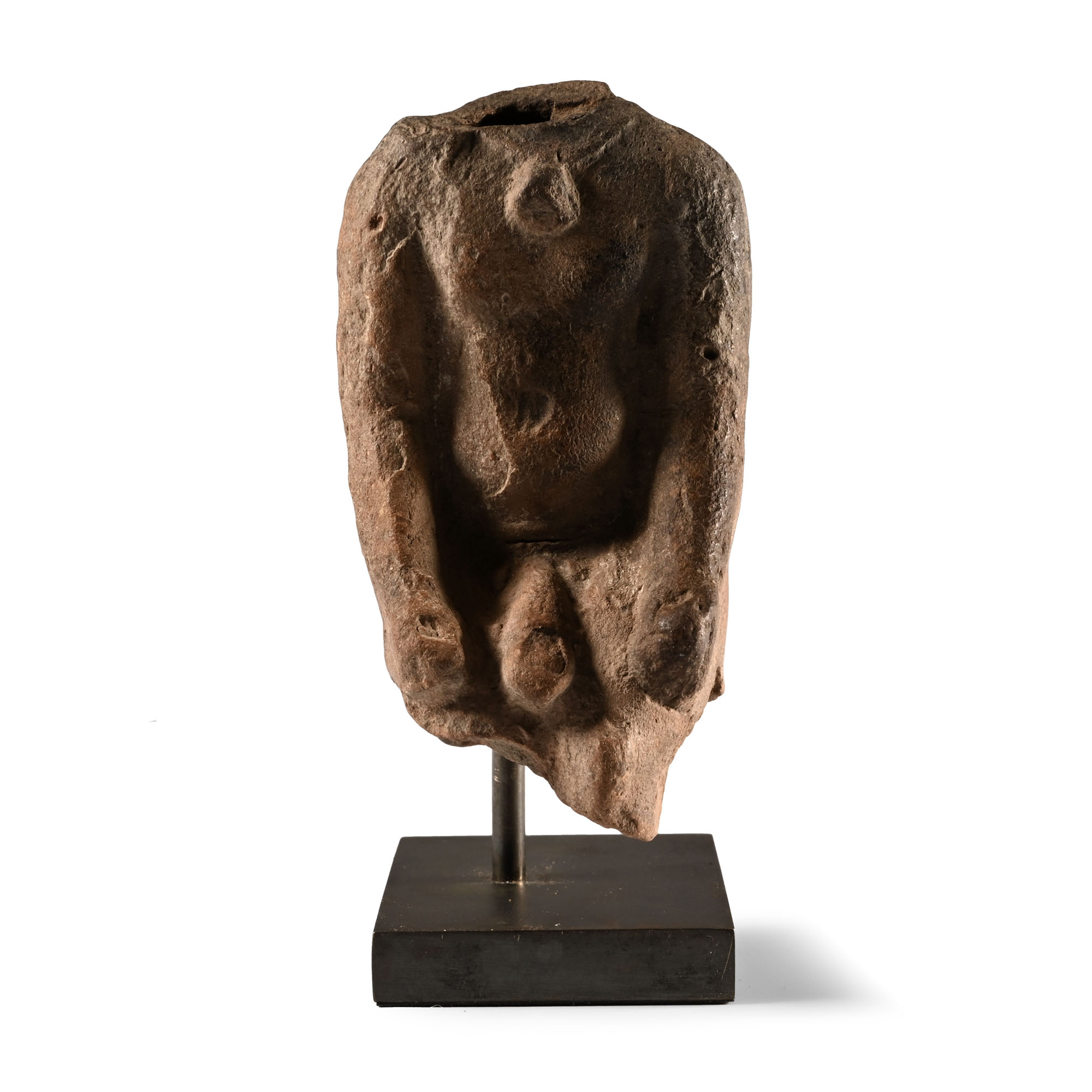
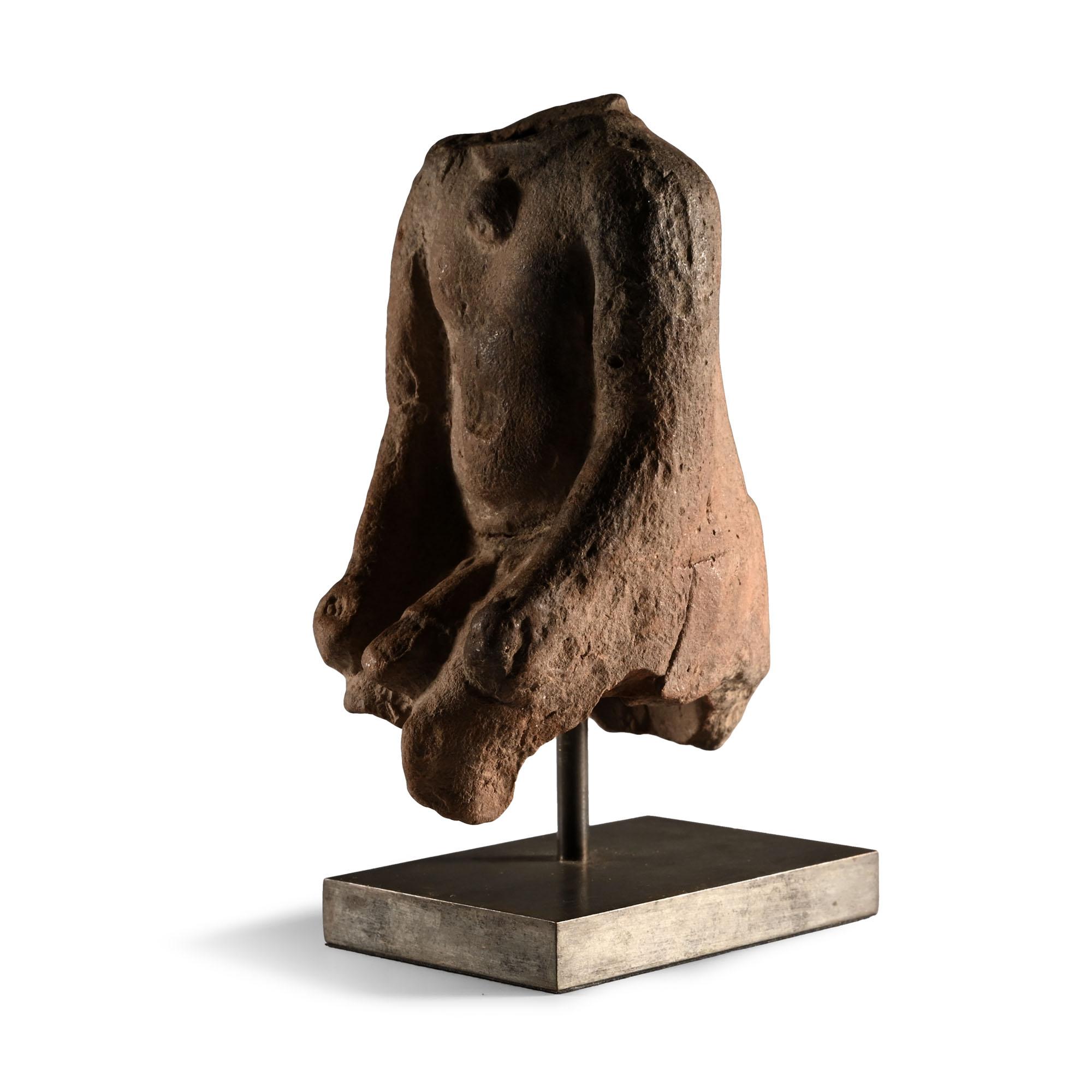
Egyptian Terracotta Seated Torso
PTOLEMAIC PERIOD, 4TH-3RD CENTURY B.C
3 7/8 in. (280 grams total, 97 mm including stand).
The headless deity, possibly Harpocrates, seated on a throne, forearms resting on thighs and flanking a protruding phallus, wearing a medallion around the neck; mounted on a custom-made display stand. [No Reserve]
ProvenanceThe Erotica Collection Christian von Faber-Castell, Küsnacgt ZH, Switzerland, since the late 1970s.
This lot is accompanied by an illustrated lot declaration signed by the Head of the Antiquities Department, Dr Raffaele D’Amato.
Cf. Ross, T., ‘Egyptian Late Period figures in terracotta and limestone’ in Villing, A., Beregeron, M., Bourogiannis, G., Johnston, A., Leclere, F., Masson, A., Ross, T., Naukratis, Greeks in Egypt, London, 2015, pp.1-79, fig. 76, for a similar enthroned ithyphallic Harpocrates.
FootnotesFigural plaques of ithyphallic Harpocrates seated on a block seat with forearms on thighs and hands each side of a projecting phallus were rare types from Naukratis, Temai el-Amohel. They can be dated to the early Hellenistic Period, circa 330 B.C.
Christian von Faber-Castell (born 1950) is a renowned German entrepreneur and art collector, best known as a member of the prominent Faber-Castell family, famed for their iconic writing instruments. A passionate advocate for art and culture, Christian von Faber-Castell curated an extensive and diverse private collection of erotica, spanning centuries and cultures. His collection reflects a deep appreciation for the interplay of beauty, sensuality, and artistic expression, bringing together rare and unique works that explore themes of intimacy and human connection. Pieces from this collection have been featured in notable exhibitions and are celebrated for their artistic and historical significance. This offering represents a rare opportunity to acquire works from one of the most fascinating and eclectic private collections of its kind.
TimeLine Auctions follows a vetting process to ensure the authenticity and legality of all items, reinforcing our commitment to integrity and responsible trading. Each antiquity, antique, and coin lot undergoes thorough examination by a vetting committee of at least ten external specialists, professional trade association members, scientists, and archaeologists: Our Vetting Process
AUCTIONS:
TimeLine is a leading auction house specialising in antiquities, ancient art, collectables, natural history, coins, medals, and books. Our auctions offer museums, collectors, historians, and enthusiasts the opportunity to acquire unique and historically significant pieces.
-
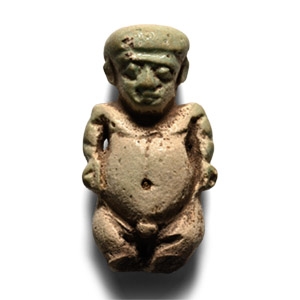
Egyptian Faience Pataikos Amulet
Late Period, 525-332 B.C.Sold for (Inc. bp): £169
Depicted nude with a cap to his head, ribbed suspension loop to the rear of the neck. 6.03 grams, 36 mm
UK private collection before 2000. Acquired on the UK art market. Property of a London gentleman. This lot is accompanied by an illustrated lot declaration signed by the Head of the Antiquities Department, Dr Raffaele D’Amato.
Pataikos is a representation of the creator deity Ptah, and his diminutive form is a symbol of his immense magical power. -
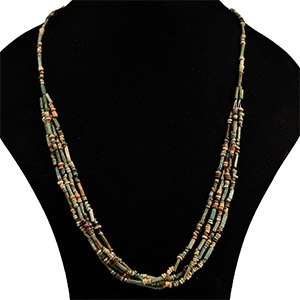
Egyptian Multi-Stranded Mummy Bead Necklace String
Late Period, 664-525 B.C.Sold for (Inc. bp): £143
A composition necklace composed of multiple strands of polychrome beads of mainly annular and tubular types. 28 grams total, 82 cm long
Acquired before 1979. From the private collection of Mr F. A., South Kensington, London, UK; thence by descent 2014. This lot is accompanied by an illustrated lot declaration signed by the Head of the Antiquities Department, Dr Raffaele D’Amato.
Red and yellow faience were among the new colours appeared in the 18th Dynasty, but they were in use until the Late Period. It was ideally formed from a core of sand and quartz and a vitreous alkaline glaze. It was the preferred medium of Egyptian jewellers even before the First Dynasty, because of its malleability and its ability to imitate other more expensive materials thanks to the colour of the glaze. -
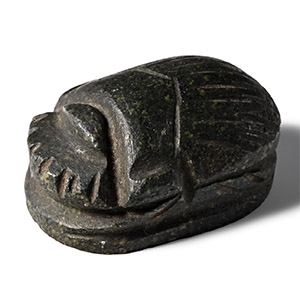
Egyptian Black Hardstone Scarab
Late Period, 664-332 B.C.Estimate: £400 - 600 (‡+bp*)
Opening Bid: £200
Dark green hardstone with paler speckles; with a boldly carved head, clypeus, prothorax and elytra, and legs indicated at the sides; plain underside. 17 grams, 29 mm
Ex Irene Newman, Birdham, Chichester, West Sussex, England. with Stride & Son Auctioneers, Chichester, West Sussex, England, 23 April 2015, no.1599 [Part]. Acquired by the present owner at the above sale. This lot is accompanied by an illustrated lot declaration signed by the Head of the Antiquities Department, Dr Raffaele D’Amato.
The scarab, which represented the dung beetle, was the most popular amulet in ancient Egypt for approximately two thousand years until the Ptolemaic Period when it gradually fell out of favour. The popularity of scarabs extended beyond the borders of Egypt, and they were also distributed and produced in other regions, such as Phoenicia and Israel. The beetle is named khepri, derived from the verb 'to come into existence', and was considered the embodiment of the creator god Khepri, who was self-engendered. The ancient Egyptians mistakenly believed that the young beetle emerging from the dung ball was the result of an act of self-creation.
