
Loading, please wait...
LOT 0614
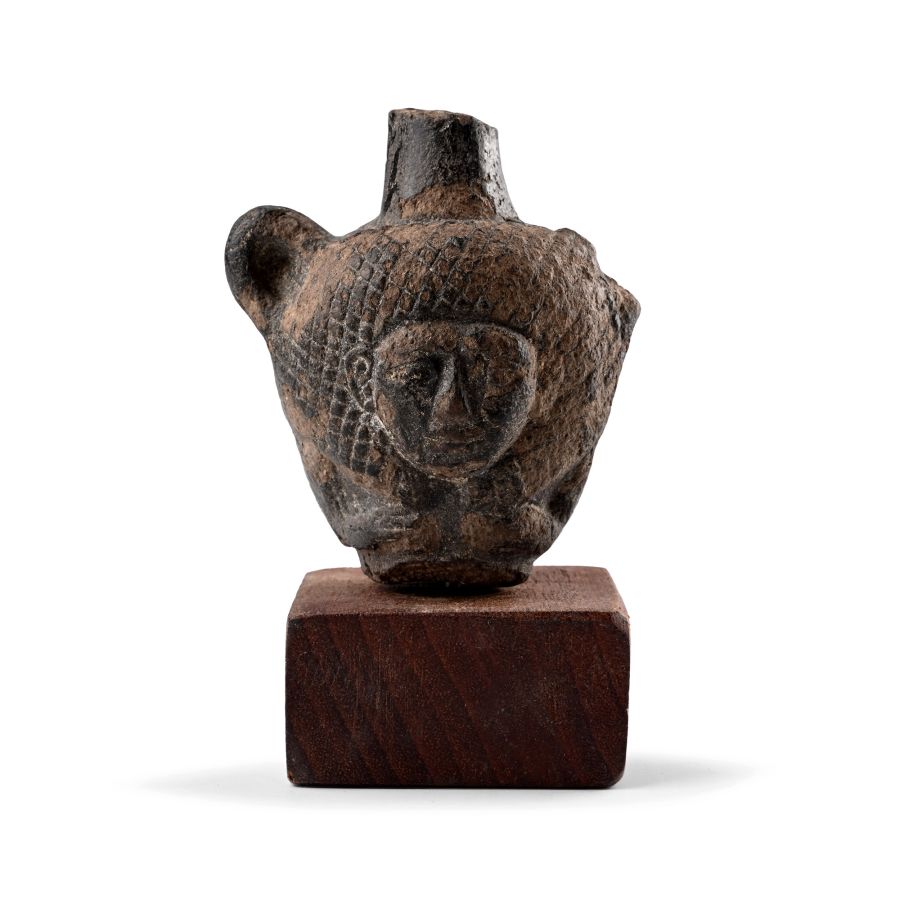
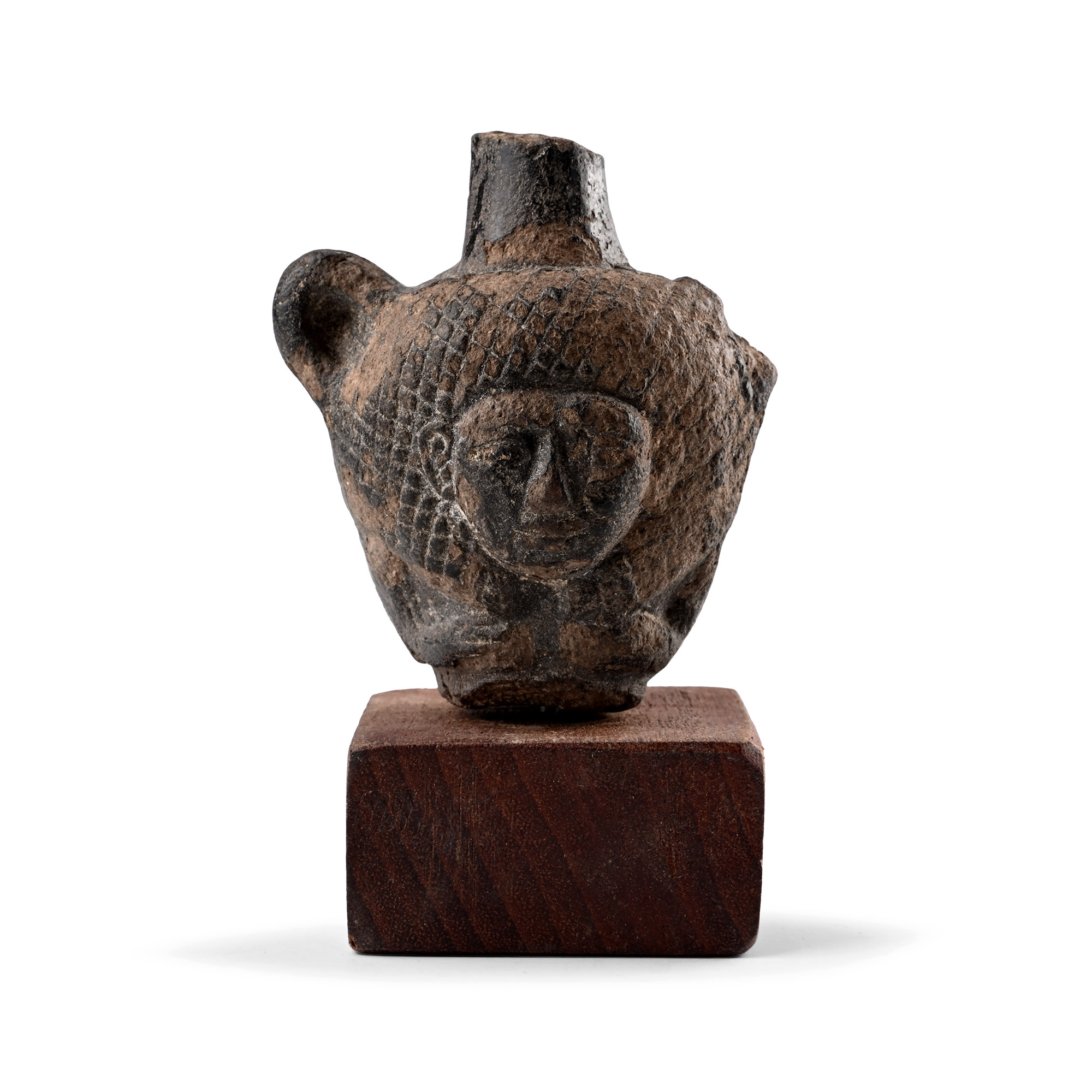
Egyptian Terracotta Pseudo-Hathor Votive Jug
1ST MILLENNIUM B.C.
4 in. (192 grams total, 10.2 cm high including stand).
Formed as a model janiform jug with loop handles (one absent), a spout, and addorsed masks of Hathor with hatched detailing on the hair, arms bent below the face, and hands cupping the breasts; repaired and mounted on a custom-made stand. [No Reserve]
ProvenanceFrom a Hastings, Kent, UK, antiques dealer, (shop closed 2009).
with Burstow & Hewett, 2024.
Acquired by the current owner from the above.
Accompanied by a copy of an illustrated academic report by Simone Musso.
TimeLine Auctions follows a vetting process to ensure the authenticity and legality of all items, reinforcing our commitment to integrity and responsible trading. Each antiquity, antique, and coin lot undergoes thorough examination by a vetting committee of at least ten external specialists, professional trade association members, scientists, and archaeologists: Our Vetting Process
AUCTIONS:
TimeLine is a leading auction house specialising in antiquities, ancient art, collectables, natural history, coins, medals, and books. Our auctions offer museums, collectors, historians, and enthusiasts the opportunity to acquire unique and historically significant pieces.
LOT 0614
Egyptian Terracotta Pseudo-Hathor Votive Jug
Estimate £200 - 300€230 - 350 (for guidance only)$270 - 410 (for guidance only)
-
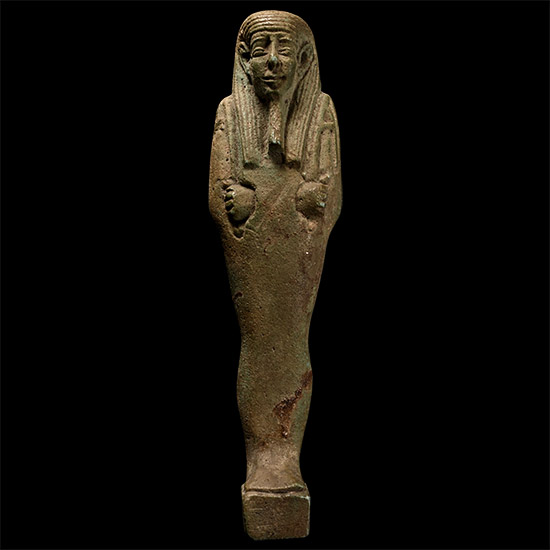
Egyptian Green Glazed Faience Shabti
Late Period, 664-332 B.C.Estimate: £1,000 - 1,400 (‡+bp*)
Opening Bid: £550
Modelled with a slender mummiform body on a small rectangular base; the long face framed by a striated tripartite wig and false beard; the hands of the imperceptibly crossed arms hold a hoe and a pick; the right hand also holds a cord from which a seed bag hangs over the figure's back; a dorsal pillar on the reverse; uninscribed. 102 grams, 14 cm
Ex Ms.E.C.(1923-2014), Israel. Inherited by his son D.L., Switzerland.
Although uninscribed, the distinctive long face, manner of hand styling and long striated wig lappets suggest that it may come from the same mould as another shabti in the World Museum, Liverpool (Janes, G., The Shabti Collections 6: A Selection from the World Museum, Liverpool, Lymm, 2016, p. 501, no. 264b). -
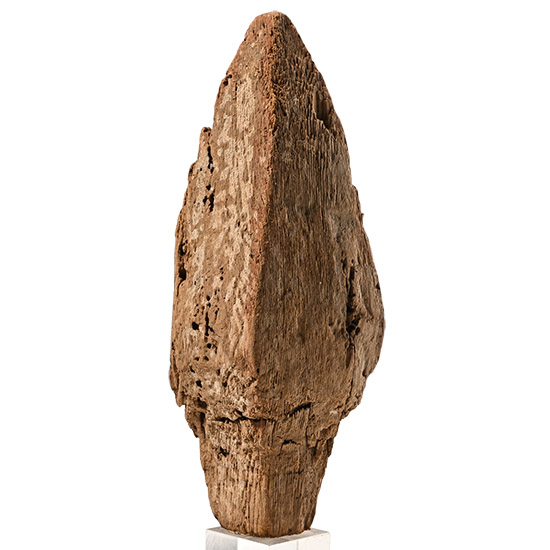
Egyptian Wooden Furniture Finial
Late Period-Ptolemaic Period, circa 664-30 B.C.Estimate: £40 - 60 (+bp*)
Bids: 1 | Current Bid: £5
Square in section and leaf-shaped in profile, with a squat mounting peg; mounted on a custom-made Perspex stand. 30 grams total, 13.5 cm including stand
with a privately curated collection, 1980s-early 2000s. From the private collection and estate of Christine Simons (1943-2025), West Midlands, UK. -
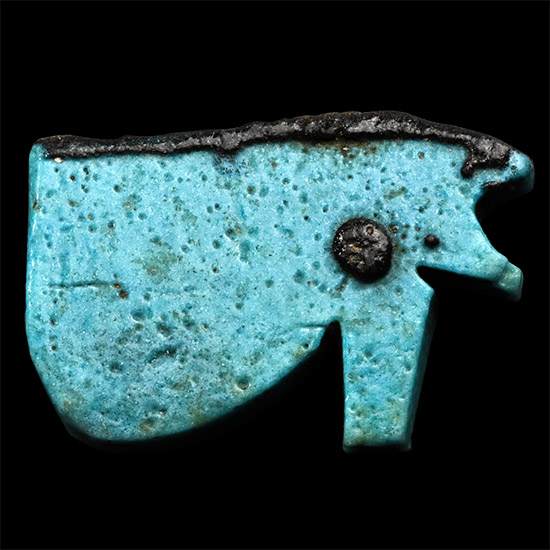
Large Egyptian Blue Glazed Faience Eye of Horus Amulet
New Kingdom-Late Period, circa 1550-332 B.C.Estimate: £500 - 700 (+bp*)
Opening Bid: £250
The body displaying the characteristic shape combining human and falcon ocular imagery, the brow and pupil detailed in black faience, pierced longitudinally for suspension. 8.34 grams, 41 mm
Early 20th century UK collection. Accompanied by a previous catalogue information page.
The wedjat-eye amulet depicts Horus’s healed eye, blending human and falconine features. Its ancient Egyptian name means ‘the one that is sound’. According to myth, Seth wounded or took the eye, and Thoth later restored it. Believed to offer protection, healing, and regeneration, the popular amulet was worn by the living and the dead.
