
Loading, please wait...

LOT 0441
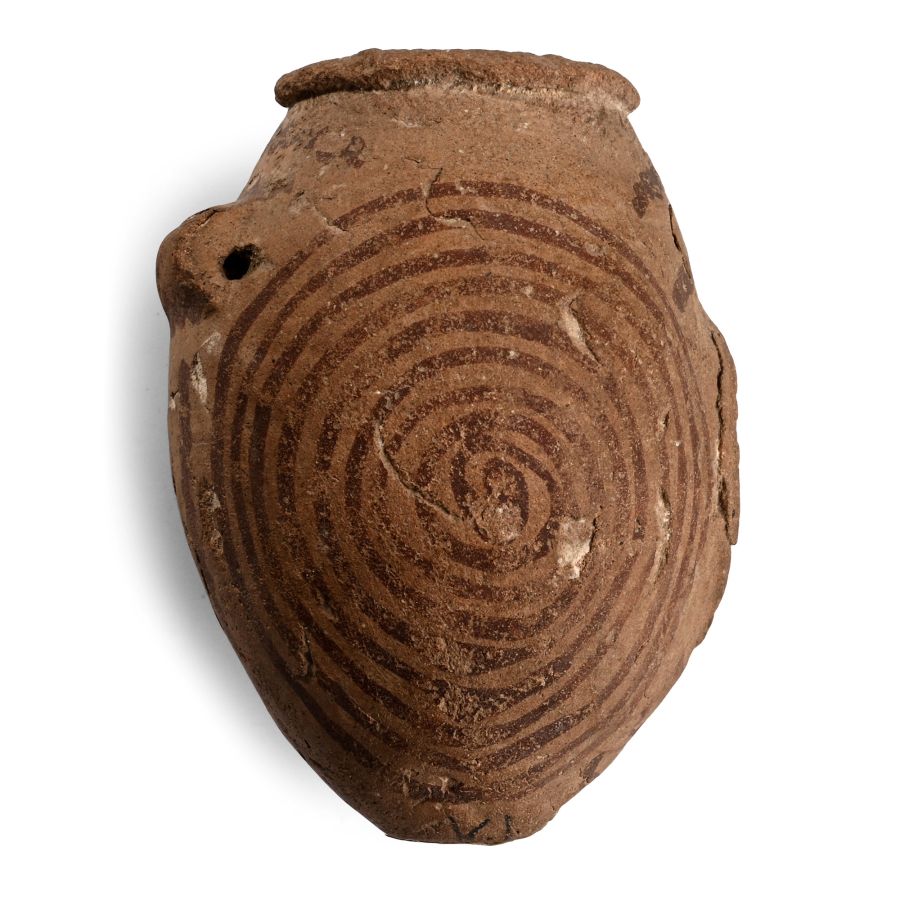
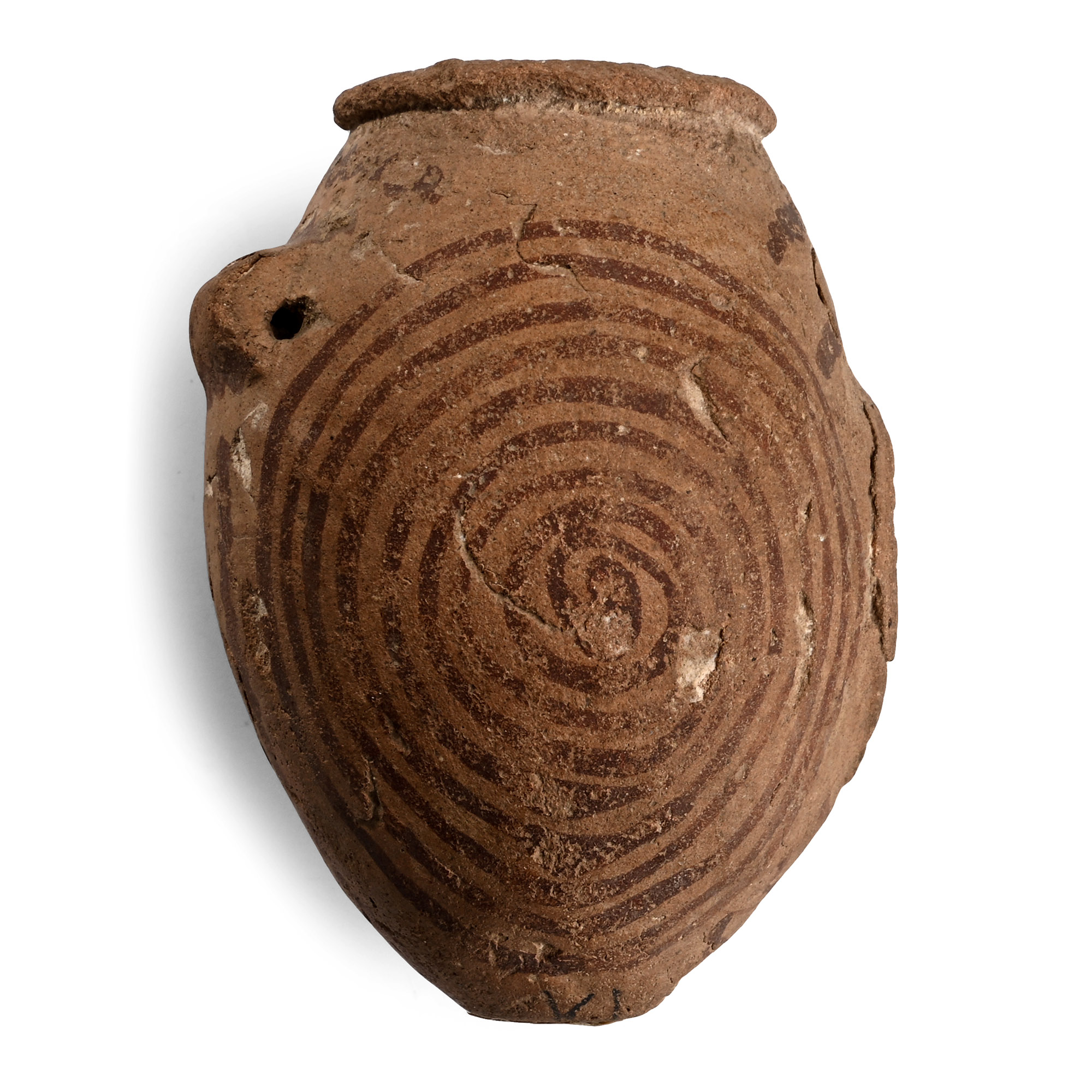
Egyptian Terracotta Pot with Painted Decoration
PREDYNASTIC PERIOD, CIRCA 3,500-3000 B.C.
3 in. (68.4 grams, 75 mm).
One half of a buff-coloured double-ovoid vessel, originally joined on one side to another identical pot, with a single pierced lug handle and a bold design of radiating circles. [No Reserve]
ProvenanceEx Puys-Aubert collection in Alexandria, March 1963, paid 18 shillings.
From the private collection of Peter Clayton, FCILIP, Dip, Arch, FSA, FRNS, Hemel Hempstead, Hertfordshire, UK; formed since the late 1950s.
Accompanied by an old handwritten information card by Peter Clayton, collection no.99.
Cf. Petrie, W.M.F., Quibell, J.E., Naqada and Ballas, London, 1895, pl. XXXIV, no. 33b, for an intact double vessel of the same type bearing the same painted design.
FootnotesThis small pot was originally attached to an identical vessel. Intact examples of which were found by the famous archaeologist Flinders Petrie during his excavations at the predynastic cemetery at Naqada, the site that gave its name to the chronology of the periods before Egyptian dynastic history.
CONDITIONTimeLine Auctions follows a vetting process to ensure the authenticity and legality of all items, reinforcing our commitment to integrity and responsible trading. Each antiquity, antique, and coin lot undergoes thorough examination by a vetting committee of at least ten external specialists, professional trade association members, scientists, and archaeologists: Our Vetting Process
AUCTIONS:
TimeLine is a leading auction house specialising in antiquities, ancient art, collectables, natural history, coins, medals, and books. Our auctions offer museums, collectors, historians, and enthusiasts the opportunity to acquire unique and historically significant pieces.
LOT 0441
Egyptian Terracotta Pot with Painted Decoration
Estimate £300 - 400€350 - 460 (for guidance only)$410 - 540 (for guidance only)
-
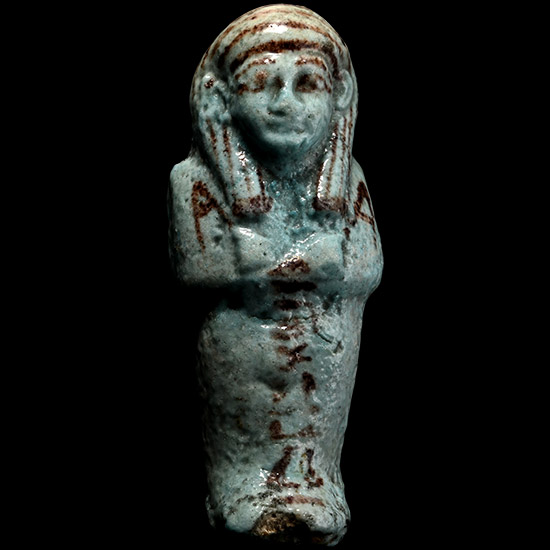
Egyptian Blue Glazed Shabti of Payefadjer
Third Intermediate Period, 21st Dynasty, circa 1070-945 B.C.Estimate: £500 - 600 (‡+bp*)
Opening Bid: £275
Squat mummiform type with face framed by a tripartite wig, hands modelled in relief, holding agricultural tools applied in paint; seed-bag at the back; central vertical hieroglyphic inscription on the lower front reading: 'The Osiris, wab-(priest), lector-(priest), Payefadjer (pꜢy.f-Ꜥḏr), true of voice'. 93 grams, 96 mm
Ex Ms E.C.(1923-2014), Israel. Inherited by her son D.L., Switzerland. -
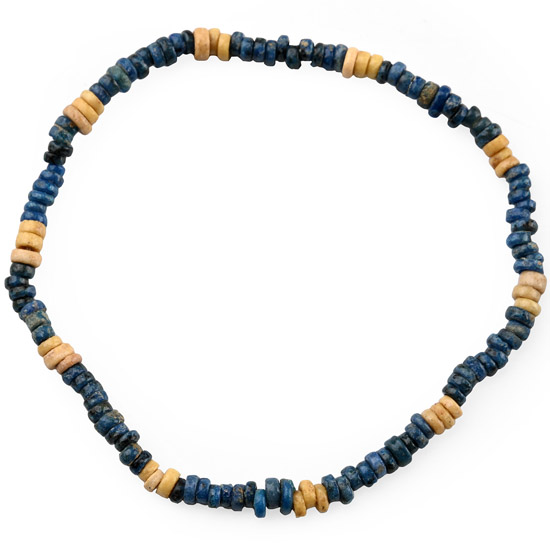
Egyptian Faience Mummy Bead Bracelet
Late Period, 664-332 B.C.Estimate: £60 - 80 (+bp*)
Bids: 1 | Current Bid: £5
Composed of alternating blue and cream annular beads, restrung with an elasticated string. 2.19 grams, 17 cm
Ex Ancient Art Shop, Windsor, UK, 1990s. Ex private collection. -
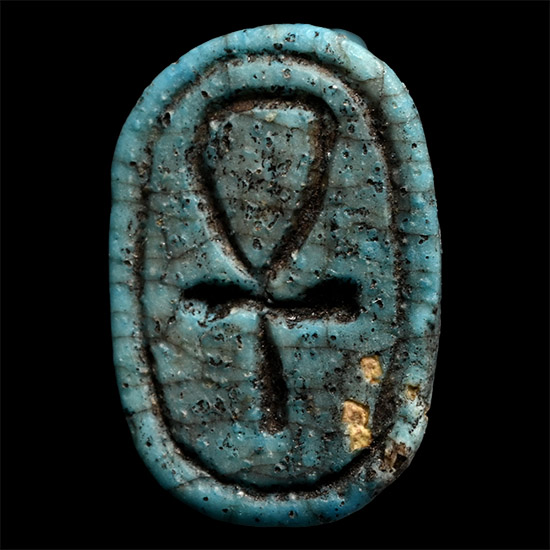
Egyptian Faience Scaraboid Frog Amulet with Ankh
Late Period, 664-332 B.C.Estimate: £120 - 170 (+bp*)
Opening Bid: £60
Modelled in the round, crouching on a rectangular base, incised ankh to the underside. 0.48 grams, 11 mm
From an important UK collection, 1940s.
Frog amulets in ancient Egypt symbolised fertility, rebirth, and renewal. Associated with the goddess Heqet, linked to childbirth and life-giving forces, they were especially popular for fertility and for protection during pregnancy and labour. Their association with the annual Nile flood, which brought new life to the land, further emphasised their symbolism of revival and abundance. The ancient Egyptian ankh hieroglyph on the amulet's base, meaning "life," reinforces the creature's symbolism.
