
Loading, please wait...
LOT 0008
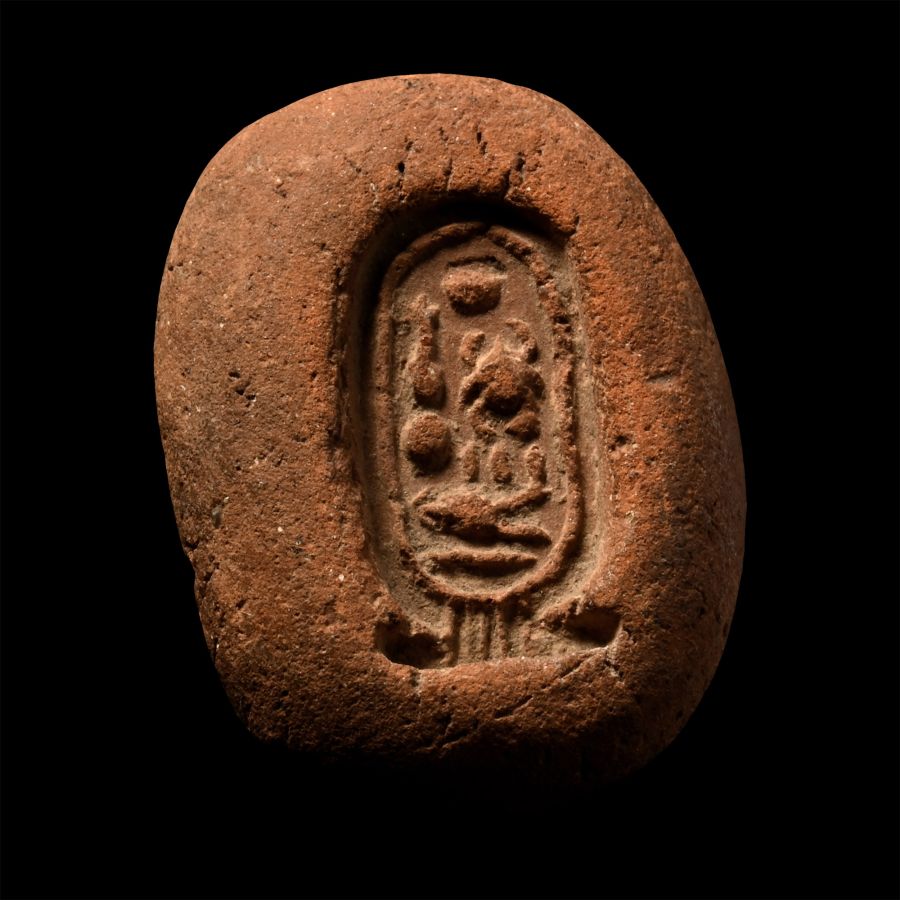
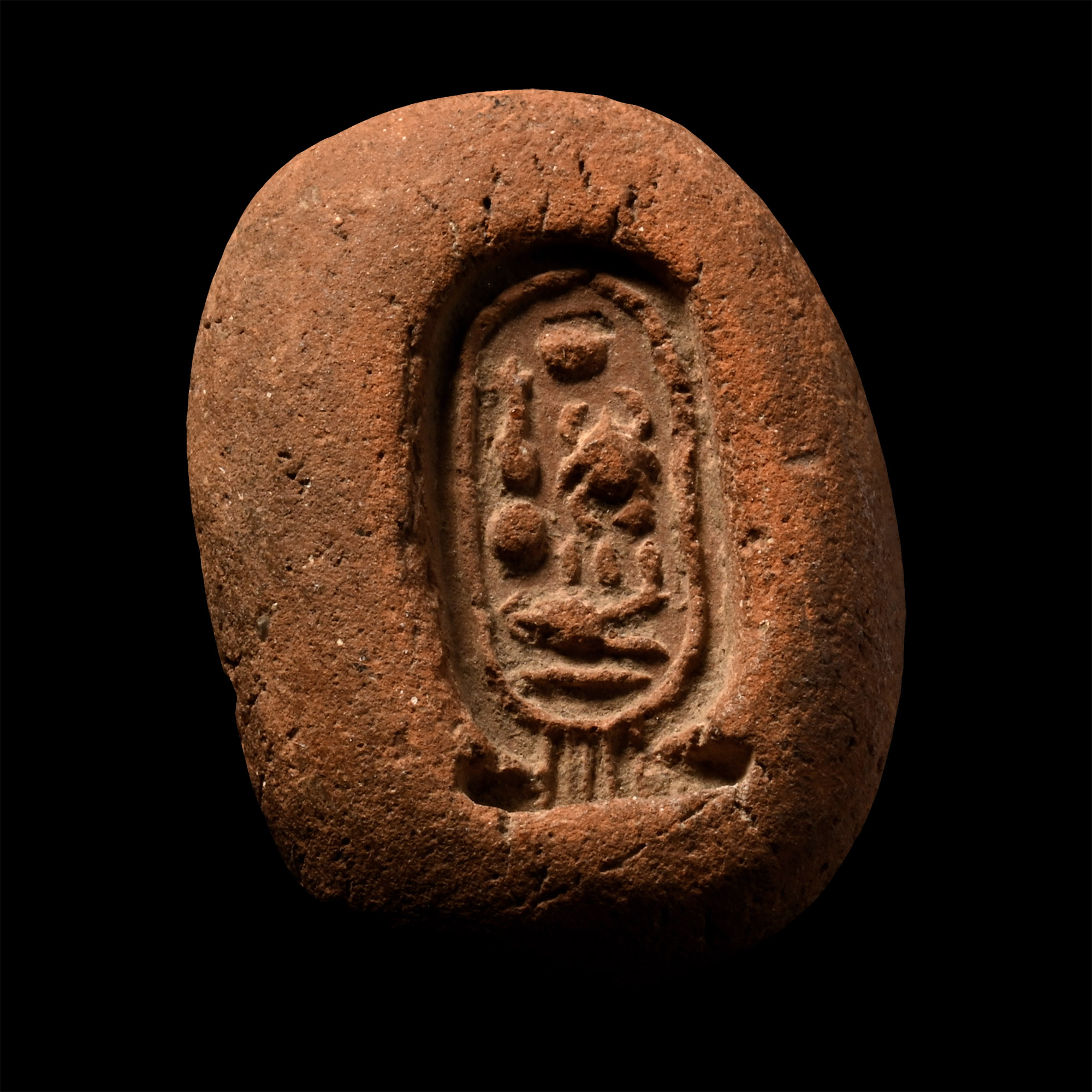
Egyptian Terracotta Mould with Impression of the Cartouche of Pharaoh Akhenaten
NEW KINGDOM, 18TH DYNASTY, AMARNA PERIOD, 1353-1332 B.C.
1 in. (4.26 grams, 25 mm).
Rounded tongue-shaped mould with an impressed cartouche containing the throne name of Akhenaten, Nefer-kheperu-Re (meaning 'Beautiful are the Manifestations of Re'). [No Reserve]
ProvenanceAcquired 7th February 1962, for 5 shillings.
From the private collection of Peter Clayton, FCILIP, Dip, Arch, FSA, FRNS, Hemel Hempstead, Hertfordshire, UK; formed since the late 1950s.
Accompanied by an old handwritten information card by Peter Clayton, collection no.86.
Moulds like this were used to produce faience amulets or inlays bearing the pharaoh's cartouche. Akhenaten's throne name, Nefer-kheperu-Re, remained unchanged throughout his reign, while his birth name changed from Amenhotep IV ('Amun is satisfied') to Akhenaten ('Servant of the Aten').
CONDITIONTimeLine Auctions follows a vetting process to ensure the authenticity and legality of all items, reinforcing our commitment to integrity and responsible trading. Each antiquity, antique, and coin lot undergoes thorough examination by a vetting committee of at least ten external specialists, professional trade association members, scientists, and archaeologists: Our Vetting Process
AUCTIONS:
TimeLine is a leading auction house specialising in antiquities, ancient art, collectables, natural history, coins, medals, and books. Our auctions offer museums, collectors, historians, and enthusiasts the opportunity to acquire unique and historically significant pieces.
LOT 0008
Egyptian Terracotta Mould with Impression of the Cartouche of Pharaoh Akhenaten
Estimate £400 - 600€460 - 700 (for guidance only)$540 - 810 (for guidance only)
Opening Bid
£5 (EUR 6; USD 7) +BP*
-
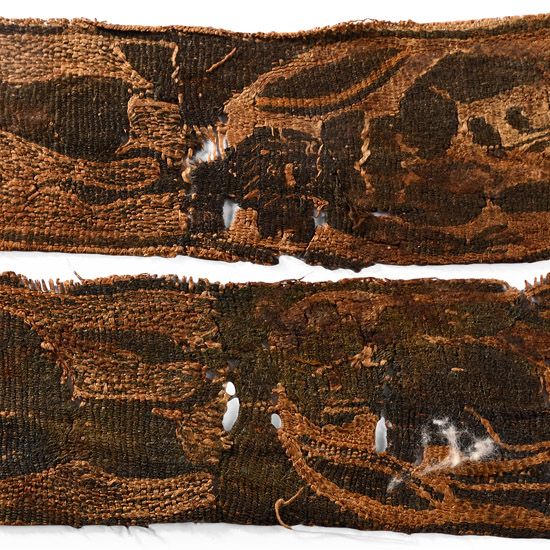
Egyptian Coptic Tunic Clavus Textile Fragments with Armed Puttoes, Lion and Hound
Circa 5th century A.D.Estimate: £100 - 140 (+bp*)
Opening Bid: £5
Comprising two long strips (clavus) with alternating figures of hunting puttoes with shields, hares and lions. 16.14 grams total, 22-23 cm
Acquired 1970s-1996. Property of a North American collector. London collection, 2016.
The theme of rabbits or hares, in association with other characters and animals of the Dionysian thiasos in a hunting setting, has notable parallels. Such representations are linked to narratives of the Dionysian cycle. -
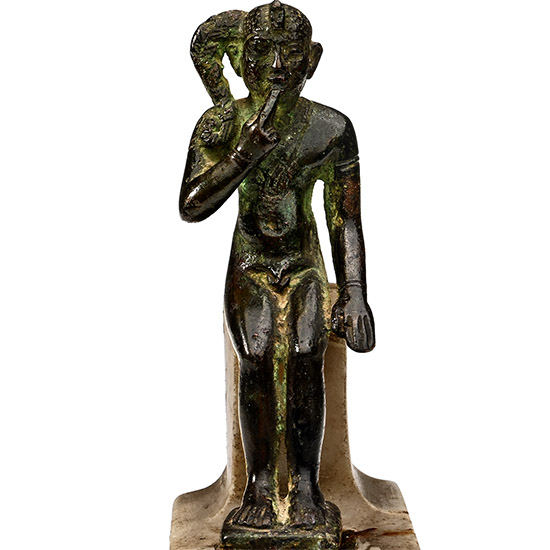
Egyptian Bronze Statuette of Harpocrates
3rd century B.C.Estimate: £2,000 - 3,000 (‡+bp*)
Opening Bid: £1,100
Votive statuette with youthful locks and a uraeus on his forehead; wearing the heart amulet around his neck; depicted nude, holding his finger to his mouth, a gesture identifying him as a child god; feet resting on a plinth. 281 grams, 10.7 cm high
Ex Tschudi Carlin, circa 1920. with Cahn Auktionen AG, Basel, Young Collectors Auction, 2015, no.147. This lot has been checked against the Interpol Database of stolen works of art and is accompanied by search certificate no.13472-263066.
Harpocrates is the Greek equivalent of the Egyptian name Hor-pa-khered, which means ‘Horus the Child’. This name refers to Horus as the divine infant of Isis and Osiris. Wearing an amulet of Harpocrates was believed to provide the same protection that Isis granted to her beloved son. Larger bronze statuettes were probably votive offerings to Harpocrates, intended to secure his favour and protection. -
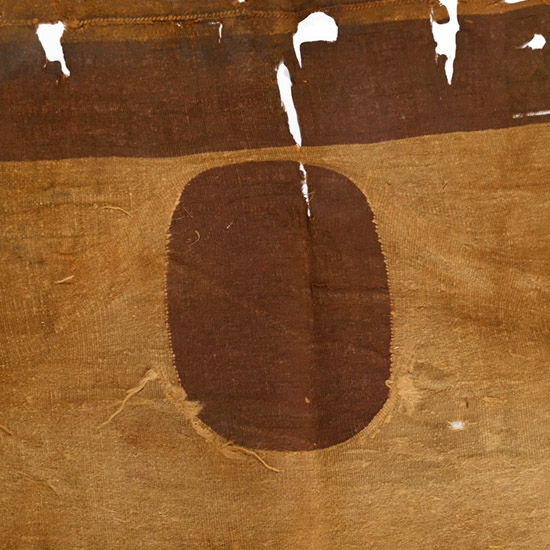
Large Egyptian Coptic Textile Shoulder Fragment of a Man's Military Tunic with Clavus and Orbiculus
Circa 5th-6th century A.D.Estimate: £200 - 300 (+bp*)
Opening Bid: £5
Large section of a shoulder from a man's tunic in wool on linen, decorated with a long purple clavus featuring geometric squares and a purple orbiculus on the shoulder; tapestry, weave braids with right-angled borders. 233 grams total including paper folder, 82 cm
Acquired 1970s-1996. Property of a North American collector. London collection, 2016.
The tunic was decorated in purple with opus phrygium embroidery. This corresponds to the iconography of military tunics for 5th-7th century Roman soldiers. The archaeological evidence from the desert cemeteries of Egypt offers striking confirmation of pictorial sources on late Roman clothing around the empire.
