
Loading, please wait...

LOT 0449
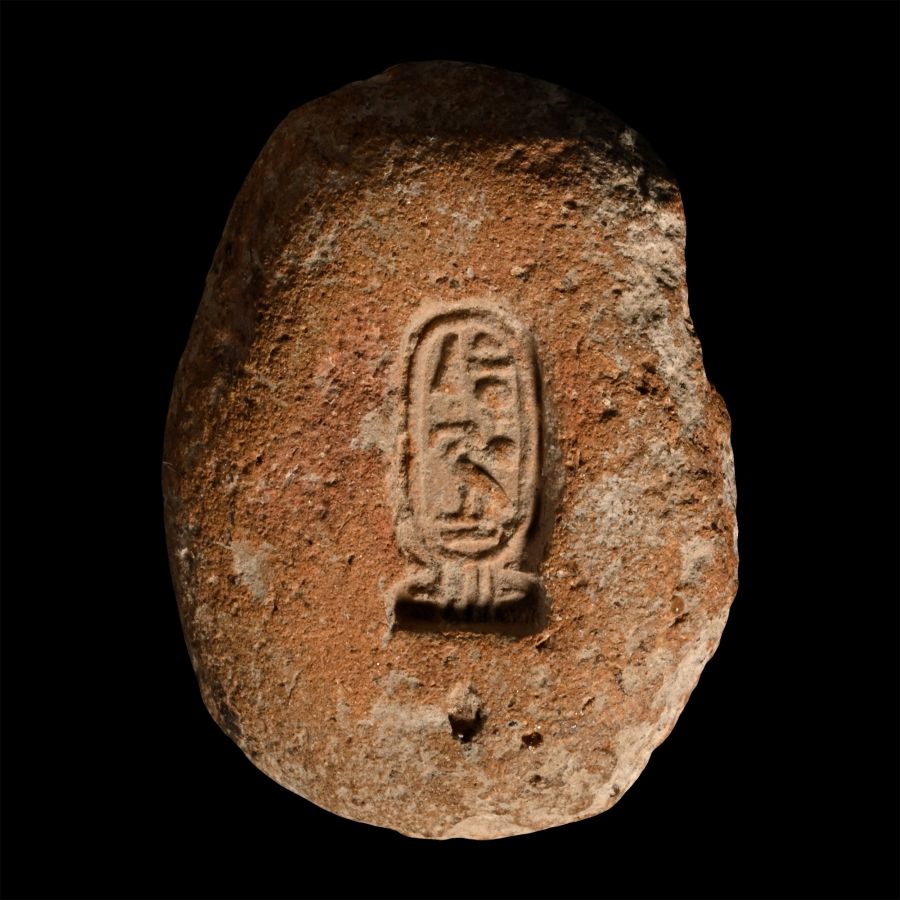
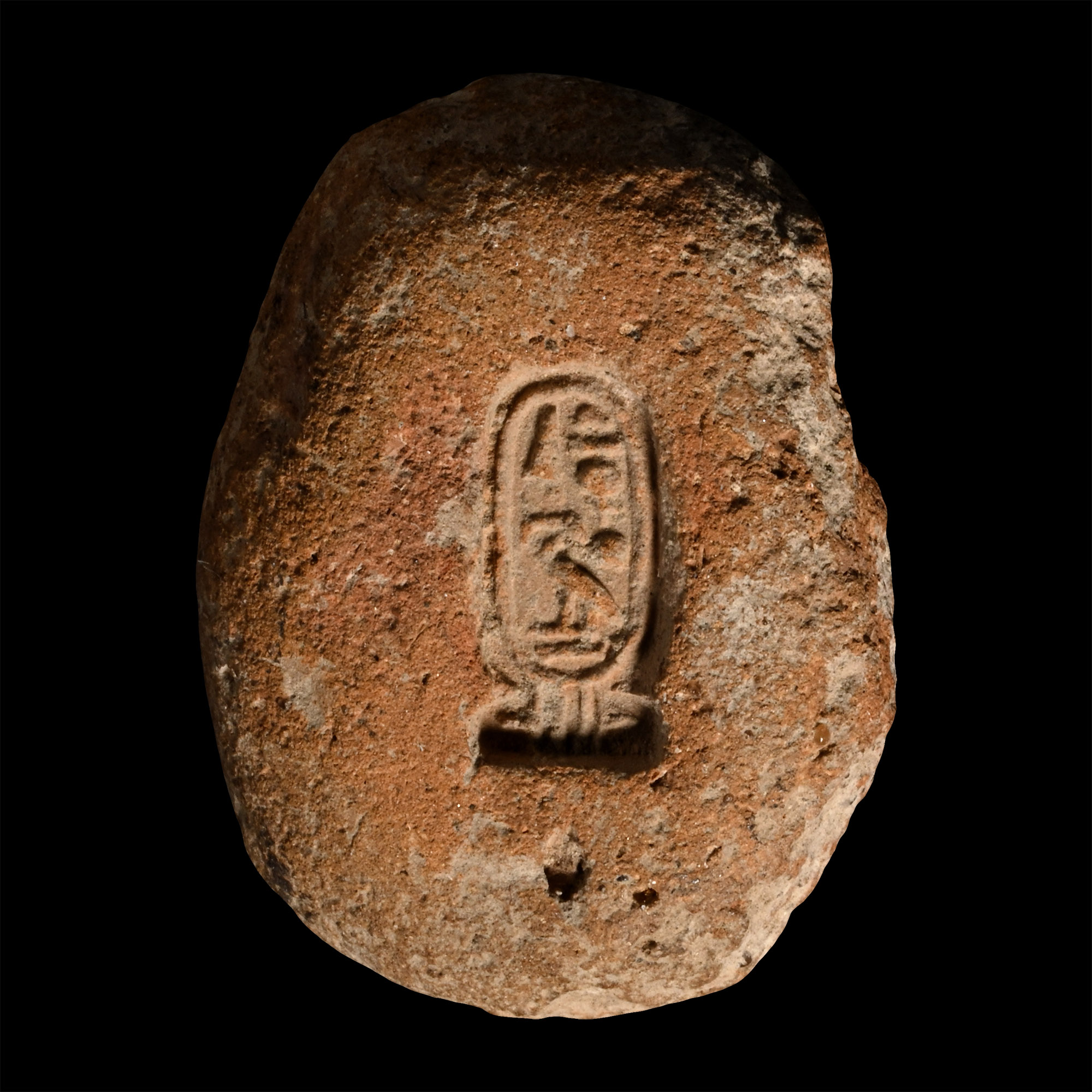
Egyptian Terracotta Mould with Impression of the Cartouche of Pharaoh Akhenaten
NEW KINGDOM, 18TH DYNASTY, AMARNA PERIOD, 1379-1362 B.C.
2 in. (4.96 grams, 27 mm).
Oblate type with incuse cartouche of Akhenaten. [No Reserve]
ProvenanceAcquired 7th February 1962, for 5 shillings.
From the private collection of Peter Clayton, FCILIP, Dip, Arch, FSA, FRNS, Hemel Hempstead, Hertfordshire, UK; formed since the late 1950s.
Accompanied by an old handwritten information card by Peter Clayton, collection no.87.
Cf. Seyfried, F. (ed.), In the Light of Amarna: 100 Years of the Nefertiti Discovery, Berlin, 2012, p. 100, fig. 2, for an example of a mould bearing Akhenaten's cartouche, likely used to produce a ring bezel.
FootnotesThis mould was probably used to produce a jewellery element, an inlay, or an amulet.
CONDITIONTimeLine Auctions follows a vetting process to ensure the authenticity and legality of all items, reinforcing our commitment to integrity and responsible trading. Each antiquity, antique, and coin lot undergoes thorough examination by a vetting committee of at least ten external specialists, professional trade association members, scientists, and archaeologists: Our Vetting Process
AUCTIONS:
TimeLine is a leading auction house specialising in antiquities, ancient art, collectables, natural history, coins, medals, and books. Our auctions offer museums, collectors, historians, and enthusiasts the opportunity to acquire unique and historically significant pieces.
LOT 0449
Egyptian Terracotta Mould with Impression of the Cartouche of Pharaoh Akhenaten
Estimate £400 - 600€460 - 700 (for guidance only)$540 - 810 (for guidance only)
-
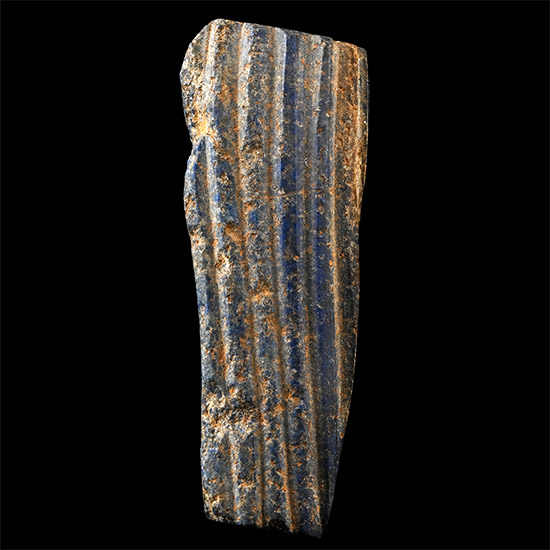
Egyptian Carved Lapis Lazuli Inlay
New Kingdom, 1550-1070 B.C.Estimate: £200 - 300 (+bp*)
Opening Bid: £5
Rectangular-section panel with tapering profile, fluting to the upper face. 23.6 grams, 48 mm
From the private collection of a European gentleman (1942-2024), formed since the 1970s.
This fragment most likely belongs to a striated skirt or wig. -
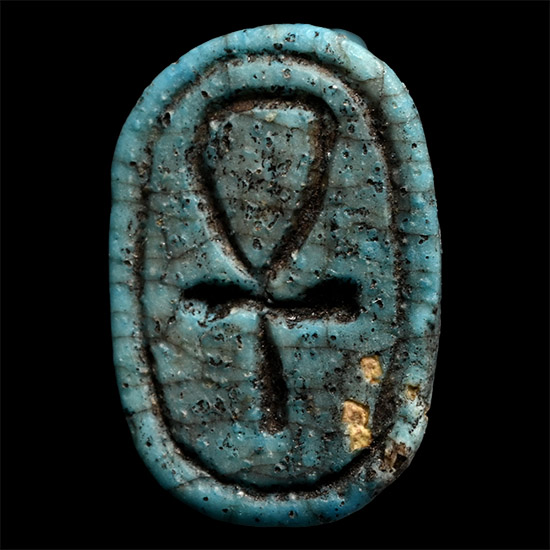
Egyptian Faience Scaraboid Frog Amulet with Ankh
Late Period, 664-332 B.C.Estimate: £120 - 170 (+bp*)
Opening Bid: £60
Modelled in the round, crouching on a rectangular base, incised ankh to the underside. 0.48 grams, 11 mm
From an important UK collection, 1940s.
Frog amulets in ancient Egypt symbolised fertility, rebirth, and renewal. Associated with the goddess Heqet, linked to childbirth and life-giving forces, they were especially popular for fertility and for protection during pregnancy and labour. Their association with the annual Nile flood, which brought new life to the land, further emphasised their symbolism of revival and abundance. The ancient Egyptian ankh hieroglyph on the amulet's base, meaning "life," reinforces the creature's symbolism. -
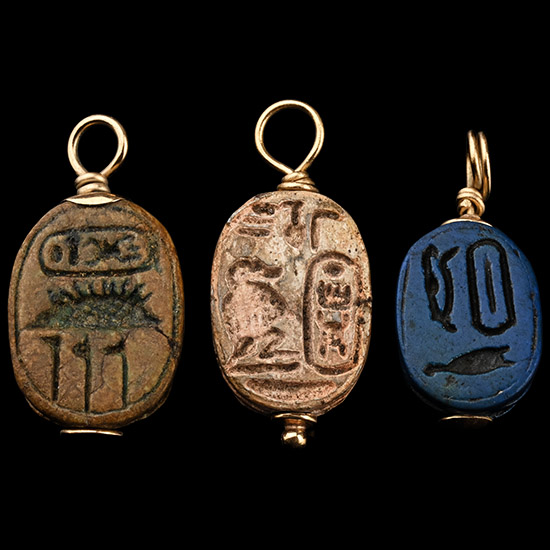
Egyptian Faience Scarabs with Gold Mounts
Late Period, 664-332 B.C. and laterEstimate: £400 - 600 (‡+bp*)
Opening Bid: £200
Comprising: a chestnut-coloured steatite scarab with a Thutmosis III cartouche and hieroglyphs on the underside; a tan-coloured faience scaraboid with a Thutmosis III cartouche on the convex obverse and the same cartouche with hieroglyphs, faced by a seated baboon, on the underside; offered with a modern blue scarab in a gold mount. 6.05 grams total, 22-25 mm
Private collection of Kal Noselson, New York, acquired between 1976 and the late 1990s; thence by descent. Accompanied by the collector's original inked images.
