
Loading, please wait...
LOT 0016
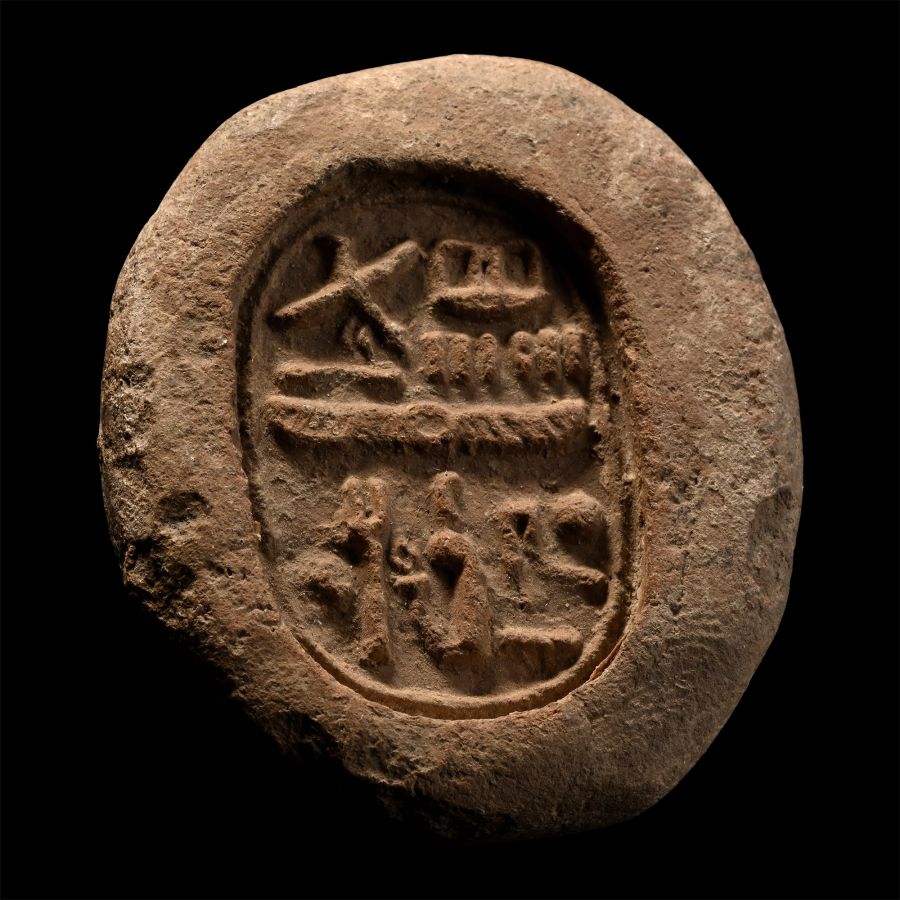
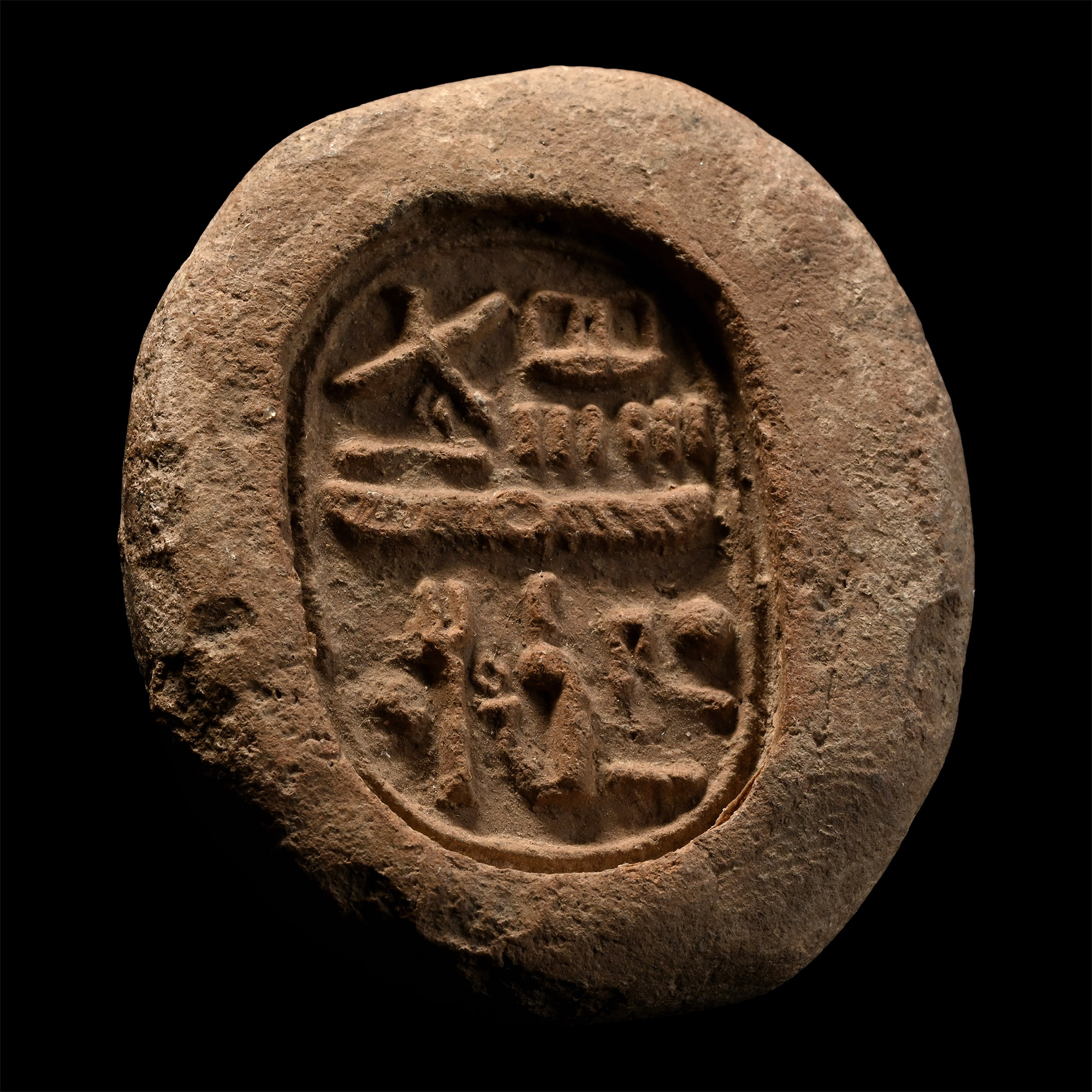
Egyptian Terracotta Mould with Impression of the Cartouche of Pharaoh Ramesses II
NEW KINGDOM, 19TH DYNASTY, CIRCA 1237-1235 B.C.
1 3/4 in. (27.4 grams, 46 mm).
Oblate type with an impressed cartouche recording the sixth Heb-Sed (jubilee) of Ramesses II. [No Reserve]
ProvenanceAcquired 7th February 1962.
From the private collection of Peter Clayton, FCILIP, Dip, Arch, FSA, FRNS, Hemel Hempstead, Hertfordshire, UK; formed since the late 1950s.
Accompanied by an old handwritten information card by Peter Clayton, collection no.85.
Cf. Brand, P.J., Ramesses II, Egypt’s Ultimate Pharaoh, Columbus, GA, 2023, pp.351-354, for a discussion of Ramesses II's early Heb-Sed festivals.
FootnotesBy the time of Ramesses II, the royal Heb-Sed festival was already about two thousand years old. He celebrated his first Heb-Sed in his 30th year and his sixth in his 45th year.
CONDITIONTimeLine Auctions follows a vetting process to ensure the authenticity and legality of all items, reinforcing our commitment to integrity and responsible trading. Each antiquity, antique, and coin lot undergoes thorough examination by a vetting committee of at least ten external specialists, professional trade association members, scientists, and archaeologists: Our Vetting Process
AUCTIONS:
TimeLine is a leading auction house specialising in antiquities, ancient art, collectables, natural history, coins, medals, and books. Our auctions offer museums, collectors, historians, and enthusiasts the opportunity to acquire unique and historically significant pieces.
LOT 0016
Egyptian Terracotta Mould with Impression of the Cartouche of Pharaoh Ramesses II
Estimate £600 - 800€700 - 930 (for guidance only)$810 - 1,080 (for guidance only)
-
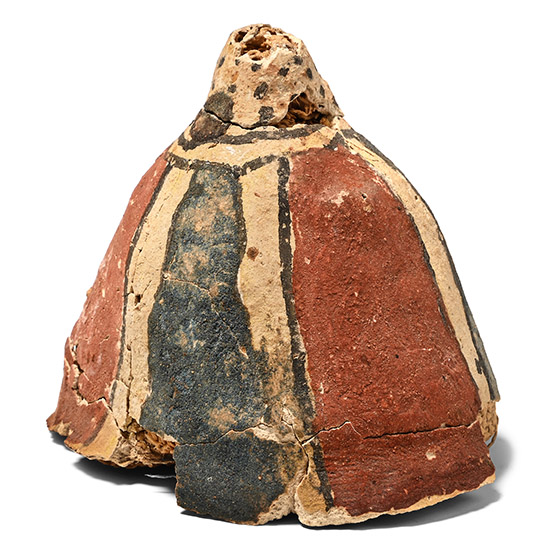
Egyptian Bell-Shaped Cartonnage Element from a Mummy Case
Graeco-Roman Period, circa 3rd century B.C.-2nd century A.D.Estimate: £100 - 140 (+bp*)
Opening Bid: £5
Bell-shaped in form with a conical top feature, the outer face is primed to accept painted petal detailing; inner layers are in loosely woven fabric. 20 grams, 69 mm
with a privately curated collection, 1980s-early 2000s. From the private collection and estate of Christine Simons (1943-2025), West Midlands, UK.
Intriguing object. Possibly a breast from a cartonnage mummy case. For example, some Roman-period cartonnage cases from Akhmim were modelled with female physiognomies, including wide hips and modelled breasts. -
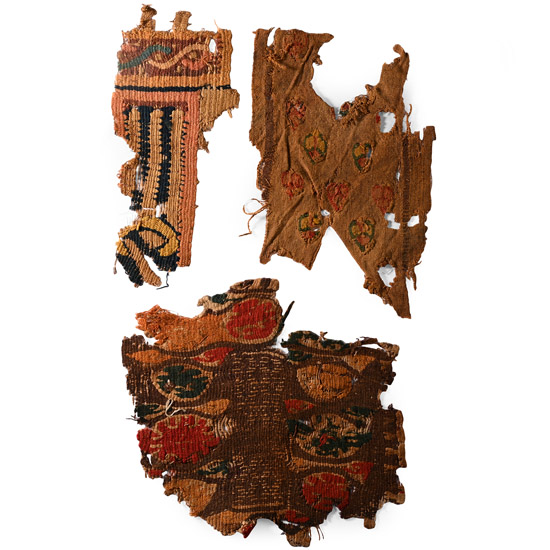
Egyptian Coptic Tunic and Tapestry Textile Fragments with Flowers and Geometric Ornaments
Circa 6th-8th century A.D.Estimate: £80 - 100 (+bp*)
Opening Bid: £5
Comprising a fragment of a clavus decorated with rows of heart-shaped buds in green, red, and yellow wool on linen, with edges marked by brown bands; a large fragment of coarse wool, consisting of a central rectangle with lozenge ornamentation in yellow and brown wool, surrounded by rectangular sections enclosing images of rabbits within yellow, green, and red medallions, facing left; and a textile fragment with geometric decoration in purple, yellow, light red, green, and black wool. 33 grams total, 21-26 cm
Acquired 1970s-1996. Property of a North American collector. London collection, 2016.
The large fragment featuring lozenge decoration, despite displaying figures associated with the Dionysian retinue (rabbits or hares), may date to the early period of the Islamic conquest, when tunic ornamentation began to take on an increasingly abstract and geometric character. -
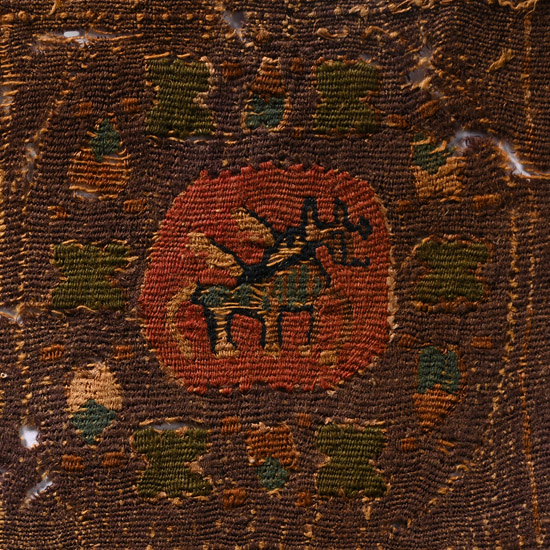
Egyptian Coptic Textile Fragment of a Tunic Tablion with Pegasus
Circa 7th century A.D.Estimate: £40 - 60 (+bp*)
Opening Bid: £5
In natural wool in shades of light brown, yellow, green, blue, and red with S-twist yarn, depicting the figure of Pegasus within a central medallion, surrounded by geometric and vegetal motifs; borders ornamented with meanders. 1.3 grams, 10.5 cm
Acquired 1970s-1996. Property of a North American collector. London collection, 2016.
The tabula, or tablion, was a square embroidery used to decorate tunics or mantles. The central figure is a rare representation of the winged horse Pegasus, a motif derived from Greek mythology, showing that classical iconography was still alive among the Christian Graeco-Roman people.
