
Loading, please wait...


LOT 0432
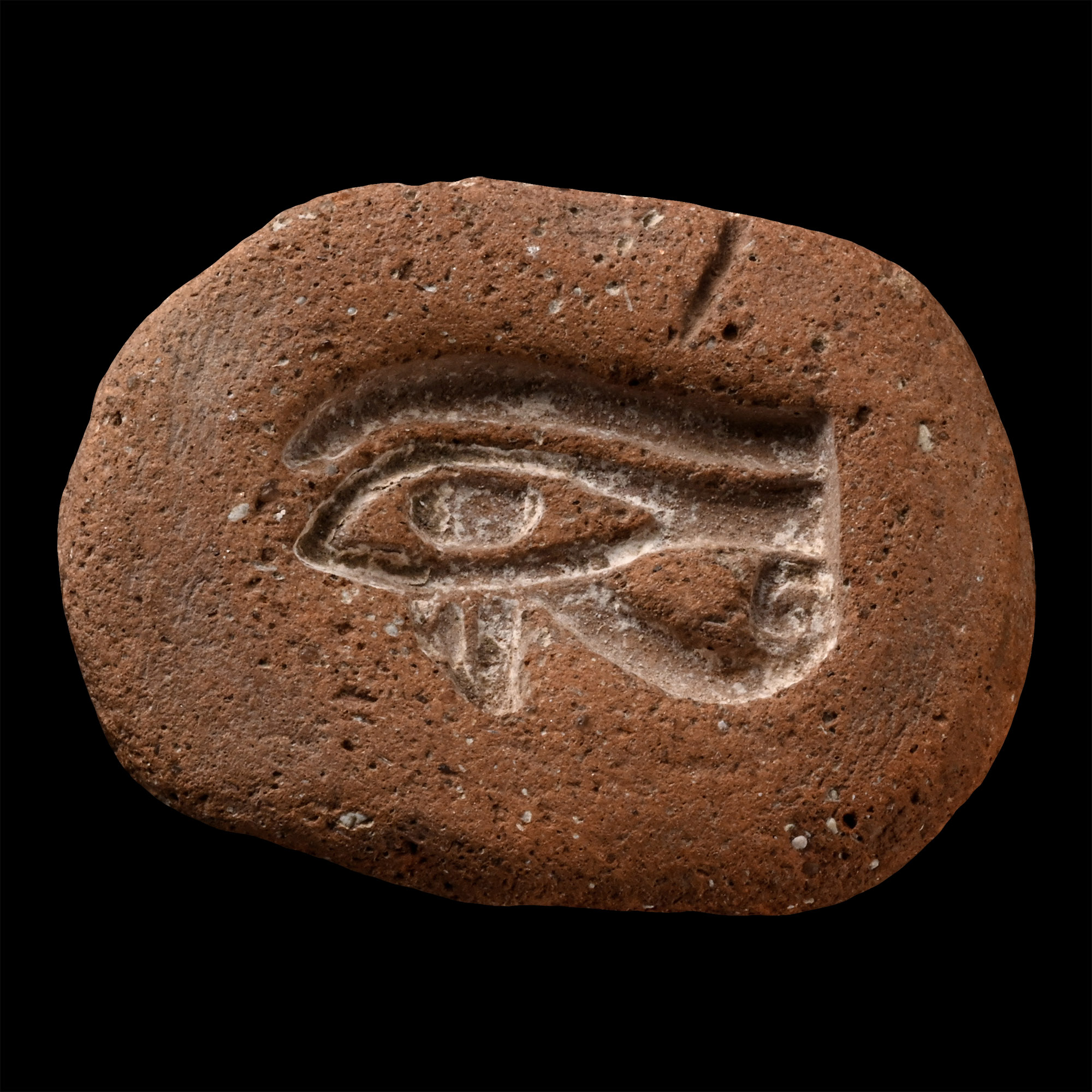
Egyptian Terracotta Mould for a Wedjat Eye
NEW KINGDOM, 18TH DYNASTY, AMARNA PERIOD, 1379-1362 B.C.
1 3/8 in. (8.8 grams, 36 mm).
Oblate terracotta mould with an impression of the 'eye of Horus' (wedjat) on one side, accompanied by an old collector's record card detailing findspot, place of purchase and other details. [No Reserve]
ProvenanceAcquired in March 1977.
From the private collection of Peter Clayton, FCILIP, Dip, Arch, FSA, FRNS, Hemel Hempstead, Hertfordshire, UK; formed since the late 1950s.
Accompanied by an old handwritten information card by Peter Clayton, collection no.127.
Cf. Seyfried, F. (ed.), In the Light of Amarna: 100 Years of the Nefertiti Discovery, Berlin, 2012, p. 295, for a similar wedjat-eye mould from Amarna.
FootnotesMoulds like this example were used to cast metal or faience items. When used for faience, traces of white paste often appear in the mould, suggesting that this example was used to produce faience wedjat eyes.
CONDITIONTimeLine Auctions follows a vetting process to ensure the authenticity and legality of all items, reinforcing our commitment to integrity and responsible trading. Each antiquity, antique, and coin lot undergoes thorough examination by a vetting committee of at least ten external specialists, professional trade association members, scientists, and archaeologists: Our Vetting Process
AUCTIONS:
TimeLine is a leading auction house specialising in antiquities, ancient art, collectables, natural history, coins, medals, and books. Our auctions offer museums, collectors, historians, and enthusiasts the opportunity to acquire unique and historically significant pieces.
LOT 0432
Egyptian Terracotta Mould for a Wedjat Eye
Estimate £50 - 70€58 - 81 (for guidance only)$68 - 95 (for guidance only)
-
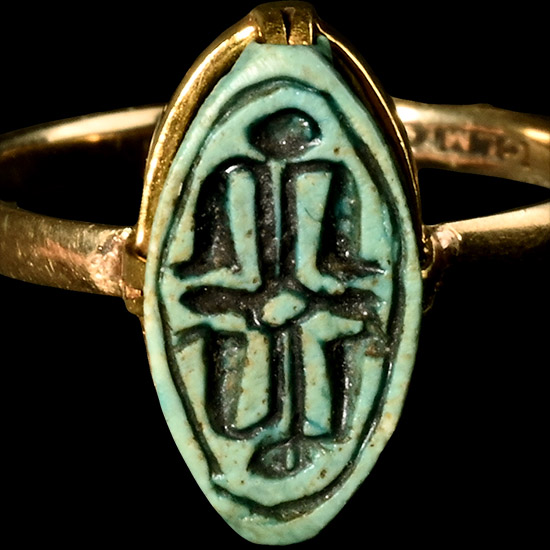
Egyptian Blue Faience Cowroid with Uraei in Gold Ring
Third Intermediate Period, 1069-860 B.C.Estimate: £500 - 700 (+bp*)
Opening Bid: £250
Slender, lentoid form with a finely striated edge design; the main motif comprises four outward-facing uraei, one in each quadrant, with a sun disc at each end, mounted in a modern gold ring. 2.33 grams, 22.62 mm overall, 16.76 mm internal diameter (approximate size British M, USA 6, Europe 12.46, Japan 12)
Private collection, London. -
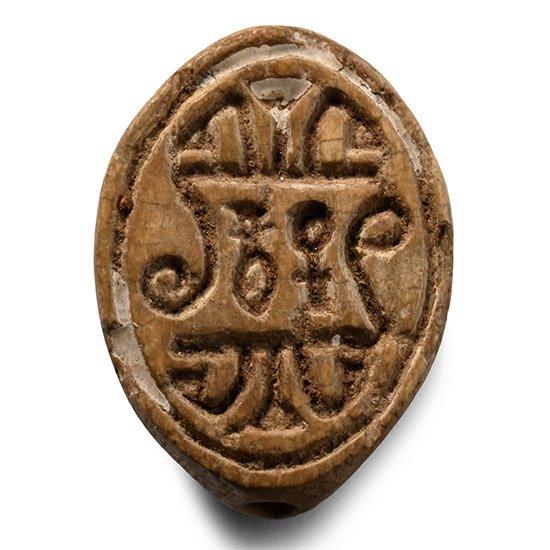
Egyptian Steatite Scaraboid Amulet with Hieroglyphs
Hyksos Period-early New Kingdom, circa 1782-1500 B.C.Estimate: £40 - 60 (+bp*)
Bids: 1 | Current Bid: £5
Plano-convex in section, underside with nfr and ankh hieroglyphs meaning 'good life', with a stylised lotus plant motif above and below. 2.36 grams, 20 mm
Excavated from Egypt in 1914. From the private collection of Mr David Sams and his wife, Elizabeth Kate Sams, gentry and amateur archaeologists who travelled to Egypt in 1914 with their daughter, Ethel. Mr Sams and his wife led digging expeditions from which these items come, from the family estate of Mr and Mrs Sams, by direct descent to their granddaughter. -
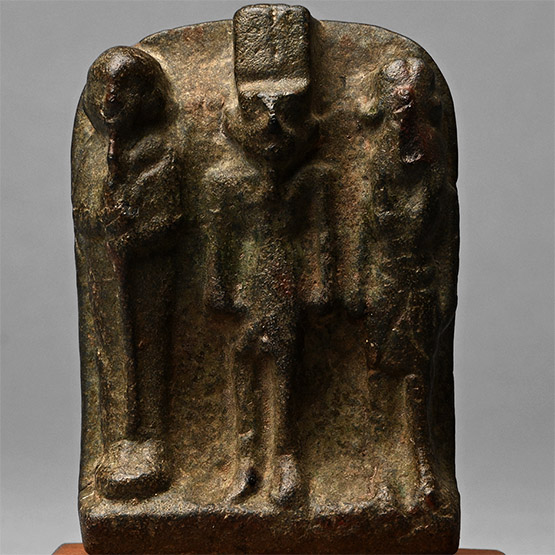
Egyptian Faience Ptah, Amun-Ra and Ra-Horakhty Triad Amulet
Ptolemaic Period, 332-30 B.C.Estimate: £2,500 - 3,500 (‡+bp*)
Opening Bid: £1,444
Rectangular plaque with a ledge along the lower edge, featuring the half-round figures of Ptah, Amun-Ra, and Ra-Horakhty; each invoked in offering formulae written in three vertical columns on the back; a fragmentary suspension loop at the rear; mounted on a wooden display stand. 88.8 grams total, 85 mm including stand
From a deceased American estate, 1970-1989. with Bonhams, London, 28 October 2009, no.81. Private collection, Europe. Accompanied by a copy of an Art Loss Register certificate, no.S00066707. This lot has been checked against the Interpol Database of stolen works of art and is accompanied by search certificate number no.13190-249206.
Amun, Ra-Horakhty, and Ptah. Amun evolved from a primordial god to a nationally worshipped deity, merging with Ra to become Amun-Ra, while Ra-Horakhty symbolises the sun and is depicted with a falcon's head. Ptah is recognised as the creator god and patron of craftsmen, originally worshipped in Memphis and later throughout Egypt.
