
Loading, please wait...

LOT 0422
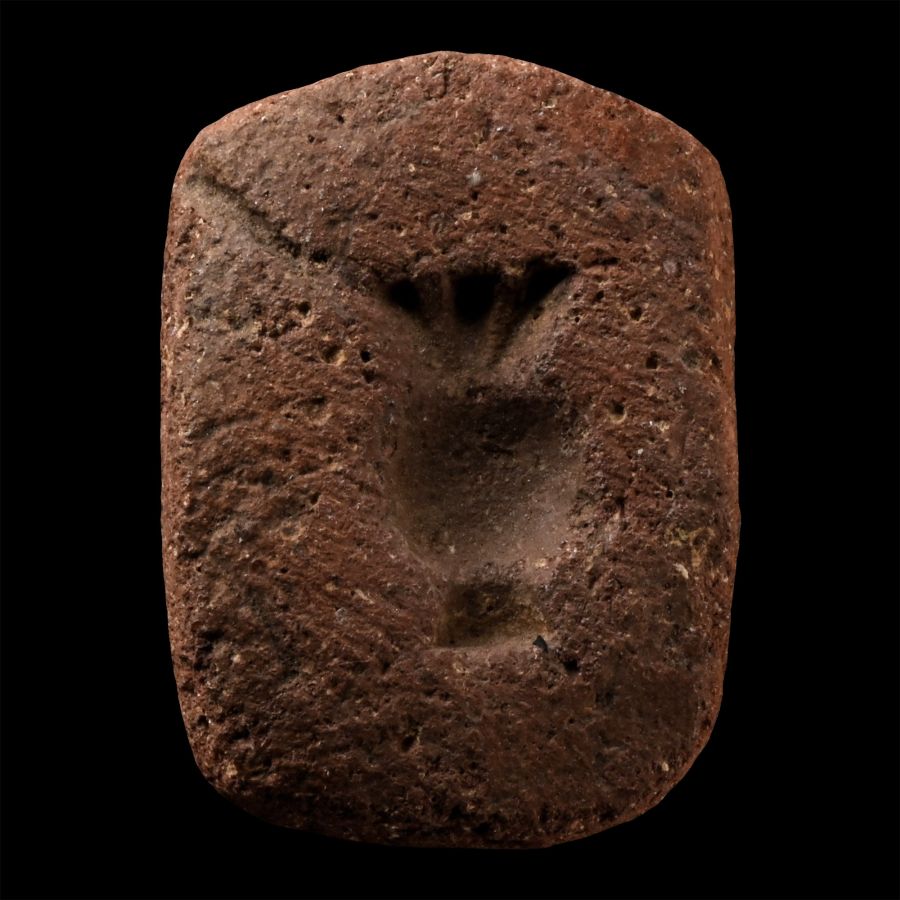
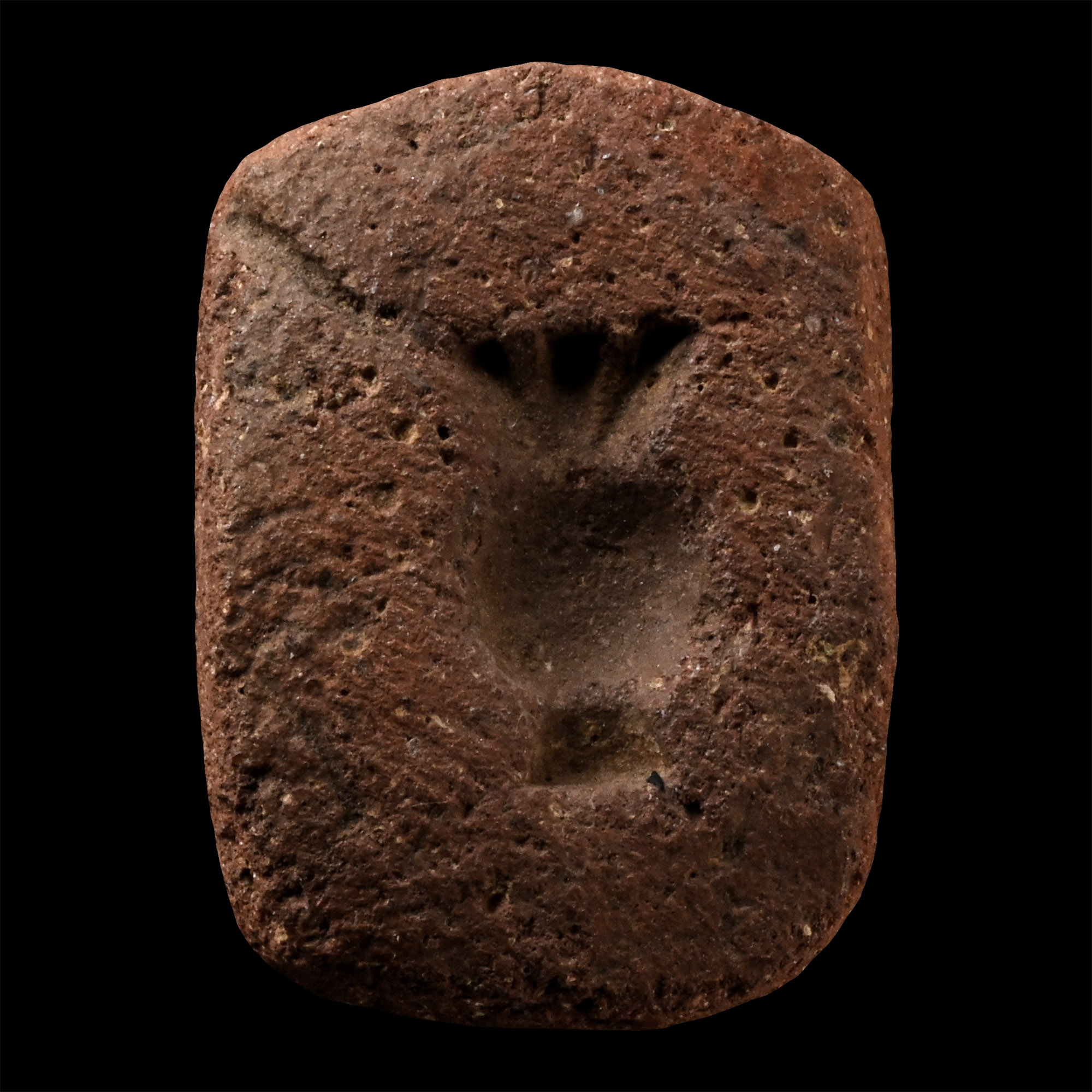
Egyptian Terracotta Mould for a Pomegranate Amulet
NEW KINGDOM, 18TH DYNASTY, AMARNA PERIOD, 1379-1362 B.C.
7/8 in. (3.22 grams, 21 mm).
Rectangular mould with incuse pomegranate motif on one side; with old collector's record card detailing findspot, place of purchase and other details. [No Reserve]
ProvenanceAcquired April 1980.
From the private collection of Peter Clayton, FCILIP, Dip, Arch, FSA, FRNS, Hemel Hempstead, Hertfordshire, UK; formed since the late 1950s.
Accompanied by an old handwritten information card by Peter Clayton, collection no.149.
TimeLine Auctions follows a vetting process to ensure the authenticity and legality of all items, reinforcing our commitment to integrity and responsible trading. Each antiquity, antique, and coin lot undergoes thorough examination by a vetting committee of at least ten external specialists, professional trade association members, scientists, and archaeologists: Our Vetting Process
AUCTIONS:
TimeLine is a leading auction house specialising in antiquities, ancient art, collectables, natural history, coins, medals, and books. Our auctions offer museums, collectors, historians, and enthusiasts the opportunity to acquire unique and historically significant pieces.
LOT 0422
Egyptian Terracotta Mould for a Pomegranate Amulet
Estimate £40 - 60€46 - 70 (for guidance only)$54 - 81 (for guidance only)
Opening Bid
£5 (EUR 6; USD 7) +BP*
-
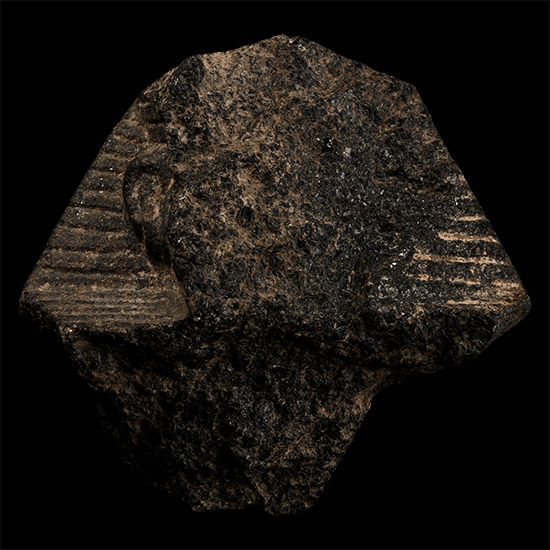
Egyptian Fragmentary Granite Head of a Pharaoh
Middle Kingdom, circa late 12th-13th Dynasty, circa 1860-1649 B.C.Estimate: £400 - 600 (+bp*)
Bids: 2 | Current Bid: £30
With a distinctive striated royal nemes headcloth, one large forward-facing ear preserved, and a largely absent face, the gathered 'tail' of the headdress hanging down at the back. 406 grams, 96 mm
Acquired March 1965. From the private collection of Peter Clayton, FCILIP, Dip, Arch, FSA, FRNS, Hemel Hempstead, Hertfordshire, UK; formed since the late 1950s. Accompanied by an old handwritten information card by Peter Clayton, collection no.110.
Dark, hard stones were favoured for royal statuary in the late Middle Kingdom. The internal treatment of the forward-facing ears and the markings of the nemes are comparable to those of more complete royal heads from this period (cf. Bourriau, J., Pharaohs and Mortals. Egyptian art in the Middle Kingdom, Cambridge, 1988, p. 38, no. 32, for a portrait head of Amenemhat III). -
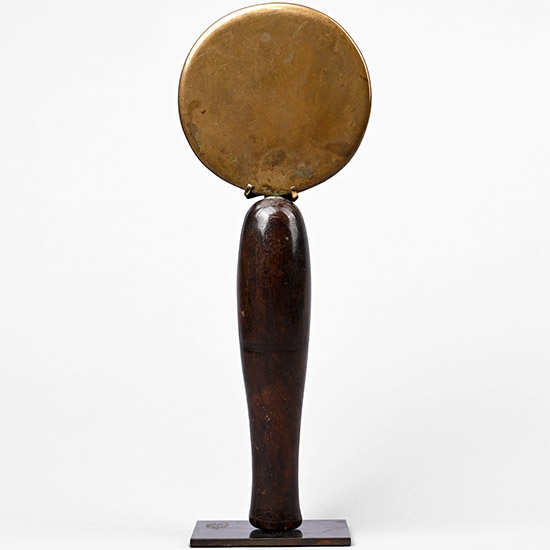
Egyptian Bronze Mirror with Wooden Handle
New Kingdom, 18th-20th Dynasty, 1550-1070 B.C.Estimate: £4,000 - 6,000 (+bp*)
Opening Bid: £2,000
The rounded cylindrical handle narrowing towards the base and decorated with three horizontal bands; the circular, heavy bronze mirror highly polished and relatively small; accompanied by a custom-made display stand. 766 grams total, 29 cm high including stand
with Rupert Wace, Ancient Art, 2003. Private collection, UK. This lot has been checked against the Interpol Database of stolen works of art and is accompanied by search certificate no.13517-263432.
The club-type handle resembles the hieroglyph hem, which can mean 'servant'. Therefore, the handle is thought to represent the mirror disc's servant. This type appears in pictorial scenes; for example, a similar smaller disc mirror with a hem handle is depicted in the Theban tomb (TT 60) of Senet (Davies, N.de G., The Tomb of Antefoker, Vizier of Sesostris I, and of His Wife, Senet, London 1930, pl. 30), and another with a larger disc and a shorter hem handle is depicted on the inside of the coffin of Sebeka (Steindorff, G., Grabfunde des mittleren Reichs in den königlichen Museen zu Berlin. Part 2: Der Sarg des Sebk.-o.- ein Grabfund aus Gebelen, Berlin, 1896, 2, pl. 2). -
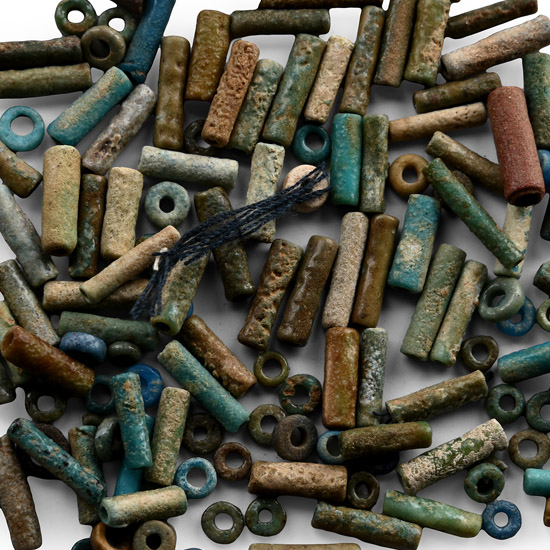
Egyptian Mummy Bead Group
Late Period-Ptolemaic Period, circa 664-30 B.C.Estimate: £40 - 60 (+bp*)
Opening Bid: £5
Group of tubular and annular beads in green, blue, and beige colours. 7.4 grams total, 3-12 mm
Ex Art Shop Windsor, 1990s. From a private UK collection.
