
Loading, please wait...

LOT 0469
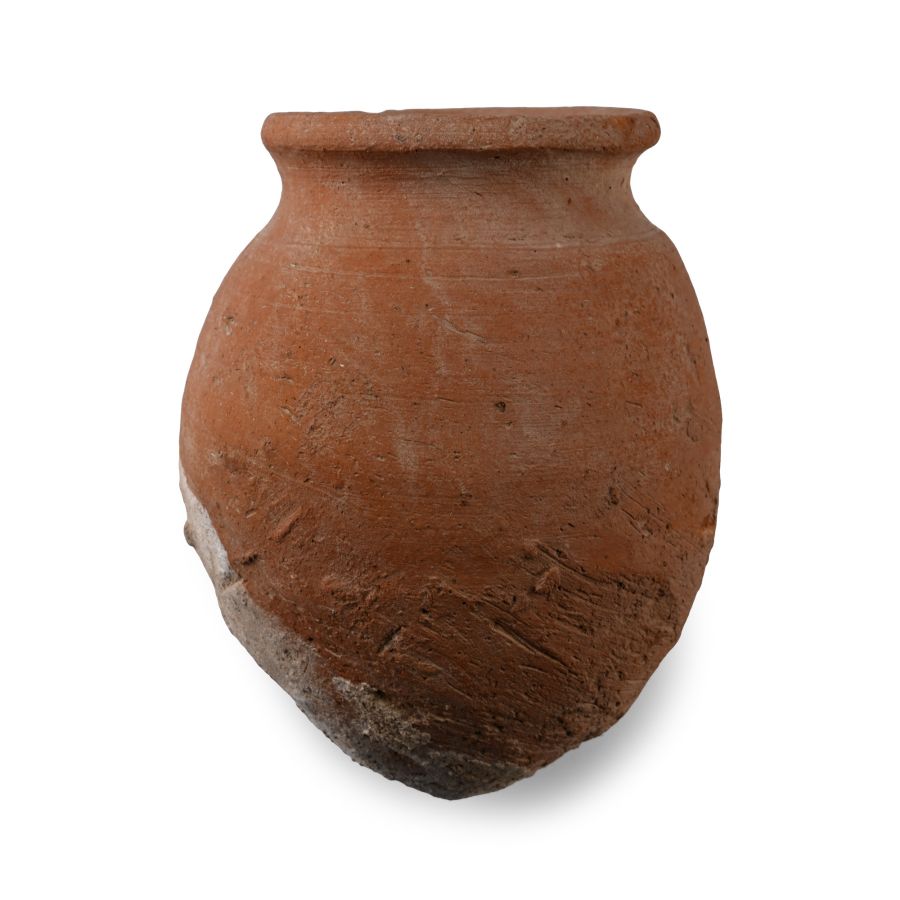
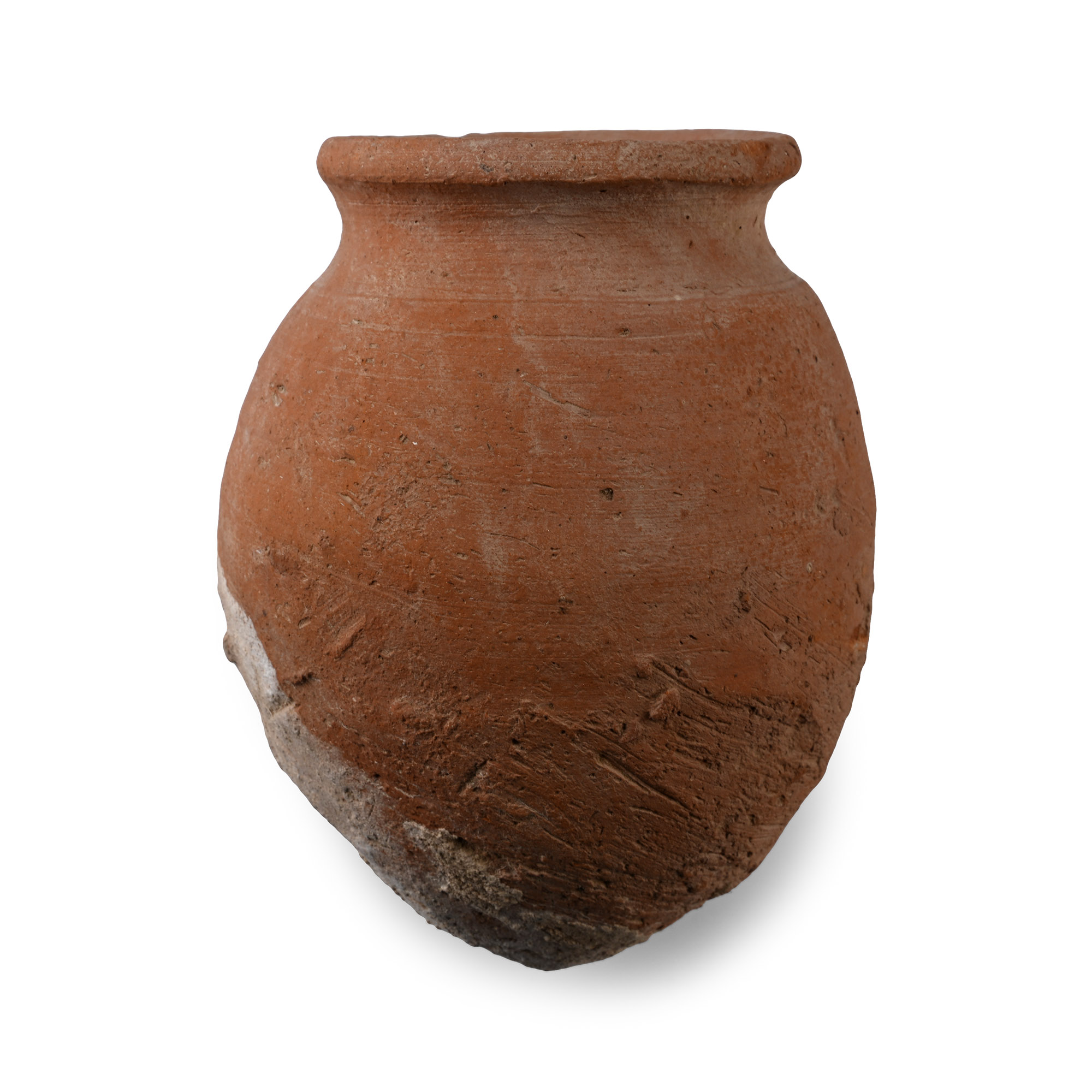
Egyptian Terracotta Jar
NEW KINGDOM, CIRCA 16TH-13TH CENTURY B.C.
6 1/8 in. (770 grams, 15.4 cm).
With pointed foot, bulbous body, carinated shoulder and everted rim. [No Reserve]
ProvenanceAcquired Sunday 11th October 1992.
From the private collection of Peter Clayton, FCILIP, Dip, Arch, FSA, FRNS, Hemel Hempstead, Hertfordshire, UK; formed since the late 1950s.
Accompanied by an old handwritten information ticket.
Various forms of this vessel were produced during the New Kingdom (see Guidotti, M.C., Vasi dall’epoca protodinastica al Nuovo Regno, Museo Egizio di Firenze, Rome, 1991, pp. 218, nos. 339-340, and p. 227, no. 361).
CONDITIONTimeLine Auctions follows a vetting process to ensure the authenticity and legality of all items, reinforcing our commitment to integrity and responsible trading. Each antiquity, antique, and coin lot undergoes thorough examination by a vetting committee of at least ten external specialists, professional trade association members, scientists, and archaeologists: Our Vetting Process
AUCTIONS:
TimeLine is a leading auction house specialising in antiquities, ancient art, collectables, natural history, coins, medals, and books. Our auctions offer museums, collectors, historians, and enthusiasts the opportunity to acquire unique and historically significant pieces.
LOT 0469
Egyptian Terracotta Jar
Estimate £300 - 400€350 - 460 (for guidance only)$410 - 540 (for guidance only)
Opening Bid
£5 (EUR 6; USD 7) +BP*
-
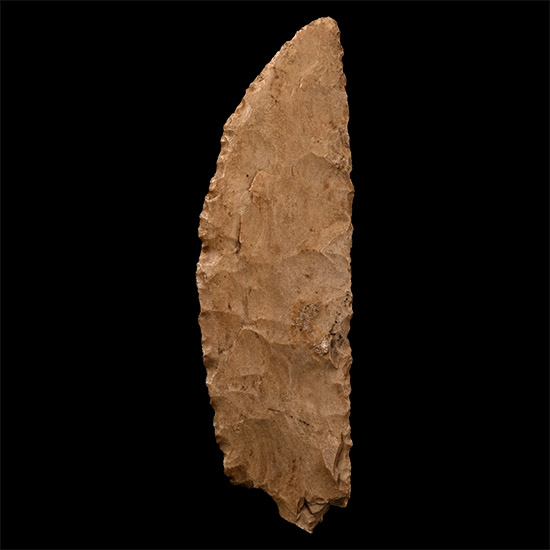
Egyptian Stone Age Knapped Honey-Coloured Flint Knife
Predynastic Period, circa 3500-3000 B.C.Estimate: £400 - 600 (+bp*)
Bids: 2 | Current Bid: £10
Knapped knife with curved edge; with old collector's record card detailing place of purchase and other details. 41.1 grams, 12.3 cm
Ex Puys-Aubert collection, Alexandria, March 1963, for 6 shillings. From the private collection of Peter Clayton, FCILIP, Dip, Arch, FSA, FRNS, Hemel Hempstead, Hertfordshire, UK; formed since the late 1950s. Accompanied by an old typed information card by Peter Clayton, collection no.106. -
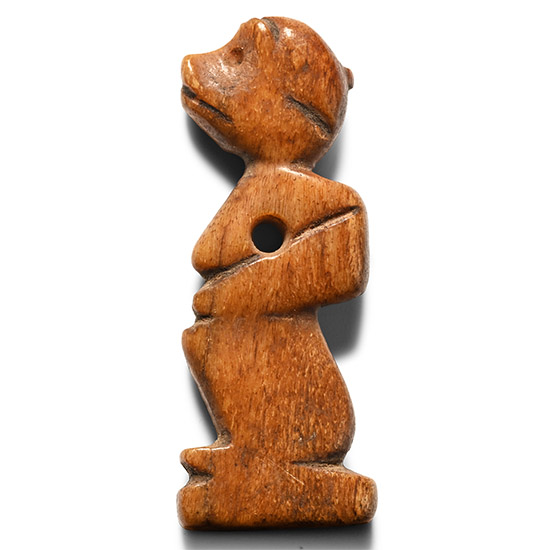
Egyptian Bone Monkey Amulet
New Kingdom, circa 1400-1292 B.C.Estimate: £120 - 170 (+bp*)
Opening Bid: £5
Carved in profile as a kneeling monkey, pierced for suspension. 4.27 grams, 43 mm
London, UK, art market, 1980s. Private collection, London, UK. -
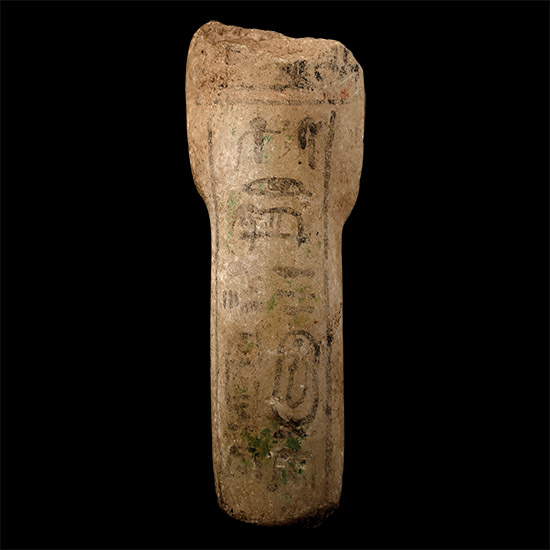
Egyptian Alabaster Shabti of Pharaoh Ramesses VI
New Kingdom, 20th Dynasty, circa 1140-1132 B.C.Estimate: £1,000 - 1,400 (+bp*)
Opening Bid: £5
Formless mummiform shape (head missing), with the lower portions of a lappet wig, schematically represented arms and hands, a collar, and an inscription added in black, with traces of green pigment; the inscription, including two cartouches, reads: 'The illuminated one, the Osiris, Lord of the Two Lands Neb-Maat-Re, beloved of Amun, Master of Appearances, Ramesses', sḥḏ wsı͗r nb tꜢwy (nb-mꜢꜤt-rꜤ mry ı͗mn) nb ḫꜤw (rꜤ-ms.sw). 431 grams, 14.7 cm
Acquired March 1977. From the private collection of Peter Clayton, FCILIP, Dip, Arch, FSA, FRNS, Hemel Hempstead, Hertfordshire, UK; formed since the late 1950s. Accompanied by an old handwritten information card by Peter Clayton, collection no.126.
This rather rudimentary, peg-like shabti is characteristic of those for Ramesses IV, VI, and VII, as well as of non-royal figurines of the 20th Dynasty. Because of their virtually featureless appearance, which relies entirely on painted details, this shabti type has been referred to as 'à contours perdus' ('with lost outlines').
