
Loading, please wait...
LOT 0634
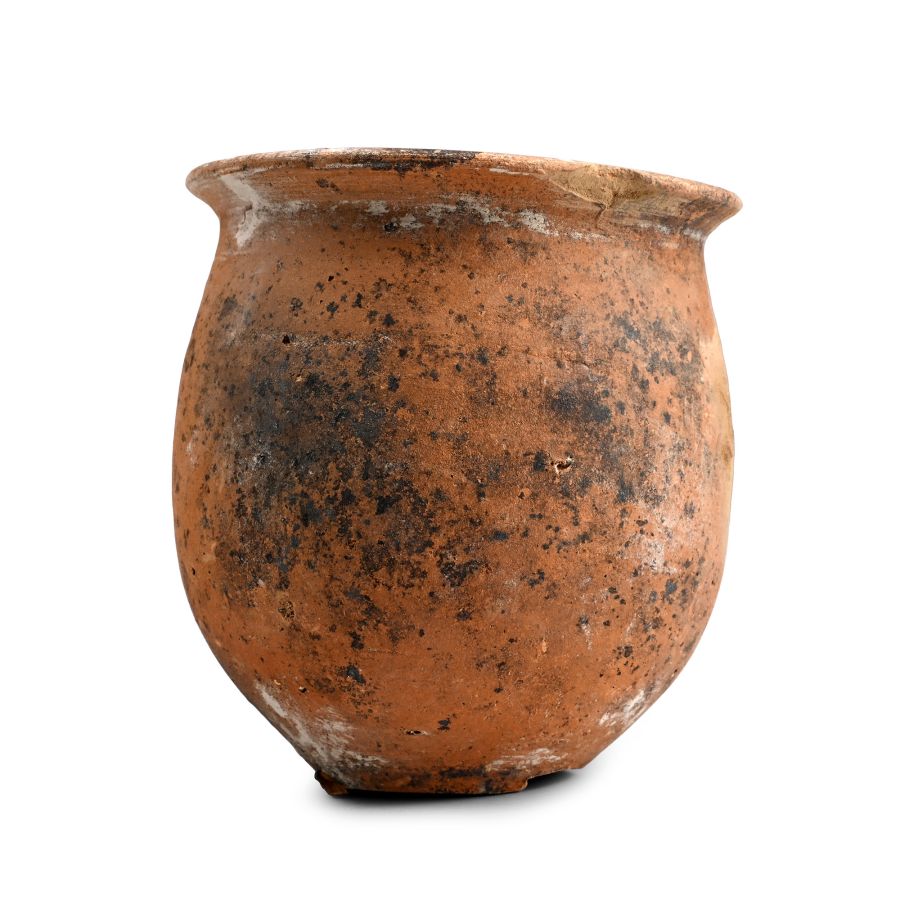
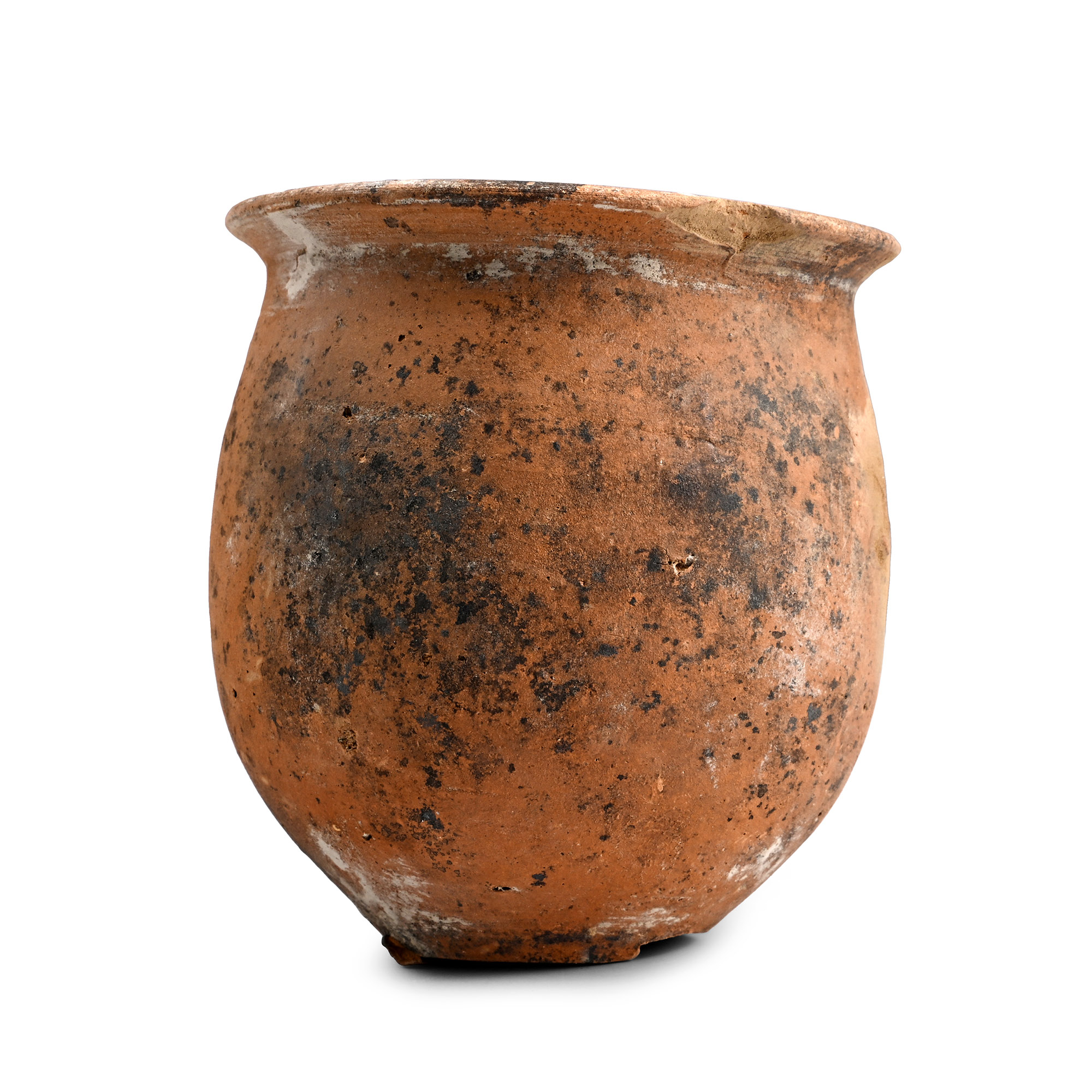
Egyptian Terracotta Jar
ROMAN PERIOD, 30 B.C.-323 A.D.
3 3/8 in. (140 grams, 85 mm).
Ovoid in profile with flared everted rim to the mouth; repaired. [No Reserve]
ProvenanceAcquired on the UK art market since the 1990s.
From the property of a late Lincolnshire, UK, gentleman; thence by descent.
TimeLine Auctions follows a vetting process to ensure the authenticity and legality of all items, reinforcing our commitment to integrity and responsible trading. Each antiquity, antique, and coin lot undergoes thorough examination by a vetting committee of at least ten external specialists, professional trade association members, scientists, and archaeologists: Our Vetting Process
AUCTIONS:
TimeLine is a leading auction house specialising in antiquities, ancient art, collectables, natural history, coins, medals, and books. Our auctions offer museums, collectors, historians, and enthusiasts the opportunity to acquire unique and historically significant pieces.
LOT 0634
Egyptian Terracotta Jar
Estimate £50 - 70€58 - 81 (for guidance only)$68 - 95 (for guidance only)
Opening Bid
£5 (EUR 6; USD 7) +BP*
-
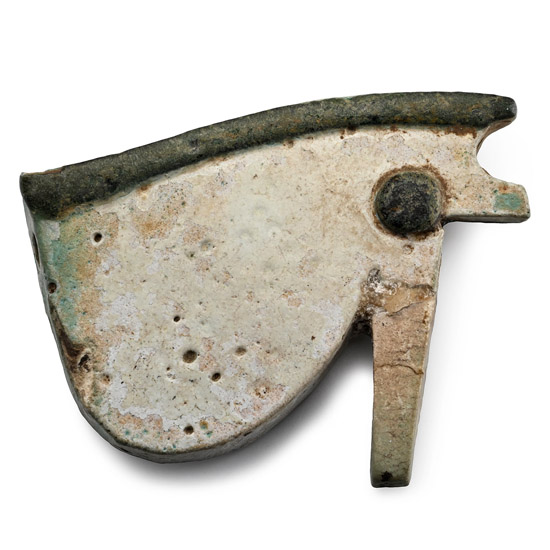
Large Egyptian Faience Eye of Horus Amulet
Third Intermediate Period, circa 1069-664 B.C.Estimate: £200 - 300 (+bp*)
Opening Bid: £100
Sizeable wedjat-eye amulet with applied black detailing to the pupil and brow. 16.5 grams, 50.4 mm
with Archaeologia, Switzerland, before 1983. Ex private North American collection. London private collection, 2016.
The wedjat-eye amulet symbolises the healed eye of the god Horus, representing both human and falcon elements. The name wedjat in ancient Egyptian means ‘the one that is sound.’ According to Egyptian mythology, Horus' eye was wounded or taken by the god Seth and later restored by Thoth. The wedjat-eye amulet was believed to protect its wearer and confer qualities of recovery and regeneration. It was highly popular and was used by both the living and the dead. -
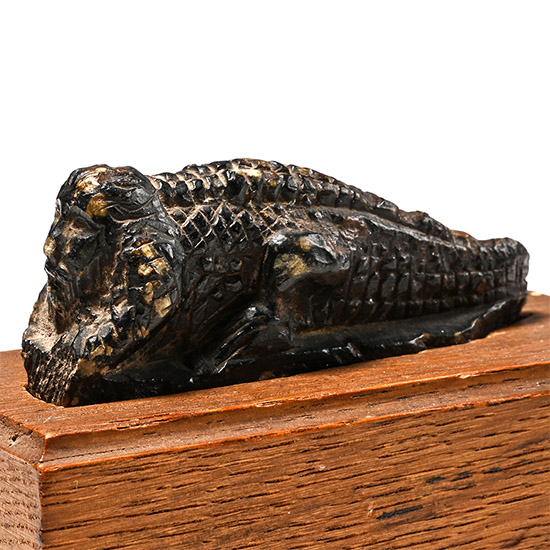
Romano-Egyptian Stone Crocodile Figure
Late Period, 664-332 B.C.Estimate: £400 - 600 (+bp*)
Opening Bid: £200
Carved in high relief with a flat underside, reptilian body with finely rendered scales, and a small human head, mounted on a custom-made wooden stand. 40.79 grams, 68 mm wide (116 grams total, 93 mmm wide including stand)
Private collection. with Mallams, Oxford, Library Sale, 2025. Acquired by the current owner from the above.
The earliest representation of a human-headed crocodile appears in a vignette from Spell 88 of the Book of the Dead dating to the reign of Ramesses II (13th century B.C.) and identifies the deceased as Sobek. Stylistically, this example appears to be from the Late Period, when amulets representing Sobek-Osiris or Sobek-Re are known. -
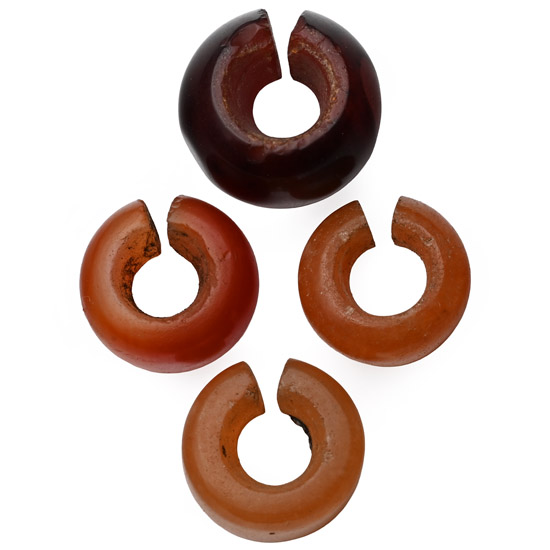
Egyptian Carnelian Hair Ring Collection
New Kingdom, circa 1400–1292 B.C.Estimate: £200 - 300 (+bp*)
Opening Bid: £100
Each a penannular lentoid-section type with narrow slot. 17 grams total, 16-20 mm
London gentleman's collection, 1970-1990s, by descent.
