
Loading, please wait...


LOT 0434
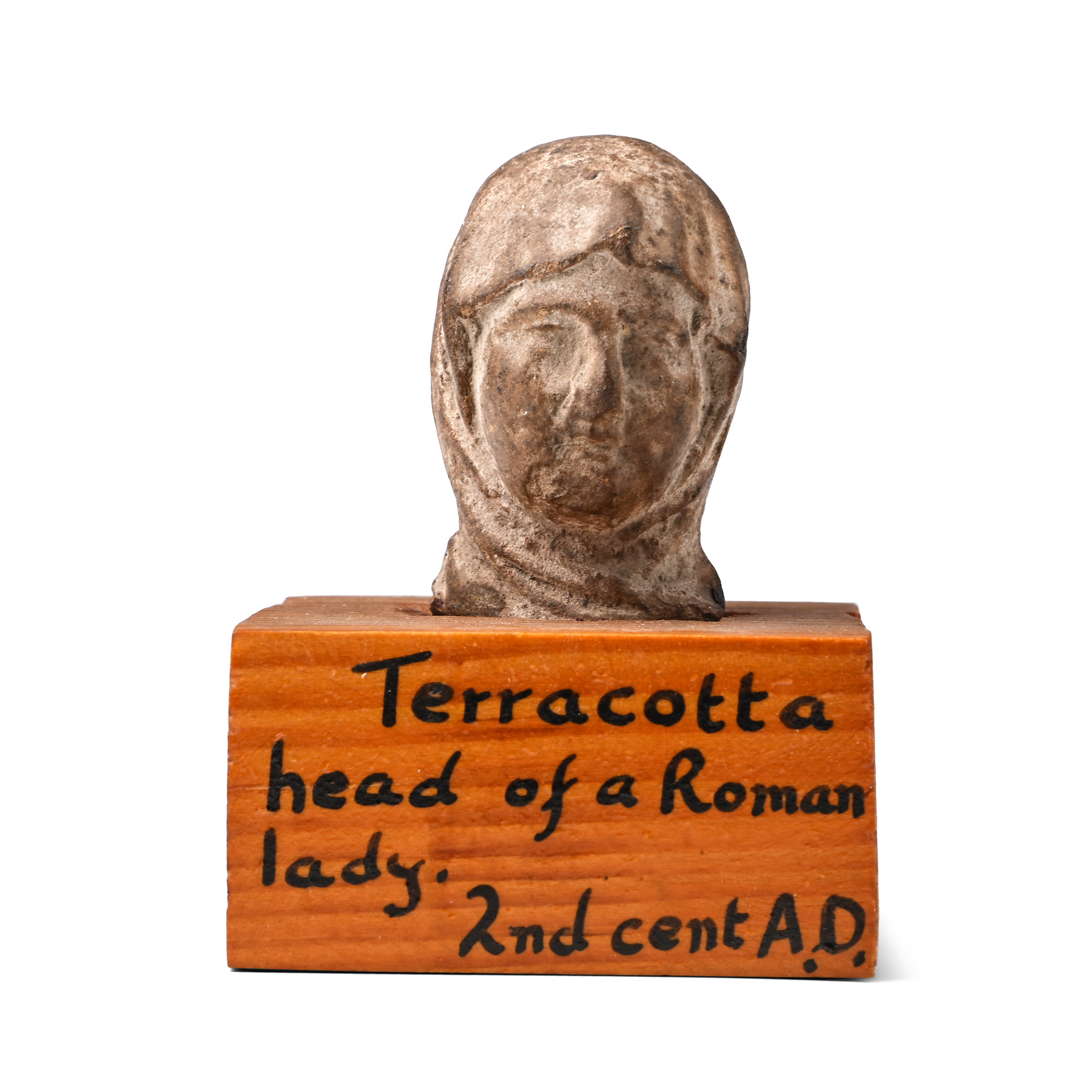
Egyptian Terracotta Head of a Roman Lady
HELLENISTIC PERIOD, CIRCA 3RD-2ND CENTURY B.C.
2 in. (40.9 grams total, 51 mm including stand).
Depicting the cloth-wrapped head of a lady, mounted on a wooden stand. [No Reserve]
ProvenanceAcquired from High Street, Herne Bay, circa June 1957, for £1.00.
Certificate of antiquity no.668 of Blanchard's Egyptian Museum, Cairo.
From the private collection of Peter Clayton, FCILIP, Dip, Arch, FSA, FRNS, Hemel Hempstead, Hertfordshire, UK; formed since the late 1950s.
Accompanied by an old handwritten information card by Peter Clayton, collection no.11.
Cf. Fjeldhagen, M., Graeco-Roman Terracottas from Egypt. Ny Carlsberg Glyptotek, Copenhagen, 1995, pp.154-155, no. 144, for a more extreme version of a cloth-wrapped woman's head.
FootnotesThis head comes from a draped female figure, known as the Tanagra-type, often wearing elegant himations (cloaks) and wide-brimmed hats (tholia), or holding accessories such as fans, wreaths, and mirrors.
CONDITIONTimeLine Auctions follows a vetting process to ensure the authenticity and legality of all items, reinforcing our commitment to integrity and responsible trading. Each antiquity, antique, and coin lot undergoes thorough examination by a vetting committee of at least ten external specialists, professional trade association members, scientists, and archaeologists: Our Vetting Process
AUCTIONS:
TimeLine is a leading auction house specialising in antiquities, ancient art, collectables, natural history, coins, medals, and books. Our auctions offer museums, collectors, historians, and enthusiasts the opportunity to acquire unique and historically significant pieces.
LOT 0434
Egyptian Terracotta Head of a Roman Lady
Estimate £100 - 140€120 - 160 (for guidance only)$140 - 190 (for guidance only)
-
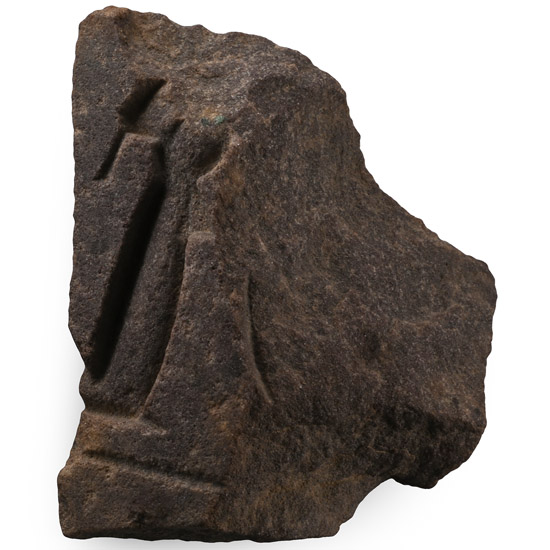
Egyptian Red Quartzite Granite Hieroglyphic Fragment
New Kingdom, 18th Dynasty, Amarna Period, 1353-1336 B.C.Estimate: £40 - 60 (+bp*)
Opening Bid: £5
Fragment featuring a single incised border line with the remains of a seated-figure hieroglyph above. 140 grams, 90 mm
Acquired circa February 1978. From the private collection of Peter Clayton, FCILIP, Dip, Arch, FSA, FRNS, Hemel Hempstead, Hertfordshire, UK; formed since the late 1950s. -
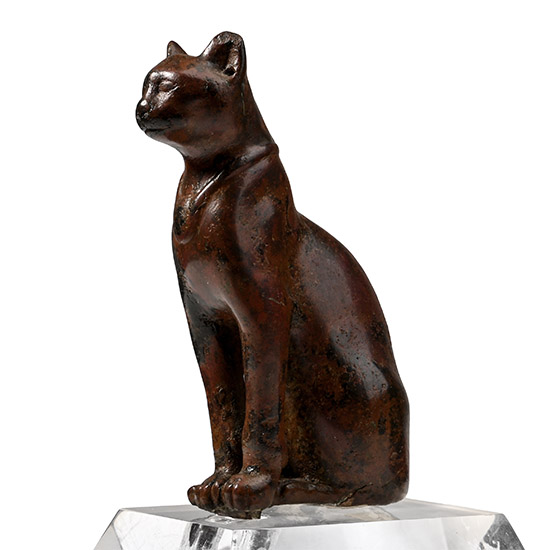
'The Fitzgerald' Egyptian Bronze Statue of the Seated Cat Goddess Bastet
Late Period, 26th-30th Dynasty, circa 664-332 B.C.Estimate: £3,000 - 4,000 (+bp*)
Bids: 10 | Current Bid: £600
Modelled seated, its tail wrapped around one side of its body and resting on a front paw, both ears pierced, wearing a collar featuring a large amuletic pendant, a rectangular tang for attachment to a separate element below; mounted on a 1970s custom-made perspex display stand. 470 grams total including stand, cat: 11.2 cm high
Dr Desmond Fitzgerald collection, no.28. Ex Nick Wright, 1990. From the collection of Charlie Watts (The Rolling Stones drummer). This lot has been checked against the Interpol Database of stolen works of art and is accompanied by search certificate no.13462-261733.
The cat was the most sacred animal in ancient Egypt and associated with the cat-headed goddess Bastet, daughter of Re. When represented in human form as a cat-headed female, she usually holds a sistrum (a musical rattle) in her right hand with a supine cat on its top, and an aegis in her left. Small kittens are often shown at her feet. Her most important cult centre was at Bubastis (Tell Basta) in the north-east Delta. The site today is heavily ruined and the temple destroyed. Sir Flinders Petrie excavated at Bubastis and other nearby Delta sites in the 1880s. Tombs of some of the temple officials have been found nearby, and vast cemeteries of mummified cat burials left as votive offerings; so many thousands were found that they were used locally as fuel. Since Petrie’s investigations, the site has been abandoned and only in recent years have excavations begun to be undertaken. In painted nobles’ tombs at Thebes, a cat is often represented seated beneath the chair of the noble’s wife. In the 5th century BC, the Greek historian Herodotus wrote that the festival of Bastet at Bubastis was the most elaborate of all those in Egypt. The Roman geographer Strabo wrote that the cat was so revered in Egypt that an Egyptian dashed into his burning house to save the cat, then returned to rescue his family. -
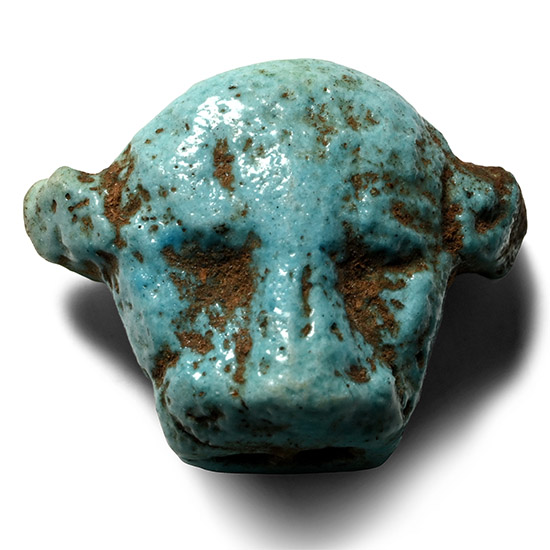
Large Egyptian Faience Lioness Head Amuletic Bead
New Kingdom, 1550-1069 B.C.Estimate: £150 - 200 (+bp*)
Bids: 1 | Current Bid: £75
Blue-glazed faience amuletic bead modelled as a lioness's head, pierced vertically through the nostrils with two holes. 2.5 grams, 21 mm
From a mid 20th century collection.
