
Loading, please wait...
LOT 0490
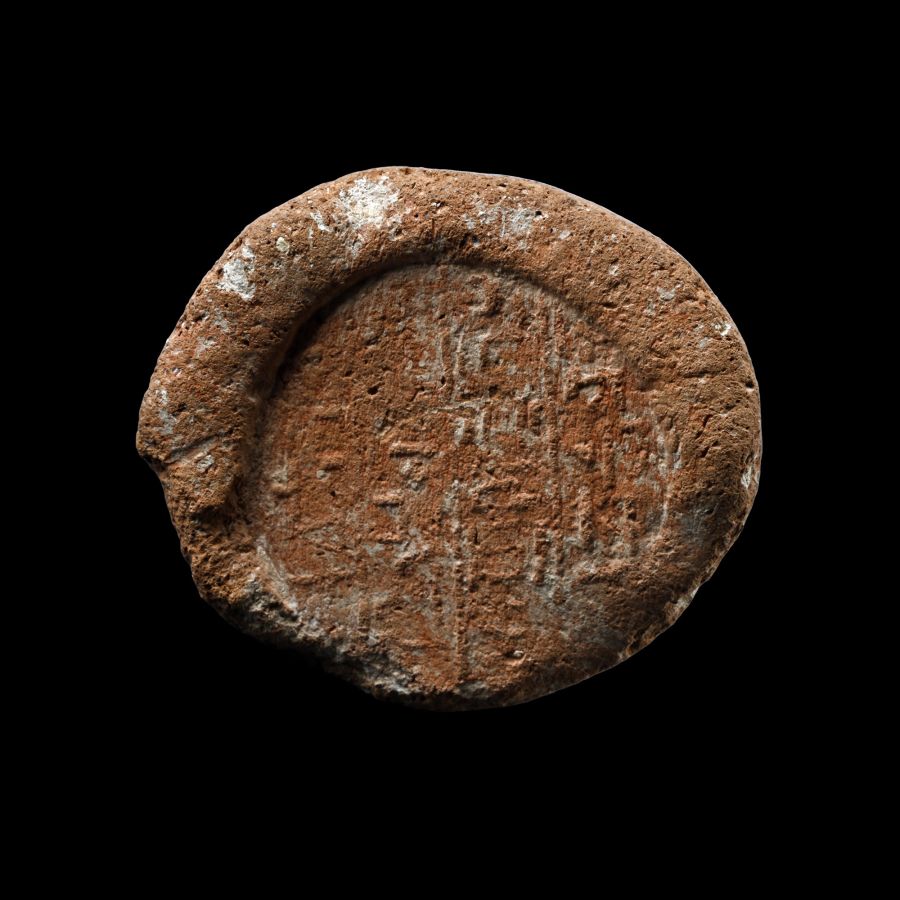
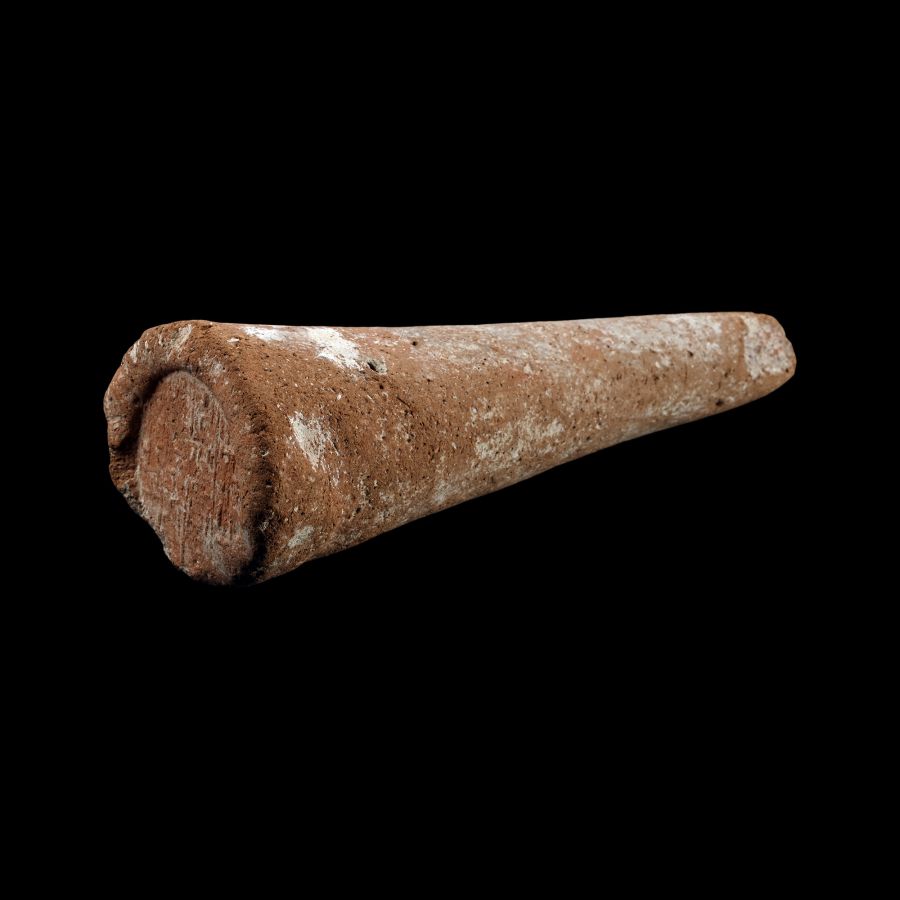
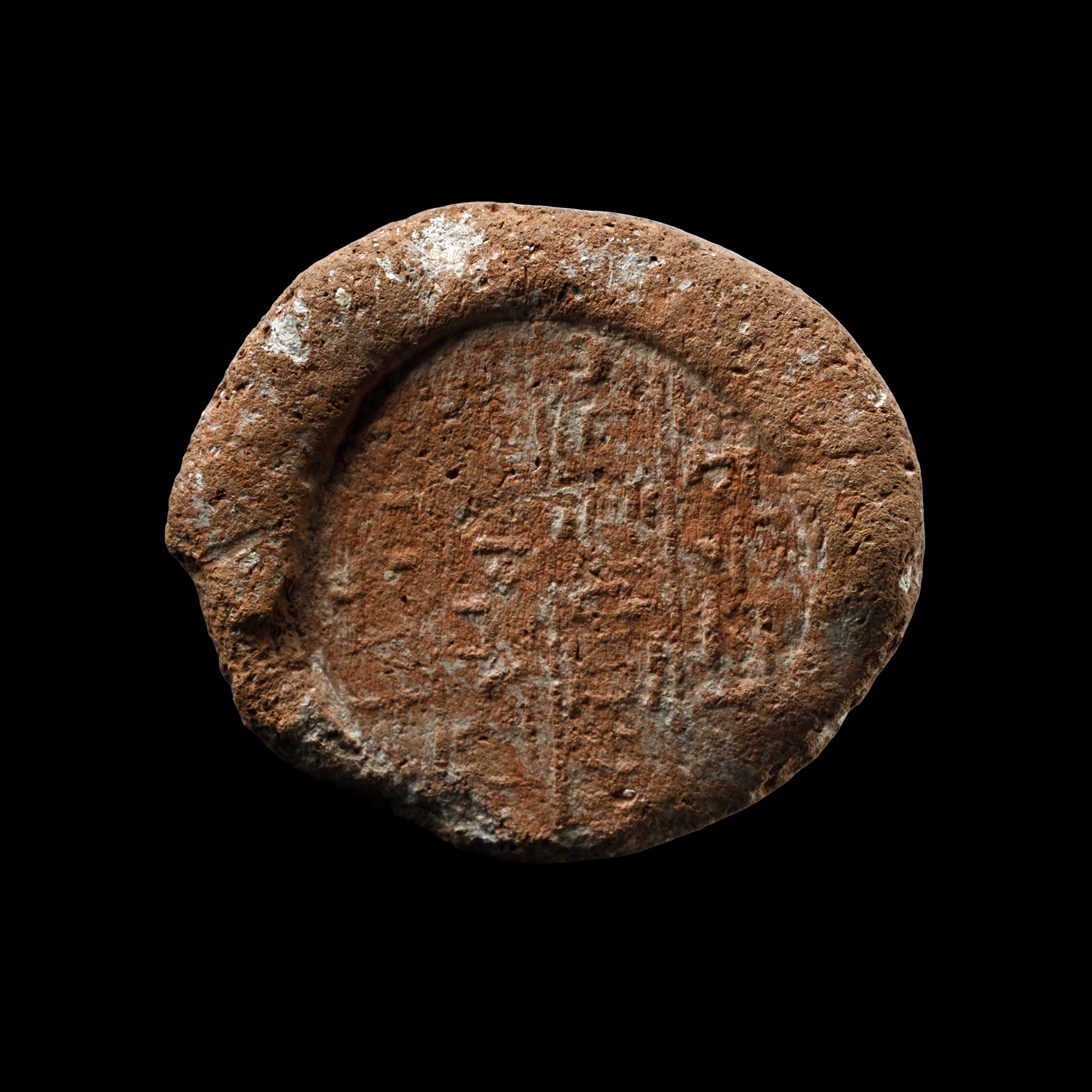
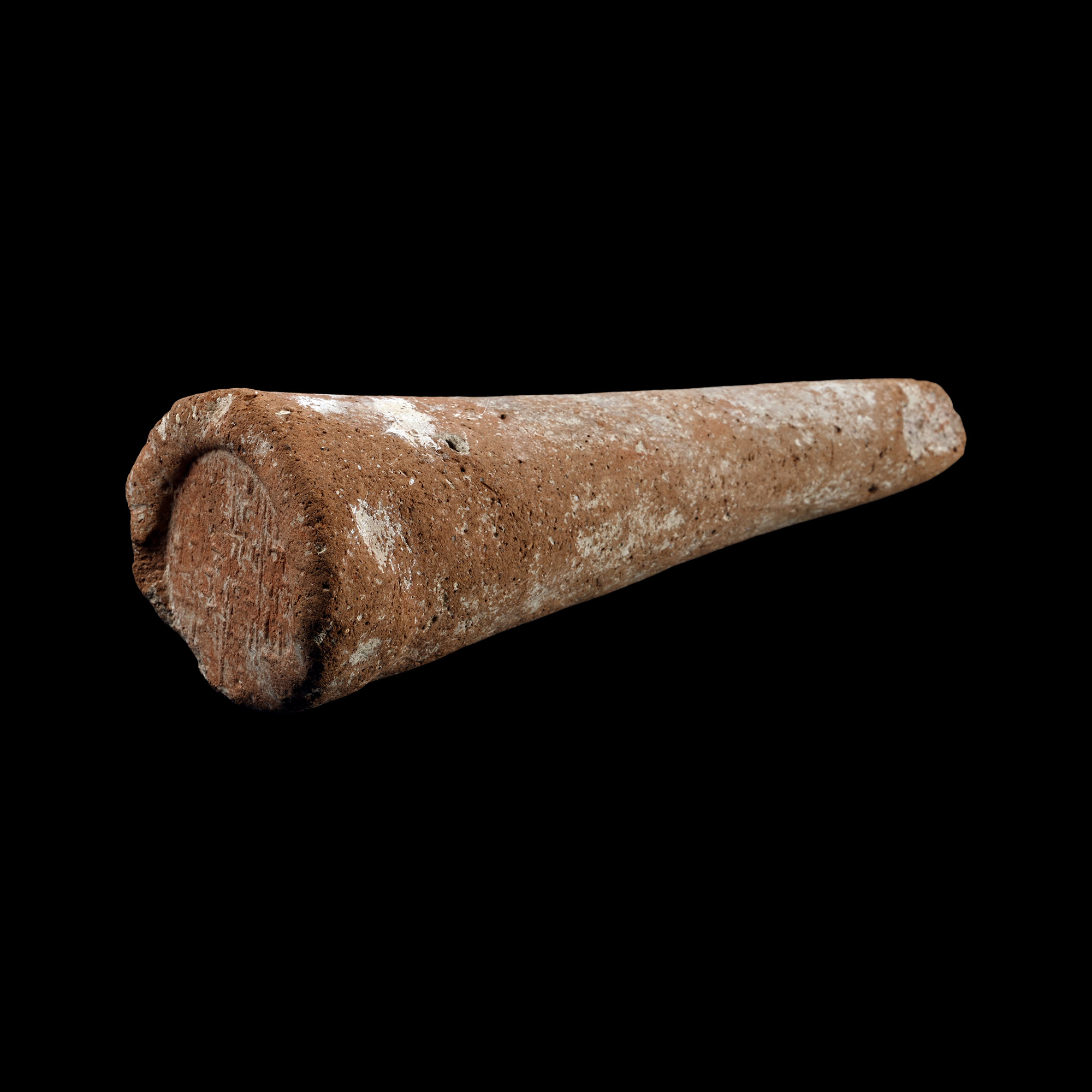
Egyptian Terracotta Funerary Cone of Qenamun
NEW KINGDOM, MID-18TH DYNASTY, CIRCA 1479-1425 B.C.
8 1/2 in. (450 grams, 21.4 cm).
Complete cone, preserving its slender tapering form, with the flat circular end faintly impressed with four horizontal lines of abraded hieroglyphic text reading: 'An offering which the king gives to Osiris, lord of eternity, may he give a voice offering of all good purified things, for the ka of the scribe of documents of the god's wife, Qenamun, true of voice'. [No Reserve]
ProvenanceAcquired from Abdoul Rassoul on the West Bank at Luxor, 1974-1980, when a guest lecturer.
From the private collection of Peter Clayton, FCILIP, Dip, Arch, FSA, FRNS, Hemel Hempstead, Hertfordshire, UK; formed since the late 1950s.
Cf. Davies, N. de G. & Laming Macadam F., A Corpus of Inscribed Egyptian Funerary Cones, Oxford, 1957, no. 488, for the cone type.
FootnotesQenamun's title indicates that he was responsible for the legal correspondence, decrees, and official documentation issued by or sent to the institution of the royal priestess of Amun. Although abraded, this cone is clearer in certain areas of the inscription than the one recorded by Davies and Macadam in their 1957 catalogue of funerary cones. Qenamun's tomb in the Theban necropolis has not yet been identified.
CONDITIONTimeLine Auctions follows a vetting process to ensure the authenticity and legality of all items, reinforcing our commitment to integrity and responsible trading. Each antiquity, antique, and coin lot undergoes thorough examination by a vetting committee of at least ten external specialists, professional trade association members, scientists, and archaeologists: Our Vetting Process
AUCTIONS:
TimeLine is a leading auction house specialising in antiquities, ancient art, collectables, natural history, coins, medals, and books. Our auctions offer museums, collectors, historians, and enthusiasts the opportunity to acquire unique and historically significant pieces.
LOT 0490
Egyptian Terracotta Funerary Cone of Qenamun
Estimate £400 - 600€460 - 700 (for guidance only)$540 - 810 (for guidance only)
-
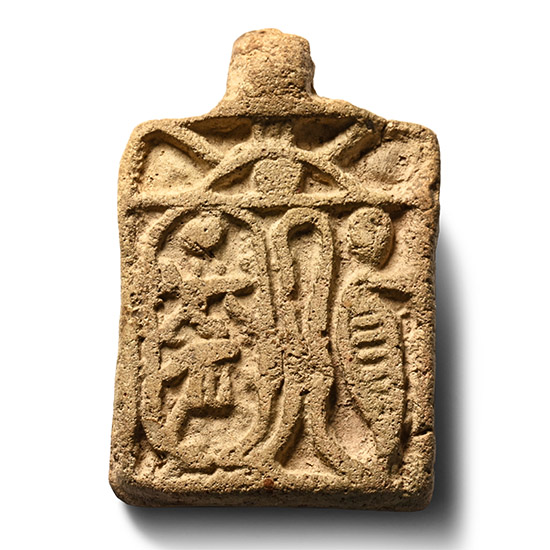
Egyptian Faience Amuletic Plaque with Cartouche of Pharaoh Thutmose III
New Kingdom, circa 1400-1292 B.C.Estimate: £200 - 300 (+bp*)
Bids: 1 | Current Bid: £5
Formed as a rectangular plaque with the cartouche of Thutmosis III and a uraeus; attachment loop to the top. 4.68 grams, 33 mm
London, UK, art market, 1980s. Private collection, London, UK. -
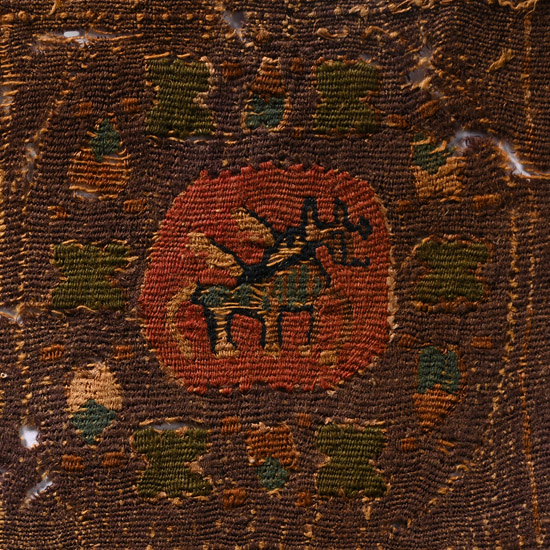
Egyptian Coptic Textile Fragment of a Tunic Tablion with Pegasus
Circa 7th century A.D.Estimate: £40 - 60 (+bp*)
Bids: 1 | Current Bid: £5
In natural wool in shades of light brown, yellow, green, blue, and red with S-twist yarn, depicting the figure of Pegasus within a central medallion, surrounded by geometric and vegetal motifs; borders ornamented with meanders. 1.3 grams, 10.5 cm
Acquired 1970s-1996. Property of a North American collector. London collection, 2016.
The tabula, or tablion, was a square embroidery used to decorate tunics or mantles. The central figure is a rare representation of the winged horse Pegasus, a motif derived from Greek mythology, showing that classical iconography was still alive among the Christian Graeco-Roman people. -
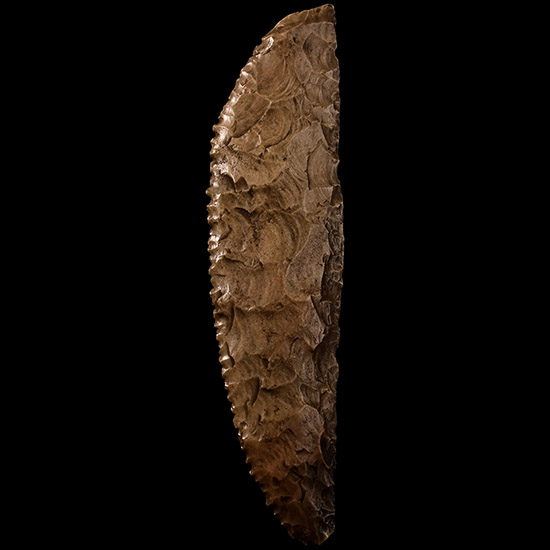
Large Egyptian Stone Age Knapped Curved Saw Blade from Thebes
Neolithic Period, 11,000-5,200 B.P.Estimate: £400 - 600 (+bp*)
Bids: 13 | Current Bid: £130
Large ripple-flaked blade with a curving, serrated cutting edge. 80.5 grams, 17 cm
Found Thebes. From the collection of A.D. Passmore (1879-1958); his collection of flints for the area of Stonehenge was donated to the Ashmolean Museum in the 1950s. From the private collection of Peter Clayton, FCILIP, Dip, Arch, FSA, FRNS, Hemel Hempstead, Hertfordshire, UK; formed since the late 1950s. Accompanied by a copy of an old handwritten information card by Peter Clayton.
