
Loading, please wait...
LOT 0029
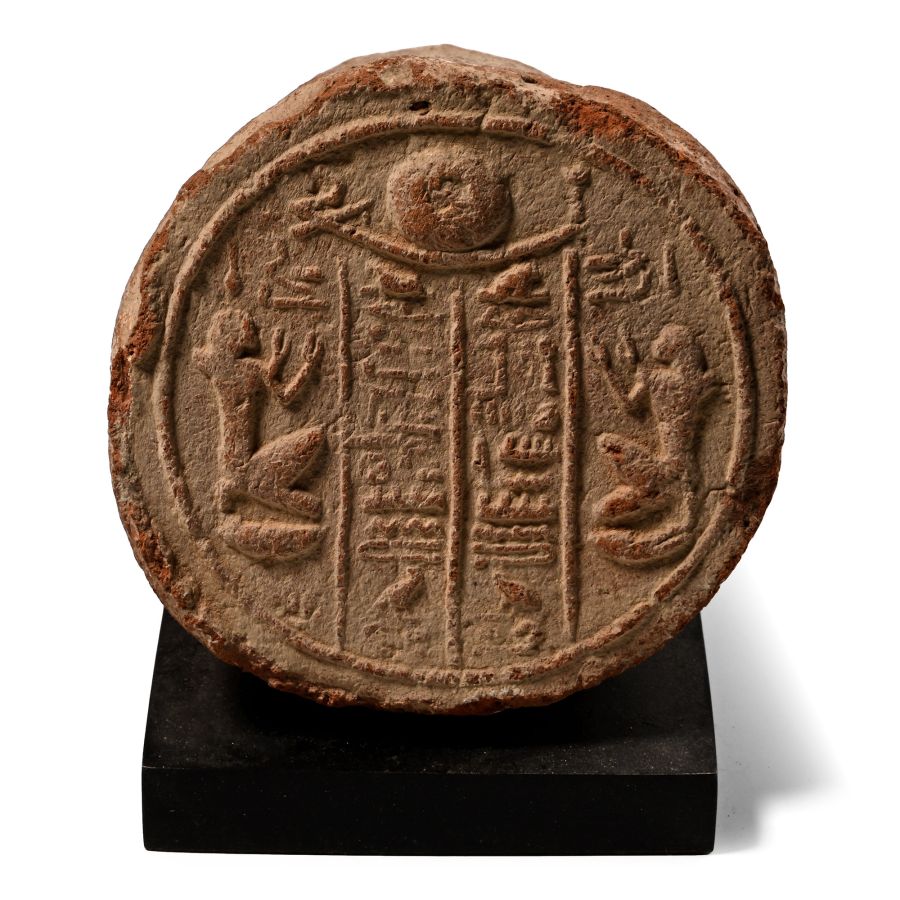
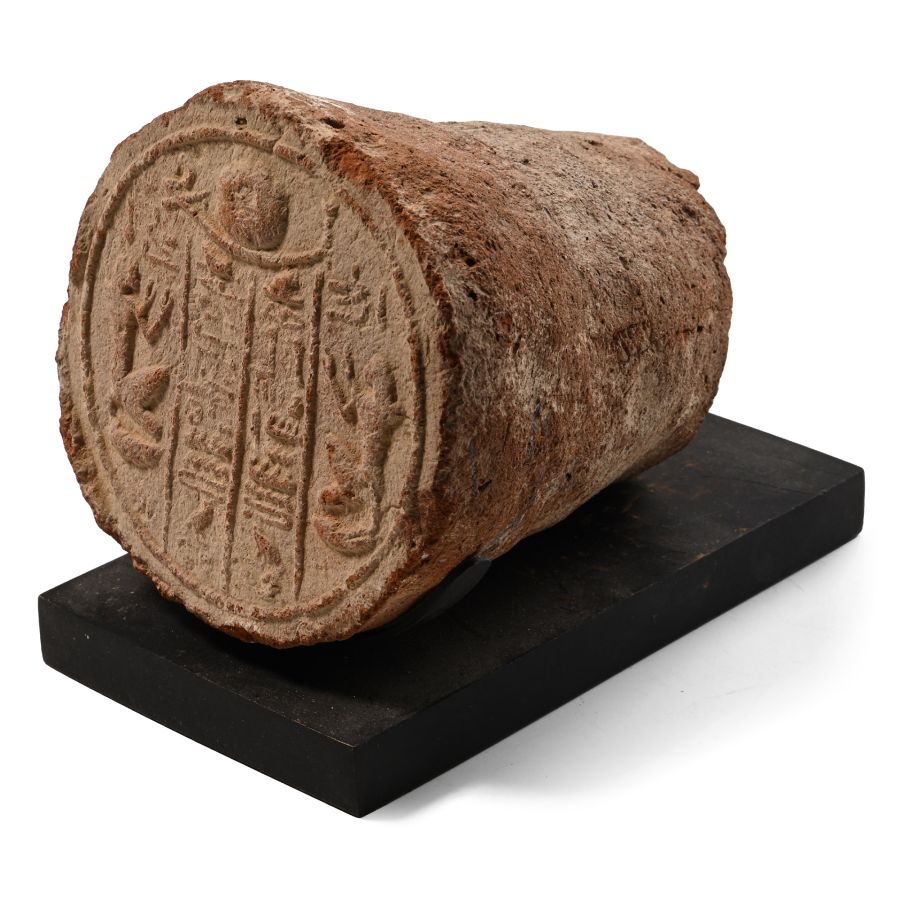
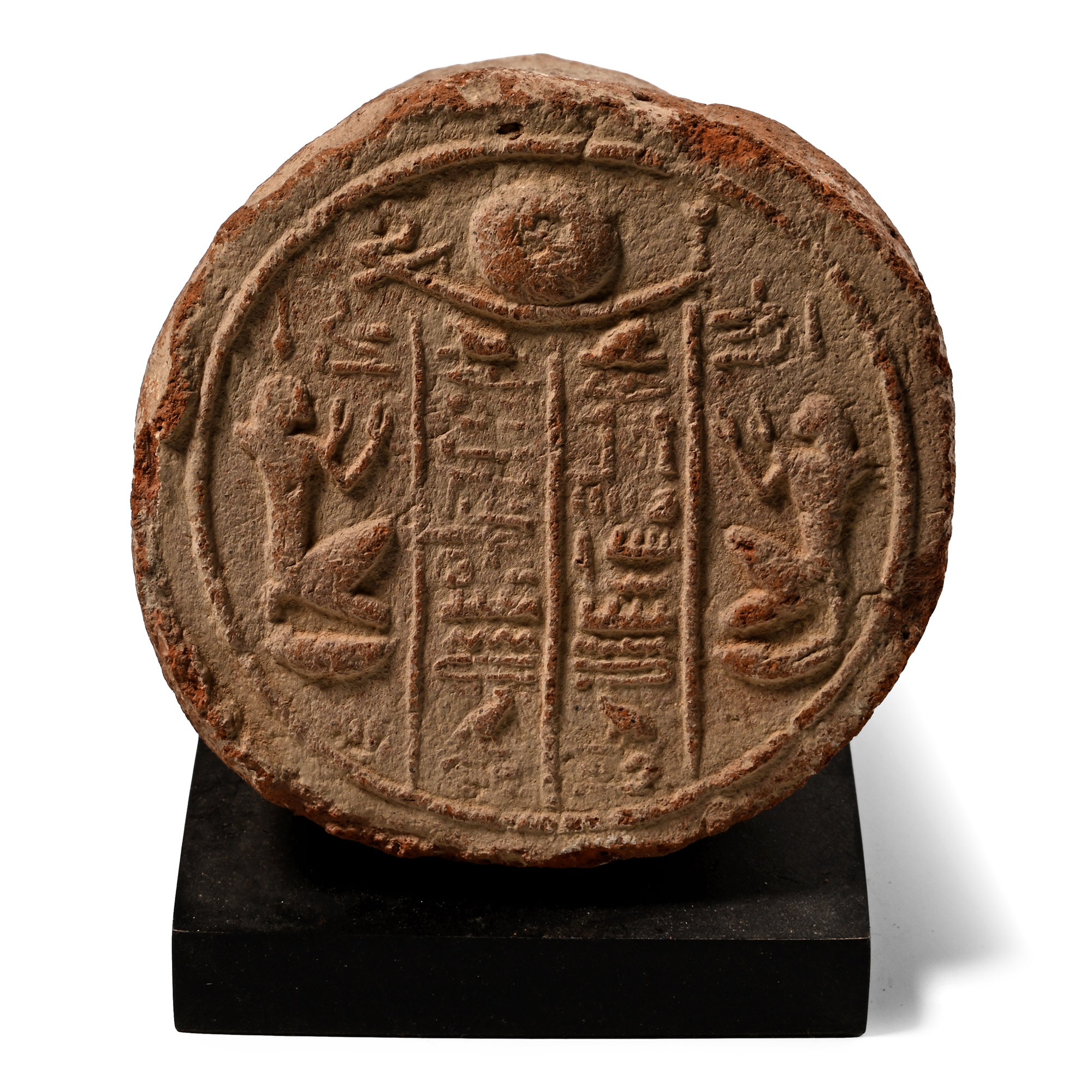
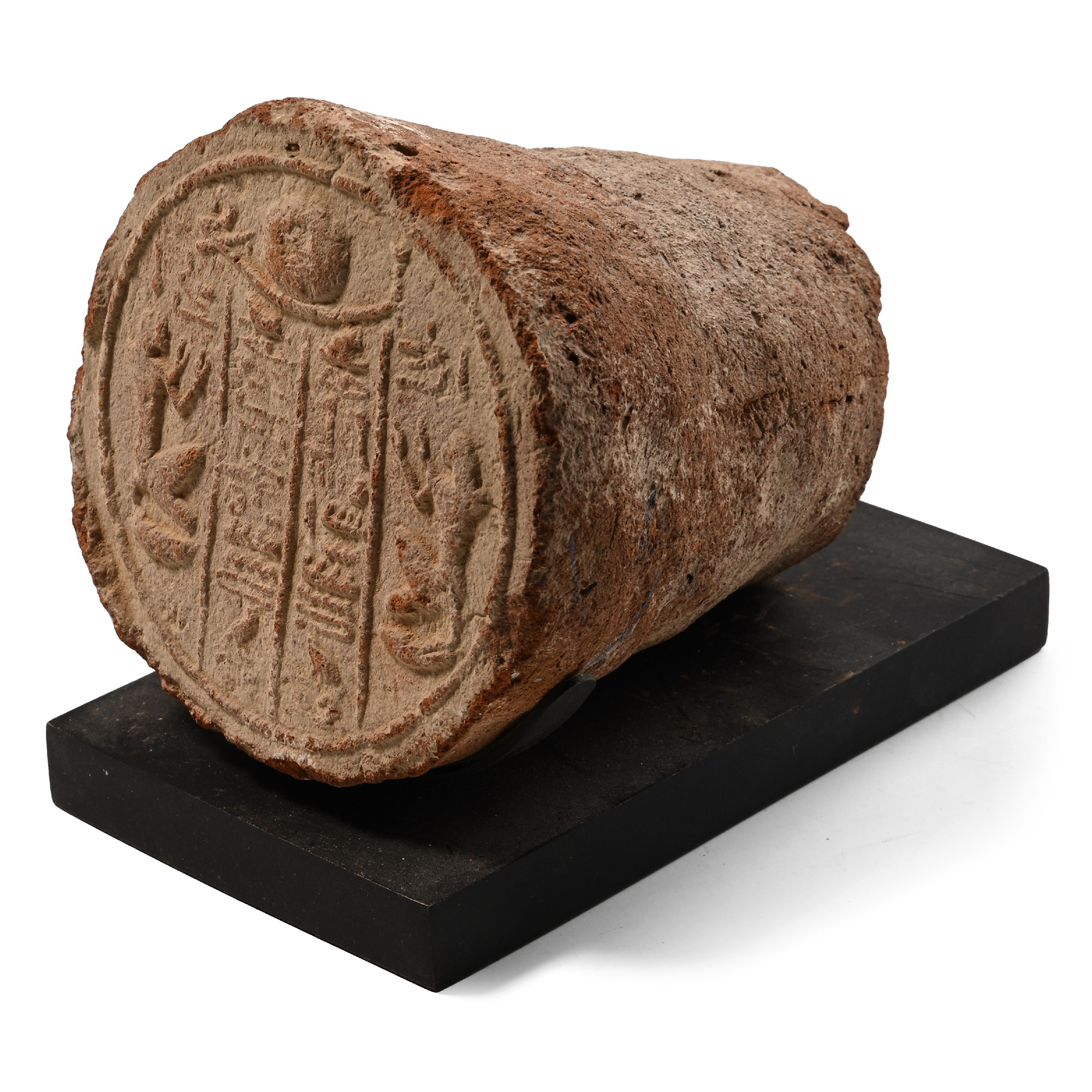
Egyptian Terracotta Funerary Cone of Montuemhat
LATE PERIOD, 25TH-26TH DYNASTY, CIRCA 700-650 B.C.
4 3/4 in. (626 grams total, 12.2 cm wide including stand).
Front portion of a tapering funerary cone for the high official, Montuemhat, the circular front impressed with the depiction of a solar barque surmounting four columns of hieroglyphs; the two left-hand columns: 'The Osiris, overseer of the southern city, Montuemhat, true of voice'; the two right-hand columns: 'The Osiris, fourth god’s servant, Montuemhat, true of voice.' [No Reserve]
ProvenanceAcquired from Abdoul Rassoul on the West Bank at Luxor, 1974-1980 when a guest lecturer.
From the private collection of Peter Clayton, FCILIP, Dip, Arch, FSA, FRNS, Hemel Hempstead, Hertfordshire, UK; formed since the late 1950s.
Cf. Davies, N. de G. & Laming Macadam F., A Corpus of Inscribed Egyptian Funerary Cones, Oxford, 1957, no. 604, for the cone type.
FootnotesAt least fourteen different cones bear Montuemhat's name, some of which mention his family members. From Montuemhat's tomb in the Asasif at Thebes (TT34).
CONDITIONTimeLine Auctions follows a vetting process to ensure the authenticity and legality of all items, reinforcing our commitment to integrity and responsible trading. Each antiquity, antique, and coin lot undergoes thorough examination by a vetting committee of at least ten external specialists, professional trade association members, scientists, and archaeologists: Our Vetting Process
AUCTIONS:
TimeLine is a leading auction house specialising in antiquities, ancient art, collectables, natural history, coins, medals, and books. Our auctions offer museums, collectors, historians, and enthusiasts the opportunity to acquire unique and historically significant pieces.
LOT 0029
Egyptian Terracotta Funerary Cone of Montuemhat
Estimate £500 - 700€580 - 810 (for guidance only)$680 - 950 (for guidance only)
-
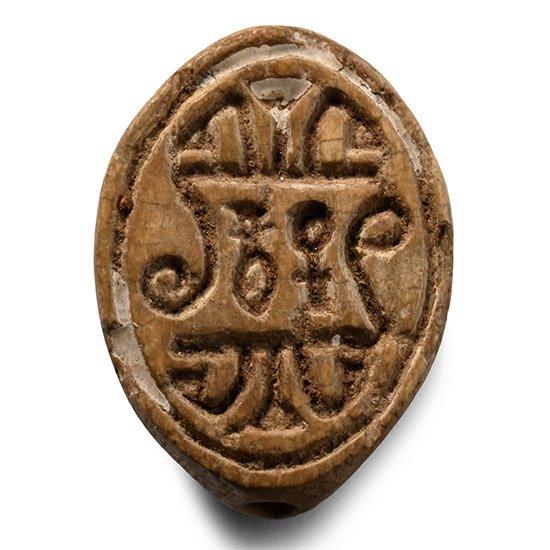
Egyptian Steatite Scaraboid Amulet with Hieroglyphs
Hyksos Period-early New Kingdom, circa 1782-1500 B.C.Estimate: £40 - 60 (+bp*)
Bids: 1 | Current Bid: £5
Plano-convex in section, underside with nfr and ankh hieroglyphs meaning 'good life', with a stylised lotus plant motif above and below. 2.36 grams, 20 mm
Excavated from Egypt in 1914. From the private collection of Mr David Sams and his wife, Elizabeth Kate Sams, gentry and amateur archaeologists who travelled to Egypt in 1914 with their daughter, Ethel. Mr Sams and his wife led digging expeditions from which these items come, from the family estate of Mr and Mrs Sams, by direct descent to their granddaughter. -
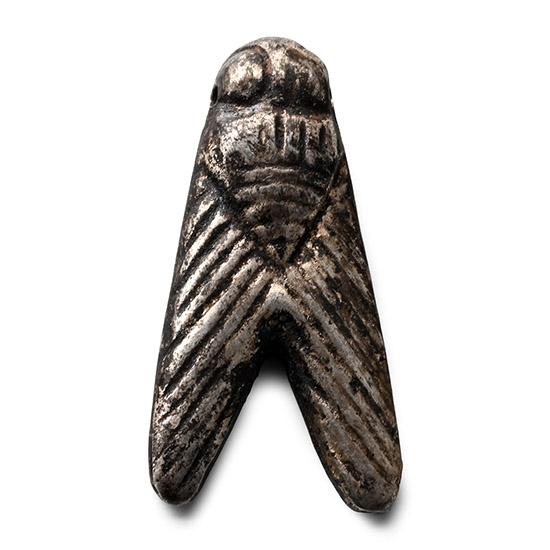
Egyptian Silver Fly Amulet
Late Period, 664-332 B.C.Estimate: £80 - 100 (+bp*)
Bids: 1 | Current Bid: £5
With detailing to the body and head, ribbed suspension loop above the head. 1.09 grams, 17 mm
London, UK, gentleman, 1990s.
Fly amulets were believed to protect against insect bites and to ward off troublesome flying creatures through apotropaic magic. Some believe they may have even symbolised the fly’s fecundity. Additionally, pharaohs bestowed gold fly-shaped pendants as military awards to honour soldiers' bravery and persistence in battle. -
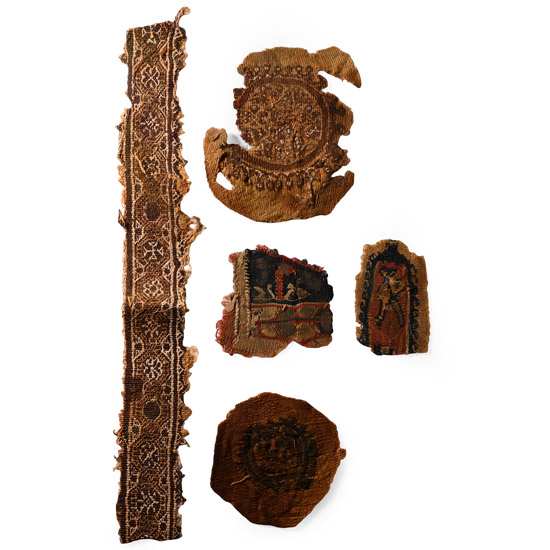
Egyptian Coptic Textile Fragments of Orbiculi, Segementa and Tablia from a Tunic with Animals, Geometric and Cross Decoration
Circa 6th-8th century A.D.Estimate: £100 - 140 (+bp*)
Bids: 1 | Current Bid: £5
Comprising a small orbiculus, with a lion, green on brown linen; fragment of a clavus, in red, yellow, green wool, s-torsion, with figures and scalloped borders; a large orbiculus, in red wool on purple linen, dentilled edges; a fragment of a tapestry with vegetal ornaments in red, yellow and green wool; a long tunic segmentum with crosses and stars inside lozenges, in yellow and dark purple. 17.94 grams total, 7.6-35.5 cm
Acquired 1970s-1996. Property of a North American collector. London collection, 2016.
The fragments are decorative parts of tunics. These are fabrics of great decorative finesse, with some elements displaying an unusual and extremely well-preserved colour palette. The large segmentum with crosses most likely belonged to an ecclesiastical garment.
