
Loading, please wait...


LOT 0462
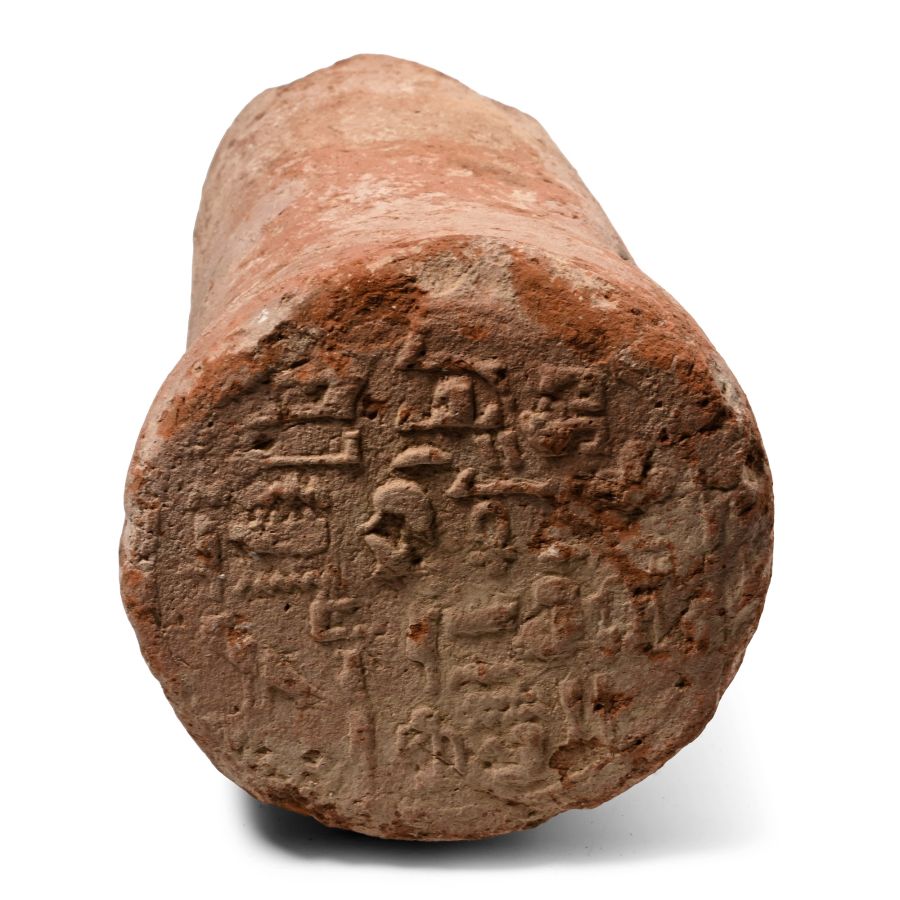
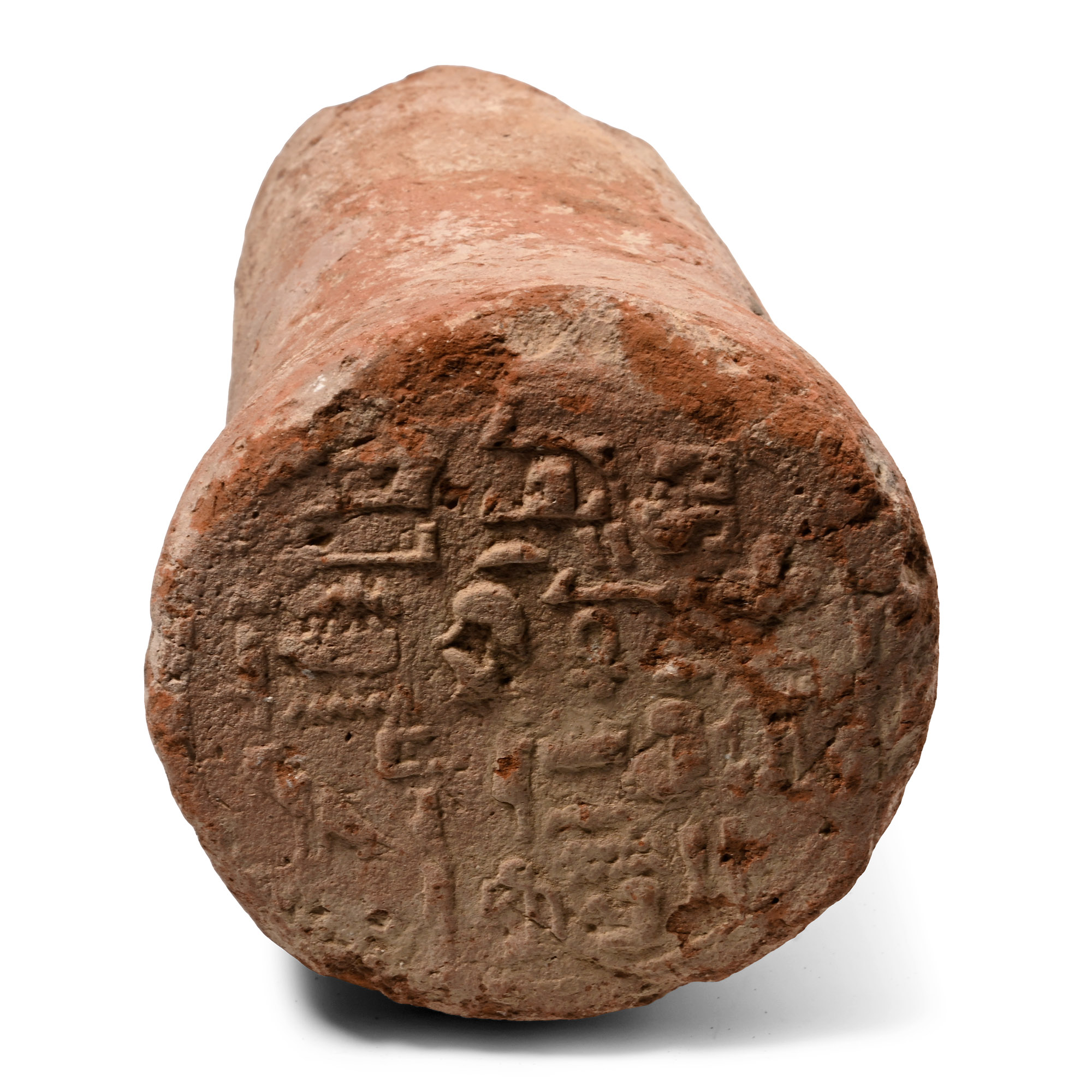
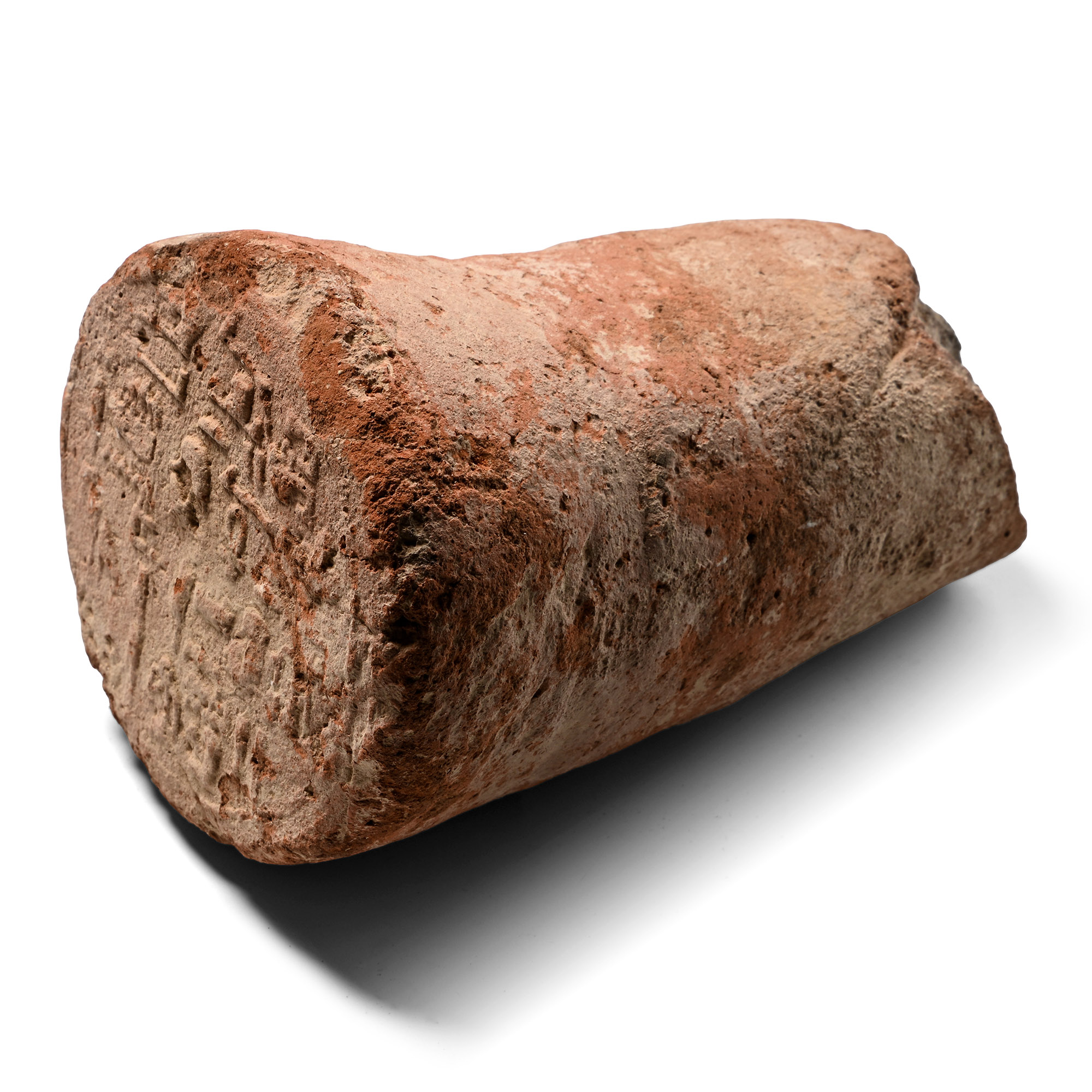
Egyptian Terracotta Funerary Cone of Ineni
NEW KINGDOM, 18TH DYNASTY, CIRCA 1514-1458 B.C.
5 3/8 in. (755 grams, 13.8 cm).
Large portion of a tapering cone with the circular flat end impressed with four horizontal lines of hieroglyphic text reading: 'Count, overseer of the (double) granary of Amun, overseer of all the sealed things in the domain of Amun, scribe, Inen(i), true of voice'. [No Reserve]
ProvenanceAcquired from Abdoul Rassoul on the West Bank at Luxor, 1974-1980 when a guest lecturer.
From the private collection of Peter Clayton, FCILIP, Dip, Arch, FSA, FRNS, Hemel Hempstead, Hertfordshire, UK; formed since the late 1950s.
Cf. Davies, N. de G. & Laming Macadam F., A Corpus of Inscribed Egyptian Funerary Cones, Oxford, 1957, no. 480, for the cone type.
FootnotesIneni enjoyed a long and highly successful career, serving under five pharaohs (Amenhotep I, Thutmosis I, Thutmosis II, Hatshepsut, and Thutmosis III). His large rock-cut tomb (TT 81) is at Sheikh Abd el-Qurna, Thebes.
CONDITIONTimeLine Auctions follows a vetting process to ensure the authenticity and legality of all items, reinforcing our commitment to integrity and responsible trading. Each antiquity, antique, and coin lot undergoes thorough examination by a vetting committee of at least ten external specialists, professional trade association members, scientists, and archaeologists: Our Vetting Process
AUCTIONS:
TimeLine is a leading auction house specialising in antiquities, ancient art, collectables, natural history, coins, medals, and books. Our auctions offer museums, collectors, historians, and enthusiasts the opportunity to acquire unique and historically significant pieces.
LOT 0462
Egyptian Terracotta Funerary Cone of Ineni
Estimate £400 - 600€460 - 700 (for guidance only)$540 - 810 (for guidance only)
Opening Bid
£5 (EUR 6; USD 7) +BP*
-
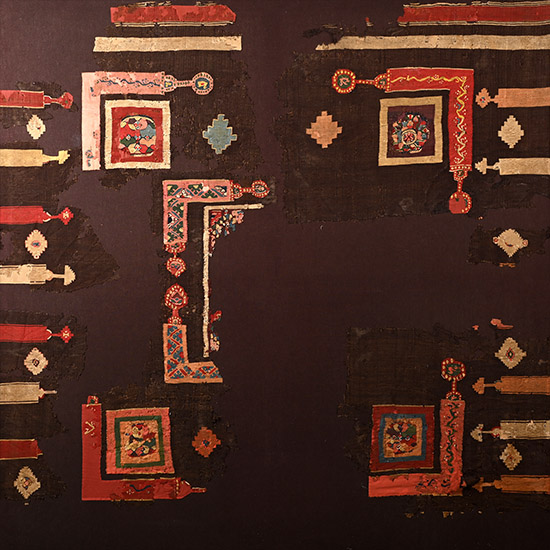
Very Large Egyptian Coptic Composition of Textile Tunic Fragments
Circa 560-700 A.D.Estimate: £4,000 - 6,000 (+bp*)
Opening Bid: £2,000
A composition of Roman-era Coptic textiles, assembled from various tunic and tapestry elements: 12 clavi, paired segmenta, and 4 tablia decorated with vegetal and floral motifs, framed by L-shaped elements composed of two clavi with orbiculi; geometric patterns wind along the clavi, while the orbiculi feature vegetal motifs and fish surrounded by small spheres; rhomboidal appliqués punctuate the surface; red, yellow, green, brown, pink, and indigo-blue wool, S-twist; mounted on a canvas with a wooden frame. 5.15 kg, 1.45 x 1.52 m
From the private antiquities collection of a Kensington collector. With a scientific report by RCD RadioCarbon dating from a sample taken in 2008. Property of a Huddersfield, UK, gentleman. This lot has been checked against the Interpol Database of stolen works of art and is accompanied by search certificate number no.13444-263431
The fragments are decorative parts of tunics or wall tapestries. These are fabrics of great decorative finesse, with some elements displaying an unusual and extremely well-preserved colour palette. The plant and animal designs are related to the so-called Nilotic decorative pattern, with Pagan elements persisting in the Christian Empire. Parts of this composition could also belong to a female shawl, like the famous Sabina's shawl found by Gayet in Antinoe. -
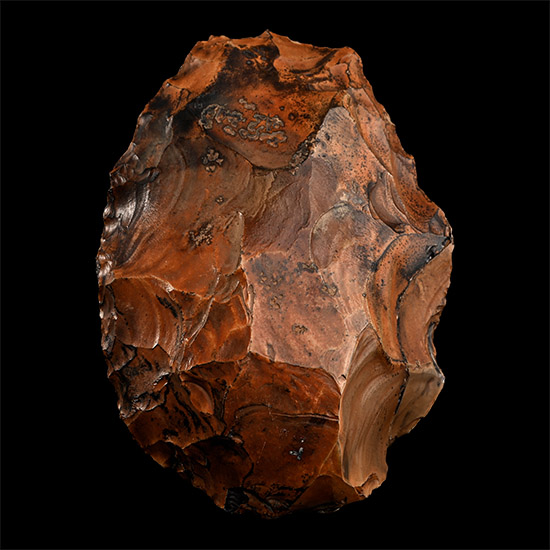
Egyptian Stone Age Knapped Handaxe
Lower Palaeolithic Period, circa 500,000-250,000 B.P.Estimate: £150 - 200 (+bp*)
Opening Bid: £5
Expertly shaped through percussion flaking, creating zigzagging lateral edges, with a roughly ovate or teardrop form and a heavy, thick butt, tapering down to a distinct working edge. 363 grams, 12.5 cm
From the collection of A.D. Passmore (1879-1958), his collection of flints from the area of Stonehenge was donated to the Ashmolean Museum in the 1950s. From the private collection of Peter Clayton, FCILIP, Dip, Arch, FSA, FRNS, Hemel Hempstead, Hertfordshire, UK; formed since the late 1950s. Accompanied by a copy of an old handwritten information card by Peter Clayton.
The Egyptian flint hand axe, or biface, is a prehistoric stone tool with two faces. This tool holds the record for being the longest-used tool in human history. The technical term 'biface' comes from the archetypal model, generally a bifacial Lithic flake with an almond-shaped morphology. Hand axes typically have a pointed end and a rounded base, giving them their characteristic shape, and both faces have been knapped to remove the natural cortex, at least partially. -
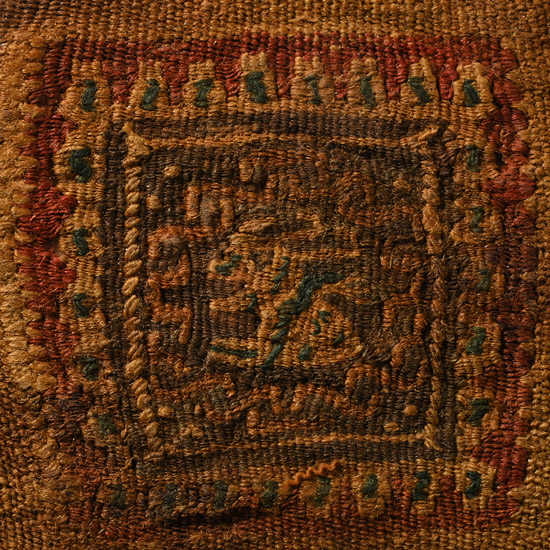
Egyptian Coptic Textile Fragment of a Tunic Tablion with Hare
Circa 6th-7th century A.D.Estimate: £40 - 60 (+bp*)
Opening Bid: £5
Comprising a tablion in coarse wool of red, green, yellow, violet and blue over white linen, scalloped borders, tapestry work (S-twist), featuring an animal (hare?) inside a square, surrounded by vegetal ornaments. 5.59 grams, 10.5 cm
Acquired 1970s-1996. Property of a North American collector. London collection, 2016.
The tabula, or tablion, was a square embroidery used to decorate tunics or mantles. The theme of rabbits or hares, in association with other characters and animals of the Dionysian Thiasos, has notable parallels. Such representations are linked to narratives of the Dionysian cycle.
