
Loading, please wait...

LOT 0430
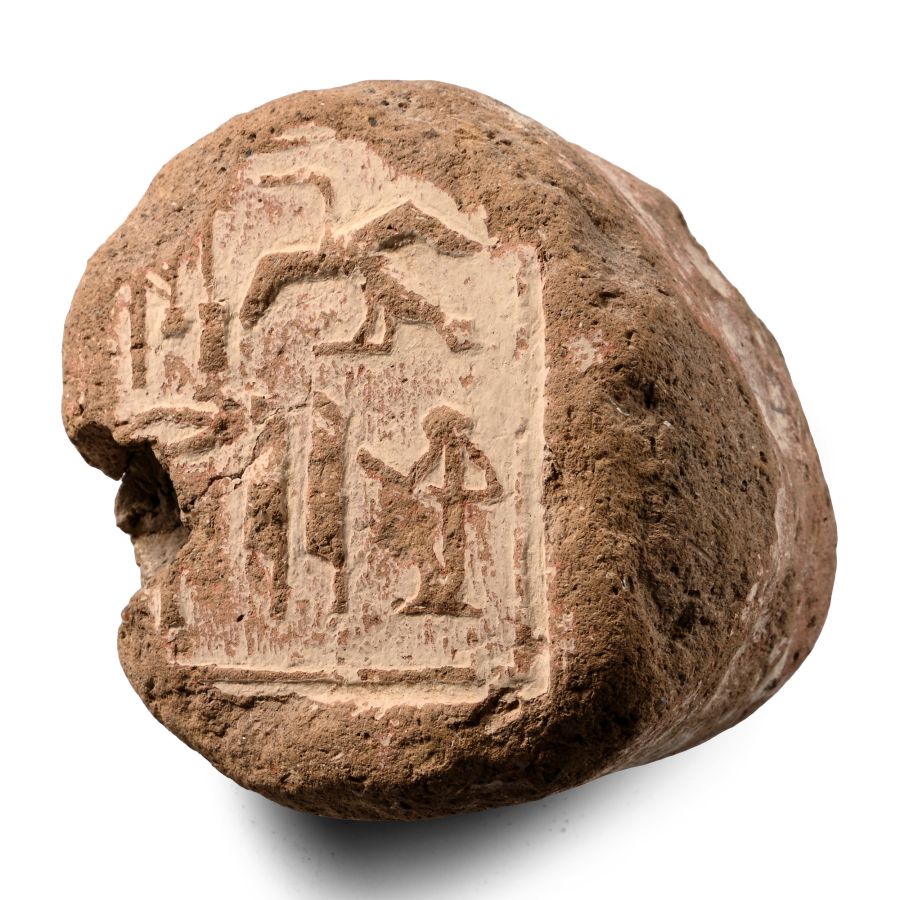
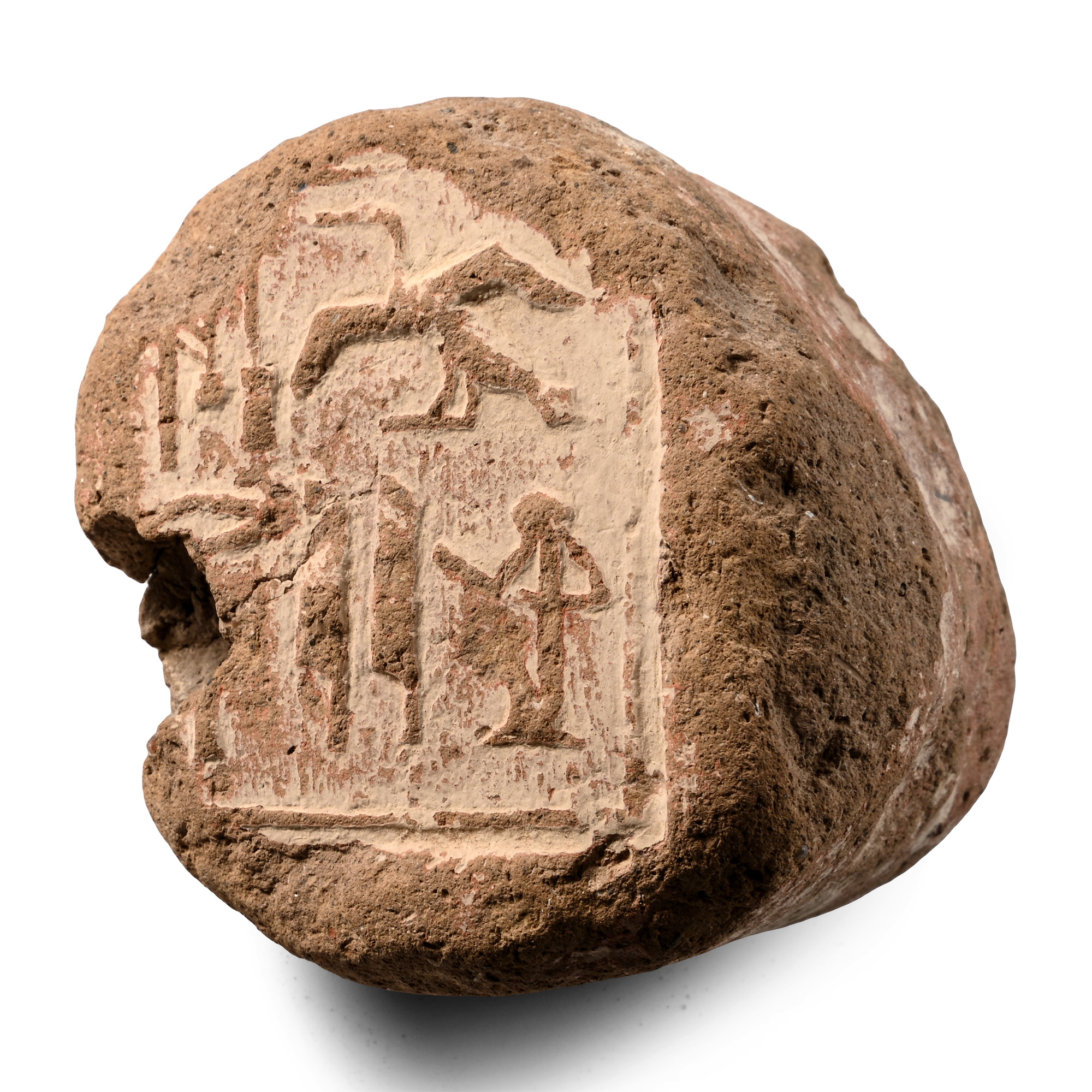
Egyptian Terracotta Funerary Cone for Paroy
NEW KINGDOM, 18TH DYNASTY, CIRCA LATE 15TH-EARLY 14TH CENTURY B.C.
3 in. (240 grmas, 75 mm).
Front portion of a tapering cone with the circular flat end impressed with a square-bordered design consisting of two short horizontal lines of inscription, reading: 'Scribe, Paroy'. [No Reserve]
ProvenanceAcquired from Abdoul Rassoul on the West Bank at Luxor, 1974-1980 when a guest lecturer.
From the private collection of Peter Clayton, FCILIP, Dip, Arch, FSA, FRNS, Hemel Hempstead, Hertfordshire, UK; formed since the late 1950s.
Cf. Davies, N. de G. & Laming Macadam F., A Corpus of Inscribed Egyptian Funerary Cones, Oxford, 1957, no. 576, for the cone type.
FootnotesIt is suggested that this cone comes from the Theban tomb of Thutmose, also known as Paroy (TT 295). However, the titles of the latter individual (Head of the Secrets in the Chest of Anubis, Sem-priest in the Good House, and Embalmer) differ from those of the person named on this cone.
CONDITIONTimeLine Auctions follows a vetting process to ensure the authenticity and legality of all items, reinforcing our commitment to integrity and responsible trading. Each antiquity, antique, and coin lot undergoes thorough examination by a vetting committee of at least ten external specialists, professional trade association members, scientists, and archaeologists: Our Vetting Process
AUCTIONS:
TimeLine is a leading auction house specialising in antiquities, ancient art, collectables, natural history, coins, medals, and books. Our auctions offer museums, collectors, historians, and enthusiasts the opportunity to acquire unique and historically significant pieces.
LOT 0430
Egyptian Terracotta Funerary Cone for Paroy
Estimate £200 - 300€230 - 350 (for guidance only)$270 - 410 (for guidance only)
Opening Bid
£5 (EUR 6; USD 7) +BP*
-
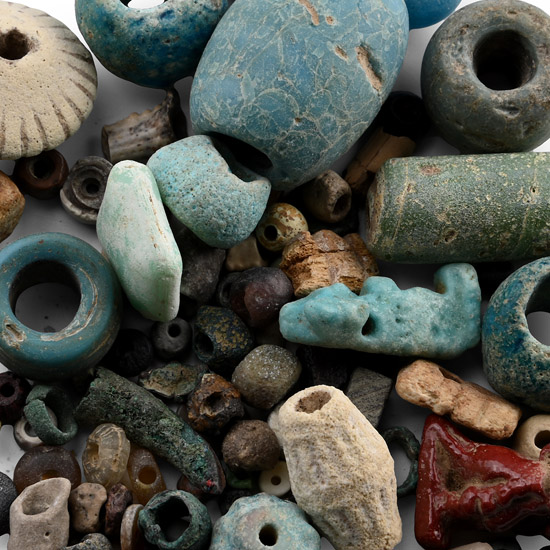
Egyptian Faience Beads and Amulets
Late Period-Roman Period, 664 B.C.-323 A.D.Estimate: £100 - 140 (+bp*)
Opening Bid: £5
Mixed group of beads, including two cat-shaped amulets, a hybrid dwarf with a ram's head, bird wings and tail, wearing a lunar crescent-and-disc headdress, large barrel-shaped bead, and others. 47 grams total, 1-23 mm
Ex 1990s collection. -
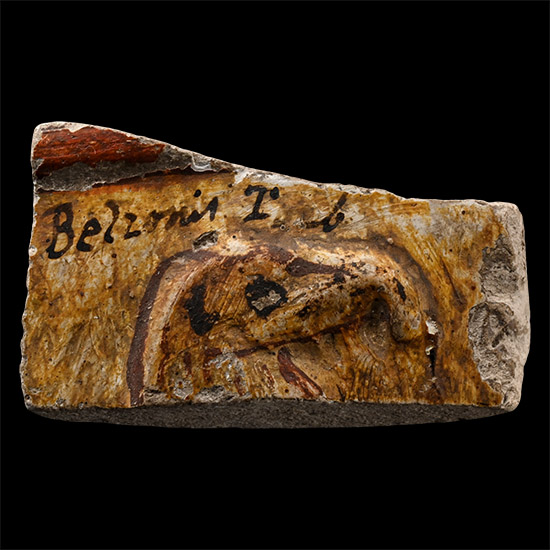
Egyptian Painted Limestone Fragment from the Tomb of Pharaoh Seti I
New Kingdom, 19th Dynasty, 1290-1279 B.C.Estimate: £100 - 140 (+bp*)
Opening Bid: £5
Colourful, almost rectangular section of a wall fragment, with a slightly dished face, low-relief moulding with pigment, and 'Belzonis T[om]b' written at the top; accompanied by an old collector's label suggesting the likely findspot and other details. 15.3 grams, 44 mm
With a late 19th-early 20th century handwritten ticket attached. From the private collection of Peter Clayton, FCILIP, Dip, Arch, FSA, FRNS, Hemel Hempstead, Hertfordshire, UK; formed since the late 1950s.
The Italian explorer and antiquarian Giovanni Battista Belzoni uncovered the tomb of Seti I (KV 17) on October 16, 1817. This monumental tomb, with beautifully decorated walls, extended almost 140 metres underground through a series of descending corridors and chambers. In 1821, Belzoni opened a groundbreaking exhibition at the Egyptian Hall in Piccadilly, London, presenting a full-scale replica of the tomb. The paid public exhibition sparked massive 19th-century "Egyptomania" and introduced European audiences to ancient Egyptian art. Such was the renown of his discovery that it was often referred to as 'Belzoni's Tomb'. -
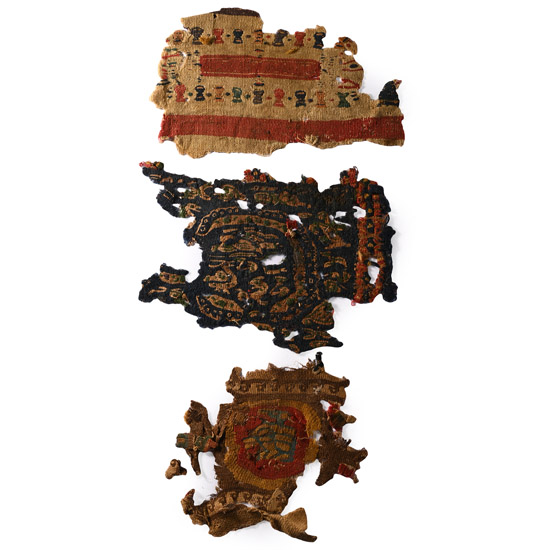
Egyptian Coptic Tunic and Tapestry Textile Fragments with Animals and Geometric Ornamets
Circa 7th-8th century A.D.Estimate: £80 - 100 (+bp*)
Opening Bid: £5
Comprising: a tapestry fragment (part of a pillow?) decorated with red bands and alternating figures of cups in green, red, blue, purple and yellow wool on linen; a large fragment of a segmentum from a tunic in coarse wool, consisting of a central medallion with a bird in red, yellow, light blue and yellow colour, with the borders decorate with meanders, tapestry, S-swift; a large portion of a tapestry with a central medallion ornamented with animals (lion, fish, birds) surrounded on the outside by dancing human figures and birds, one side circumscribed by a red stripe with vegetal ornaments, in red, blue-purple and yellow wool. 27 grams total, 15-22 cm
Acquired 1970s-1996. Property of a North American collector. London collection, 2016.
Large fragments of Coptic textiles display figures associated with the Dionysian retinue (lions, birds); however, they may date to the early period of the Islamic conquest, when tunic ornamentation began to take on an increasingly abstract and geometric character, preserving only stylised traces of the ancient Pagan symbology.
