
Loading, please wait...
LOT 0445
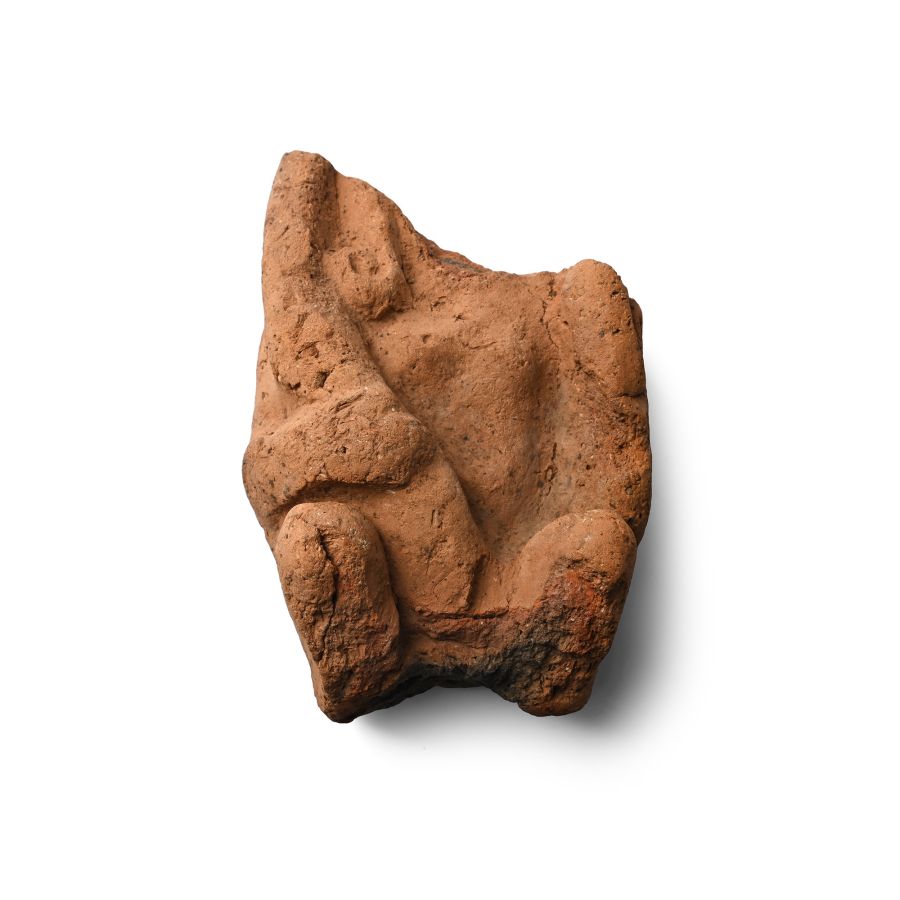
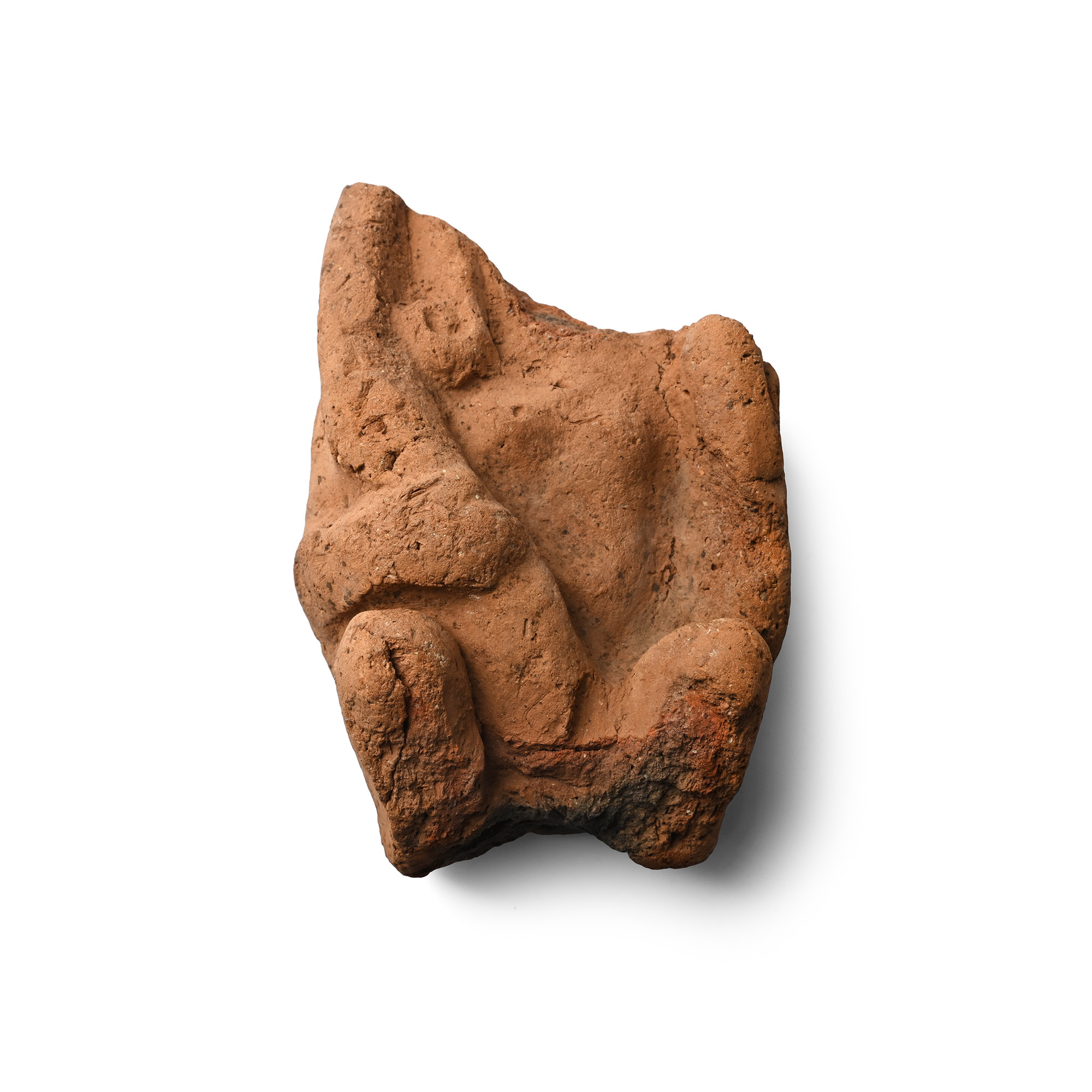
Egyptian Terracotta Fragment of Man Holding Elongated Phallus
PTOLEMAIC PERIOD, 323-30 B.C.
5 1/8 in. (383 grams, 13 cm).
Plano-convex in section with lateral folded legs, lower end of the sidelock at the shoulder, phallus extended across the body. [No Reserve]
ProvenanceAcquired in London, UK, 1980.
From the collection of G.M.R.H., London, UK.
This lot is accompanied by an illustrated lot declaration signed by the Head of the Antiquities Department, Dr Raffaele D'Amato.
TimeLine Auctions follows a vetting process to ensure the authenticity and legality of all items, reinforcing our commitment to integrity and responsible trading. Each antiquity, antique, and coin lot undergoes thorough examination by a vetting committee of at least ten external specialists, professional trade association members, scientists, and archaeologists: Our Vetting Process
AUCTIONS:
TimeLine is a leading auction house specialising in antiquities, ancient art, collectables, natural history, coins, medals, and books. Our auctions offer museums, collectors, historians, and enthusiasts the opportunity to acquire unique and historically significant pieces.
LOT 0445
Egyptian Terracotta Fragment of Man Holding Elongated Phallus
Sold for (Inc. bp): £59
-
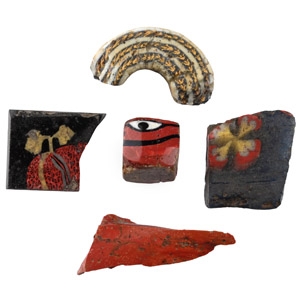
Egyptian Glass Inlay Collection
Ptolemaic Period, 332-30 B.C.Sold for (Inc. bp): £442
Various fragments, most featuring floral motifs, and a rectangular red, black lined block with an eye at each narrow end. 14.1 grams total, 14-29 mm
Acquired on the UK art market, 1977-1979. Private collection, London. This lot is accompanied by an illustrated lot declaration signed by the Head of the Antiquities Department, Dr Raffaele D'Amato. -
.jpg)
Egyptian Basalt Statue Base For The Priest Hor-sa-aseti
Late Period, 664-332 B.C.Estimate: £4,000 - 6,000 (+bp*)
Opening Bid: £2,000
Fragment of the rectangular base of a statue, preserving an integral pair of feet on the upper surface; lower end of dorsal column inscription at the rear with two hieroglyphs; below, a horizontal band of hieroglyphic text extending onto both short sides including part of an offering formula for the ḥm-nṯr ı͗wnw-smꜤ ḥr-sꜢ-Ꜣstı͗ (the priest [of the] Southern Heliopolis [i.e., Thebes], Hor-sa-aseti); old collectors' labels on the underside; supplied with a custom-made wooden display stand. 1.37 kg, 12.9 cm (4.08 kg total, 25 cm including stand)
Private New York, USA, collection, 1970. Ex Adrian Burns, Columus, Ohio, USA, from an old estate collection. Ex Art for Eternity gallery, New York, USA. Ex Art Primativo, Auction 16, 2001, no.430. Ex private New York, USA, collection. Private collection, London, UK. Accompanied by an academic report by Egyptologist Paul Whelan. This lot has been checked against the Interpol Database of stolen works of art and is accompanied by a search certificate number no.12832-240779. This lot has been cleared against the Art Loss Register database, and is accompanied by an illustrated lot declaration signed by the Head of the Antiquities Department, Dr Raffaele D'Amato. -
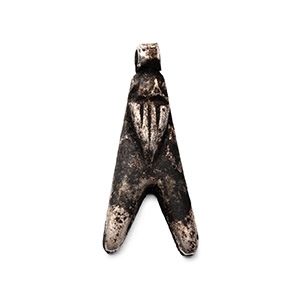
Egyptian Silver Fly Amulet
Late-Ptolemaic Period, 664-30 B.C.Sold for (Inc. bp): £78
With linear detailing to wings, raised eyes, pierced for suspension. 0.84 grams, 19 mm
Ex London, UK, art market, 1990s. This lot is accompanied by an illustrated lot declaration signed by the Head of the Antiquities Department, Dr Raffaele D'Amato.
Although flies might seem like mere nuisances—often shown being swatted by pharaohs or officials—ancient Egyptians admired them for their speed, agility, and persistence. Fly-shaped amulets, first appearing in Naqada II burials around 3200 B.C., became especially popular in the New Kingdom. Made from materials like gold, silver, faience, lapis lazuli, and bone, they served apotropaic purposes, protecting against bites and warding off pests. Some may have also symbolised fertility. Gold fly pendants were even awarded by pharaohs to honour soldiers’ bravery and tenacity.
