
Loading, please wait...


LOT 0422
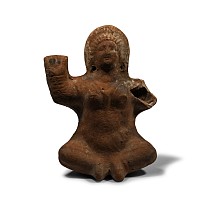
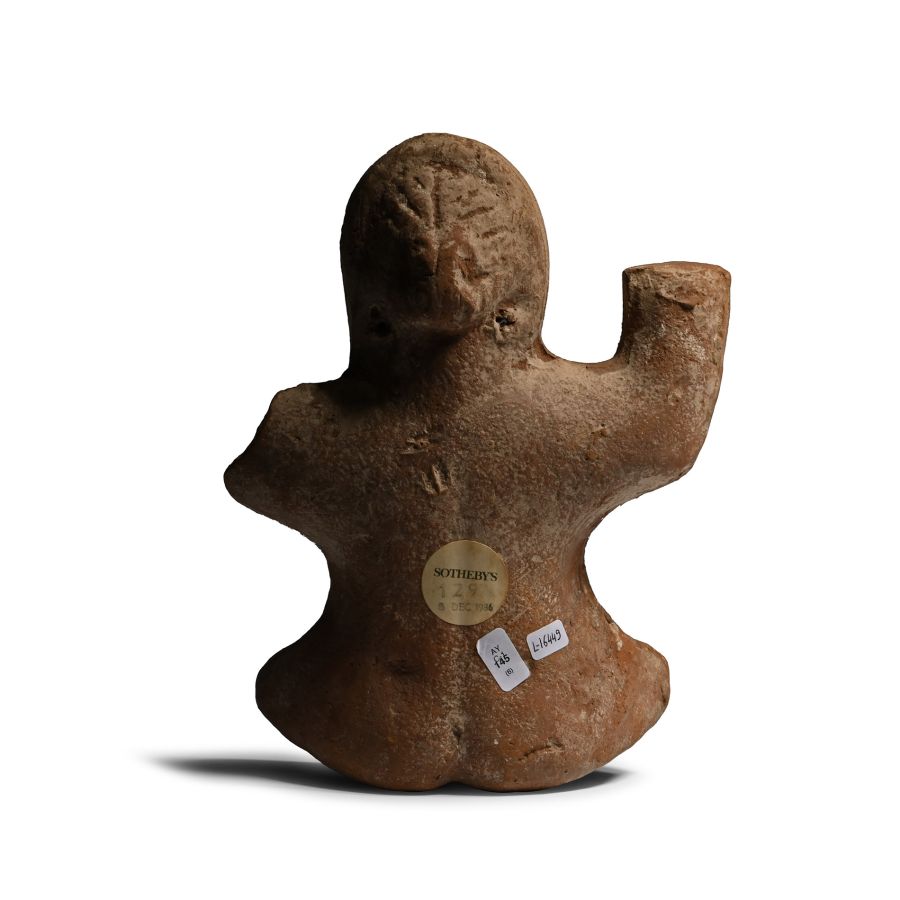
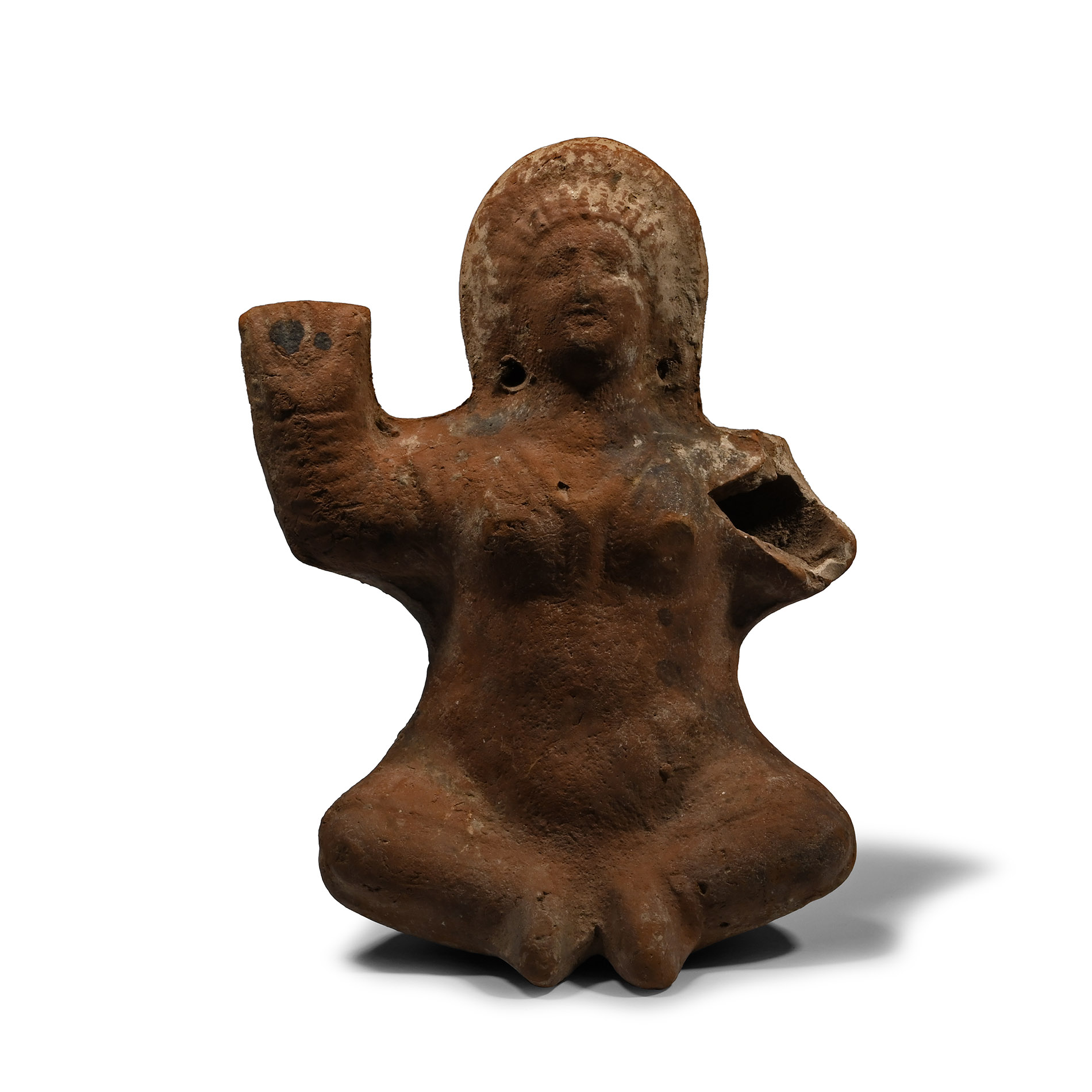
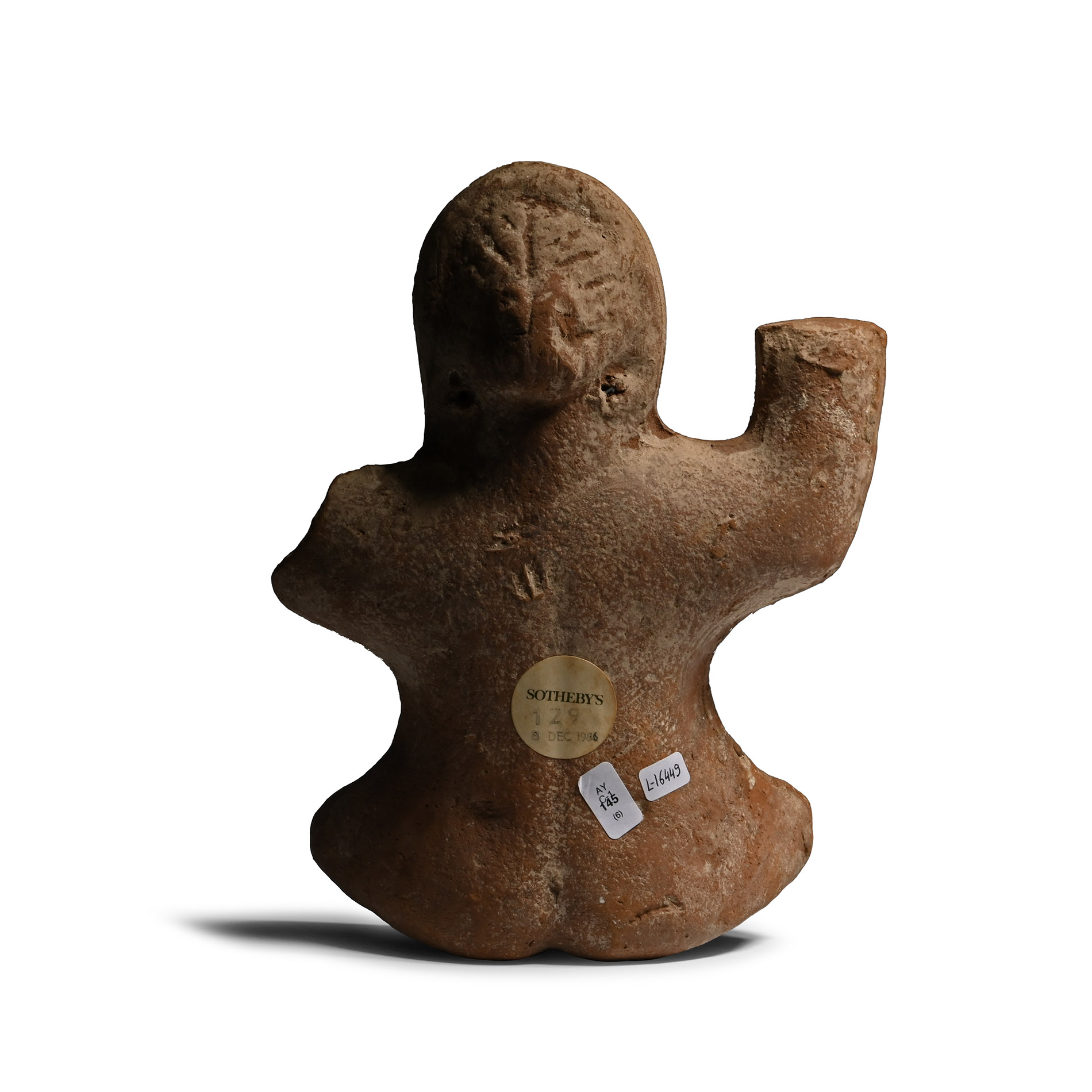
Egyptian Terracotta Figurine of Baubo
PTOLEMAIC PERIOD, 2ND-1ST CENTURY B.C.
7 1/2 in. (642 grams, 19.2 cm).
Depicted wearing a long sleeveless vestis talaris with a V-opening, on the head a high propoloma falling on her shoulders, ears pierced to accept earrings, right arm raised and legs bent at knees.
ProvenanceThe Erotica Collection Christian von Faber-Castell, Küsnacgt ZH, Switzerland, since the late 1970s.
This lot is accompanied by an illustrated lot declaration signed by the Head of the Antiquities Department, Dr Raffaele D’Amato.
Cf. similar statuette (with lowered hand) in Gutch, C., 'Excavations at Naukratis: D. The Terracottas. ' in The Annual of the British School at Athens, 5, pp.67-97, 1899, pl.XIII, fig.201.
FootnotesBaubo was a minor divinity in Greek mythology, linked to the cult of Demeter and Persephone. The statuette belongs to the second type of Baubo figurines, widespread in the last Ptolemaic and Roman period in Egypt. The Egyptian Baubos are split into two groups, and this one belongs to the first group depicting a woman seating frontally whilst holding a musical instrument or with the open hand in blessing gesture. Many of them were used as amulets or as ex-voto.
Christian von Faber-Castell (born 1950) is a renowned German entrepreneur and art collector, best known as a member of the prominent Faber-Castell family, famed for their iconic writing instruments. A passionate advocate for art and culture, Christian von Faber-Castell curated an extensive and diverse private collection of erotica, spanning centuries and cultures. His collection reflects a deep appreciation for the interplay of beauty, sensuality, and artistic expression, bringing together rare and unique works that explore themes of intimacy and human connection. Pieces from this collection have been featured in notable exhibitions and are celebrated for their artistic and historical significance. This offering represents a rare opportunity to acquire works from one of the most fascinating and eclectic private collections of its kind.
TimeLine Auctions follows a vetting process to ensure the authenticity and legality of all items, reinforcing our commitment to integrity and responsible trading. Each antiquity, antique, and coin lot undergoes thorough examination by a vetting committee of at least ten external specialists, professional trade association members, scientists, and archaeologists: Our Vetting Process
AUCTIONS:
TimeLine is a leading auction house specialising in antiquities, ancient art, collectables, natural history, coins, medals, and books. Our auctions offer museums, collectors, historians, and enthusiasts the opportunity to acquire unique and historically significant pieces.
-
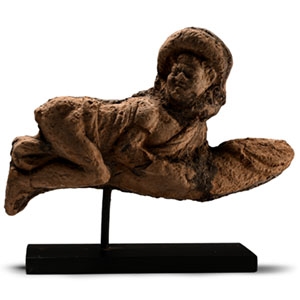
Romano-Egyptian Terracotta Figurine of a Slave with Enormous Phallus
3rd century B.C.-3rd century A.D.Sold for (Inc. bp): £260
Modelled in the round hollow-formed figure of a crouching male gripping his exaggerated phallus and looking over his right shoulder; mounted on a custom-made stand. 284 grams total, 11.6 cm wide including stand
The Erotica Collection Christian von Faber-Castell, Küsnacgt ZH, Switzerland, since the late 1970s. This lot is accompanied by an illustrated lot declaration signed by the Head of the Antiquities Department, Dr Raffaele D’Amato.
Christian von Faber-Castell (born 1950) is a renowned German entrepreneur and art collector, best known as a member of the prominent Faber-Castell family, famed for their iconic writing instruments. A passionate advocate for art and culture, Christian von Faber-Castell curated an extensive and diverse private collection of erotica, spanning centuries and cultures. His collection reflects a deep appreciation for the interplay of beauty, sensuality, and artistic expression, bringing together rare and unique works that explore themes of intimacy and human connection. Pieces from this collection have been featured in notable exhibitions and are celebrated for their artistic and historical significance. This offering represents a rare opportunity to acquire works from one of the most fascinating and eclectic private collections of its kind. -
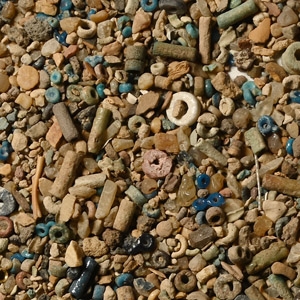
Egyptian Faience Beads and Other Fragments
Late Period, 664-332 B.C.Sold for (Inc. bp): £124
Including seed and tubular beads, and other items. 46 grams total, 1-9 mm
From an old English collection. Acquired from Brigantia, York, 1990s. Ian Wilkinson collection, Nottinghamshire, UK, formed since 1985. This lot is accompanied by an illustrated lot declaration signed by the Head of the Antiquities Department, Dr Raffaele D’Amato. -
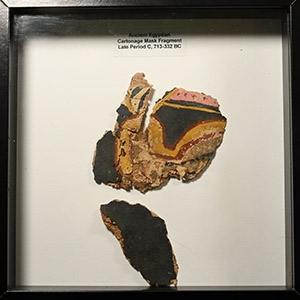
Egyptian Painted Cartonnage Cartouche Fragment
Late-Ptolemaic Period, 664-31 B.C.Sold for (Inc. bp): £143
Two large moulded fragments of cartonnage with polychrome painted decoration; mounted in a glazed frame. 824 grams including frame, 25.2 x 25.2 cm
Ex M.S. Ciappara collection, Norfolk, UK, 1939-1950. This lot is accompanied by an illustrated lot declaration signed by the Head of the Antiquities Department, Dr Raffaele D’Amato.
