
Loading, please wait...

LOT 0478
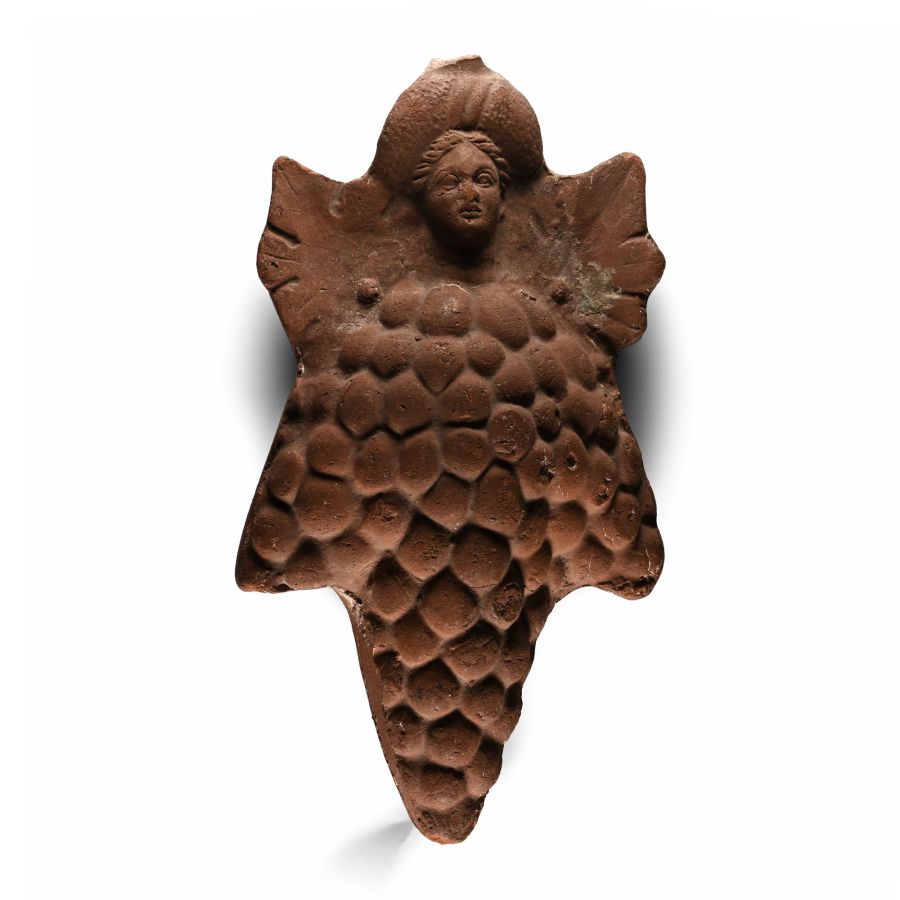
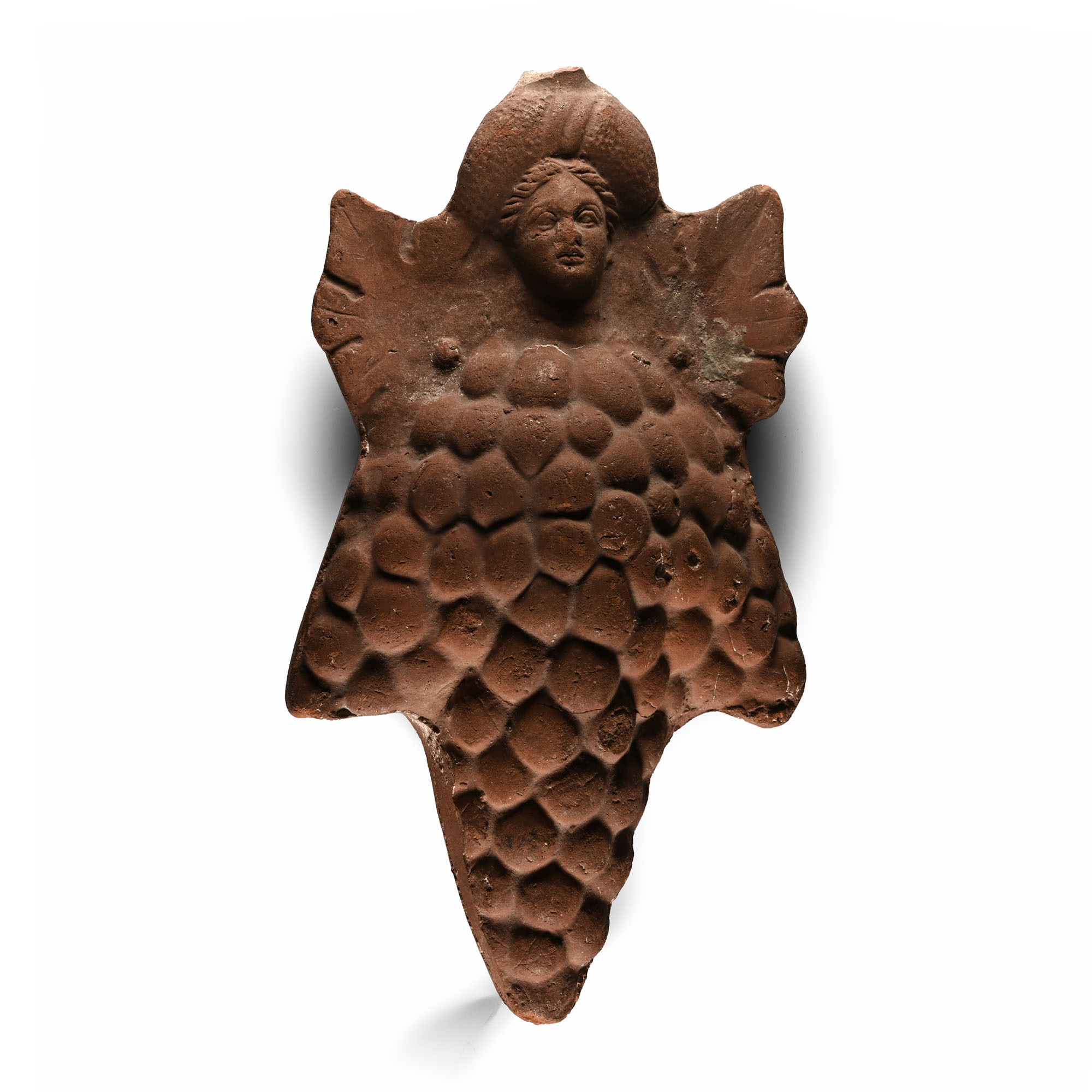
Egyptian Terracotta Figure of Artemis of Ephesus
PTOLEMAIC PERIOD, 2ND-1ST CENTURY B.C.
7 1/8 in. (222 grams, 18 cm).
Hollow-formed figure of Artemis wearing a voluminous wreath, head emerging from a bunch of grapes between two vine leaves; vent on top of the head; opening to rear. [No Reserve]
ProvenanceThe Erotica Collection Christian von Faber-Castell, Küsnacgt ZH, Switzerland, since the late 1970s.
This lot is accompanied by an illustrated lot declaration signed by the Head of the Antiquities Department, Dr Raffaele D’Amato.
The statue of Artemis at Ephesus (modern Turkey) is modelled with breasts in multiple tiers and with a hairstyle reminiscent of that on this figure.
CONDITIONTimeLine Auctions follows a vetting process to ensure the authenticity and legality of all items, reinforcing our commitment to integrity and responsible trading. Each antiquity, antique, and coin lot undergoes thorough examination by a vetting committee of at least ten external specialists, professional trade association members, scientists, and archaeologists: Our Vetting Process
AUCTIONS:
TimeLine is a leading auction house specialising in antiquities, ancient art, collectables, natural history, coins, medals, and books. Our auctions offer museums, collectors, historians, and enthusiasts the opportunity to acquire unique and historically significant pieces.
-
.jpg)
Egyptian Bronze Amun-Min-Kamutef Statuette
Late Period, 664-332 B.C.Sold for (Inc. bp): £2,080
Modelled in the round as a votive ithyphallic figure wearing a double-plumed crown with a sun disc, holding a flail in his outstretched right hand and his erect phallus in the left; mounted on a custom-made display base. 538 grams total, 21 cm high including stand
Acquired on the London art market. Ex 'K' collection, 1990-2020s. This lot has been cleared against the Art Loss Register database, and is accompanied by an illustrated lot declaration signed by the Head of the Antiquities Department, Dr Raffaele D’Amato.
Amun-Min-Kamutef was a syncretic deity combining the attributes of Amun, the supreme god of the Egyptian pantheon, and Min who represents sexual procreation. The iconography of Amun's ithyphallic form Kamutef is essentially that of Min, and serves to emphasise the sexual prowess of the god. Kamutef means 'bull of his mother' and appears to refer both to Amun's sky-goddess mother in her cow form and to the bull's sexual prowess and strength. -
Egyptian Faience Amulet Collection
1st millennium B.C.Estimate: £600 - 800 (‡+bp*)
Opening Bid: £300
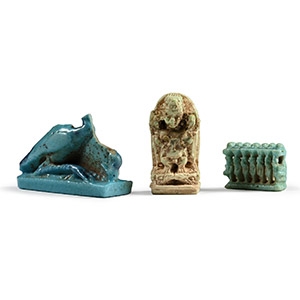
Comprising: an amuletic bead consisting of a row of seven Taweret figures on a rectangular base, pierced longitudinally; a seated ibis before a diminutive figure of Maat on a tongue-shaped base; a cippus amulet composed of the figure of Pataikos standing on two crocodiles, with two hawks perched on his shoulders, a scarab on his head, flanked by the figures of Isis and Nephthys, and on the back, a winged goddess standing on the crocodiles' tails. 6.5 grams total, 16-30 mm
Acquired in the mid 1980s-1990s. Private collection, Switzerland, thence by descent. Private collection, since the late 1990s. This lot is accompanied by an illustrated lot declaration signed by the Head of the Antiquities Department, Dr Raffaele D’Amato. -
Egyptian Silver Gazelle Amulet
Late-Ptolemaic Period, 664-30 B.C. or earlierSold for (Inc. bp): £221
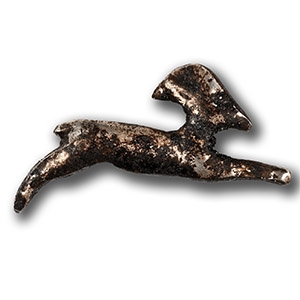
Figure of a leaping gazelle modelled in the half-round, two attachment loops to the reverse. 1 grams, 21 mm
From an early 20th century collection. This lot is accompanied by an illustrated lot declaration signed by the Head of the Antiquities Department, Dr Raffaele D’Amato.
The ‘flying gallop’ pose of animal figures, including the ibex, in ancient Egyptian jewellery elements is considered to be of Aegean influence.
