
Loading, please wait...
LOT 0508
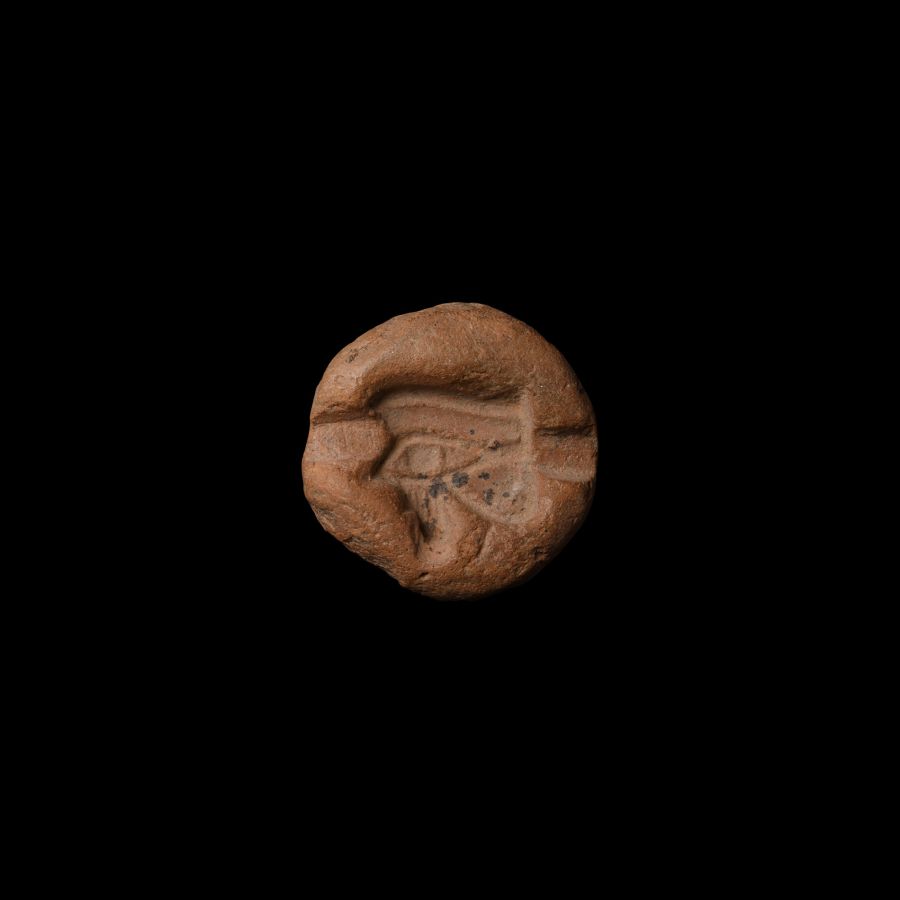
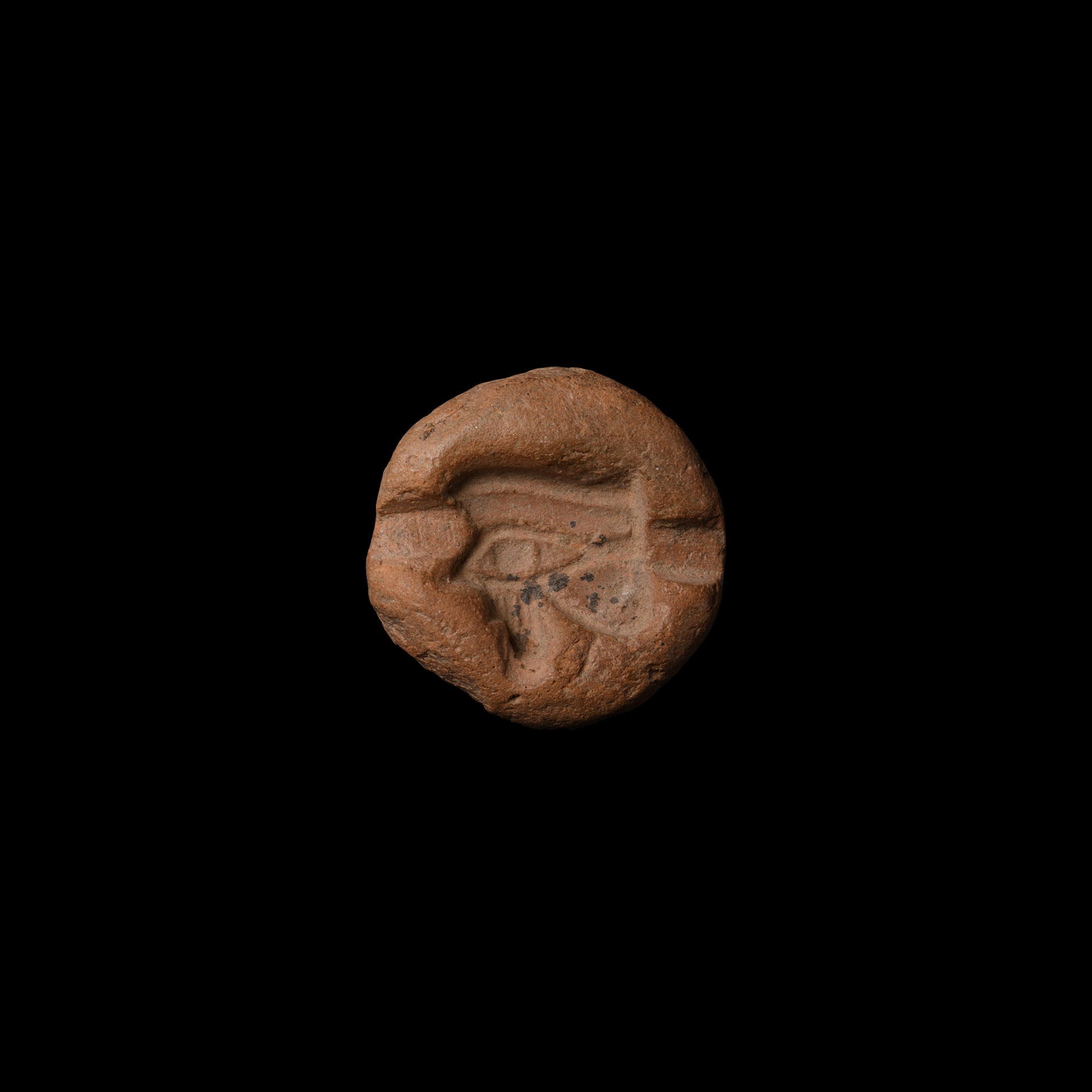
Egyptian Terracotta Eye of Horus Mould
NEW KINGDOM, 1390-1069 B.C.
1 3/8 in. (12.9 grams, 34 mm).
A terracotta amulet mould with incuse sacred wedjat motif, with ducts either side for excess material and possibly to indicate the position of suspension holes added after moulding. [No Reserve]
ProvenanceEx UK art market, 1970s.
Property of a London gentleman.
A comparable example from Thebes and dated to the 18th Dynasty is in the Metropolitan Museum of Art (accession number 12.180.377).
CONDITIONTimeLine Auctions follows a vetting process to ensure the authenticity and legality of all items, reinforcing our commitment to integrity and responsible trading. Each antiquity, antique, and coin lot undergoes thorough examination by a vetting committee of at least ten external specialists, professional trade association members, scientists, and archaeologists: Our Vetting Process
AUCTIONS:
TimeLine is a leading auction house specialising in antiquities, ancient art, collectables, natural history, coins, medals, and books. Our auctions offer museums, collectors, historians, and enthusiasts the opportunity to acquire unique and historically significant pieces.
-
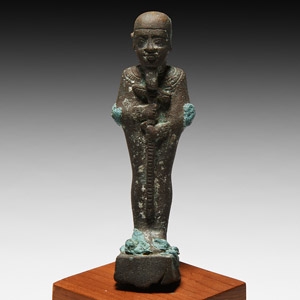
Egyptian Bronze Figure of Ptah
Late Period-Ptolemaic Period, 664-30 B.C.Sold for (Inc. bp): £936
A bronze statuette of the god Ptah, wearing a tight-fitting mummiform garment and cap, standing on a rectangular base, detailing to his face, straight false beard and broad collar, his arms held in front of his chest, holding the was sceptre; lug to base; accompanied by a custom-made wooden display base. 160 grams total, 13.5 cm including stand
Acquired 1980s. Private collection of L.H., Staffordshire, UK. Property of a Sussex, UK, teacher.
Ptah was the god of Egypt's capital city Memphis and master craftsman of the gods, known for his benevolent and approachable character. -
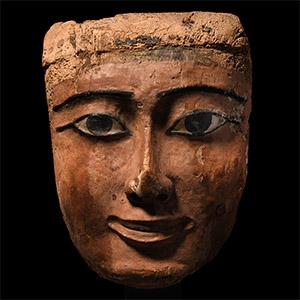
Egyptian Wooden Painted Mask
Late New Kingdom, 1350-1070 B.C.Sold for (Inc. bp): £2,925
A wooden funerary mask with finely delineated painted eyes and eyebrows on a gesso ground; holes to accept attachment pegs to the reverse; mounted on a custom-made display stand. 1.14 kg, 32.5 cm high including stand
Ex private Swiss collection, before 1960. This lot has been checked against the Interpol Database of stolen works of art and is accompanied by search certificate no.11600-199042.
The mask is typical of Phoenician-Punic production and likely had a funerary purpose. -
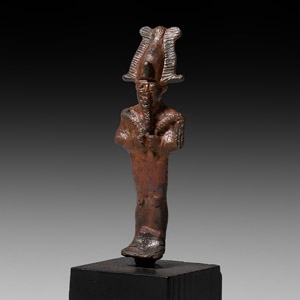
Egyptian Osiris Statuette
Late Period, 664-332 B.C.Estimate: £400 - 600 (+bp*)
Opening Bid: £200
A bronze figurine of Osiris standing with flail and crook held in crossed arms, plaited beard, Atef crown to his head with uraeus above the brow, mounted on a custom-made stand. 150 grams total, 12 cm including stand
Fine condition.
Property of a London gentleman; acquired in London in 1976.
