Loading, please wait...

Egyptian Terracotta Bowl Egyptian Terracotta Bowl Egyptian Terracotta Bowl
Use mousewheel to zoom in and out, click to enlarge
Details

LOT 0478

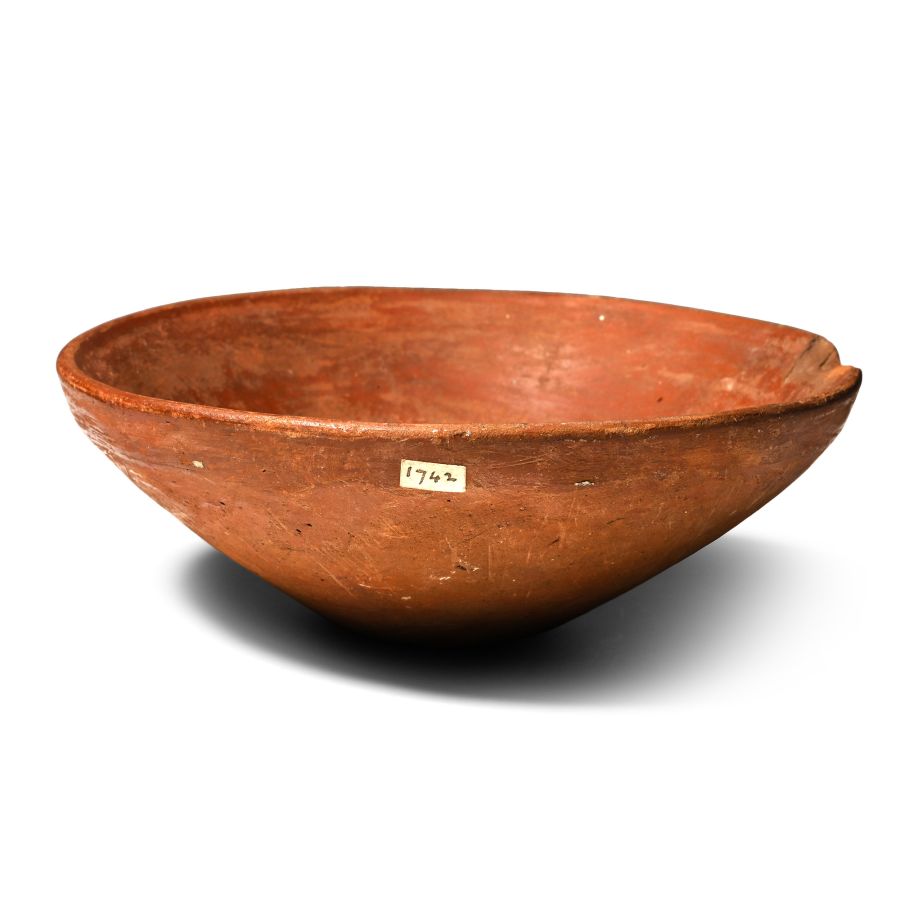
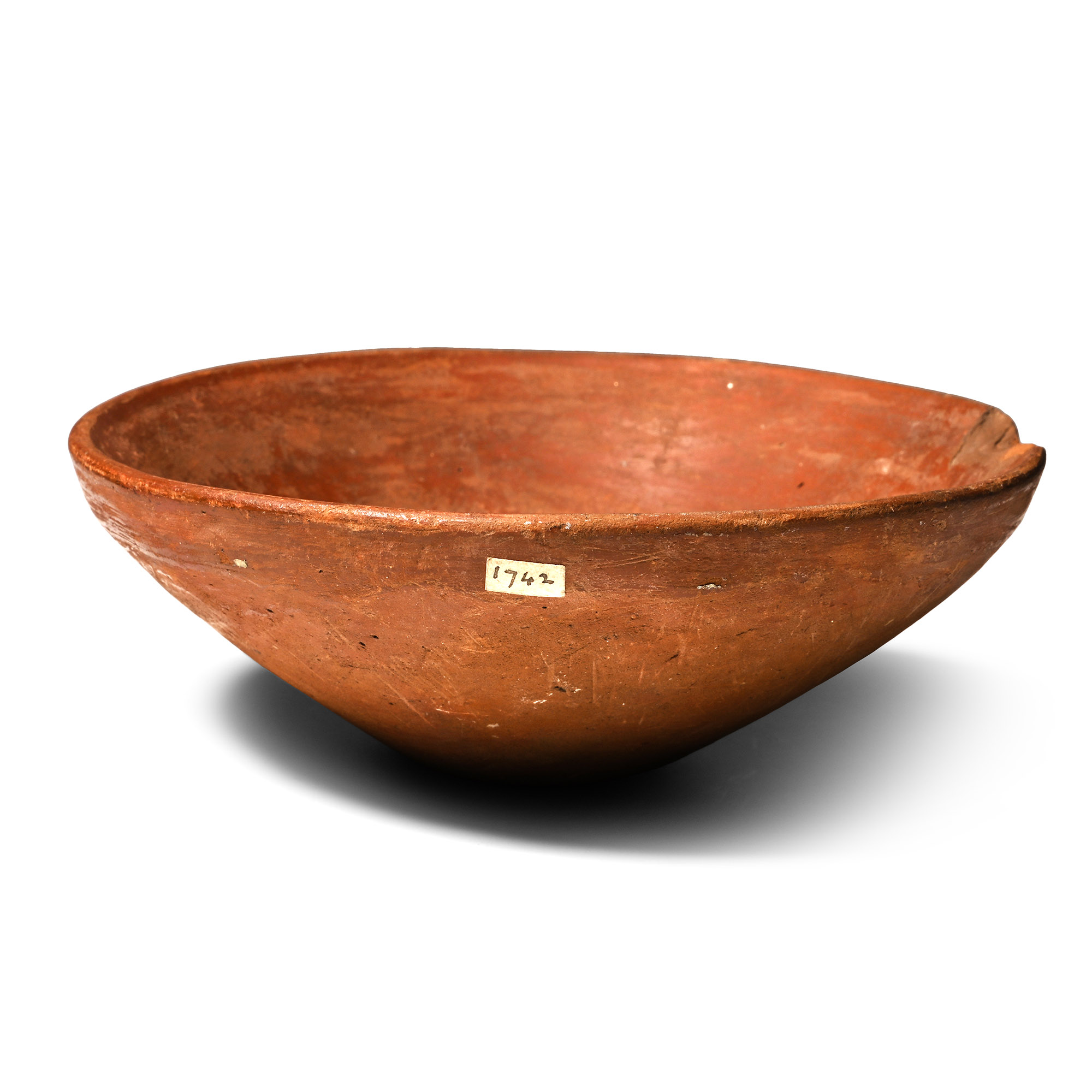
Egyptian Terracotta Bowl

PREDYNASTIC PERIOD, 4TH MILLENNIUM B.C.

6 1/8 in. (375 grams, 15.5 cm wide).

Conical in profile with narrow foot; old collector's notation to underside: 'Found by Petrie location Ballas and Naqada in 1895'. [No Reserve]

Provenance

From the collection of David Donlan (1947-2025), a dedicated and lifelong collector with a passion for the ancient world and the natural sciences, forming his collection from 1960s onwards, using many reputable dealers across the United Kingdom, including the well-regarded Coincraft and The Parthenon Gallery.

Literature

Cf. Petrie, W.M.F., Quibell, J.E., Naqada and Ballas, London, 1895, pl. XXII, no. 22, for a similarly styled vessel.

Footnotes

Naqada (ancient Nubt) is situated on the west bank of the Nile, and is the type-site for the Predynastic period (Naqada I–III). It was a major centre of trade, craft production, and the process of unifying Egypt. Ballas is situated on the east bank opposite Naqada, and contains important Predynastic and Early Dynastic cemeteries excavated extensively by Flinders Petrie and James Quibell in conjunction with their work at Naqada. Their report was published in 1895.

CONDITION
VETTING:

TimeLine Auctions follows a vetting process to ensure the authenticity and legality of all items, reinforcing our commitment to integrity and responsible trading. Each antiquity, antique, and coin lot undergoes thorough examination by a vetting committee of at least ten external specialists, professional trade association members, scientists, and archaeologists: Our Vetting Process


AUCTIONS:

TimeLine is a leading auction house specialising in antiquities, ancient art, collectables, natural history, coins, medals, and books. Our auctions offer museums, collectors, historians, and enthusiasts the opportunity to acquire unique and historically significant pieces.

LOT 0478

Egyptian Terracotta Bowl

Estimate £150 - 200€170 - 230 (for guidance only)$200 - 270 (for guidance only)

Opening Bid
£5 (EUR 6; USD 7) +BP*

Sign in to Bid

Please enter a e-mail
Please enter a password
Or Create Account here.
Please confirm to accept TC and Privacy policy

Bids: 0
RELATED LOTS
  • Egyptian Stone Scarab Group
    Egyptian Stone Scarab Group
    Second Intermediate Period-Ptolemaic Period, circa 1600-30 B.C.

    Estimate: £120 - 170 (+bp*)

    Opening Bid: £5

    Comprising: carnelian type with plain underside; similar with incuse hand symbol; small greenstone type with scarab beetle and other signs; grey stone type with sphinx, indistinct hes- vase above, and two papyrus stalks below; another with a decorative cartouche panel and other signs; two supplied with a museum-quality impression. 7.12 grams total, 10-17 mm


    From the private collection of a European gentleman (1942-2024), formed since the 1970s.

    Lot Details

  • Egyptian Black Stone Scarab
    Egyptian Black Stone Scarab
    Late Period, 664-332 B.C.

    Estimate: £60 - 80 (+bp*)

    Opening Bid: £5

    Lightly incised detailing to the carapace, underside with a crouching ibex in profile; supplied with a museum-quality impression. 3.05 grams, 16 mm


    From the private collection of a European gentleman (1942-2024), formed since the 1970s.

    Lot Details

  • Very Tall Egyptian Black-Topped Vase
    Very Tall Egyptian Black-Topped Vase
    Predynastic Period, Naqada II, circa 3900–3400 B.C.

    Estimate: £8,000 - 10,000 (+bp*)

    Opening Bid: £4,000

    A finely made, coil-formed Nile silt clay, red-polished pottery vessel with elongated ovoid body, pointed base, rounded shoulder, and narrowing neck widening to a slightly everted rim; the upper section blackened through inverted firing, creating the characteristic black-topped finish of Upper Egyptian Predynastic ceramic production; the surface retaining a lustrous burnish with visible vertical polishing marks; accompanied by a display stand. 3.67 kg total, 40 cm (40.5 cm high including stand)


    with Joe Gerena Fine Arts, New York, USA. Collection of Erich Spangenberg, Texas, 1980s. Fortuna Fine Arts Ltd, New York, USA. Wyvern Collection, acquired from the above on 20 March 2018. This lot has been checked against the Interpol Database of stolen works of art and is accompanied by search certificate number no.13349-256959.

    This is an exceptionally large Naqada II black-topped vessel; comparable large examples generally measure approximately 33–37 cm (e.g., Aberdeen Museums ABDMS003532, 36.5 cm; British Museum EA30966, 33.6 cm; National Museum of Ireland 1899:311, 36 cm; Metropolitan Museum of Art 36.1.2, 35 cm), although most examples are significantly smaller. Black-topped vessels were hand-made from finely prepared Nile silt clay, often tempered and coated with a red hematite slip. Larger examples frequently took the form of hes-jars with tapered or pointed bases and narrowing necks and vases with rather more torpedo-like bodies, like this example, while others were made as beakers or wide bowls. Experimental studies suggest that the vessels were fired inverted, with their openings buried in sawdust or other organic material, producing the characteristic blackened rim and interior. After firing, their surfaces were carefully burnished to a high polish, leaving visible polishing marks. These vessels were used mainly in ritual and funerary contexts for the presentation and pouring of liquid offerings. Found chiefly in higher-status burials and cultic deposits, their distinctive red-and-black colour scheme was probably associated with Egyptian concepts of death, regeneration, and cyclical renewal, making them especially appropriate for funerary ceremonies and ritual activities.

    Lot Details