
Loading, please wait...
LOT 0707
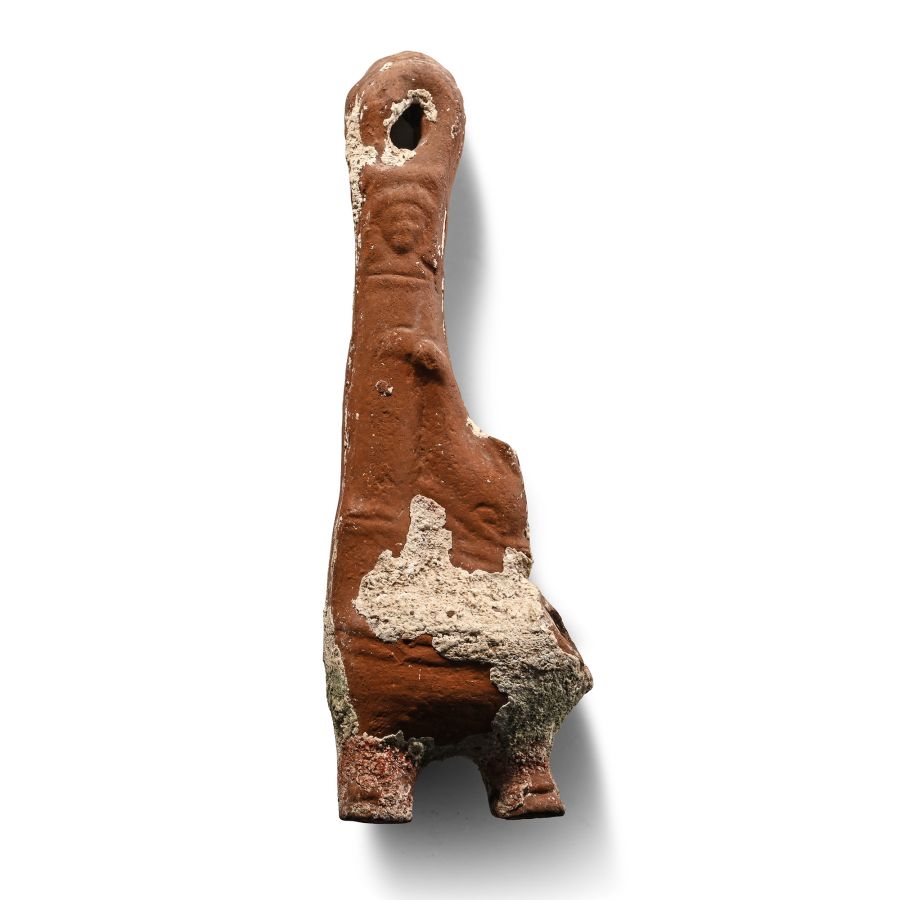
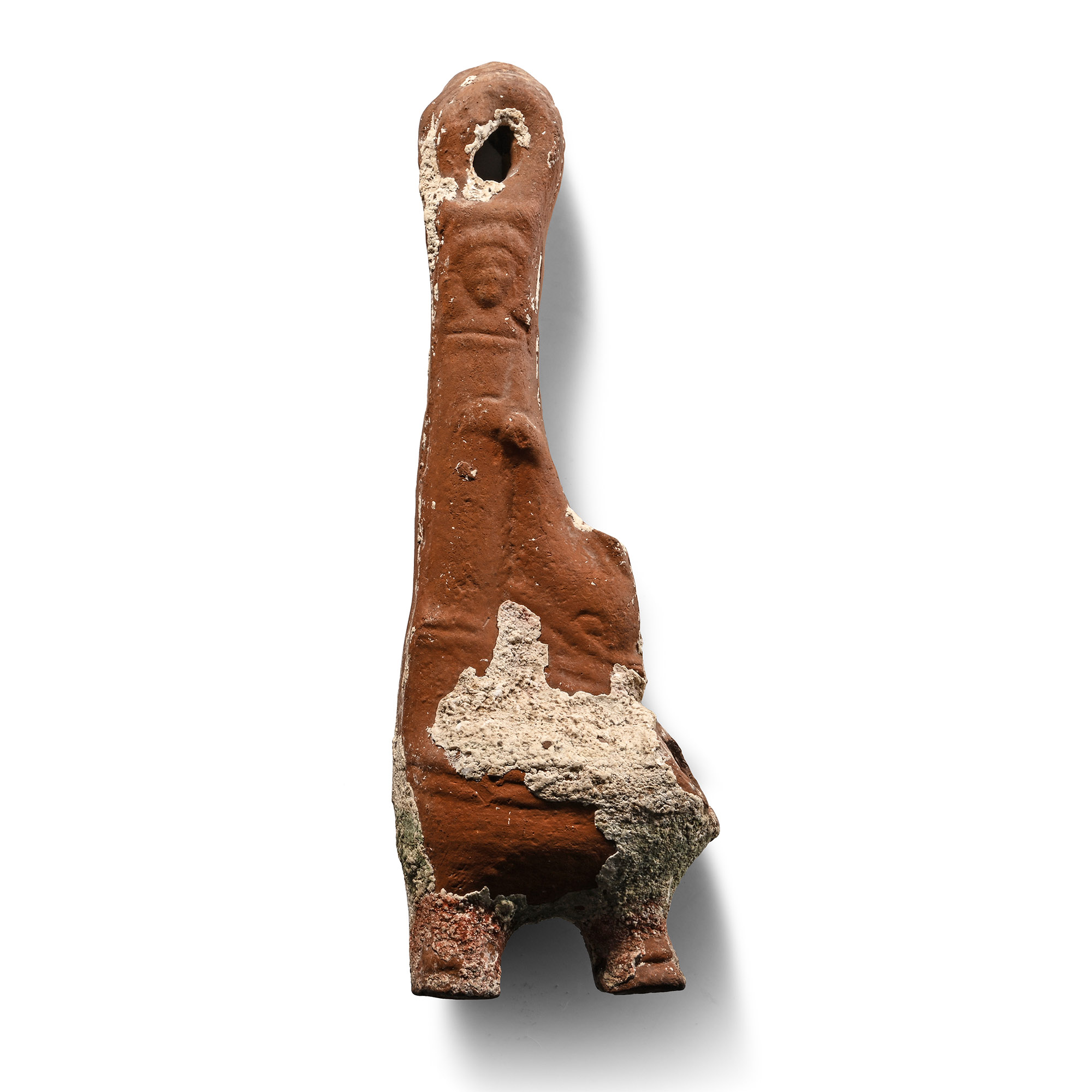
Egyptian Terracotta Alexandrian Figure
ROMAN PERIOD, 30 B.C.-323 A.D.
7 5/8 in. (178 grams, 19.5 cm).
Hollow-formed vessel with bulbous body and two flared feet below, vertical handle with loop finial and moulded mummy and dolphin motif; marine accretion; inked to underside 'Ex M. Suzanne / Alexandria / 1903-1920'. [No Reserve]
ProvenanceFrom the collection of David Donlan (1947-2025), a dedicated and lifelong collector with a passion for the ancient world and the natural sciences, forming his collection from 1960s onwards, using many reputable dealers across the United Kingdom, including the well-regarded Coincraft and The Parthenon Gallery.
CONDITIONTimeLine Auctions follows a vetting process to ensure the authenticity and legality of all items, reinforcing our commitment to integrity and responsible trading. Each antiquity, antique, and coin lot undergoes thorough examination by a vetting committee of at least ten external specialists, professional trade association members, scientists, and archaeologists: Our Vetting Process
AUCTIONS:
TimeLine is a leading auction house specialising in antiquities, ancient art, collectables, natural history, coins, medals, and books. Our auctions offer museums, collectors, historians, and enthusiasts the opportunity to acquire unique and historically significant pieces.
LOT 0707
Egyptian Terracotta Alexandrian Figure
Estimate £120 - 170€140 - 200 (for guidance only)$160 - 230 (for guidance only)
Opening Bid
£5 (EUR 6; USD 7) +BP*
-
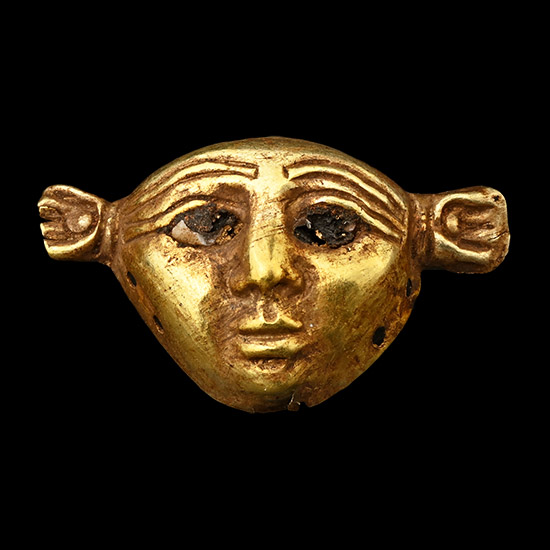
Egyptian Gold Hathor Face Mask
Late Period-Ptolemaic Period, circa 664-30 B.C.Estimate: £1,800 - 2,400 (+bp*)
Opening Bid: £900
Depicted as a woman's head with cow ears, her eyebrows and cosmetic lines carefully defined, with her eyes retaining traces of inlay. 0.96 grams, 28 mm
From the collection of a UK gentleman, London, UK, by descent from his family collection 1970s.
This particular appearance of Hathor, with a human head and cow ears, often appears on columns, particularly in temples associated with goddesses or mammisi-temples ("birth houses"), which were devoted to the birth of a goddess's divine son. The form also appears in the decoration of sistra used in Hathoric and birth-related rituals. Therefore, this diminutive gold image embodies Hathor's symbolic protective potency in all matters maternal. -
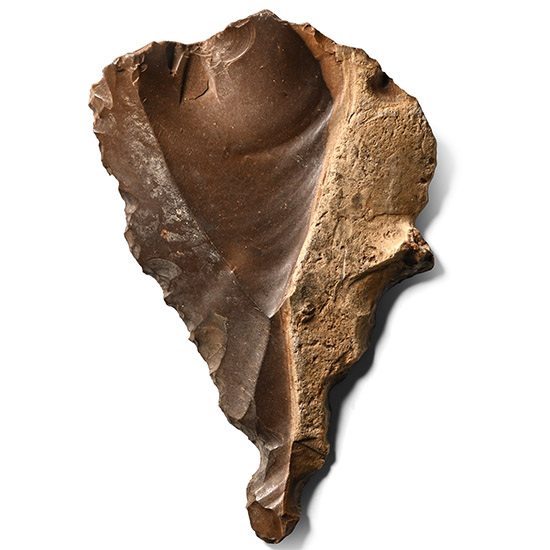
'Valley of the Kings' Egyptian Stone Age Knapped Boring Tool
Neolithic Period, circa 6,000 B.P.Estimate: £50 - 70 (+bp*)
Opening Bid: £5
Triangular in plan with broad curved butt and cortex to one edge; marked 'Tombs of the Kings Valley, Thebes, 1912'. 80.8 grams, 97 mm
Found near the tombs of the Valley of the Kings, Thebes, Egypt, 1912. Acquired from Sotheby's, 16 June 1959 (part), £4.10. From the private collection of Peter Clayton, FCILIP, Dip, Arch, FSA, FRNS, Hemel Hempstead, Hertfordshire, UK; formed since the late 1950s. Accompanied by a copy of an old handwritten identification card written by Peter Clayton. -
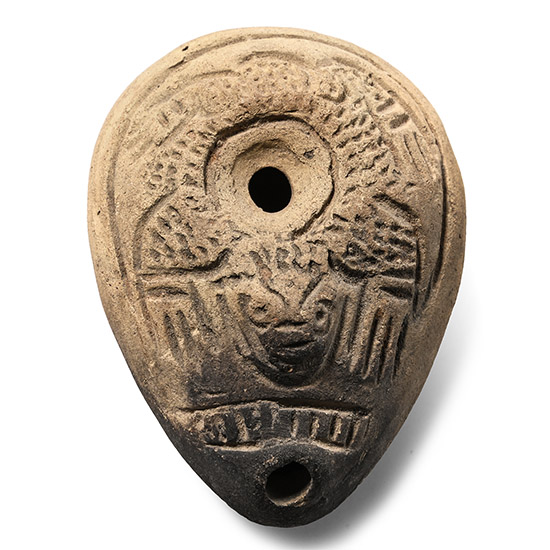
Romano-Egyptian Terracotta Frog Oil Lamp
Roman Period, 3rd-4th century A.D.Estimate: £50 - 70 (+bp*)
Opening Bid: £5
Ovoid in plan and biconvex in section, low-relief frog image on the discus, starburst on the underside; old collector's note: 'Very light buff coloured frog lamp. Exact type as illustrated in Bailey, [?] Roman pottery lamps. B.17.1963 pl. 14 d. Decorated base. 3-4th century A.D. Found in Alexandria. From Puys-Aubert collection in Alexandria. March 1963.' 71 grams, 81 mm
From the private collection of Peter Clayton, FCILIP, Dip, Arch, FSA, FRNS, Hemel Hempstead, Hertfordshire, UK; formed since the late 1950s. Accompanied by an old handwritten identification card written by Peter Clayton.
