
Loading, please wait...
LOT 0419
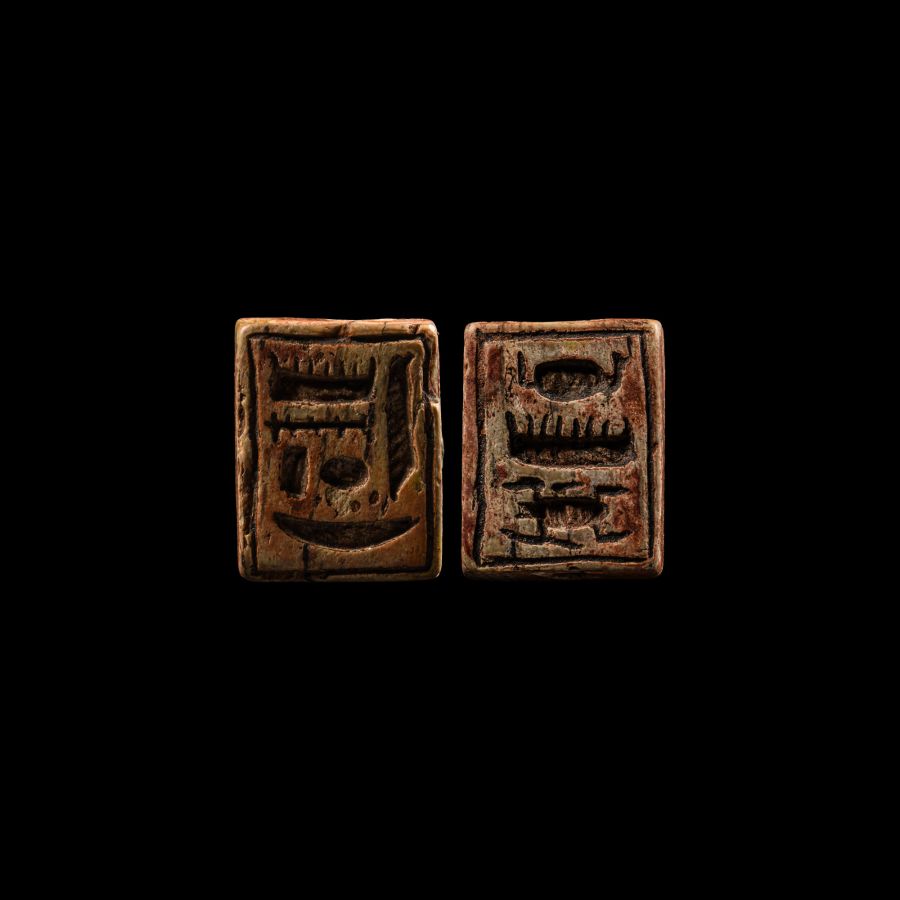
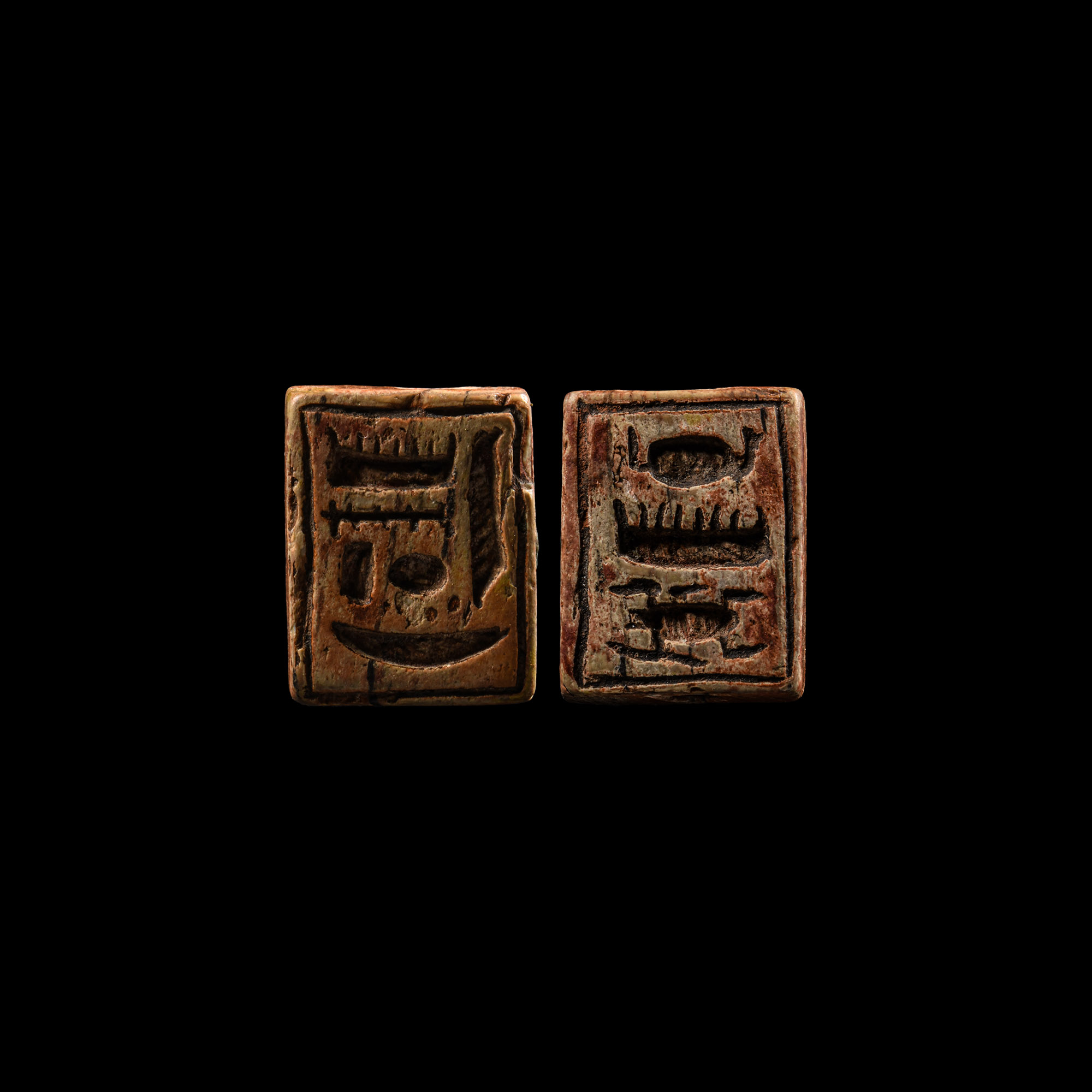
Egyptian Tabular Glazed Steatite Spacer Bead with Hieroglyphs
LATE PERIOD, 664-332 B.C. OR LATER
5/8 in. (2.25 grams, 16 mm).
Bifacial with incised border to each face, one with throne name of Tuthmoses III and the other with hieroglyphs. [No Reserve]
ProvenanceAcquired 1970s-1996.
Property of a North American collector.
London collection, 2016.
See Andrews, C., Amulets of Ancient Egypt, London, 1994, for discussion.
CONDITIONTimeLine Auctions follows a vetting process to ensure the authenticity and legality of all items, reinforcing our commitment to integrity and responsible trading. Each antiquity, antique, and coin lot undergoes thorough examination by a vetting committee of at least ten external specialists, professional trade association members, scientists, and archaeologists: Our Vetting Process
AUCTIONS:
TimeLine is a leading auction house specialising in antiquities, ancient art, collectables, natural history, coins, medals, and books. Our auctions offer museums, collectors, historians, and enthusiasts the opportunity to acquire unique and historically significant pieces.
LOT 0419
Egyptian Tabular Glazed Steatite Spacer Bead with Hieroglyphs
Sold for (Inc. bp): £130
-
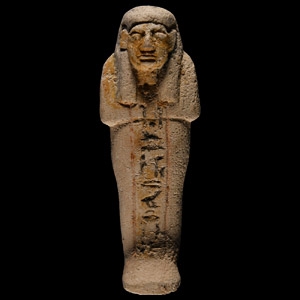
Egyptian Painted Limestone Hieroglyphic Shabti for Iru-iry
Late New Kingdom, circa 1000 B.C.Estimate: £1,000 - 1,400 (+bp*)
Opening Bid: £500
With remains of pigmented tripartite wig, face and upper body, with frontal column of hieroglyphic text with black fill and red borders, dedicating the shabti to 'The God's Father (a priestly title), Iru-iry(?)'. 95.8 grams, 11.2 cm
Acquired 1970s-1996. Property of a North American collector. London collection, 2016. -
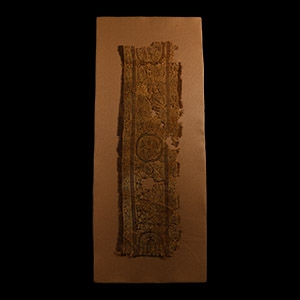
Egyptian Mounted Coptic Textile with Running Hounds
Circa 6th-7th century A.D.Sold for (Inc. bp): £104
Comprising a large fragment with a vertical band (clavus) from a garment, woven in linen and green, blue, yellow and red wool, embroidered with circular patterns filled with vegetal figures and arabesques, alternating with two parallel rows of running animals (hounds?), edged by a red border, a further band of foliage decoration. 163 grams, 59 x 24.5 cm
Acquired 1970s-1996. Property of a North American collector. London collection, 2016.
Tapestry technique on natural linen. It is highly probable that this tapestry was part of a long decorated tunic, a clavus running vertically on the breast and on the back of it, and having a parallel clavus on the other side. Tunic decoration conformed to a specific layout with the back mirroring the front. Matching bands called clavi ran on either side of the neck. They could be full length, like our specimen, or stop above the waistline. -
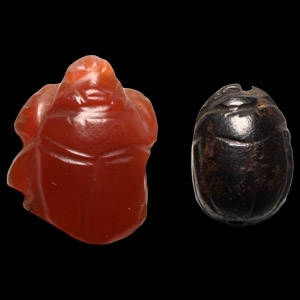
Egyptian Hardstone Scarab Group
Late New Kingdom, 1550-1060 B.C.Sold for (Inc. bp): £338
Both polished and drilled for suspension; possibly carnelian and haematite; some chips. 2.94 grams total, 11-16 mm
From a family collection formed 1900-1950; by descent circa 1980.
