
Loading, please wait...
LOT 0498
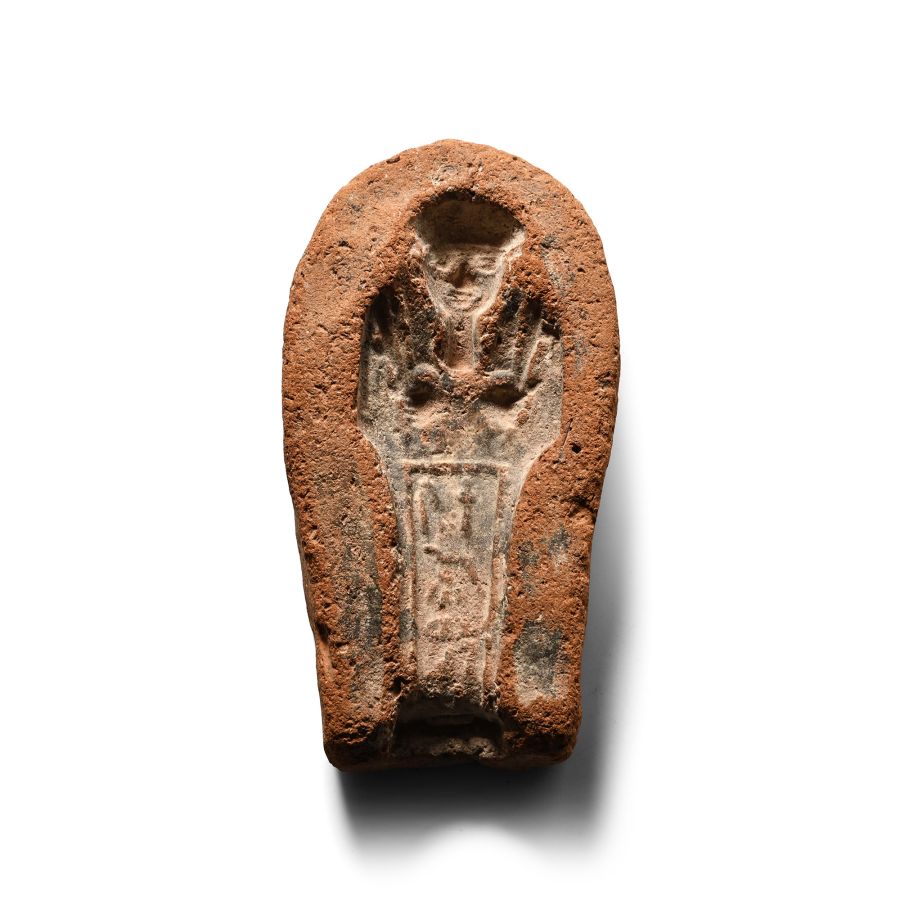
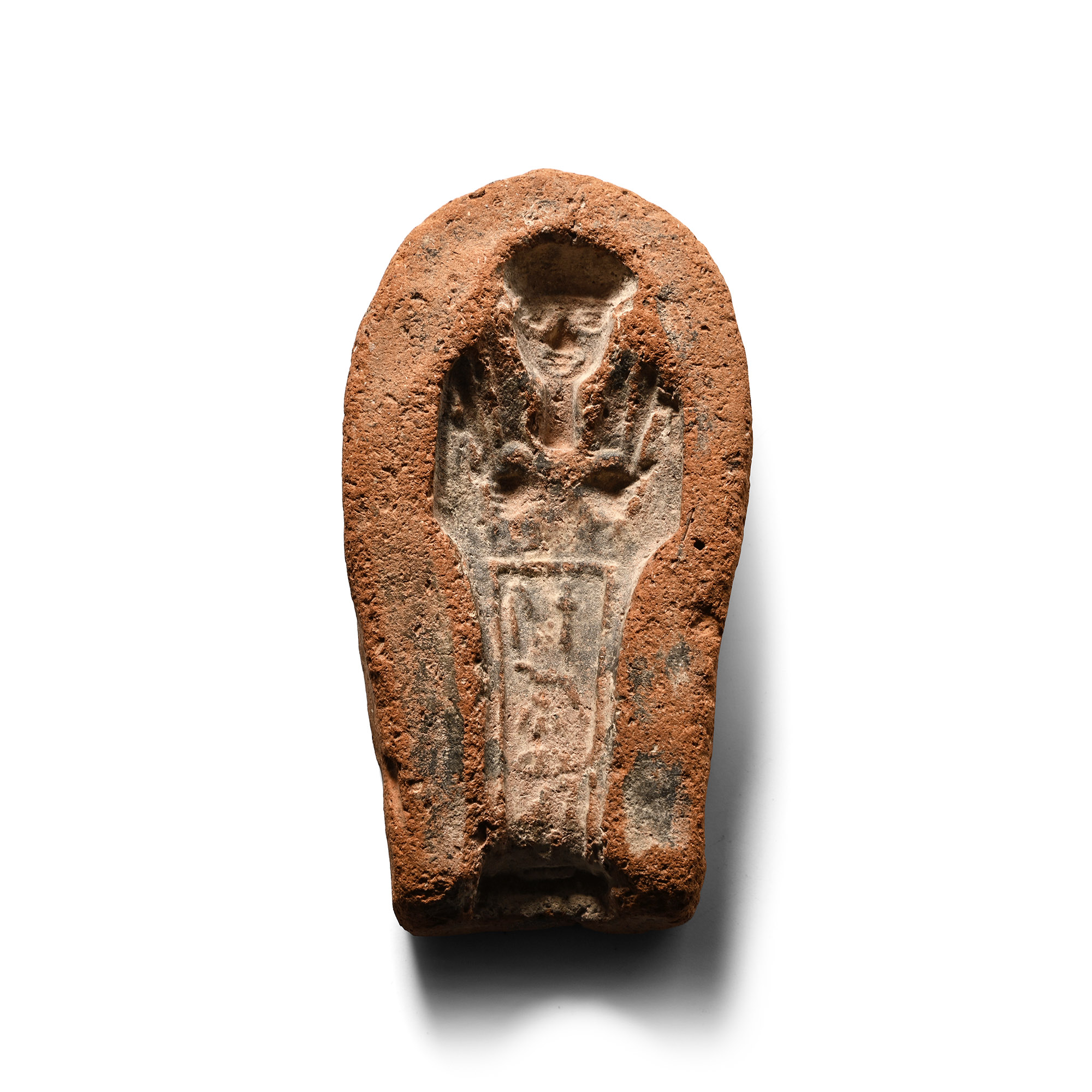
Egyptian Style Terracotta Shabti Mould
19TH-20TH CENTURY A.D.
3 3/8 in. (70 grams, 87 mm).
Tongue-shaped in plan with a step to the square end, incuse figure with crossed hands, tripartite wig, hieroglyphic text to the lower body, giving a standard shabti introduction.
ProvenanceFrom the private collection of Peter Clayton, FCILIP, Dip, Arch, FSA, FRNS, Hemel Hempstead, Hertfordshire, UK; formed since the late 1950s.
FootnotesThis forger's mould features the most recognisable text elements found on Late Period shabtis. However, authentic ancient moulds were typically plain—allowing the inscription to be added after casting—or left with blank spaces for the owner's name. While modern forgers often successfully replicate the common opening formulas, they frequently garble or over-embellish the subsequent individual names and texts.
CONDITIONTimeLine Auctions follows a vetting process to ensure the authenticity and legality of all items, reinforcing our commitment to integrity and responsible trading. Each antiquity, antique, and coin lot undergoes thorough examination by a vetting committee of at least ten external specialists, professional trade association members, scientists, and archaeologists: Our Vetting Process
AUCTIONS:
TimeLine is a leading auction house specialising in antiquities, ancient art, collectables, natural history, coins, medals, and books. Our auctions offer museums, collectors, historians, and enthusiasts the opportunity to acquire unique and historically significant pieces.
LOT 0498
Egyptian Style Terracotta Shabti Mould
Estimate £300 - 400€350 - 460 (for guidance only)$410 - 540 (for guidance only)
-
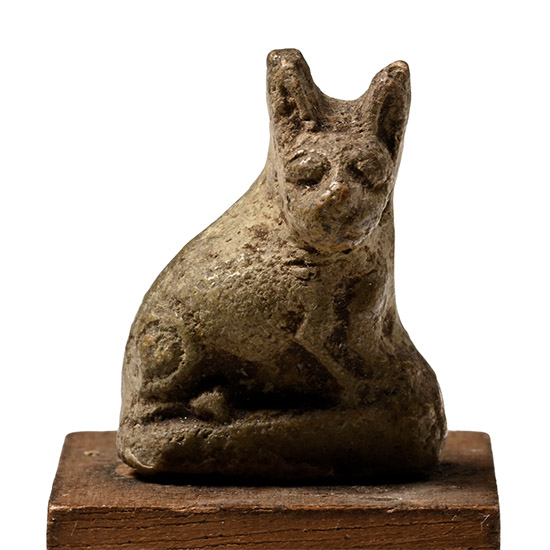
Egyptian Faience Cat Amulet
Late Period, 664-332 B.C.Estimate: £80 - 100 (+bp*)
Bids: 3 | Current Bid: £25
Modelled in the round in a sitting pose with head turned; old collector's label: 'Ancient Egyptian Charm Figure of the Sacred Cat. B.C. 900. Fine style & work & quite perfect. From the Hilton Price Collection'; with an old wooden stand. 3.01 grams, 23 mm
From the private collection of Frederick George Hilton Price (1842–1909). From the estate of a deceased Sussex private collector since the early 20th century. Accompanied by an old, original handwritten information label. -
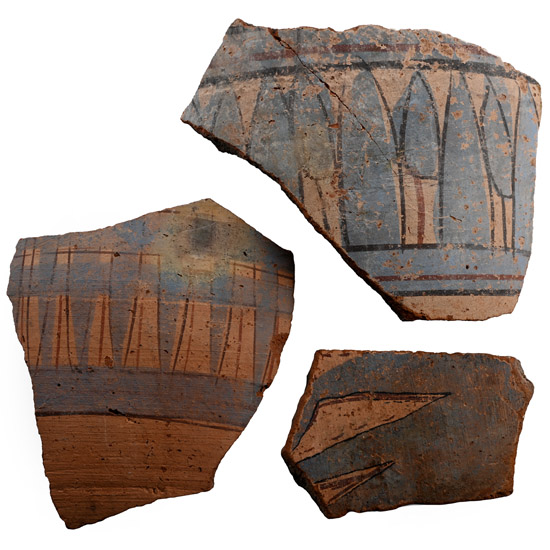
Large Egyptian Painted Bowl Fragments
New Kingdom, 18th Dynasty, Amarna Period, 1379-1362 B.C.Estimate: £80 - 100 (+bp*)
Opening Bid: £5
Three substantial fragments from blue-painted vessels, two with stylised floral motifs and one with a fragment of figurative decoration. 300 grams total, 8.3-13.2 cm
Acquired circa 1979. From the private collection of Peter Clayton, FCILIP, Dip, Arch, FSA, FRNS, Hemel Hempstead, Hertfordshire, UK; formed since the late 1950s.
The distinctive blue colour on these pottery fragments derives from a cobalt-and-aluminium slip that reacts during firing. The designs could incorporate floral, geometric, and figurative motifs (for an illustrated discussion of the technical production of blue-painted pottery, see Seyfried, F. (ed.), In the Light of Amarna: 100 Years of the Nefertiti Discovery, Berlin, 2012, pp. 132-135. -
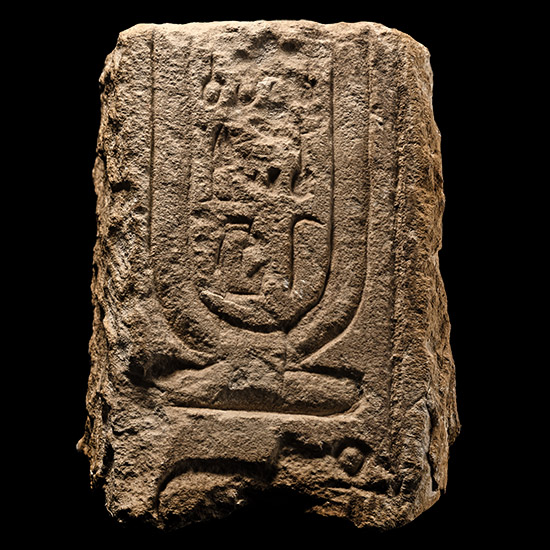
Egyptian Limestone Block from a Tomb with Cartouche of Queen Nefertiti
New Kingdom, 18th Dynasty, Amarna Period, 1353-1332 B.C.Estimate: £4,000 - 6,000 (+bp*)
Bids: 12 | Current Bid: £550
Rectangular block with a dressed face, preserving most of a low-relief cartouche containing Nefertiti's name, 'Neferneferu[aten] Nefertiti'. 1.13 kg, 11.2 cm
Acquired in March 1977. From the private collection of Peter Clayton, FCILIP, Dip, Arch, FSA, FRNS, Hemel Hempstead, Hertfordshire, UK; formed since the late 1950s. Accompanied by an old handwritten information card by Peter Clayton, collection no.129. This lot has been checked against the Interpol Database of stolen works of art and is accompanied by search certificate no.13493-262901.
Most inscribed objects related to Akhenaten or his family were systematically smashed or defaced after his death. Some scholars think that Nefertiti then took the royal name Neferneferuaten and may have served as a co-regent or an independent ruler.
