
Loading, please wait...
LOT 2085
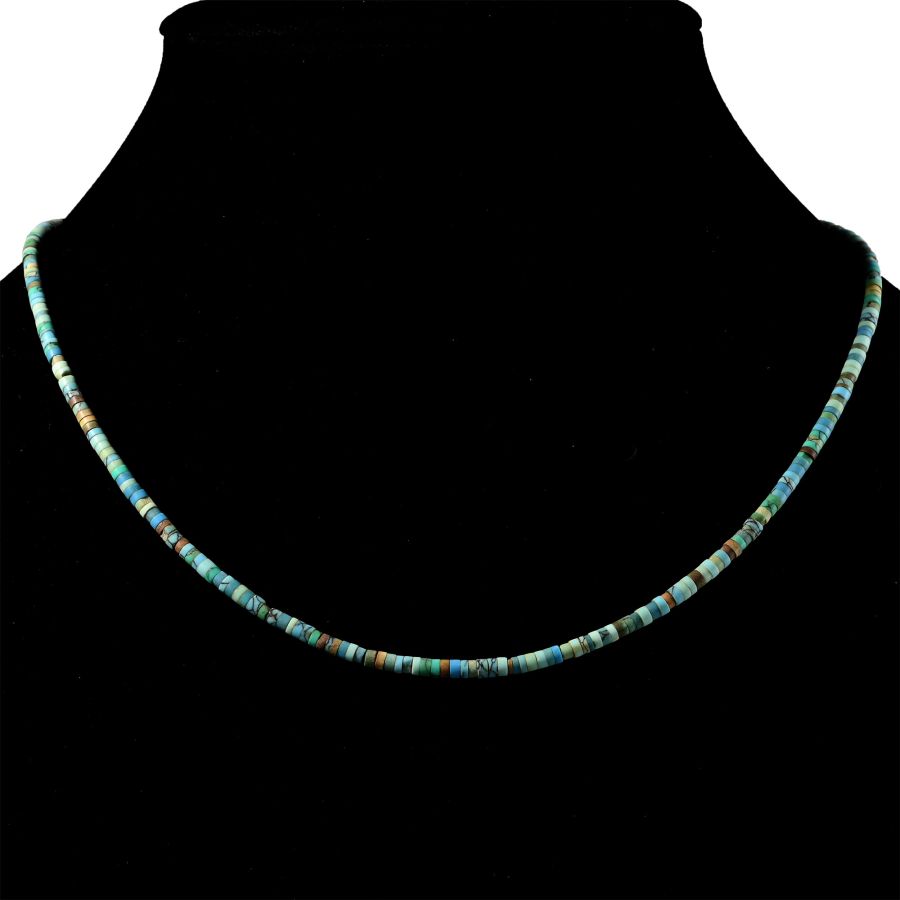
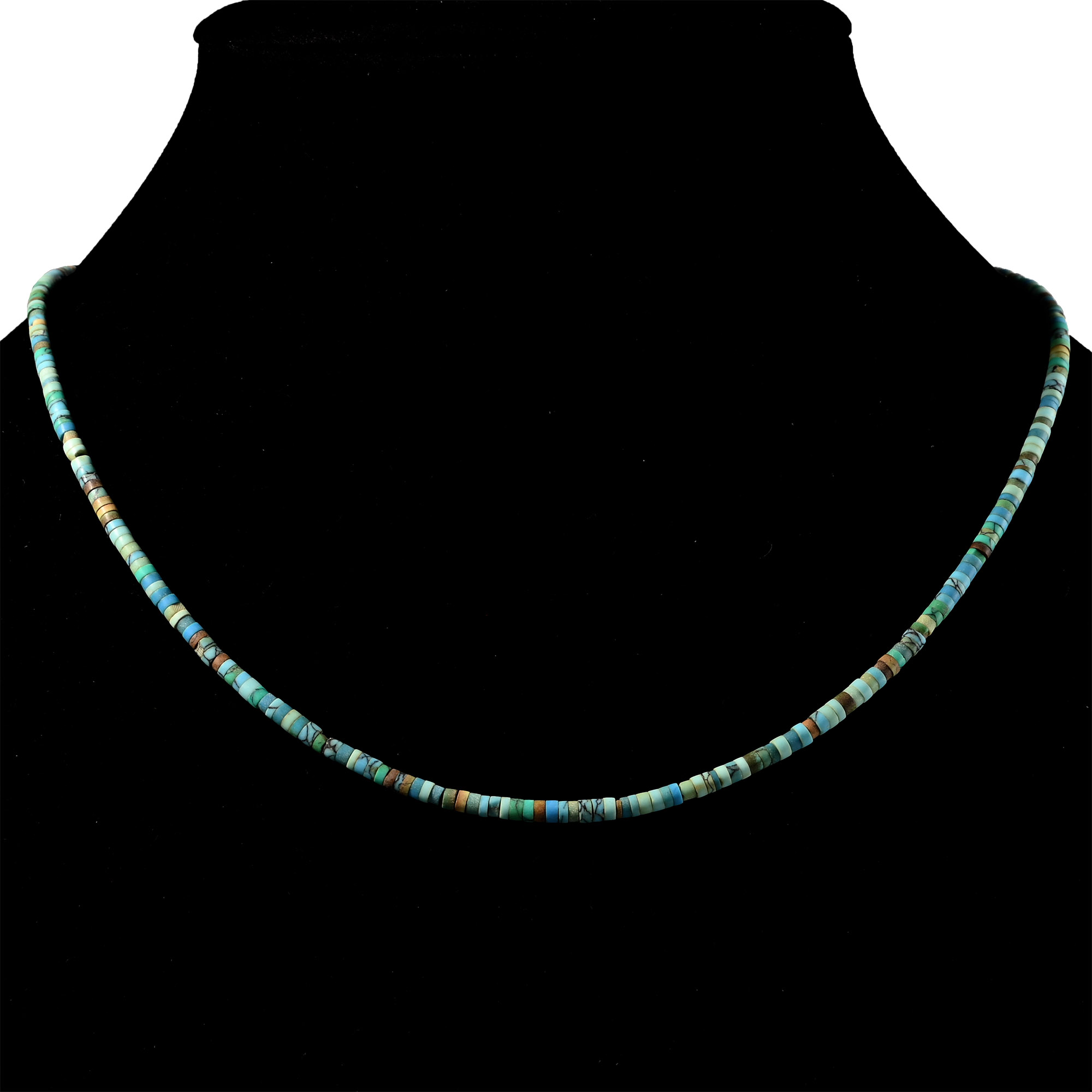
Egyptian Style Stone Bead Necklace String
20TH CENTURY A.D.
14 1/4 in. (4.6 grams, 36.2 cm).
Group of small annular turquoise and other stone beads. [No Reserve]
ProvenanceAcquired in the 1990s.
Ex London, UK, collection.
TimeLine Auctions follows a vetting process to ensure the authenticity and legality of all items, reinforcing our commitment to integrity and responsible trading. Each antiquity, antique, and coin lot undergoes thorough examination by a vetting committee of at least ten external specialists, professional trade association members, scientists, and archaeologists: Our Vetting Process
AUCTIONS:
TimeLine is a leading auction house specialising in antiquities, ancient art, collectables, natural history, coins, medals, and books. Our auctions offer museums, collectors, historians, and enthusiasts the opportunity to acquire unique and historically significant pieces.
-
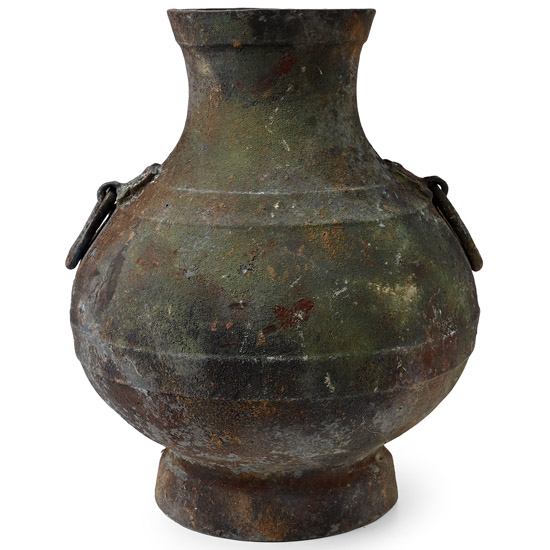
Archaic Chinese Style Bronze Jar
20th century A.D.Sold for (Inc. bp): £182
Bulbous body with a flaring foot and a funicular neck, two articulated loop handles on the shoulder with dragon-mask attachments. 2.43 kg, 29.3 cm high
Ex Hong Kong gentleman's collection. -
.jpg)
Post Medieval Silver Ring with Vibrant Blood Orange Glass Insert
France, 18th century A.D.Sold for (Inc. bp): £208
Flat-section hoop and ellipsoid bezel with leaf detail to the shoulder, orange glass insert. 2.07 grams, 21.36 mm overall, 17.44 x 15.72 mm internal diameter (approximate size British O, USA 7, Europe 14.98, Japan 14)
Private collection, Europe. Acquired on the English art market. -
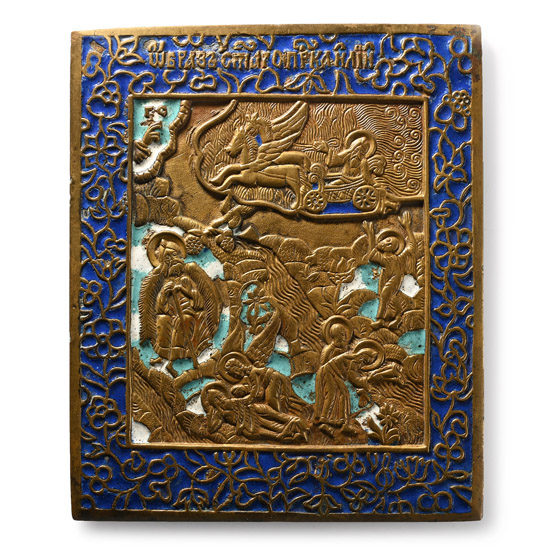
Russian Orthodox Enamelled Bronze Travel Icon with Scenes of the Life of the Prophet Elijah
19th century A.D.Sold for (Inc. bp): £247
With blue champlevé enamel, depicting scenes of the life of Prophet Elijah: on the bottom right Elijah rolling up his mantle and dividing the waters of the Jordan, in front of his disciple Elisha; on the bottom left Elijah watched over by the Angel; on the top right Elijah ascending to heaven on a Chariot of Fire, assisted by the hand of God; on the left Elijah, covered by his mantle, fed by ravens; frame with blue enamel over gilded pseudo-vegetal decorations. 585 grams, 14.3 cm
Acquired from Chris Martin-Zakheim, Iconastas, 5 Piccadilly Arcade, London SW1. From the private collection of a West London, UK, gentleman, formed since the early 2000s.
The icon represents the Ascension of the prophet Elijah and other scenes from his life. Elijah is ascending to heaven in a fiery chariot drawn by horses, leaving his mantle to his disciple Elisha, symbolising the transmission of his prophetic mission. Among the great figures of the Bible, the prophet Elijah was one of the most venerated figures in Orthodoxy.
