
Loading, please wait...


LOT 2454
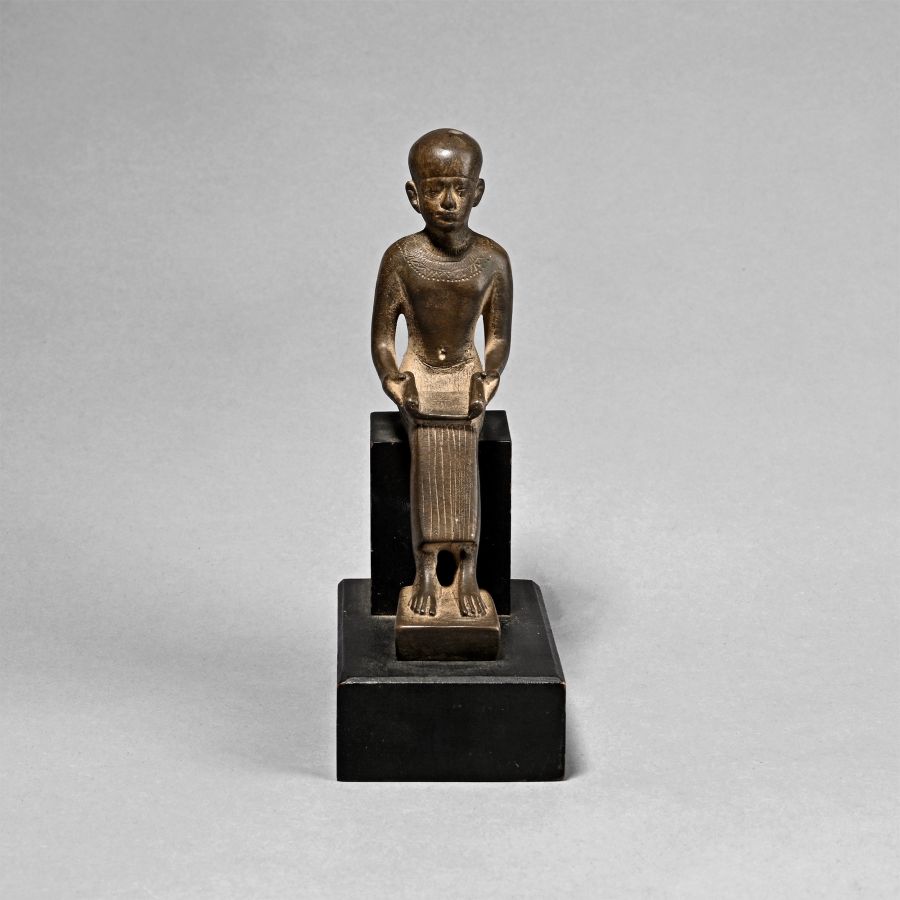
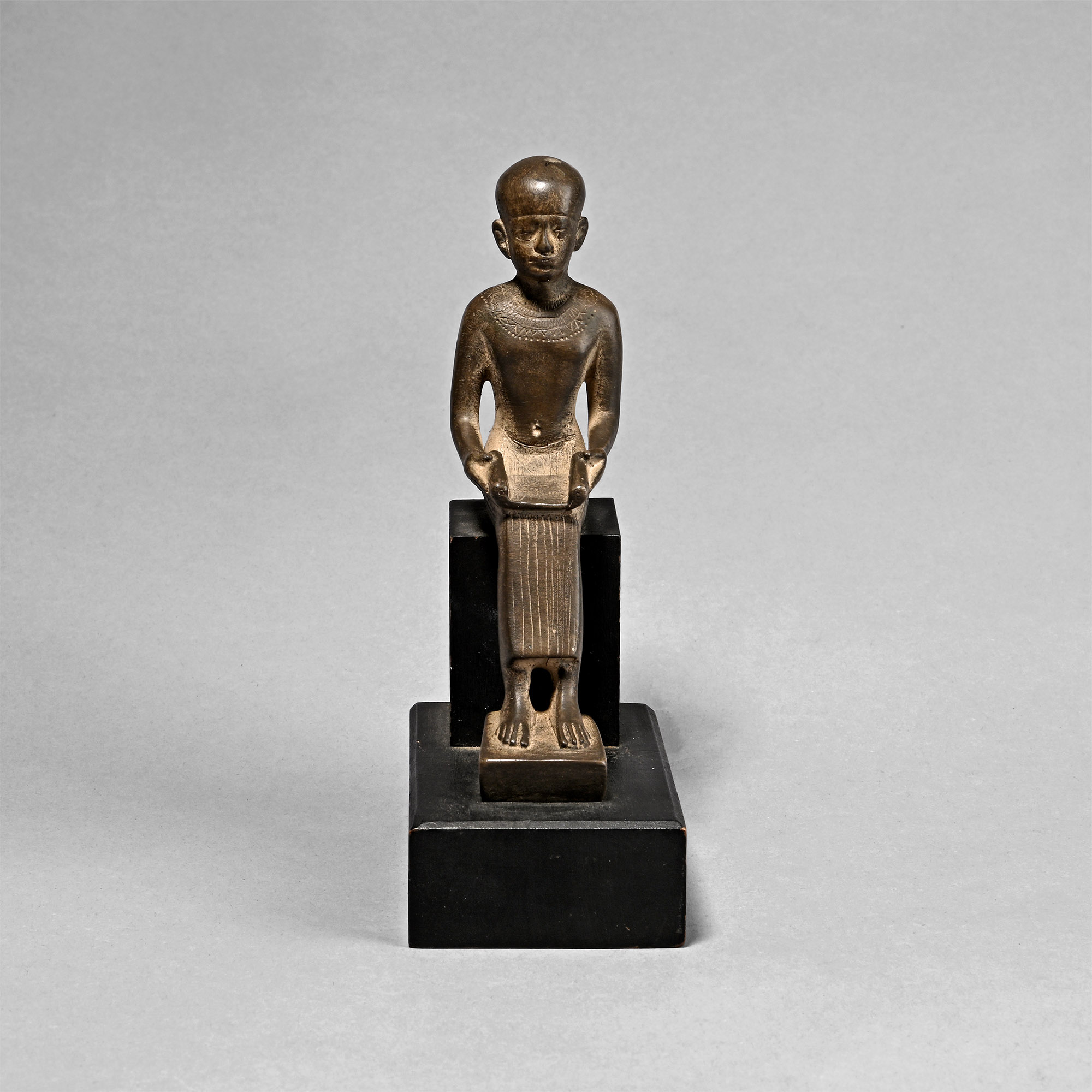
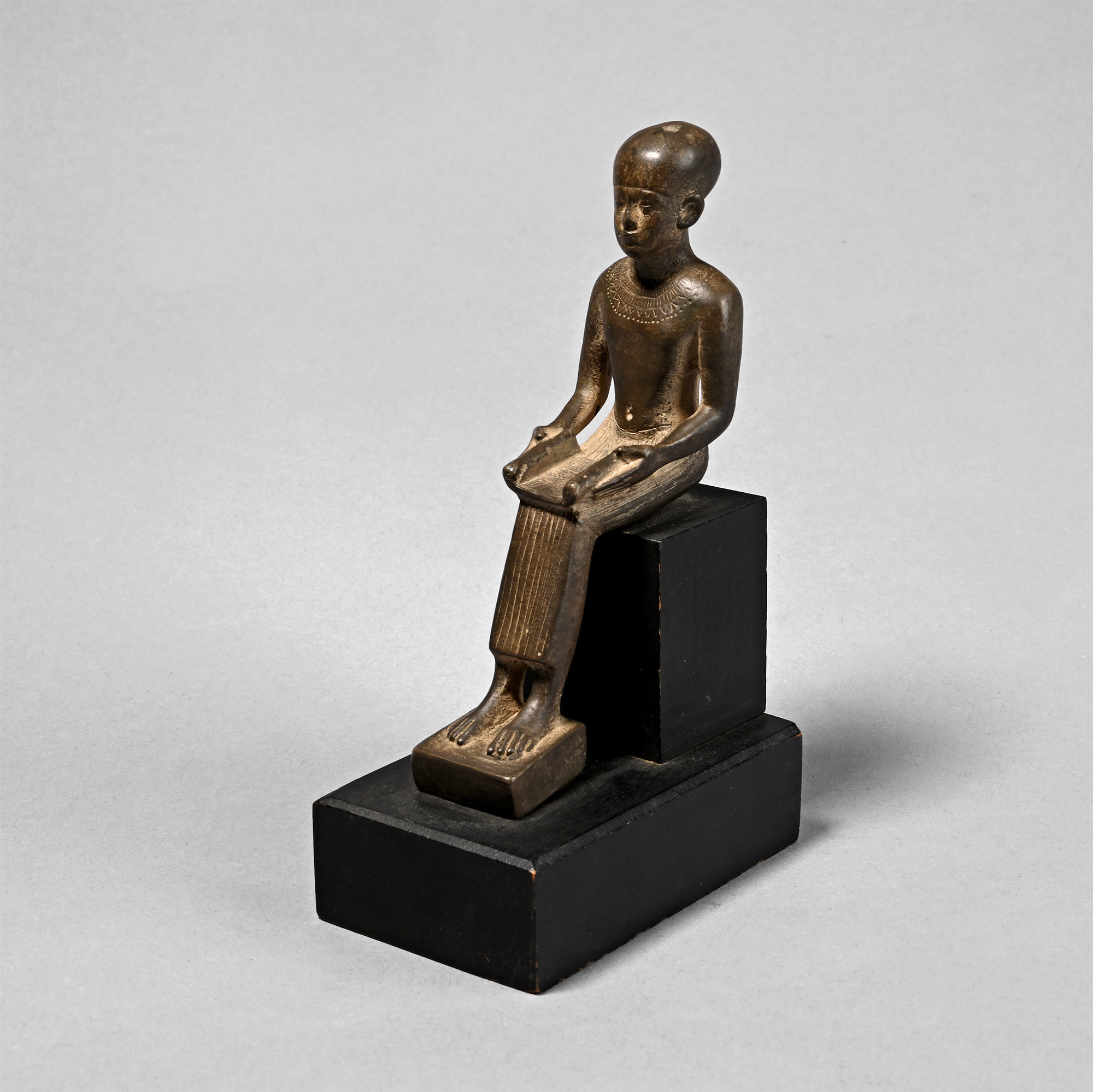
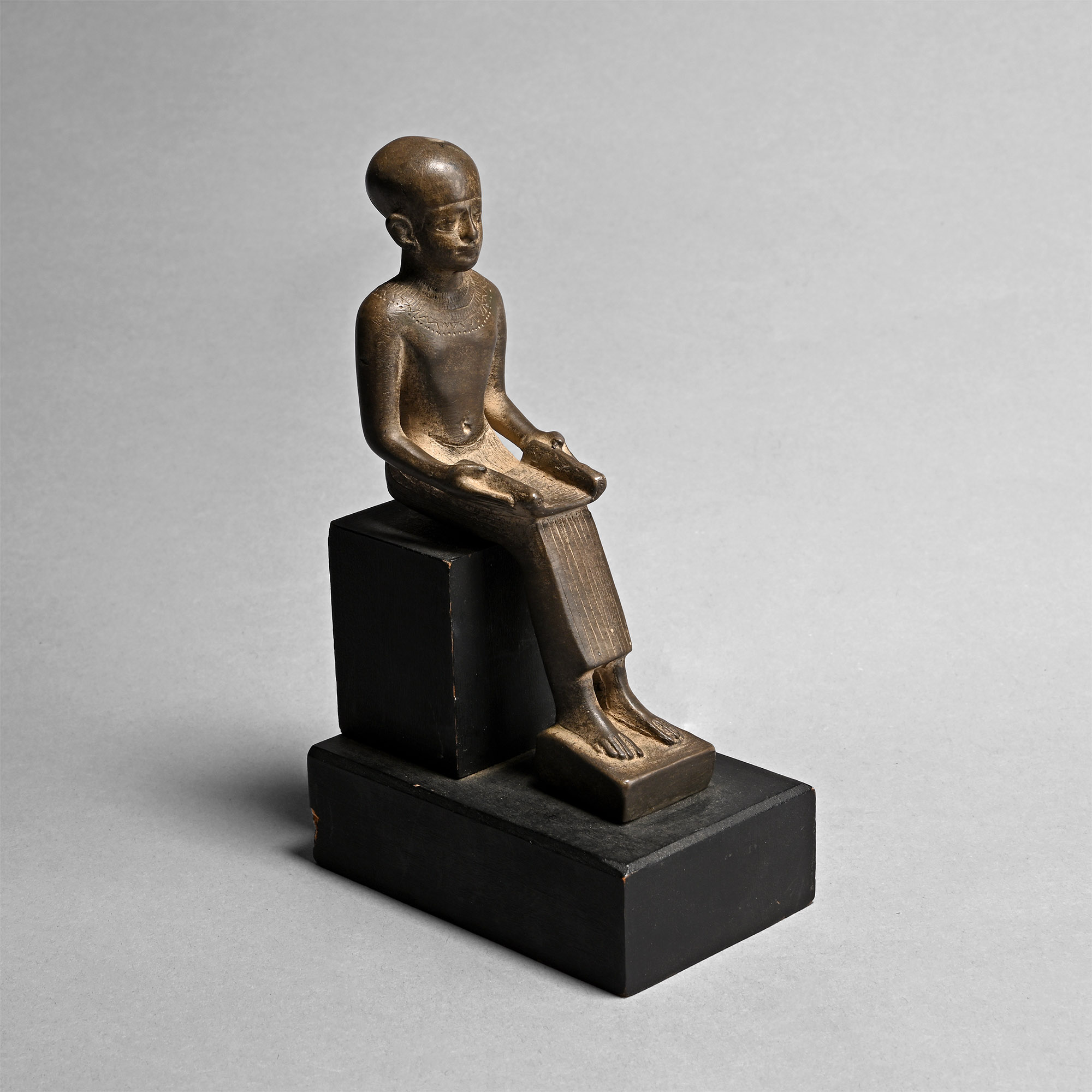
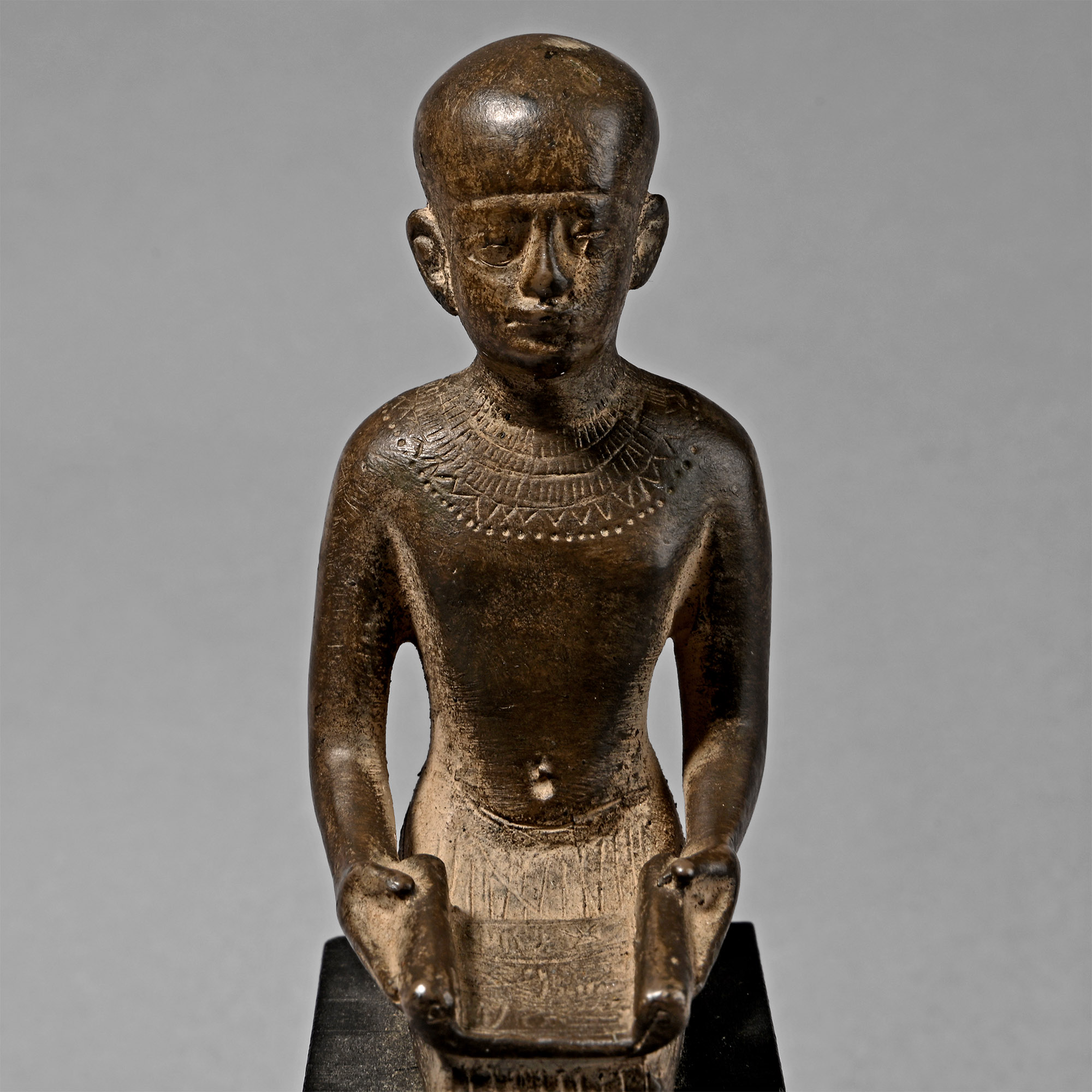
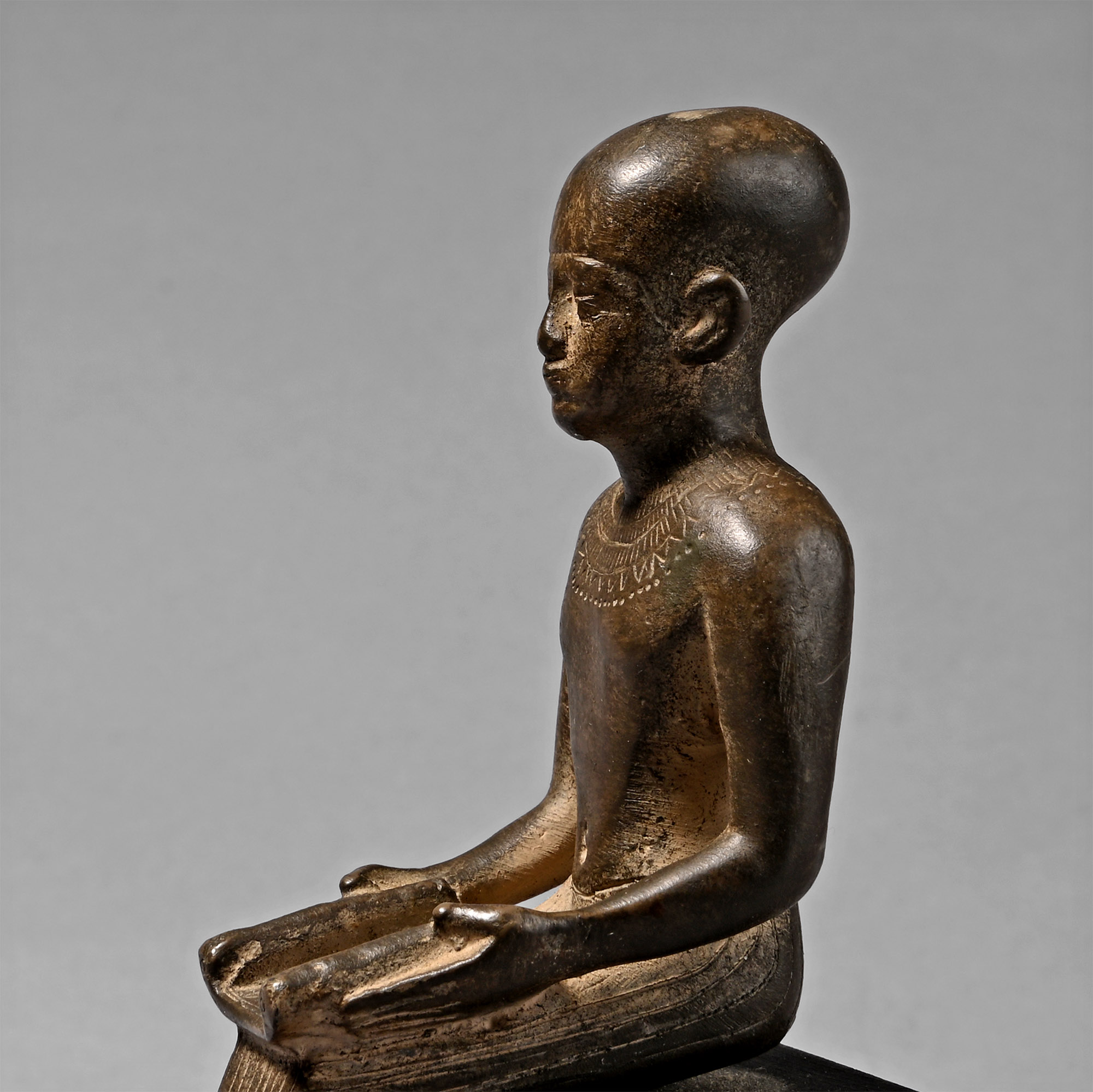
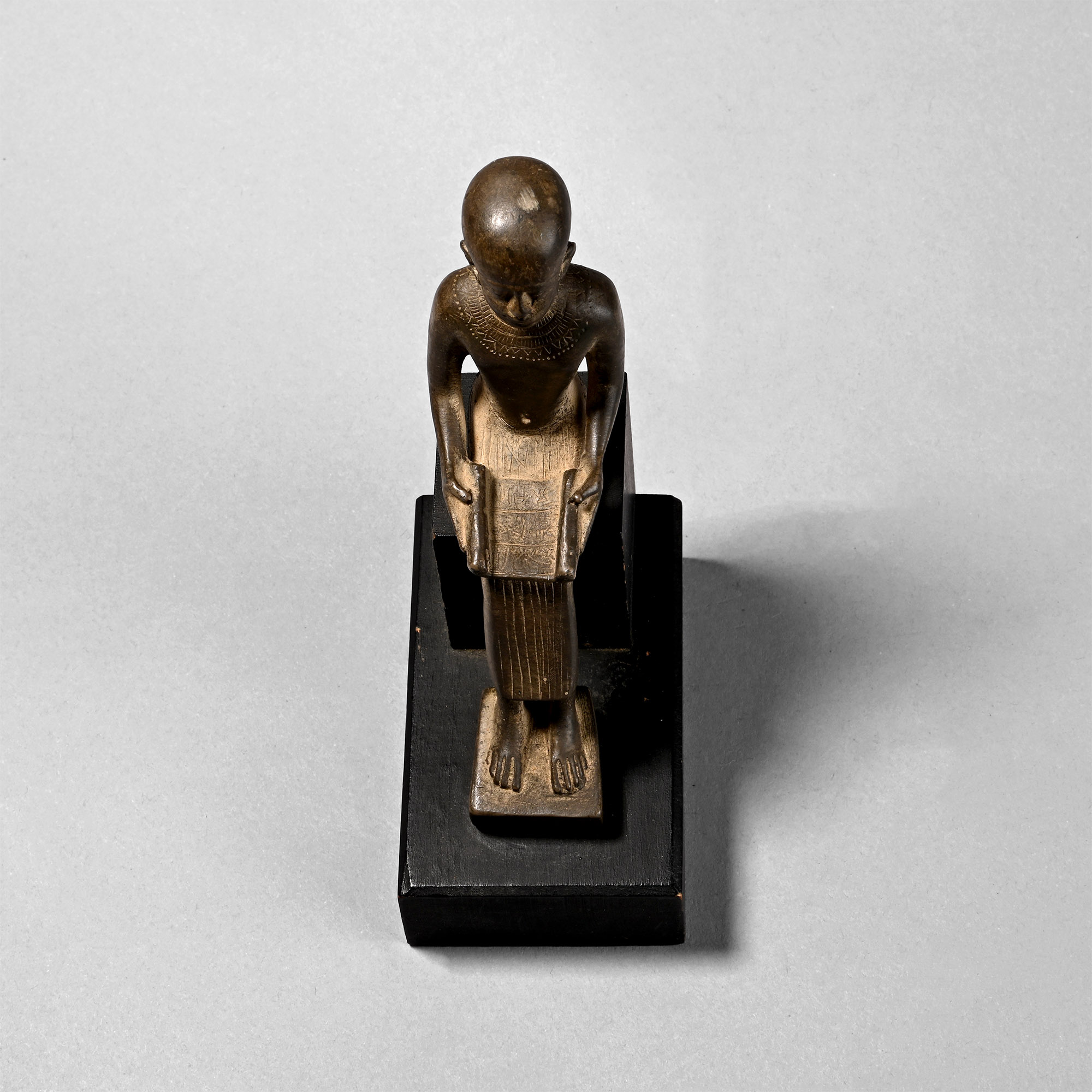
Egyptian Style Seated Statue of Imhotep
20TH CENTURY A.D.
5 5/8 in. (515 grams total, 14.4 cm including stand).
Modelled in the round seated figure in tight-fitting robe with incised detailing to the chest and collar; partly unfurled scroll on the lap held in both hands; mounted on a custom-made stand.
ProvenanceAcquired on the UK art market.
Property of a Suffolk, UK, gentleman.
TimeLine Auctions follows a vetting process to ensure the authenticity and legality of all items, reinforcing our commitment to integrity and responsible trading. Each antiquity, antique, and coin lot undergoes thorough examination by a vetting committee of at least ten external specialists, professional trade association members, scientists, and archaeologists: Our Vetting Process
AUCTIONS:
TimeLine is a leading auction house specialising in antiquities, ancient art, collectables, natural history, coins, medals, and books. Our auctions offer museums, collectors, historians, and enthusiasts the opportunity to acquire unique and historically significant pieces.
LOT 2454
Egyptian Style Seated Statue of Imhotep
Estimate £100 - 140€120 - 160 (for guidance only)$140 - 190 (for guidance only)
Opening Bid
£50 (EUR 58; USD 68) +BP*
-
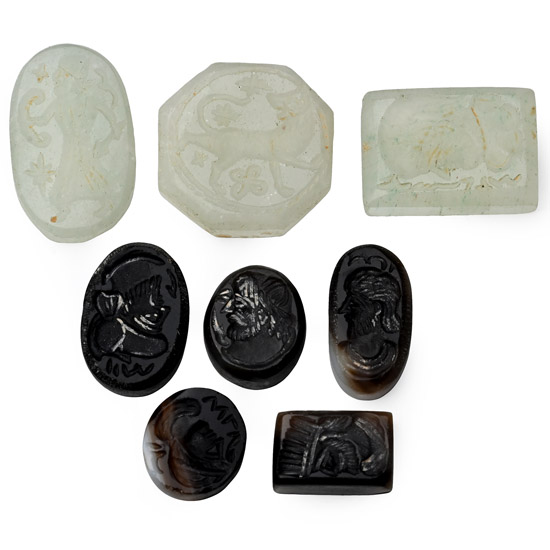
Group of After the Antique Stone Intaglios
20th century A.D.Estimate: £50 - 70 (+bp*)
Opening Bid: £5
Comprising an octagonal with a lion passant regardant, a rectangular with a face in profile, an oval with a standing archer, four oval with male bust in profile, a rectangular with a crowned male bust. 6.84 grams total, 9-18 mm
London, UK, collection, 1990s. -
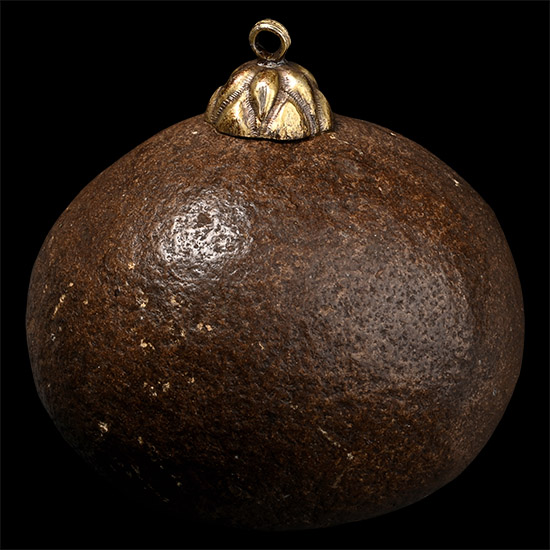
Bezoar with Silver-Gilt Suspension Mount
Circa 17th-18th century A.D.Estimate: £2,000 - 3,000 (+bp*)
Opening Bid: £1,000
Dark brown, rounded bezoar with a granular surface, fitted with a domed silver-gilt cap and circular suspension loop, the cap decorated with pointed leaves, their outlines and central veins defined against textured grounds. 74 grams, 80 mm
Acquired on the European art market. UK, private collection. This lot has been checked against the Interpol Database of stolen works of art and is accompanied by search certificate no.13478-263372.
Bezoars were valued in European and Asian medicinal traditions for their supposed ability to counteract poison. Natural examples are concretions formed around indigestible material within the digestive systems of animals. Their historical reputation is reflected in the name, derived from the Persian p ādzahr, meaning “antidote”. During the early modern period, bezoars were furnished with precious-metal caps, cages and containers. Mounted examples could be worn as protective pendants, suspended for medicinal use, or preserved among the natural specimens and costly objects assembled in cabinets of curiosities. The present leaf-decorated cap belongs to this tradition of combining a valued specimen with ornamental metalwork. Surviving comparisons include a 17th-century brown bezoar pendant in a silver mount at the London Museum and an 18th-century silver-mounted example in the Museo Nacional de Ciencias Naturales, Madrid. These documents the continued use of silver mounts for bezoars across both centuries and provide the historical setting for the present example. -
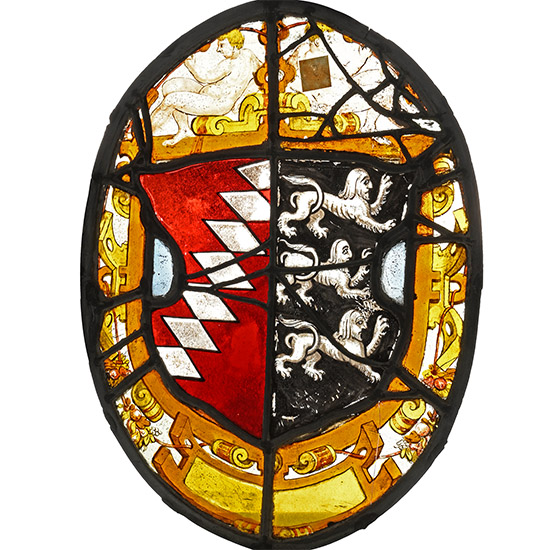
Post Medieval Stained Glass with Armorial
Circa 1580 A.D.Estimate: £200 - 300 (+bp*)
Bids: 7 | Current Bid: £160
Ellipsoid panel made up from fragments in lead cames; heater shield divided 'per pale' with bend lozengy on one side and three lions passant on the other, surrounding scrolled bands and other detailing. 1.07 kg, 41.5 cm
Private collection. From a Devon family estate on the edge of Dartmoor, from the 1930s to the present day. Several pieces formerly from the Collection of 'Ralegh Radford' (CourtenayArthur Ralegh Radford, 7 November 1900 - 27 December 1998) and reputedly sections of glass from Salisbury Cathedral matched to sections in Lydford Parish Church, Devon.
