
Loading, please wait...
_900x900.jpg "Egyptian Style Cat on Wooden Base")
_200x200.jpg "Egyptian Style Cat on Wooden Base")
_900x900.jpg "Egyptian Style Cat on Wooden Base")
_200x200.jpg "Egyptian Style Cat on Wooden Base")
.jpg "Egyptian Style Cat on Wooden Base")
.jpg "Egyptian Style Cat on Wooden Base")
LOT 2135
Egyptian Style Cat on Wooden Base
20TH CENTURY A.D.
8 in. (1.25 kg total, 20.5 cm including stand).
Modelled in the round in alert pose with gold coloured loop in each ear; bronze or composition on a polished wooden base; after the antique. [No Reserve]
ProvenanceFrom a private, UK, collection in the 1980s.
Property of a London, UK, antiquarian.
TimeLine Auctions follows a vetting process to ensure the authenticity and legality of all items, reinforcing our commitment to integrity and responsible trading. Each antiquity, antique, and coin lot undergoes thorough examination by a vetting committee of at least ten external specialists, professional trade association members, scientists, and archaeologists: Our Vetting Process
AUCTIONS:
TimeLine is a leading auction house specialising in antiquities, ancient art, collectables, natural history, coins, medals, and books. Our auctions offer museums, collectors, historians, and enthusiasts the opportunity to acquire unique and historically significant pieces.
-
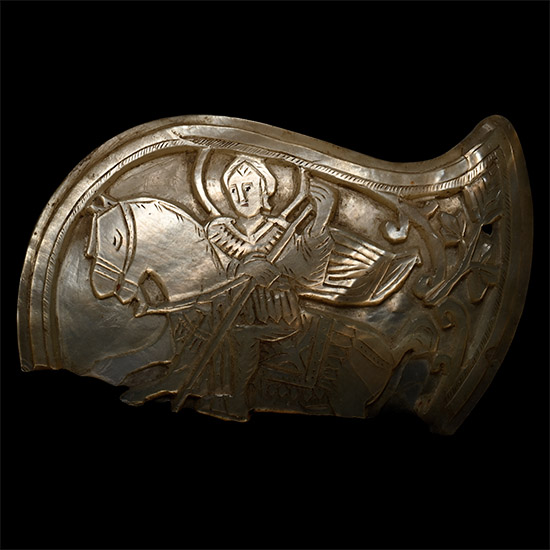
Post Medieval Carved Nacre with St George
18th-19th century A.D.Estimate: £200 - 300 (+bp*)
Opening Bid: £100
Carved nacre panel with reserved image of a horseman among trees deploying his spear with both hands. 62 grams, 10.5 cm
Acquired on the French art market. Private collection, England. -
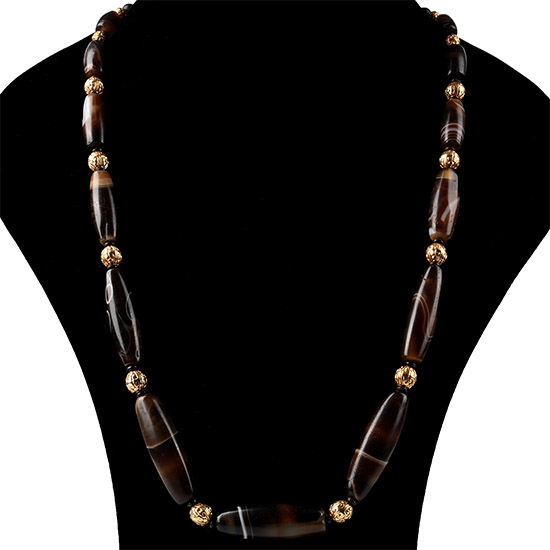
Tibetan Banded Agate and Gilt Prayer Bead Necklace
20th century A.D.Sold for (Inc. bp): £33
Graduated fusiform banded agate beads with gilt metal spacer beads. 175 grams, 76 cm
Private collection, UK. -
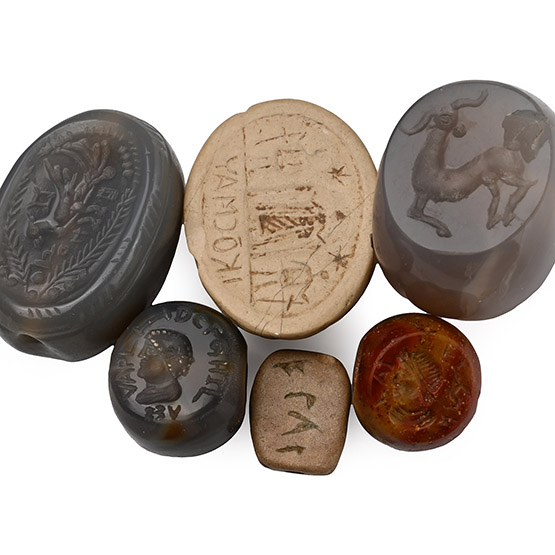
Group of Seals and Scaraboids
20th century A.D.Estimate: £100 - 140 (+bp*)
Opening Bid: £50
Including scarab with figural scene and legend to underside, plano-convex type with wreath, perching bird and legend, and other types; after the antique. 78 grams total, 15-33 mm
From the late S M collection, London, UK, 1969-1999.
