
Loading, please wait...
LOT 2353
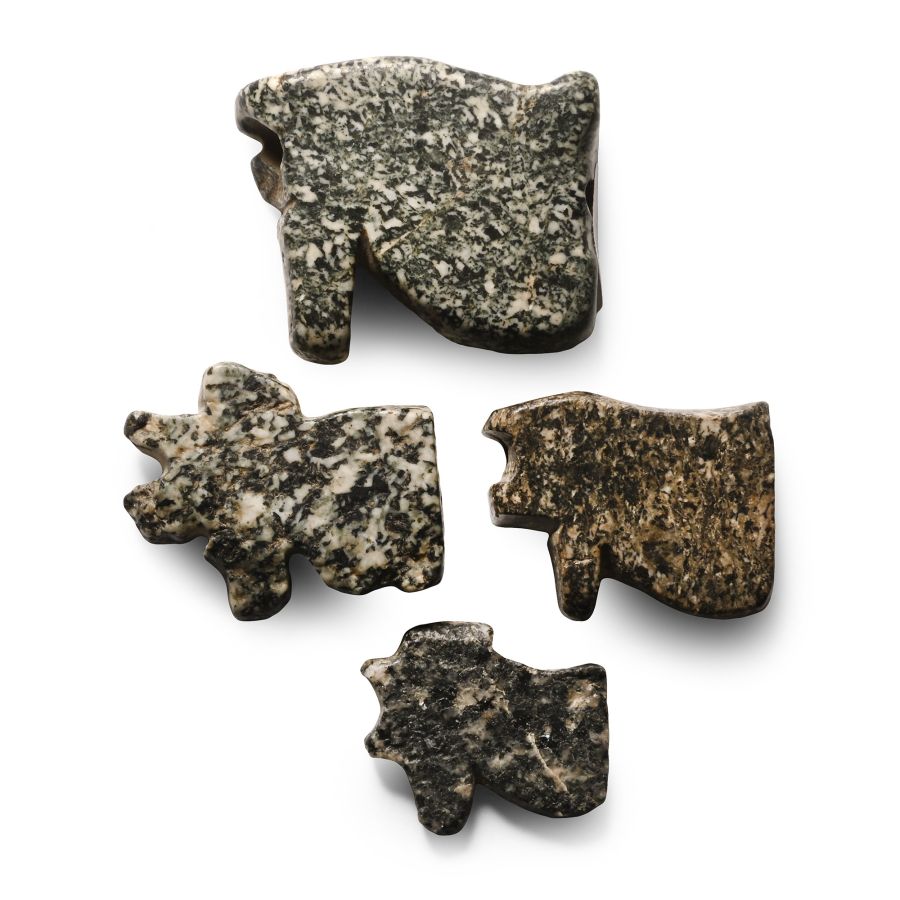
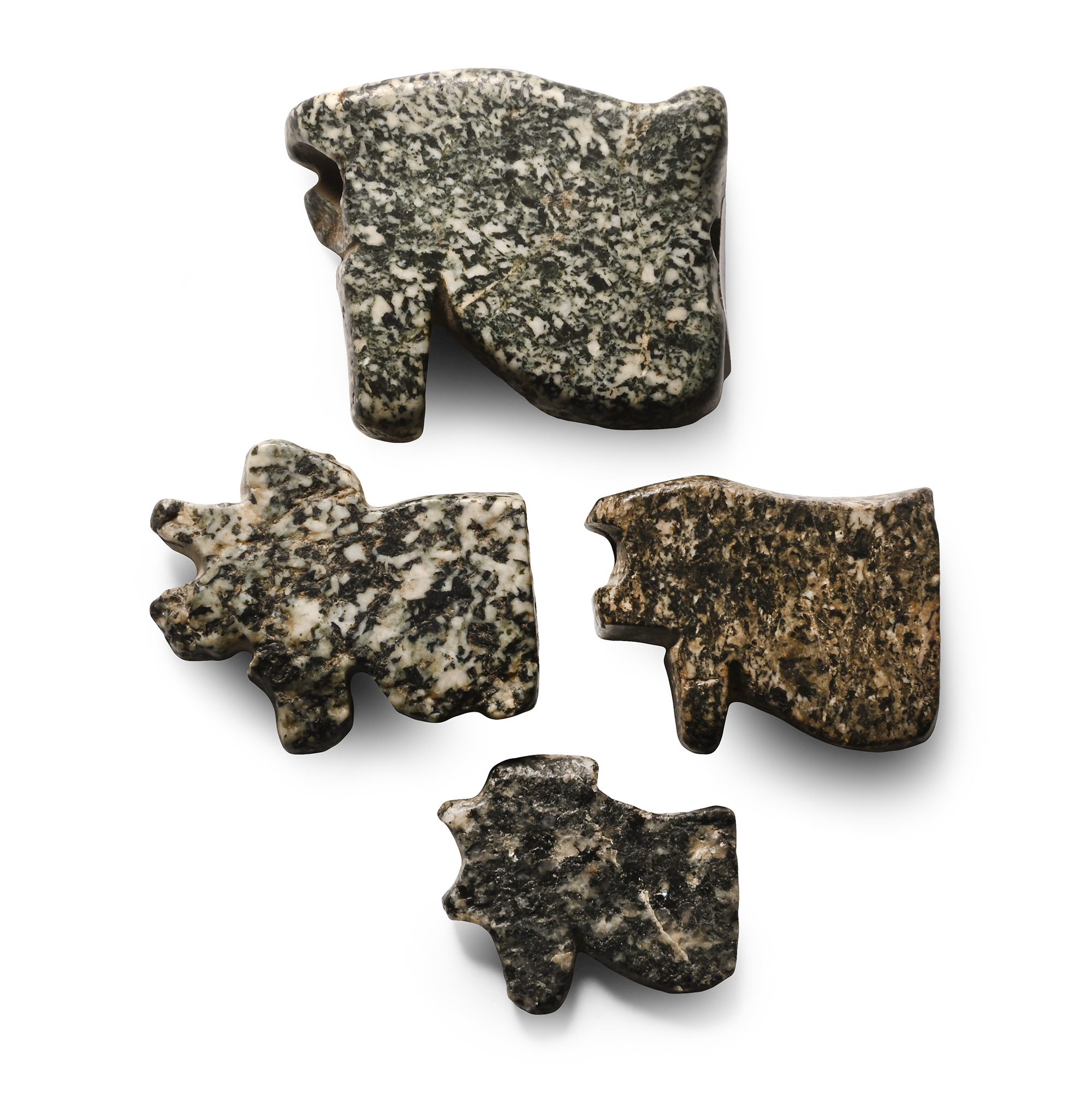
Egyptian Style Black Granite Eye of Horus Amulet Collection
20TH CENTURY A.D.
3/4 - 1 7/8 in. (28.9 grams total, 20-30 mm).
Each carved into the wedjat amulet and pierced longitudinally. [4]
Provenancewith Archaeologia, Switzerland, before 1983.
Ex private North American collection.
London private collection, 2016.
Cf. Flinders Petrie, W.M., Amulets, London, 1994, pl.XXV, fig.138p.
CONDITIONTimeLine Auctions follows a vetting process to ensure the authenticity and legality of all items, reinforcing our commitment to integrity and responsible trading. Each antiquity, antique, and coin lot undergoes thorough examination by a vetting committee of at least ten external specialists, professional trade association members, scientists, and archaeologists: Our Vetting Process
AUCTIONS:
TimeLine is a leading auction house specialising in antiquities, ancient art, collectables, natural history, coins, medals, and books. Our auctions offer museums, collectors, historians, and enthusiasts the opportunity to acquire unique and historically significant pieces.
LOT 2353
Egyptian Style Black Granite Eye of Horus Amulet Collection
Estimate £80 - 100€93 - 116 (for guidance only)$108 - 135 (for guidance only)
-
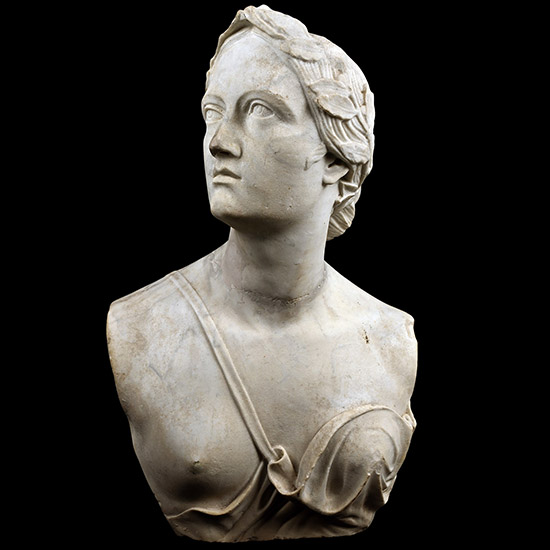
Large White Marble Bust of Diana the Huntress
19th century A.D.Sold for (Inc. bp): £1,690
The goddess shown in an elegant pose with her head turned to the right and her gaze directed upwards, wearing a laurel leaf crown and a loose garment covering her left breast, leaving the right one exposed, narrow quiver strap crossing over her right shoulder; her hair dressed in soft waves and pulled to a chignon at the nape of her neck; old repair on the neck. 66.5 kg, 68 cm high
Acquired on the UK art market. Private collection, London. This lot has been checked against the Interpol Database of stolen works of art and is accompanied by search certificate no.13080-246797.
In the 19th century, many studies of the hunter goddess were inspired by the 'Diana of Versailles', a 2nd-century Roman version in the Greek tradition of iconography, today in the collection of the Louvre Museum, Paris, France. -

Mizoram Burmese Amber Bead Necklace with Natural Inclusions
Cretaceous Period, circa 99 million years B.P.Estimate: £500 - 700 (+bp*)
Opening Bid: £250
Restrung necklace of dark honey-coloured beads of cylindrical and annular shape formed by hand, containing various organic inclusions. 54 grams, 82 cm
From the Hukawng Valley in northern Myanmar. Acquired in Assam in the 1980s. From the private collection of a Somerset gentleman. Accompanied by a copy of a letter from Dr Andrew J. Ross FRES, of the National Museum of Scotland, concerning testing carried out on the necklace.
Dr Ross states: 'The internal fractures and flow planes are consistent with what you see in amber, and although it does not contain any identifiable insect inclusions, the organic fragments that are present and the general colours appear consistent with Burmese amber.' -
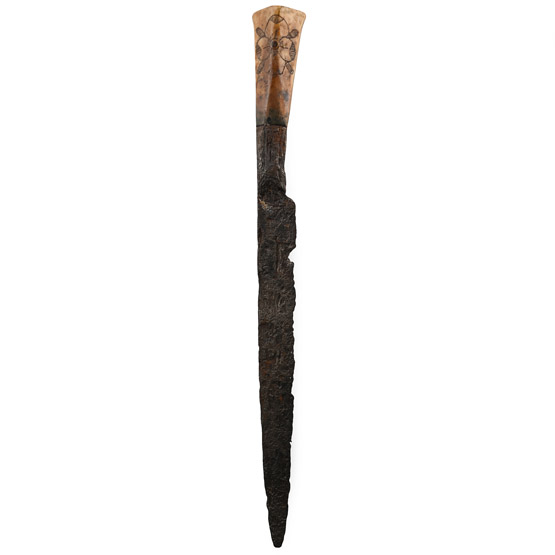
Stuart Period Iron Knife with Decorated Bone Handle
17th century A.D.Sold for (Inc. bp): £111
Slender single-edged iron blade with socket, lozenge-section bone handle with incised quatrefoil motifs. 31.8 grams, 19.8 cm
Acquired on the UK art market before 2000. Property of an Essex, UK, gentleman.
