
Loading, please wait...

LOT 0015
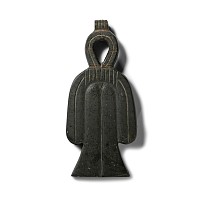
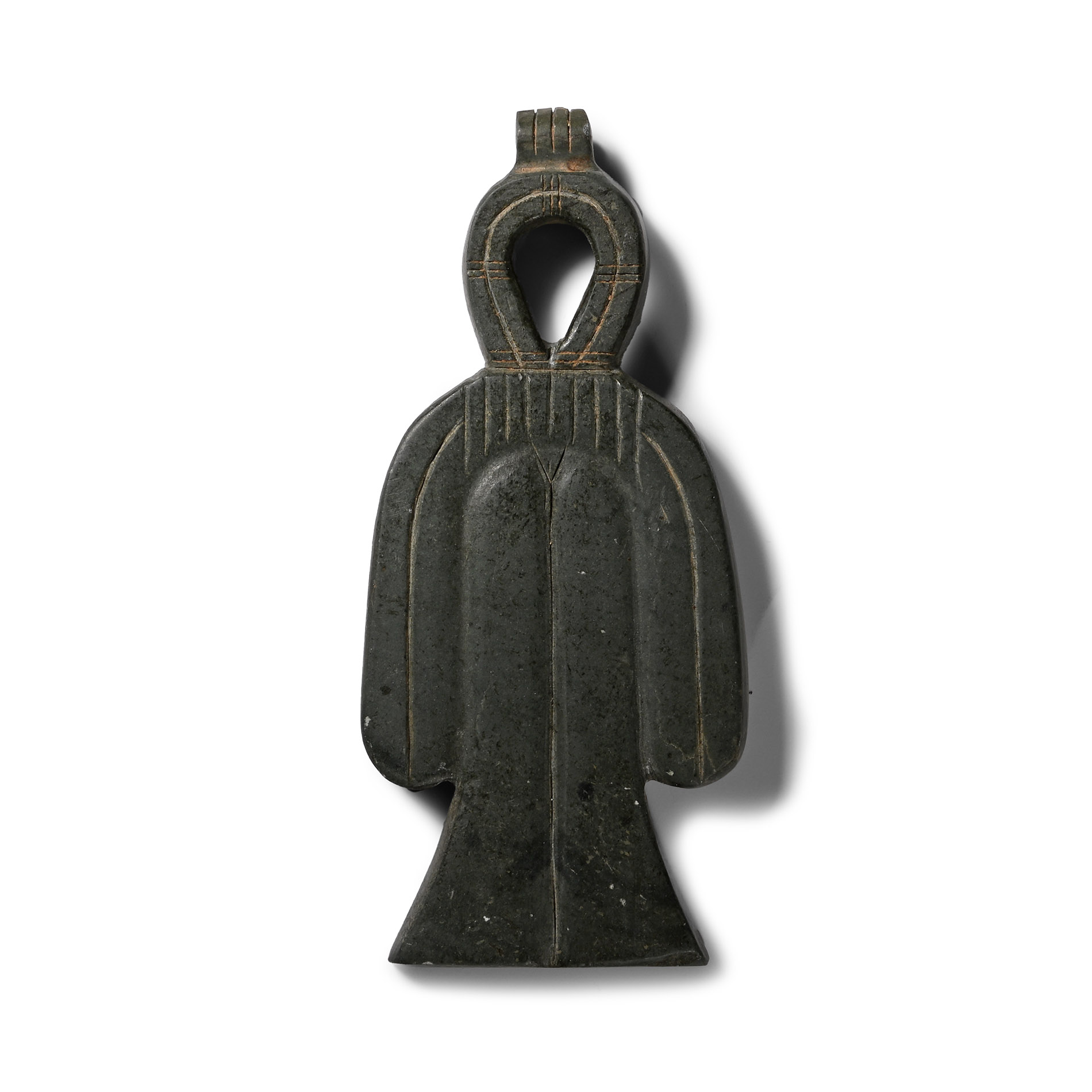
Egyptian Stone Tyet Amulet
THIRD INTERMEDIATE PERIOD-LATE PERIOD, CIRCA 743-332 B.C.
3 1/4 in. (38.9 grams, 81 mm).
Finely carved tyet amulet with incised internal detailing and ribbed suspension loop at the top.
ProvenanceAcquired in the mid 1980s-1990s.
Private collection, Switzerland, thence by descent.
Private collection, since the late 1990s.
Cf. Reisner, G.A., Catalogue général des antiquités égyptiennes du Musée du Caire, Nos.5218-6000 et 12001-12527, Vol. I, Amulets, Cairo, 1907, pl.VII (CG12036), for an amulet of similar styling.
FootnotesThe tyet amulet was associated with the goddess Isis and was often referred to as the 'knot' or 'girdle' of Isis. Some believe that it represents a bandage used to absorb menstrual blood. It was commonly placed within the mummy wrappings on the upper torso of the deceased, with the belief that it would invoke Isis' protection and safeguard the body, thus ensuring their rebirth in the afterlife.
CONDITIONTimeLine Auctions follows a vetting process to ensure the authenticity and legality of all items, reinforcing our commitment to integrity and responsible trading. Each antiquity, antique, and coin lot undergoes thorough examination by a vetting committee of at least ten external specialists, professional trade association members, scientists, and archaeologists: Our Vetting Process
AUCTIONS:
TimeLine is a leading auction house specialising in antiquities, ancient art, collectables, natural history, coins, medals, and books. Our auctions offer museums, collectors, historians, and enthusiasts the opportunity to acquire unique and historically significant pieces.
LOT 0015
Egyptian Stone Tyet Amulet
Estimate £1,500 - 2,000€1,740 - 2,320 (for guidance only)$2,030 - 2,700 (for guidance only)
-
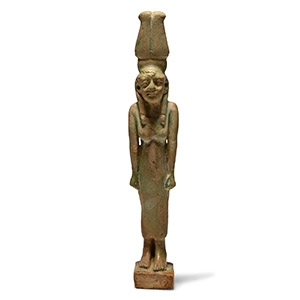
Large Egyptian Faience Amulet of the Goddess Isis
Late Period-Ptolemaic Period, 664-30 B.C.Sold for (Inc. bp): £1,170
The goddess dressed in a long tight-fitting tunic to her ankles, standing with her left leg forward, her straight arms descending to her thighs; vulture headgear surmounted two long feathers; dorsal pillar with hieroglyphic text; repaired. 50 grams, 14 cm
Private collection Mr E. Saad, Cairo, Egypt-Montreux, Switzerland, 1970s. Ex private collection of Mr S.A., acquired from Mr Saad in 1997.
In ancient Egyptian mythology, Isis was the sister-wife of Osiris and the mother of the sky god Horus. She is associated with aspects of fertility and motherhood. This amulet unusually depicts her with a two-plumed crown, which may associate her with the goddess Sothis. -
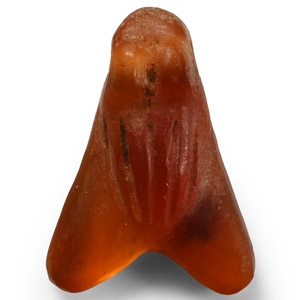
Egyptian Carnelian Fly Amulet
Late Period, 664-332 B.C.Sold for (Inc. bp): £117
Formed as a fly with long triangular wings and domed eyes. 0.42 grams, 12 mm
From an early 20th century collection.
Fly amulets first appeared in burials as early as c. 3200 B.C., but their popularity expanded during the New Kingdom. They were made from various materials such as gold, silver, lapis lazuli, carnelian, amethyst, faience, and bone. Fly amulets were thought to protect against insect bites and to ward off troublesome flying creatures through apotropaic magic. They may also have even been intended to symbolise the fly’s fecundity. Pharaohs would bestow gold fly-shaped pendants as military awards to honour the bravery and fly-like persistence of soldiers in battle. -
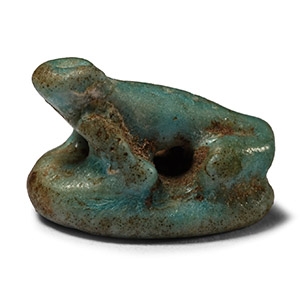
Egyptian Faience Frog Scarab
Ptolemaic Period, circa 300 B.C.Estimate: £400 - 600 (‡+bp*)
Opening Bid: £200
Discoid base with crouching frog pierced longitudinally for threading; underside with a solar disc and unidentified symbol. 0.56 grams, 13 mm
Ex R. Liechti (1934-2010) Geneva, Switzerland, formed between 1950-1990s. Accompanied by a copy of an old collection inventory note.
