
Loading, please wait...
LOT 0497
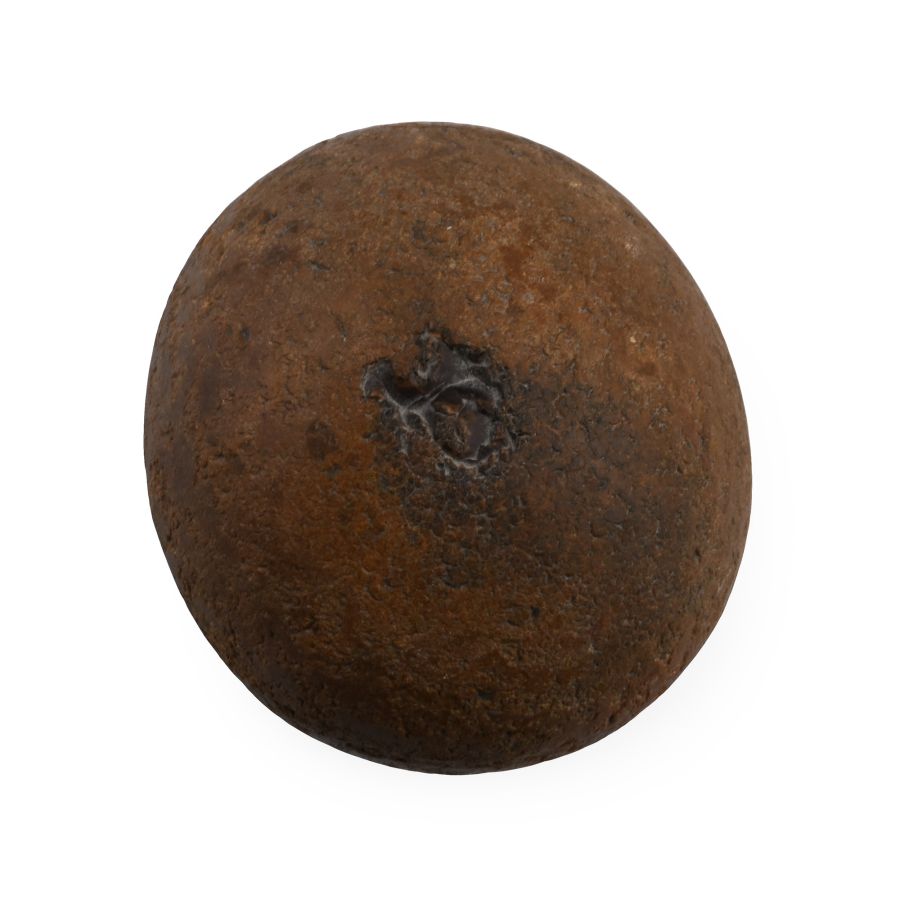
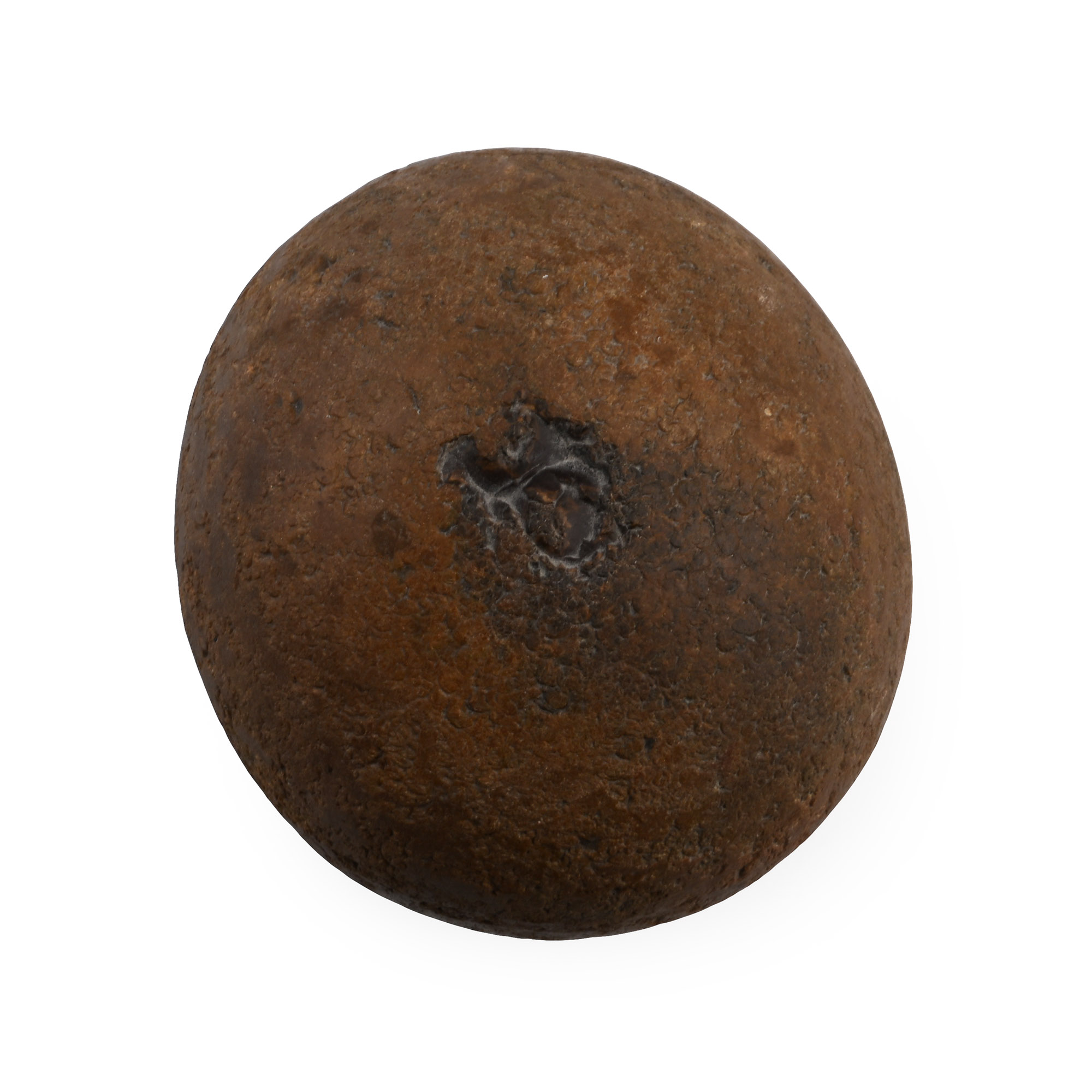
Egyptian Stone Smoothing Tool
3RD-LATE 1ST MILLENNIUM B.C.
3 3/8 in. (625 grams, 86 mm).
Spherical pounder with a smooth surface. [No Reserve]
ProvenanceFrom the private collection of Peter Clayton, FCILIP, Dip, Arch, FSA, FRNS, Hemel Hempstead, Hertfordshire, UK; formed since the late 1950s.
Accompanied by an old handwritten information card by Peter Clayton, collection no.134.
Stocks, D.A., Experiments in Egyptian Archaeology: Stoneworking technology in Ancient Egypt, London, 2003, pp.43-44, for an illustrated discussion of the use of pounders for both metal and stone.
FootnotesStone pounders were used to shape and harden metal, as well as to pound stone architectural elements and statues.
CONDITIONTimeLine Auctions follows a vetting process to ensure the authenticity and legality of all items, reinforcing our commitment to integrity and responsible trading. Each antiquity, antique, and coin lot undergoes thorough examination by a vetting committee of at least ten external specialists, professional trade association members, scientists, and archaeologists: Our Vetting Process
AUCTIONS:
TimeLine is a leading auction house specialising in antiquities, ancient art, collectables, natural history, coins, medals, and books. Our auctions offer museums, collectors, historians, and enthusiasts the opportunity to acquire unique and historically significant pieces.
LOT 0497
Egyptian Stone Smoothing Tool
Estimate £40 - 60€46 - 70 (for guidance only)$54 - 81 (for guidance only)
Opening Bid
£5 (EUR 6; USD 7) +BP*
-
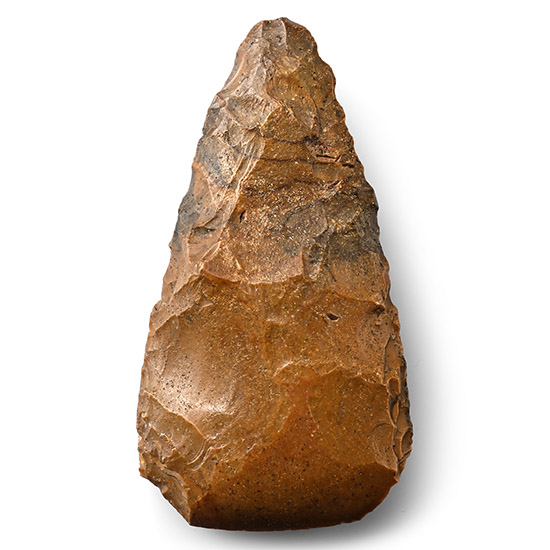
Egyptian Stone Age Polished Knapped Axehead
Neolithic Period, 11,000-5,200 B.P.Estimate: £100 - 140 (+bp*)
Bids: 3 | Current Bid: £15
Teardrop-shaped flint, featuring a classic, symmetrical lanceolate plan, tapering to a point at one end and a wider basal end. 58.3 grams, 86 mm
Found at Fayum North. From the collection of A.D. Passmore (1879-1958), his collection of flints from the area of Stonehenge was donated to the Ashmolean Museum in the 1950s. From the private collection of Peter Clayton, FCILIP, Dip, Arch, FSA, FRNS, Hemel Hempstead, Hertfordshire, UK; formed since the late 1950s. Accompanied by a copy of an old handwritten information card by Peter Clayton. -
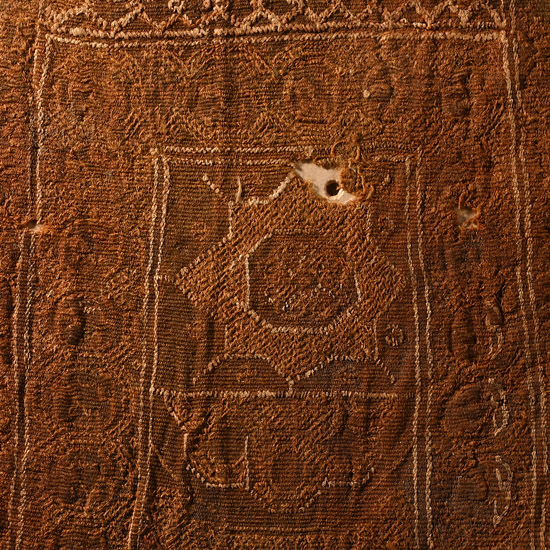
Egyptian Mounted Coptic Textile Fragment of a Central Clavus
Circa 6th-7th century A.D.Estimate: £40 - 60 (+bp*)
Bids: 1 | Current Bid: £5
Wide tunic fragment in coarse linen and purple-violet wool with animal figures enclosed within an orbiculi, the central part of the fragment featuring a geometric decoration of stars and lozenges; mounted on cardboard backing. 45 grams total, 22 cm
Acquired 1970s-1996. Property of a North American collector. London collection, 2016.
Among the many fragments from wool tunics, there are several long strips that match to form nearly full-length central pectoral clavi. They are patterned with a profusion of small figures or interlaced abstract designs, birds, plants and animals, with a contrasting border filled with geometric motifs. -
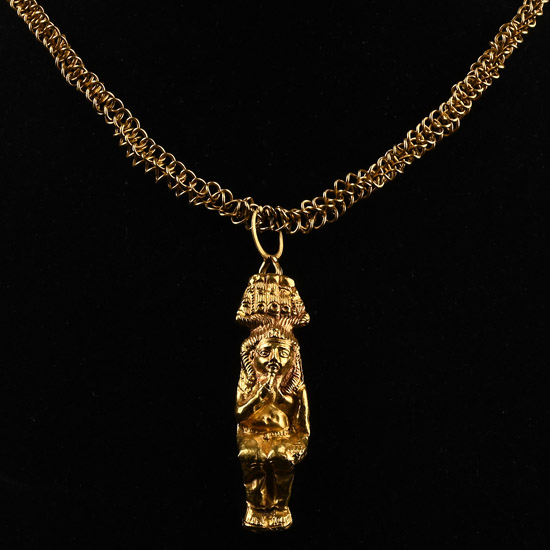
Egyptian Gold Necklace with Harpocrates Pendant
Roman Period, 1st century B.C.-1st century A.D.Estimate: £12,000 - 17,000 (‡+bp*)
Opening Bid: £6,667
Gold chain of double-looped links terminating in corrugated end elements, with hook-and-eye clasp; suspension ring embellished with applied granulation and a ribbed loop; hollow-formed sheet-gold pendant in the round depicting Harpocrates seated, his right forefinger raised to his mouth, wearing a finely detailed nemes headdress surmounted by a complex hemhem, crown incorporating multiple hedjet elements, flanking uraei, and ram's horns. 49.80 grams, 40.5 cm
Ex Elie Boustros collection, Lebanon. Private collection, acquired in the late 1980s-early 1990s; thence by descent. This lot has been checked against the Interpol Database of stolen works of art and is accompanied by search certificate number no.13203-249297.
The fully three-dimensional modelling of the pendant aligns it with a group of high-quality Roman-period Egyptian goldwork characterised by pronounced plasticity and sculptural ambition. A pertinent comparison may be drawn with the gold diadem depicting Serapis from the Dush Treasure, discovered concealed within the wall of a Roman fort in the Baris Oasis (Reddé, M., Douch IV. Le trésor de Douch, DFIFAO 28, Cairo, 1992). That assemblage, plausibly associated with a nearby temple of Serapis and Isis, demonstrates a similarly bold treatment of divine imagery in precious metal. Comparable small-scale representations of Harpocrates in gold - often amuletic in function - are known from Roman Egypt, though examples combining such intricate crown iconography with fully rounded modelling remain relatively rare. The present piece therefore occupies an interesting position between personal adornment and cultic or apotropaic object, reflecting both Alexandrian iconographic synthesis and provincial workshop virtuosity. Harpocrates is the Greek version of the Egyptian Hor-pa-khered, which means ‘Horus the Child’. This name refers to Horus as the divine infant of Isis and Osiris. Wearing an amulet of Harpocrates was believed to provide the same protection that Isis offered to her beloved son.
