
Loading, please wait...
_900x900.jpg "Egyptian Stone Scaraboid with Cartouche of Thutmose IV")
_200x200.jpg "Egyptian Stone Scaraboid with Cartouche of Thutmose IV")
.jpg "Egyptian Stone Scaraboid with Cartouche of Thutmose IV")
LOT 0504
Egyptian Stone Scaraboid with Cartouche of Thutmose IV
NEW KINGDOM, 18TH DYNASTY, CIRCA 1415 B.C.
1 1/4 in. (5.79 grams, 34 mm).
Keeled body pierced longitudinally, underside with cartouche for Thutmose IV (Men-kheperru-re) and other hieroglyphs.
ProvenanceFrom the collection of a gentleman, acquired on the London art market in the 1990s.
CONDITIONTimeLine Auctions follows a vetting process to ensure the authenticity and legality of all items, reinforcing our commitment to integrity and responsible trading. Each antiquity, antique, and coin lot undergoes thorough examination by a vetting committee of at least ten external specialists, professional trade association members, scientists, and archaeologists: Our Vetting Process
AUCTIONS:
TimeLine is a leading auction house specialising in antiquities, ancient art, collectables, natural history, coins, medals, and books. Our auctions offer museums, collectors, historians, and enthusiasts the opportunity to acquire unique and historically significant pieces.
-
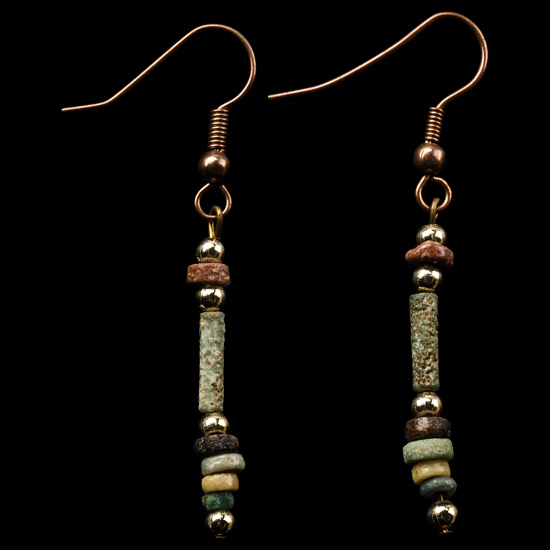
Egyptian Mummy Bead Earring Pair
Late Period, 664-332 B.C.Sold for (Inc. bp): £85
A matched pair formed of annular and cylindrical faience beads; modern hook and bar with gold-coloured beads. 1.27 grams total, 50-51 mm
Acquired Town Hall Antiques, Market Place, Woburn, Bedfordshire, UK, on 2nd March 2001. Property of a West Northamptonshire, UK, gentleman. Accompanied by a copy of the original Town Hall Antiques invoice. -
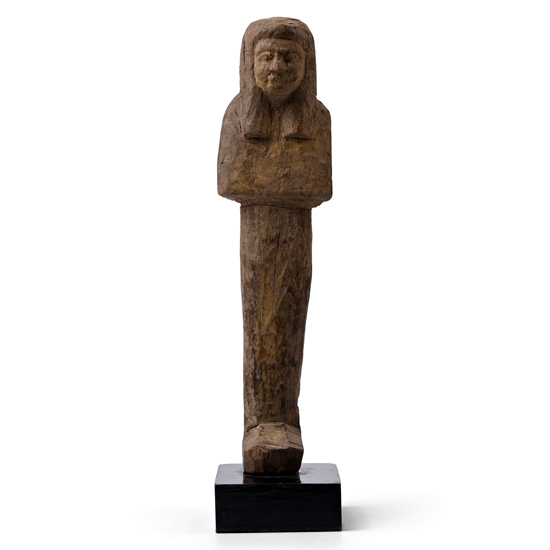
Egyptian Wooden Shabti Figure
New Kingdom, 19th Dynasty, circa 1292-1185 B.C.Estimate: £800 - 1,000 (+bp*)
Opening Bid: £444
Typical mummiform figure, carved in the round with folded arms, wearing a tripartite wig; remains of gesso on the surface; mounted on a wooden base. 138 grams total, 21.9 cm including stand
Ex Budo Bleb (1940-2022) collection, Berlin, formed 1960s onwards. -
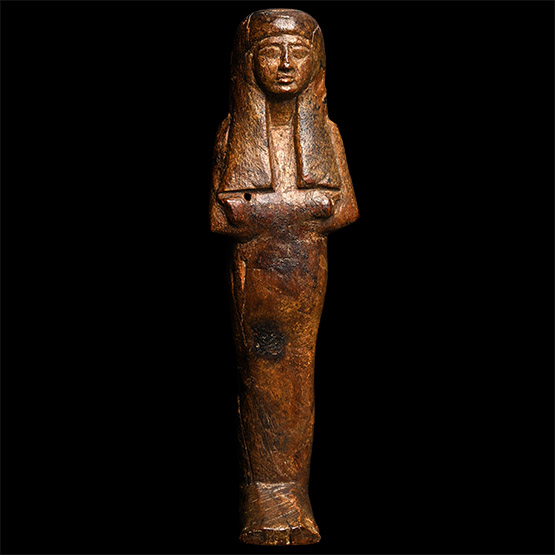
Egyptian Wooden Shabti
New Kingdom, 19th Dynasty, circa 1292-1185 B.C.Estimate: £6,000 - 8,000 (‡+bp*)
Opening Bid: £3,000
Carved in the round in a typical mummiform shape with hands crossed on the chest, wearing a tripartite wig with long, splayed lappets; collector's number to base 'E.803'. 140 grams, 21.5 cm
Private collection, acquired in the late 1980s-early 1990s; thence by descent. This lot has been checked against the Interpol Database of stolen works of art and is accompanied by a search certificate number no.13228-249321.
A shabti (or ushabti) is a small funerary figurine from ancient Egyptian tombs, dating from around 2000 BCE to 30 BCE. Its main purpose was to assist the deceased in the afterlife by performing tasks like farming. Shabtis were often inscribed with a magical formula from the Book of the Dead to ensure they would come to life when needed.
