
Loading, please wait...
LOT 0541
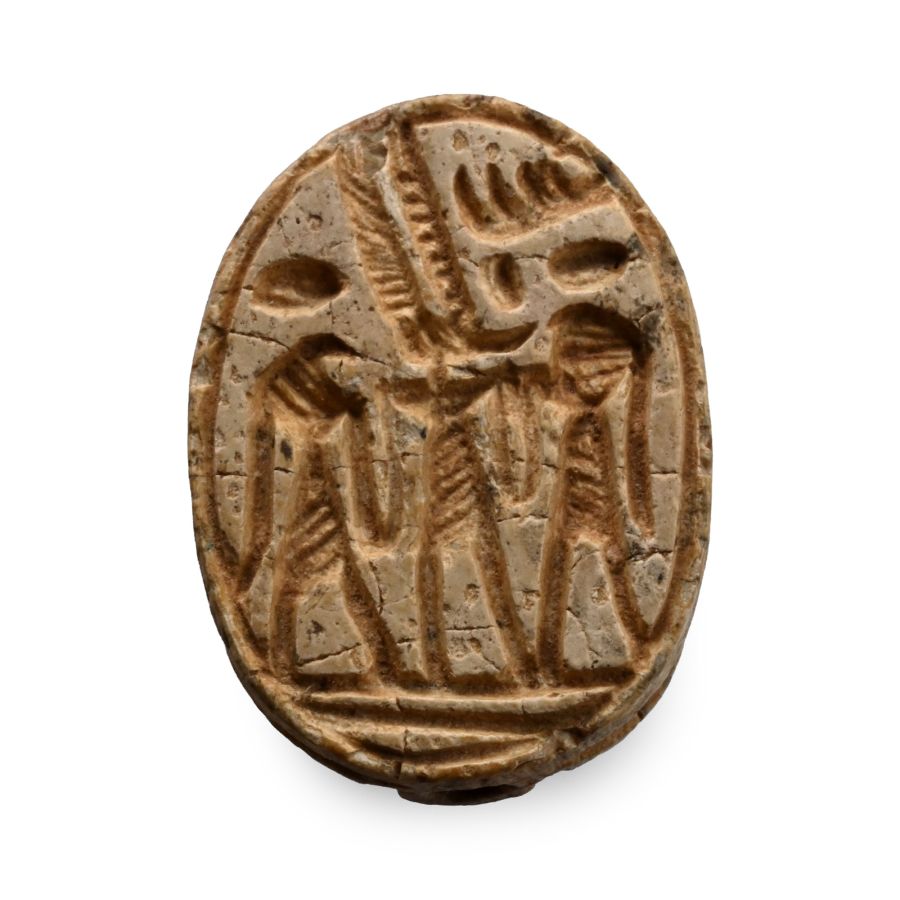
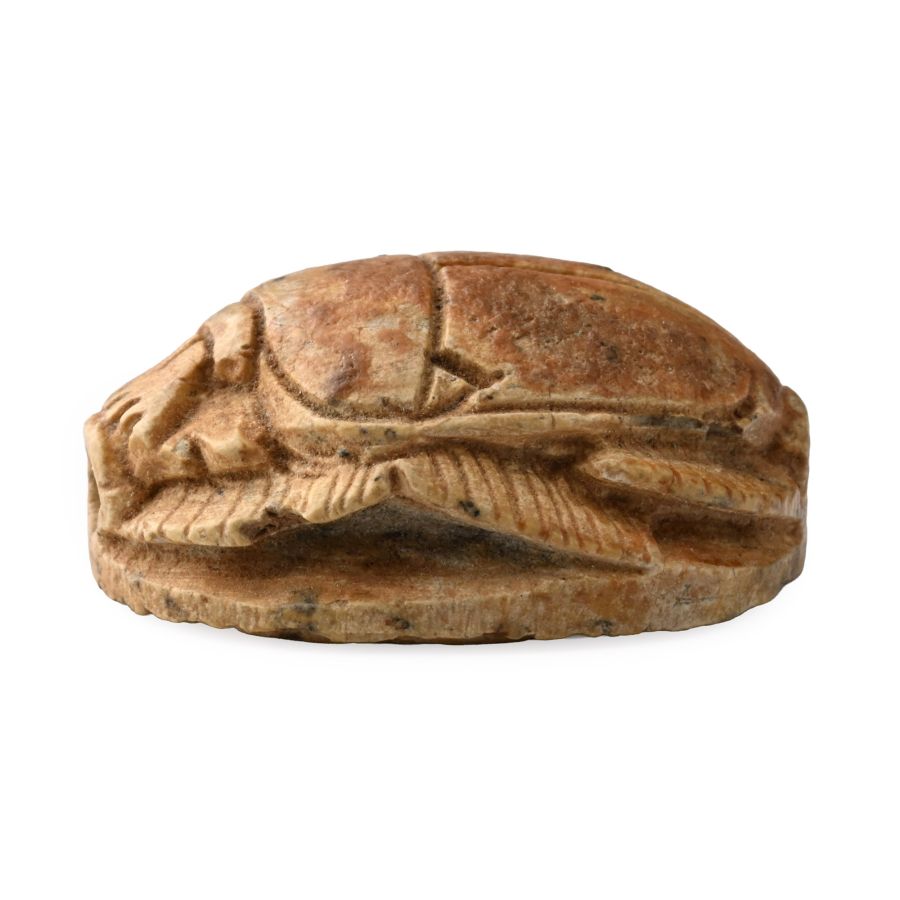
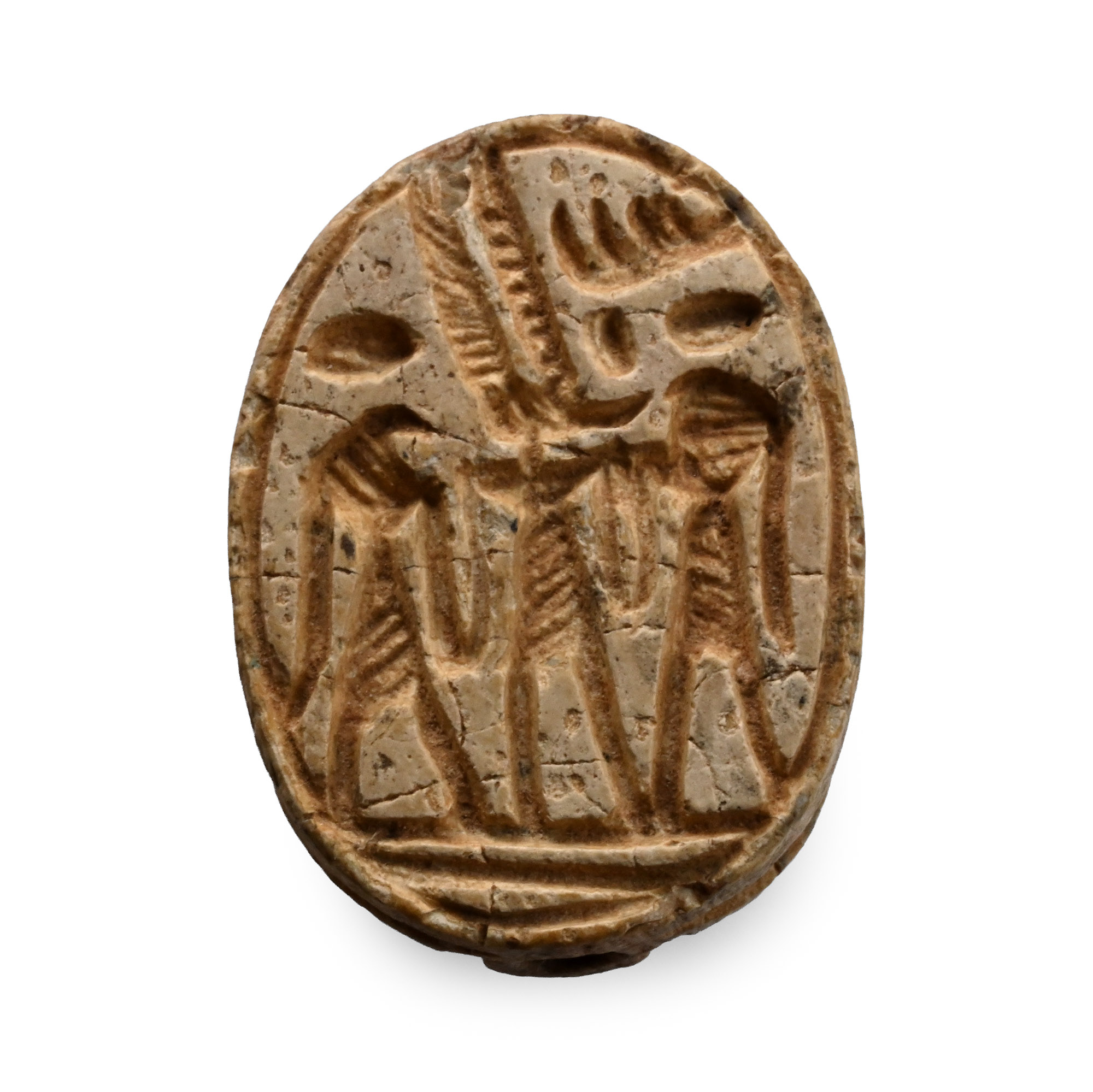
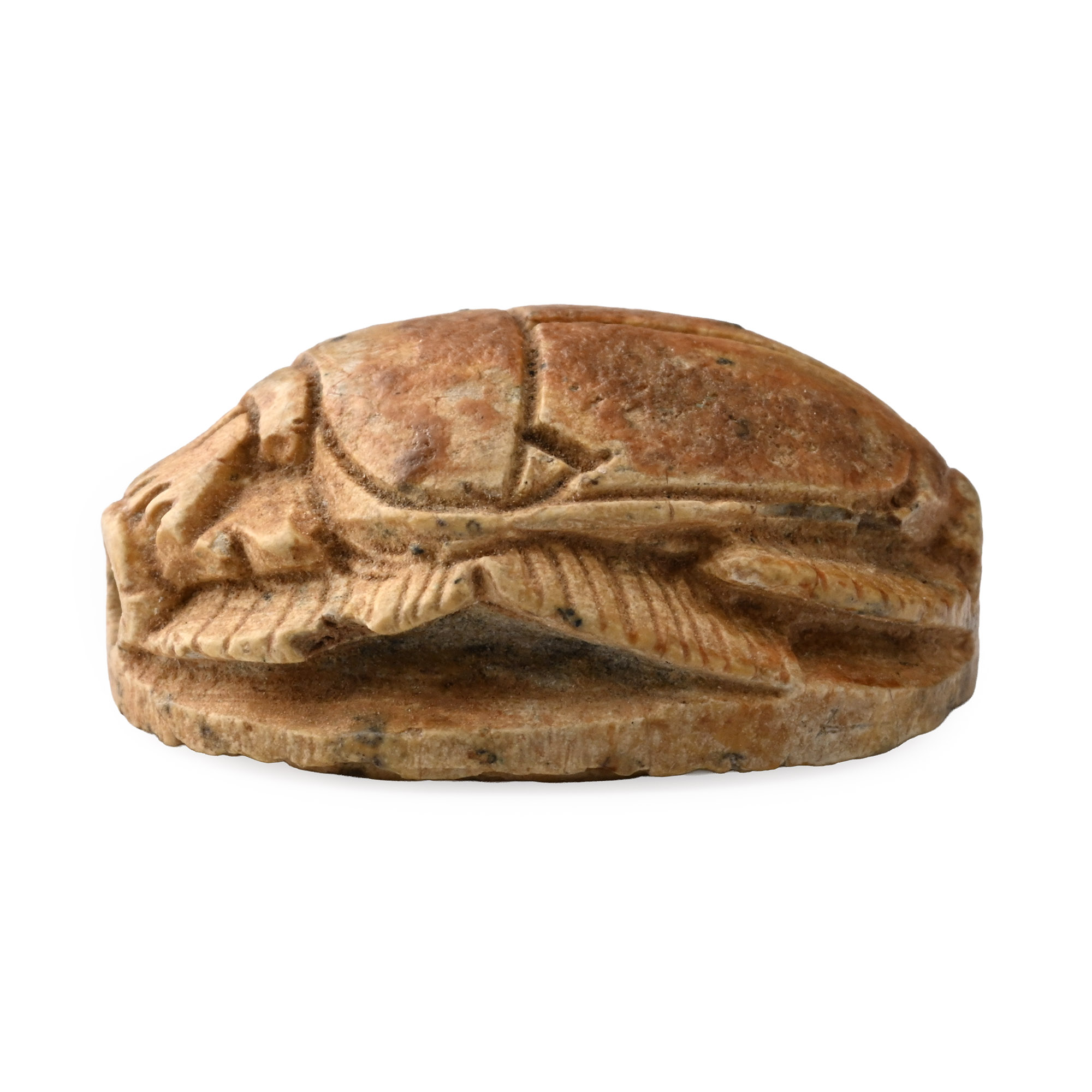
Egyptian Stone Scarab
LATE PERIOD, 664-332 B.C.
3/4 in. (3.74 grams, 20 mm).
Incised detailing to the carapace and legs, pierced longitudinally; underside with three deities (possibly Amun-Ra, flanked by figures of Re).
ProvenanceFrom the Gustave Mustaki collection before 1948.
Ex London, UK, gallery.
From a private UK collection.
This lot is accompanied by an illustrated lot declaration signed by the Head of the Antiquities Department, Dr Raffaele D'Amato.
Cf. Petrie, W.M.F., Button and Design Scarabs, London, 1925, pl. XV, no.1044, for a similar example.
CONDITIONTimeLine Auctions follows a vetting process to ensure the authenticity and legality of all items, reinforcing our commitment to integrity and responsible trading. Each antiquity, antique, and coin lot undergoes thorough examination by a vetting committee of at least ten external specialists, professional trade association members, scientists, and archaeologists: Our Vetting Process
AUCTIONS:
TimeLine is a leading auction house specialising in antiquities, ancient art, collectables, natural history, coins, medals, and books. Our auctions offer museums, collectors, historians, and enthusiasts the opportunity to acquire unique and historically significant pieces.
-
Egyptian Faience Double Lizard Amulet
Late Period, 664-332 B.C.Sold for (Inc. bp): £169
Gentle trapezoidal plinth with modelled depictions of two long-tailed lizards on the top; four evenly spaced holes pierce the plinth for attachment. 12 grams, 54 mm
From a UK dealer since the 1970s. From an old London, UK, collection since circa 1985. This lot is accompanied by an illustrated lot declaration signed by the Head of the Antiquities Department, Dr Raffaele D'Amato.
The lizard was the animal manifestation of the creator god Atum. His sun-god aspect is embodied in the lizard's need to bask in sunshine. -
.jpg)
Egyptian Body of Anubis Glass Inlay
Late Period-Ptolemaic Period, 664-30 B.C.Sold for (Inc. bp): £208
With gently curved obverse and flat reverse, section of an inlay depicting Anubis, with thick neck and beginning of extended foreleg. 110 grams, 96 mm
Acquired on the French art market, 1980s. with Bonhams, London, 13 April 2011, lot 21. Accompanied by copies of the relevant Bonhams catalogue pages. This lot is accompanied by an illustrated lot declaration signed by the Head of the Antiquities Department, Dr Raffaele D'Amato.
This coloured glass inlay depicts Anubis, the jackal-headed god of mummification and protector of the dead. Likely part of a coffin or shrine, it demonstrates the use of glass to imitate precious materials in elite funerary art. The figure’s profile and predominantly black colour evoke Anubis’s role in preservation and the afterlife. -
.jpg)
Egyptian Painted Wooden Mask
Ptolemaic Period, circa 3rd century B.C.Estimate: £2,500 - 3,500 (‡+bp*)
Opening Bid: £1,250
D-shaped in plan with carved facial detailing, thick nose and full lips; painted bands to brow pierced in three places for attachment. 1.04 kg, 30 cm
Swiss private collection, Zurich, assembled in the 1950s. Private collection. Acquired on the Zurich art market in 2013. This lot has been checked against the Interpol Database of stolen works of art and is accompanied by a search certificate number no.12847-241680. This lot has been cleared against the Art Loss Register database, and is accompanied by an illustrated lot declaration signed by the Head of the Antiquities Department, Dr Raffaele D'Amato.
