
Loading, please wait...
LOT 0483
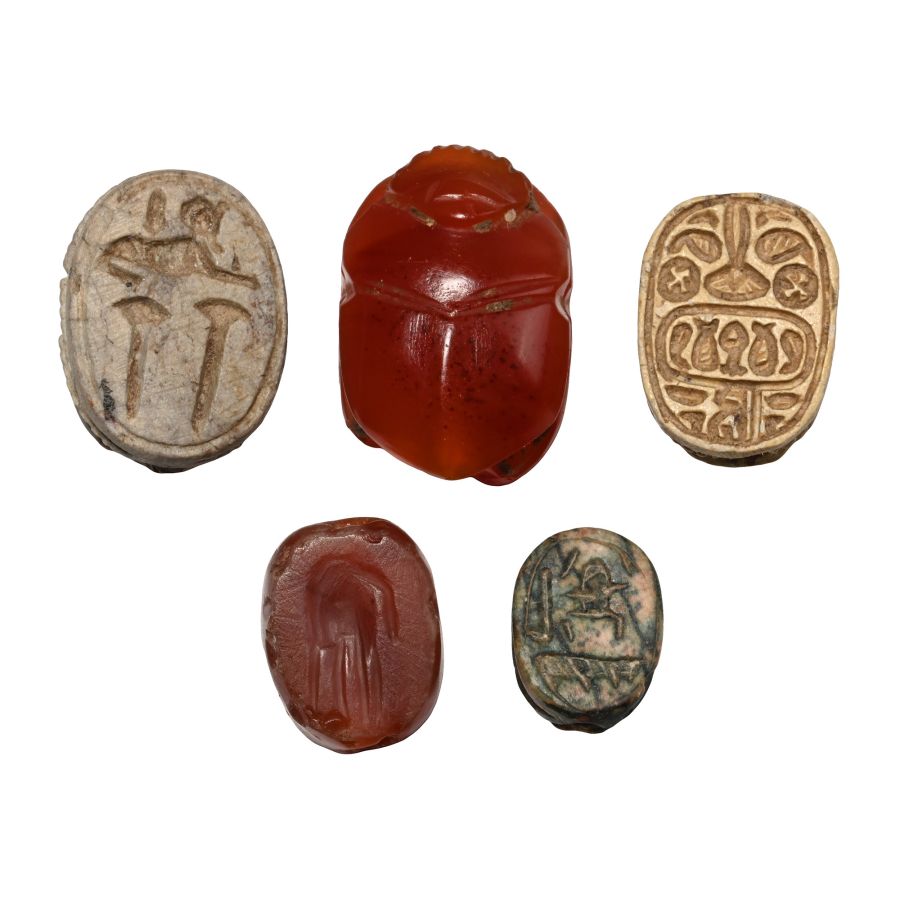
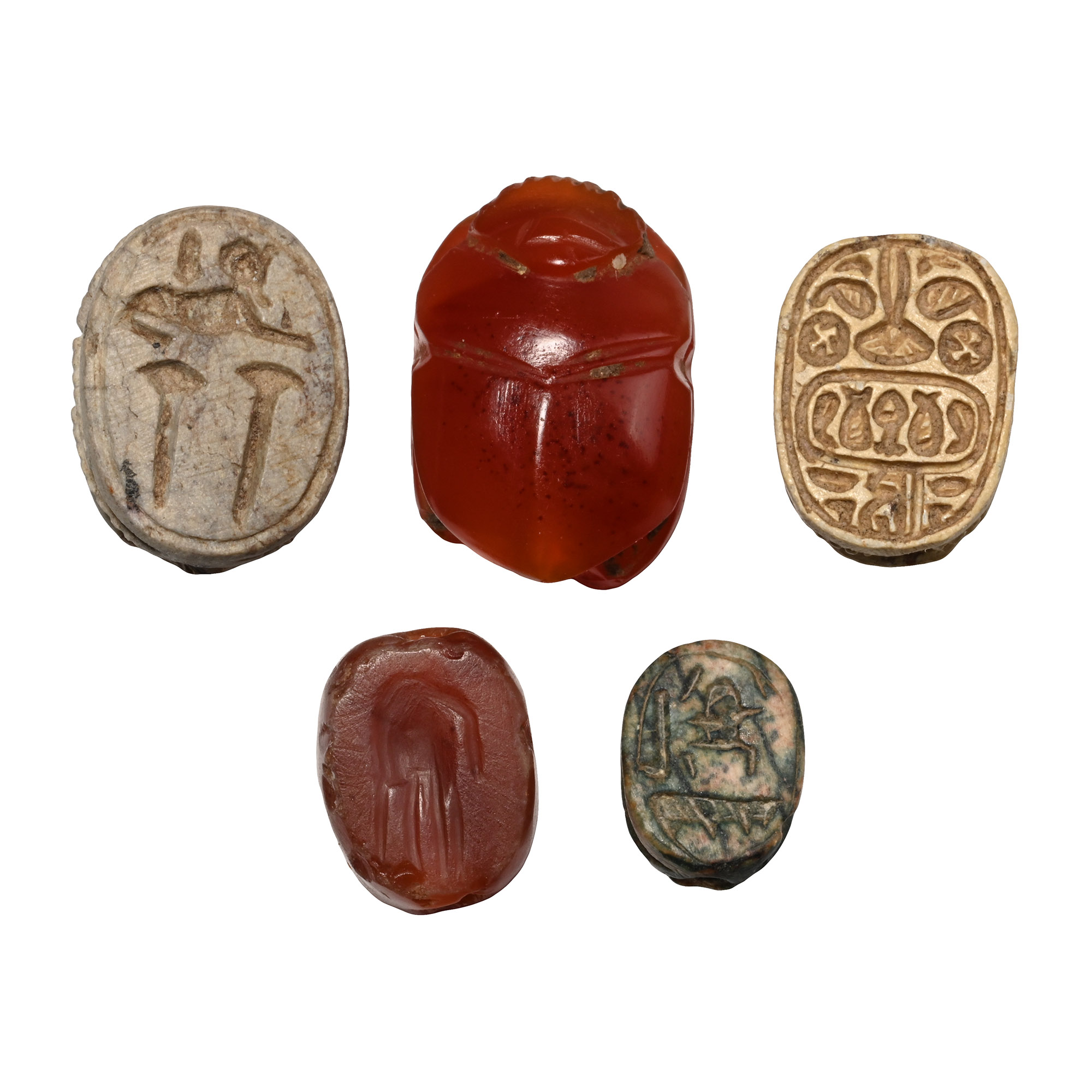
Egyptian Stone Scarab Group
SECOND INTERMEDIATE PERIOD-PTOLEMAIC PERIOD, CIRCA 1600-30 B.C.
3/8 - 5/8 in. (7.12 grams total, 10-17 mm).
Comprising: carnelian type with plain underside; similar with incuse hand symbol; small greenstone type with scarab beetle and other signs; grey stone type with sphinx, indistinct hes- vase above, and two papyrus stalks below; another with a decorative cartouche panel and other signs; two supplied with a museum-quality impression. [5, No Reserve]
ProvenanceFrom the private collection of a European gentleman (1942-2024), formed since the 1970s.
LiteratureCf. Newberry, P.E., Catalogue général des antiquités égyptiennes du Musée du Caire N° 36001-37521, Scarab-shaped Seals, Cairo, 1907, pl. XIV, no. 36667, for a similar sphinx design scarab; pl. XIV, no. 36350, for a scarab with hand motif; Ben-Tor, D., Scarabs, Chronology, and Interconnections: Egypt and Palestine in the Second Intermediate Period, Fribourg/Göttingen, 2007, pl. 57, for scarabs bearing decorative cartouche panels combined with numerous signs.
CONDITIONTimeLine Auctions follows a vetting process to ensure the authenticity and legality of all items, reinforcing our commitment to integrity and responsible trading. Each antiquity, antique, and coin lot undergoes thorough examination by a vetting committee of at least ten external specialists, professional trade association members, scientists, and archaeologists: Our Vetting Process
AUCTIONS:
TimeLine is a leading auction house specialising in antiquities, ancient art, collectables, natural history, coins, medals, and books. Our auctions offer museums, collectors, historians, and enthusiasts the opportunity to acquire unique and historically significant pieces.
-
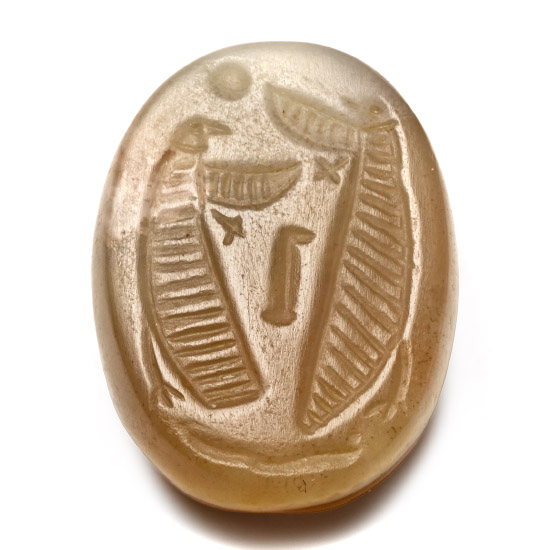
Egypto-Phoenician Agate Scarab
8th-6th century B.C.Sold for (Inc. bp): £156
Plano-convex in section with incised segmentation to the carapace, underside with two hatched avian figures; supplied with a museum-quality impression. 5.65 grams, 20 mm
From the private collection of a European gentleman (1942-2024), formed since the 1970s. -
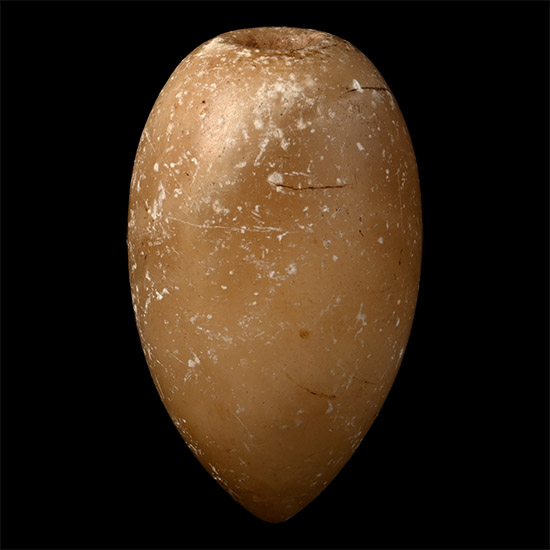
Egyptian Alabaster Miniature 'Torpedo' Flask
Middle Kingdom, 2nd millennium B.C.Sold for (Inc. bp): £98
Ovoid in profile with a pointed base, narrow opening, and hollowed interior. 62.6 grams, 57 mm
From a UK private collection since at least 1946. Property of a West London, UK, gentleman.
Ancient Egyptian cosmetics included volatile essential oils, animal fats, or scented plant resins. The ‘torpedo’ shape of the vessel required it to be positioned horizontally, ensuring the fluid remained in contact with the stopper or seal to prevent it from drying out or leaking. -
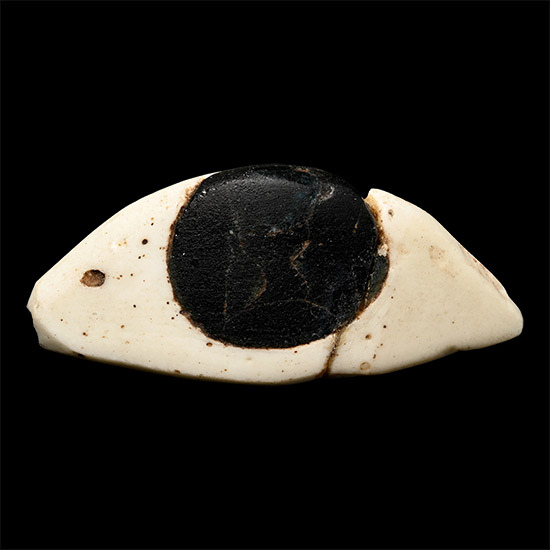
Egyptian Glass Mummy Eye
Ptolemaic Period, circa 332-30 B.C.Sold for (Inc. bp): £234
White sclera with inset black glass iris; old dealer's ticket with legend; repaired. 5 grams, 36 mm
Ex John Cummings Ltd., Lincolnshire, UK. From the private collection of a Canadian gentleman living in Essex, UK, formed since the 1920s-circa 1990. Property of an Essex lady until the late 1990s; thence by descent. From the private collection of an Essex gentleman since the late 1990s. Accompanied by an old information card.
