
Loading, please wait...
LOT 0457
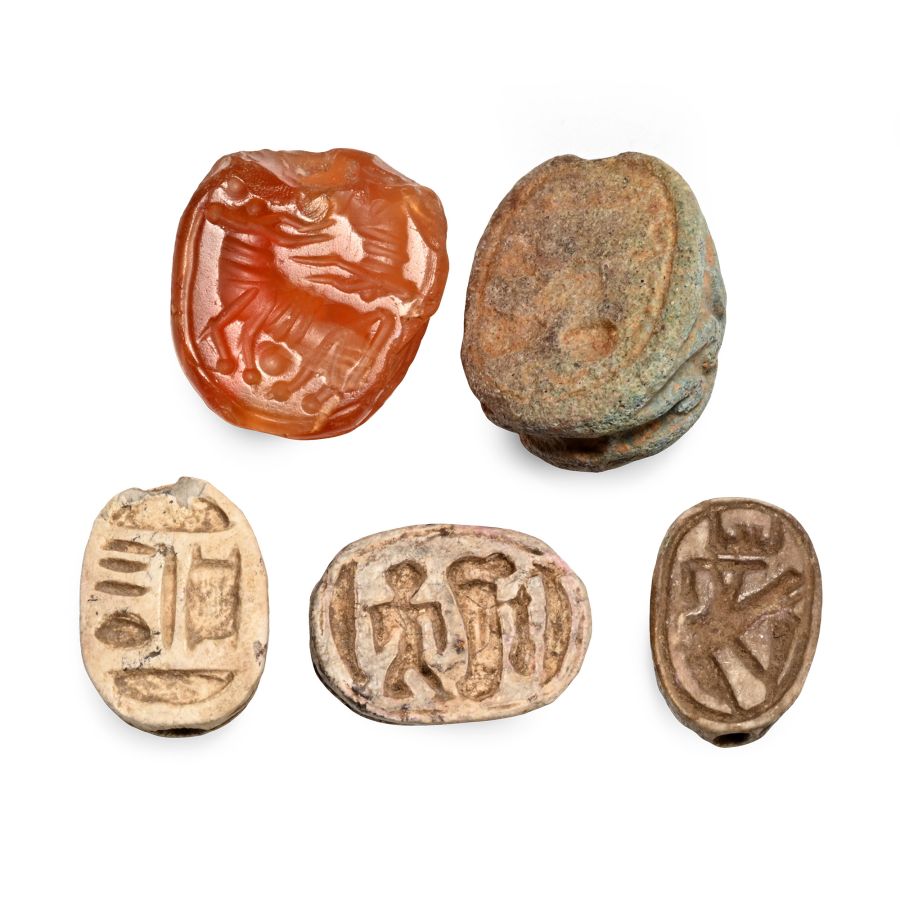
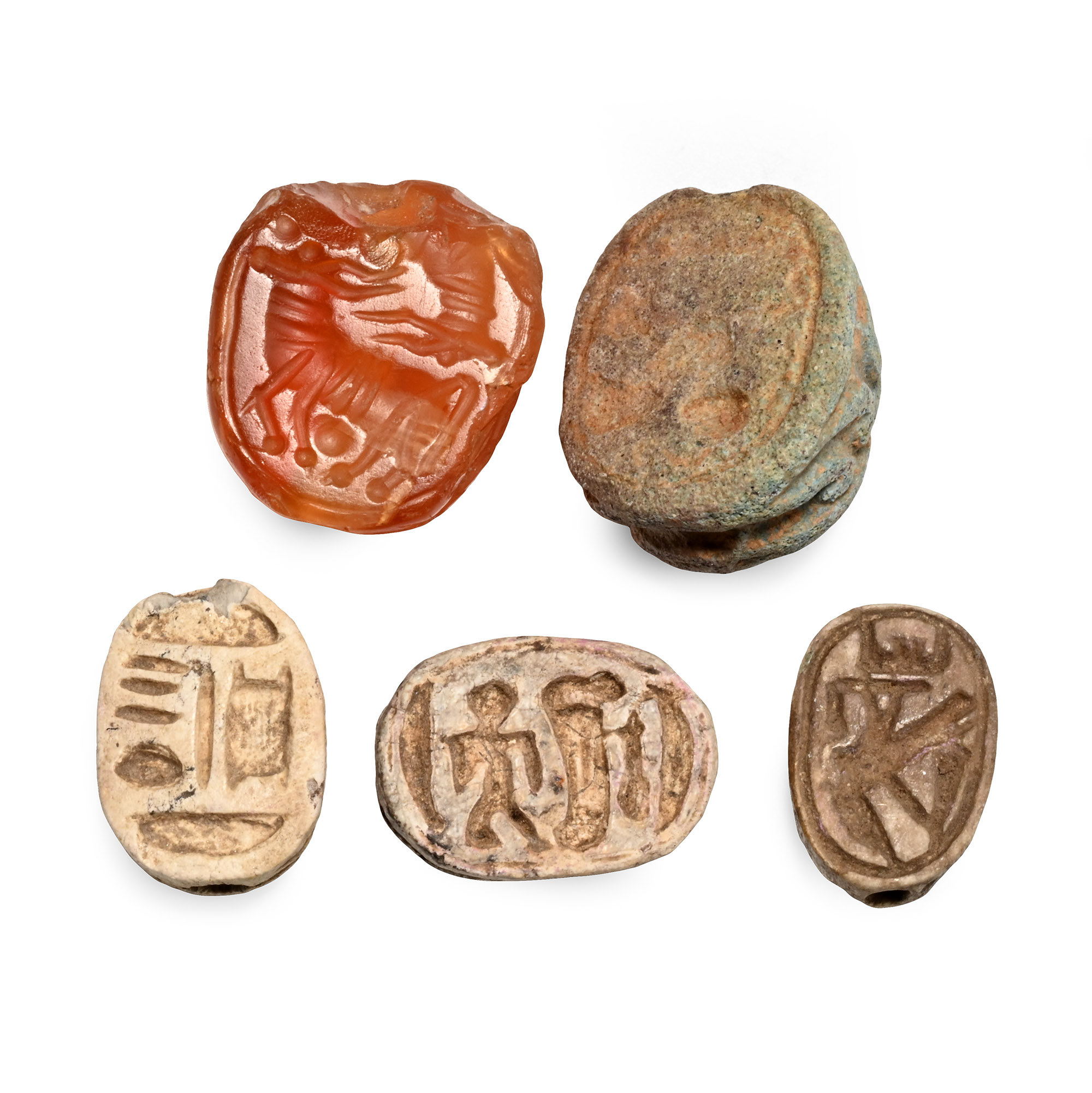
Egyptian Stone Scarab Group
LATE PERIOD-PTOLEMAIC PERIOD, 664-30 B.C. AND LATER
1/2 - 5/8 in. (7.5 grams total, 12-16 mm).
Comprising five scarabs with anatomical detailing: one carnelian with two antelopes tête-bêche; one with worn hieroglyphs on the underside; one with two neb signs flanking others; one with two neb signs flanking a standing human figure, uraeus and nefer; and one with the Horus falcon above the sign for gold (nbw). [5, No Reserve]
ProvenanceFrom the private collection of a European gentleman (1942-2024), formed since the 1970s.
FootnotesThe falcon on the sign of gold, meaning 'Golden Horus (or falcon)', is found in the titles of Egyptian kings and was therefore considered a potent symbolic motif on scarabs.
CONDITIONTimeLine Auctions follows a vetting process to ensure the authenticity and legality of all items, reinforcing our commitment to integrity and responsible trading. Each antiquity, antique, and coin lot undergoes thorough examination by a vetting committee of at least ten external specialists, professional trade association members, scientists, and archaeologists: Our Vetting Process
AUCTIONS:
TimeLine is a leading auction house specialising in antiquities, ancient art, collectables, natural history, coins, medals, and books. Our auctions offer museums, collectors, historians, and enthusiasts the opportunity to acquire unique and historically significant pieces.
-
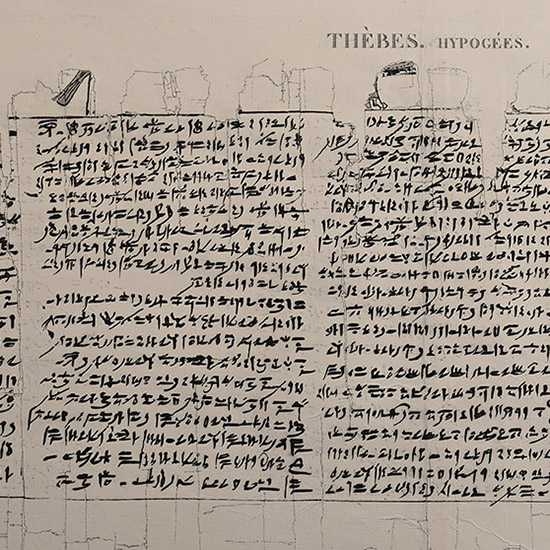
Very Large Egyptian Expedition Lithograph of the Hypogees Papyrus Manuscript from Thebes
Early 19th century A.D.Estimate: £80 - 100 (+bp*)
Opening Bid: £40
Proof etching on laid paper of plate 66 from Vol.II of Description de l'Égypte : ou, Recueil des observations et des recherches qui ont été faites en Égypte pendant l'expédition de l'armée française entitled Thèbes. Hypogées. Manuscrit sur papyrus. 230 grams, 102 x 69 cm
From the collection of a North American priest. Acquired between 1981-1996. Property of a North American collector.
Produced between February 1802 and 1830 on the orders of Napoleon Bonaparte; published between 1809 and 1828. Just 1,000 copies were distributed to various institutions, printed on laid paper with an 'Égypte ancienne et moderne' watermark. The book is subtitled Recueil des observations et des recherches qui ont été faites en Égypte pendant l’expédition de l’Armée française, publié par les ordres de Sa Majesté l’Empereur Napoléon le Grand (Gathering of observations and discoveries which were made in Egypt during the expedition of the French army, published on the orders of His Majesty the Emperor Napoleon the Great). It was the world's first encyclopedia devoted exclusively to the remains of ancient Egypt. The plates of this book are the first to present the archaeological sites of Thebes (Luxor). The papyrus manuscript was recovered from an underground tomb chamber (hypogeum). The text is written in hieratic, a cursive form of hieroglyphs, often used for religious papyrus documents. -
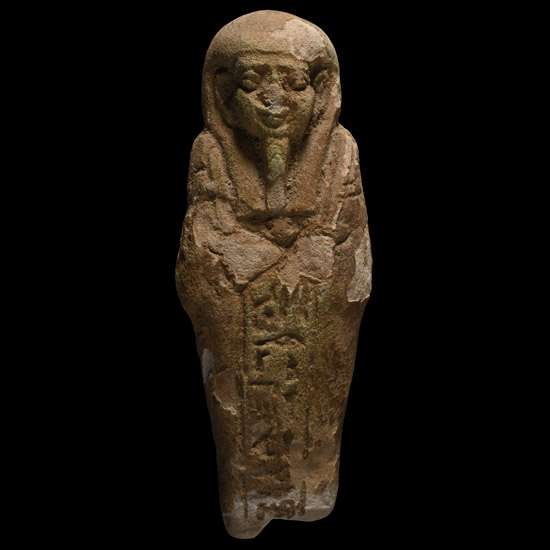
Egyptian Faience Hierogyphic Shabti
Late Period, 664-332 B.C.Sold for (Inc. bp): £221
With moulded facial features, tripartite wig, agricultural tools in the crossed hands and a seed-bag to the left shoulder; dorsal pillar; vertical panel to lower body with impressed hieroglyphic inscription: 'The illuminated one, the Osiris, the Controller of the Estates.... (sḥḏ wsı͗r ḫrp-ḥwwt....); lower legs absent. 56.3 grams, 95 mm
From the private collection of a Canadian gentleman living in Essex, UK, formed since the 1920s-circa 1990. Property of an Essex lady until the late 1990s; thence by descent. From the private collection of an Essex gentleman since the late 1990s. -
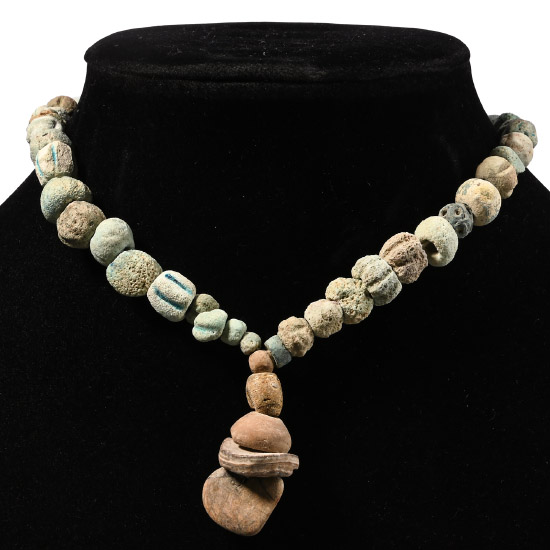
Romano-Egyptian Faience and Other Bead Necklace String
Roman Period, 30 B.C.-323 A.D.Sold for (Inc. bp): £59
Composed mainly of melon, oblate and spherical beads, with two large discoid beads as a central feature, restrung. 34 grams, 33.7 cm
Ex Ancient Art Shop, Windsor, UK, 1990s. Ex private West County, UK, collection.
