
Loading, please wait...
LOT 0442
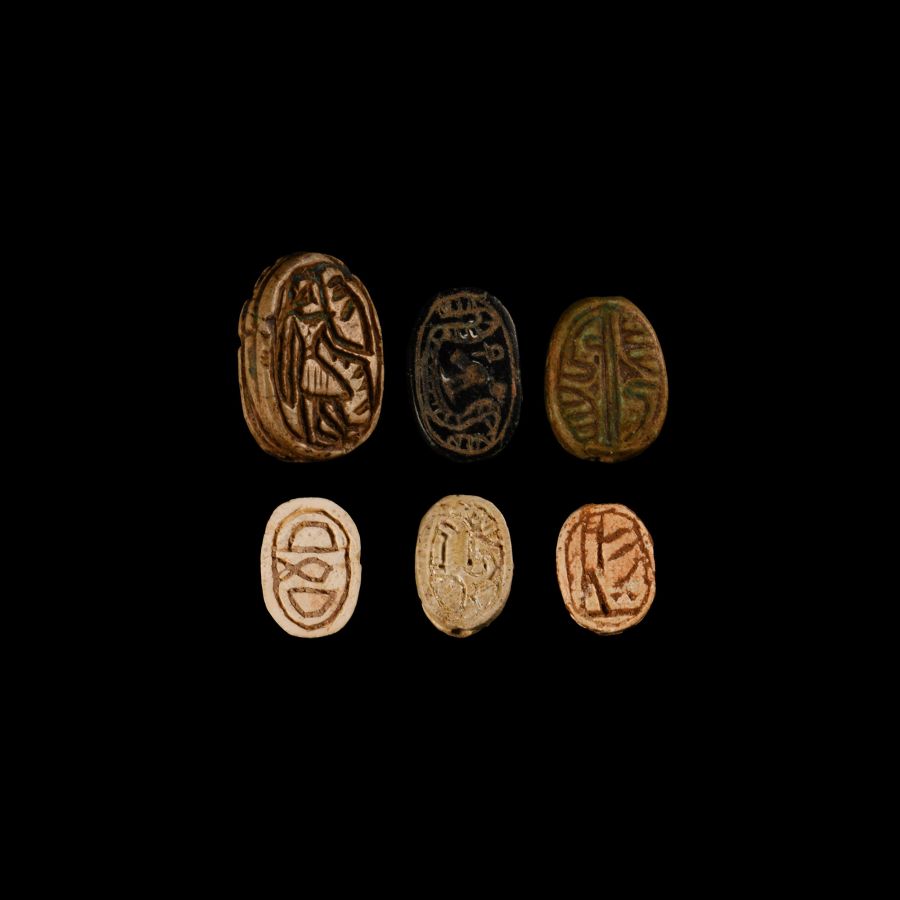
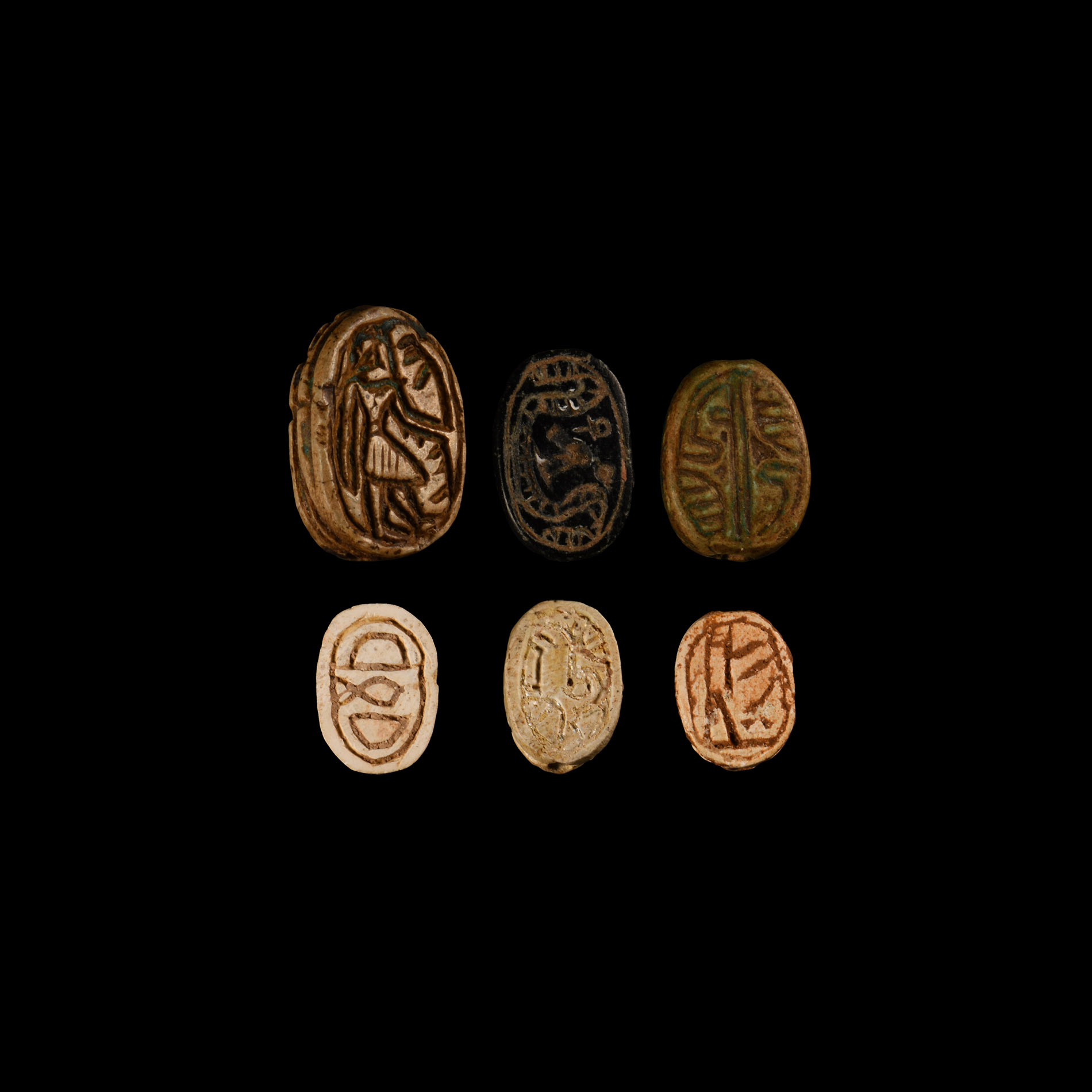
Egyptian Stone Scarab Collection
SECOND INTERMEDIATE PERIOD, 1650-332 B.C. AND LATER
3/8 - 5/8 in. (6.16 grams total, 10-17 mm).
Each with simple anatomical detailing and an engraved motif to base; pierced for suspension; five of steatite, one of dark stone. [6, No Reserve]
ProvenanceCollected since the 1970s.
Ex Everitt collection, acquired by descent 2017.
Cf. Ben-Tor, D., The Scarab. A Reflection of Ancient Egypt, Jerusalem, 1993, pp. 32 (for the scarab with antelope), 33 (for the two scarabs with human figures).
CONDITIONTimeLine Auctions follows a vetting process to ensure the authenticity and legality of all items, reinforcing our commitment to integrity and responsible trading. Each antiquity, antique, and coin lot undergoes thorough examination by a vetting committee of at least ten external specialists, professional trade association members, scientists, and archaeologists: Our Vetting Process
AUCTIONS:
TimeLine is a leading auction house specialising in antiquities, ancient art, collectables, natural history, coins, medals, and books. Our auctions offer museums, collectors, historians, and enthusiasts the opportunity to acquire unique and historically significant pieces.
-
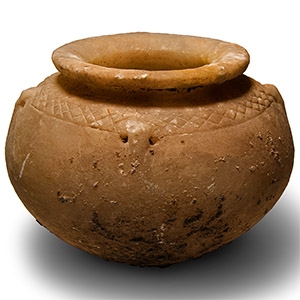
Egyptian Calcite Jar
Early Dynastic Period, 2900-2350 B.C.Estimate: £5,000 - 7,000 (‡+bp*)
Opening Bid: £2,222
Carved from 'Egyptian alabaster' or marble, squat-bodied with a broad, rounded shoulder and narrow flat base, short neck and everted rim, four pierced lugs to the shoulders incorporated into a circumferential band of engraved cross-hatching. 746 grams, 11.8 cm
From a British collection, acquired in 1993. This lot has been checked against the Interpol Database of stolen works of art and is accompanied by search certificate number no.11835-206783. -
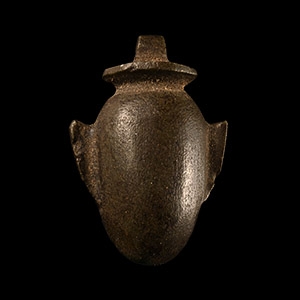
Large Egyptian Hardstone Heart Amulet
Late Period, 664-332 B.C.Sold for (Inc. bp): £208
Oval-bodied with a discoid top and integral suspension loop. 7.24 grams, 29 mm
From an early 20th century collection, Carnavon, North Wales, UK. -
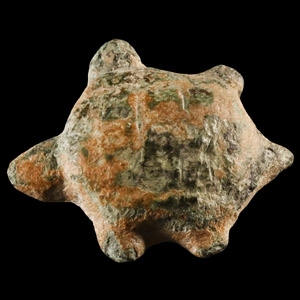
Romano-Egyptian Bronze Tortoise Statuette
Roman Period, 30 B.C.-323 A.D.Sold for (Inc. bp): £98
Modelled in the round with naturalistic detailing. 6.9 grams, 21 mm
‘The Ancient Menagerie Collection’ formerly the property of a Cambridgeshire lady, collected since the 1990s and acquired from auctions and dealers throughout Europe and the USA, now ex London collection.
