
Loading, please wait...
LOT 0487
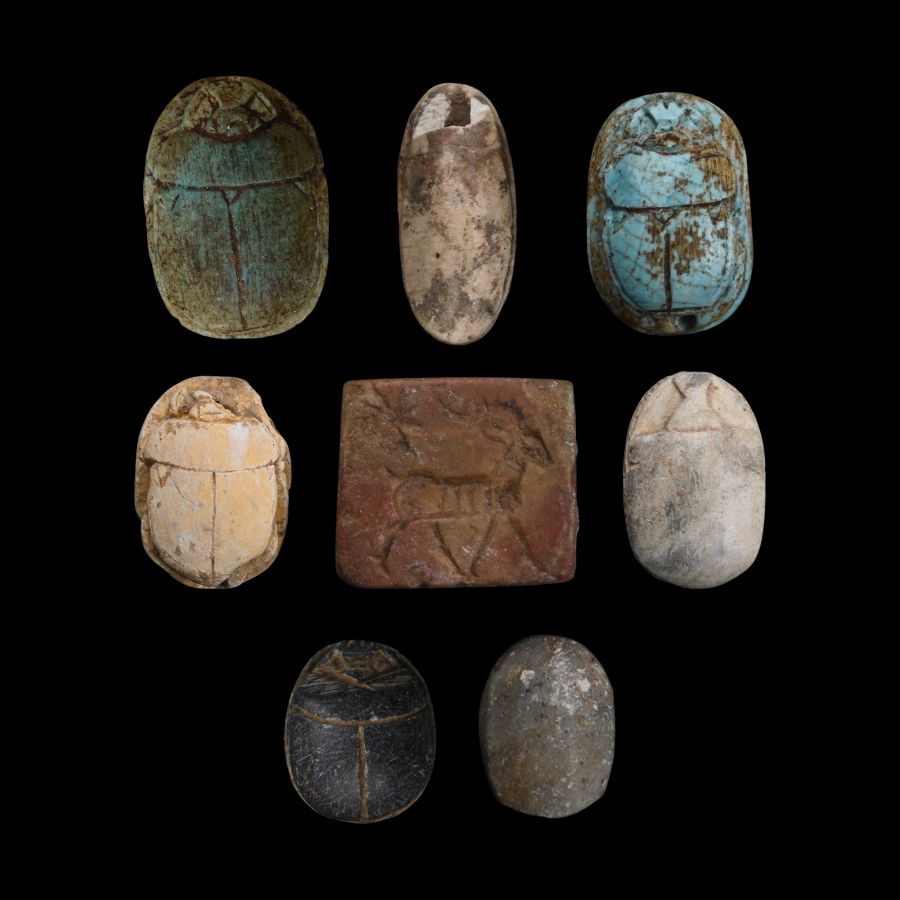
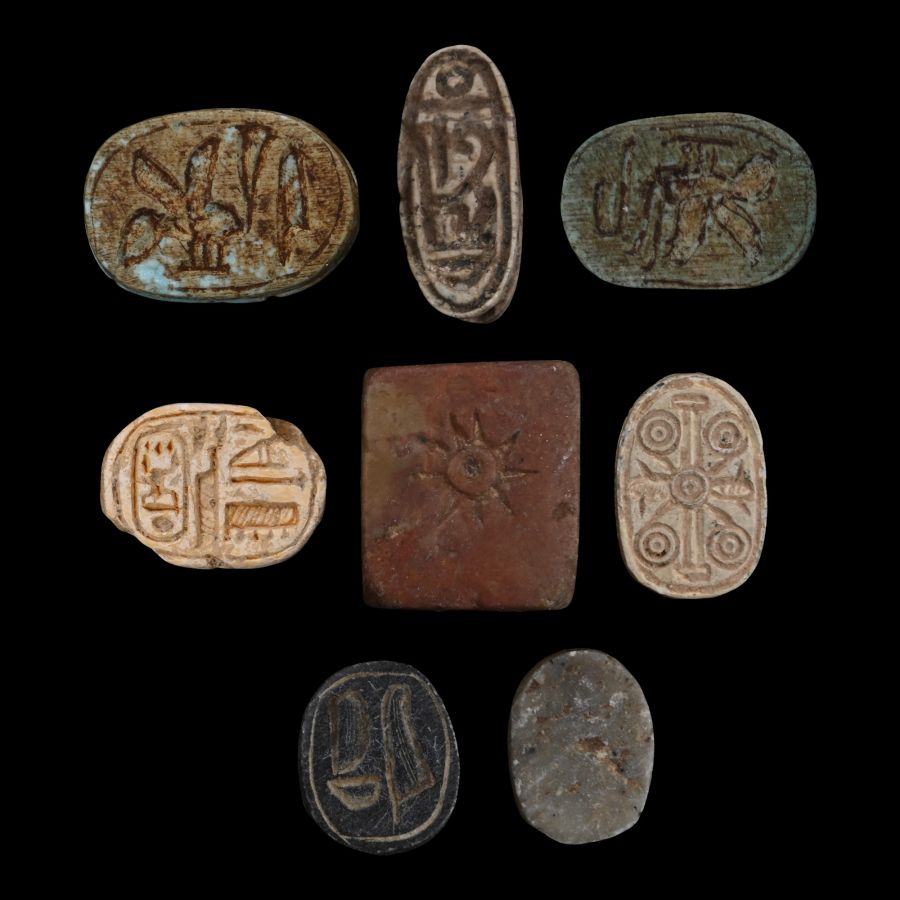
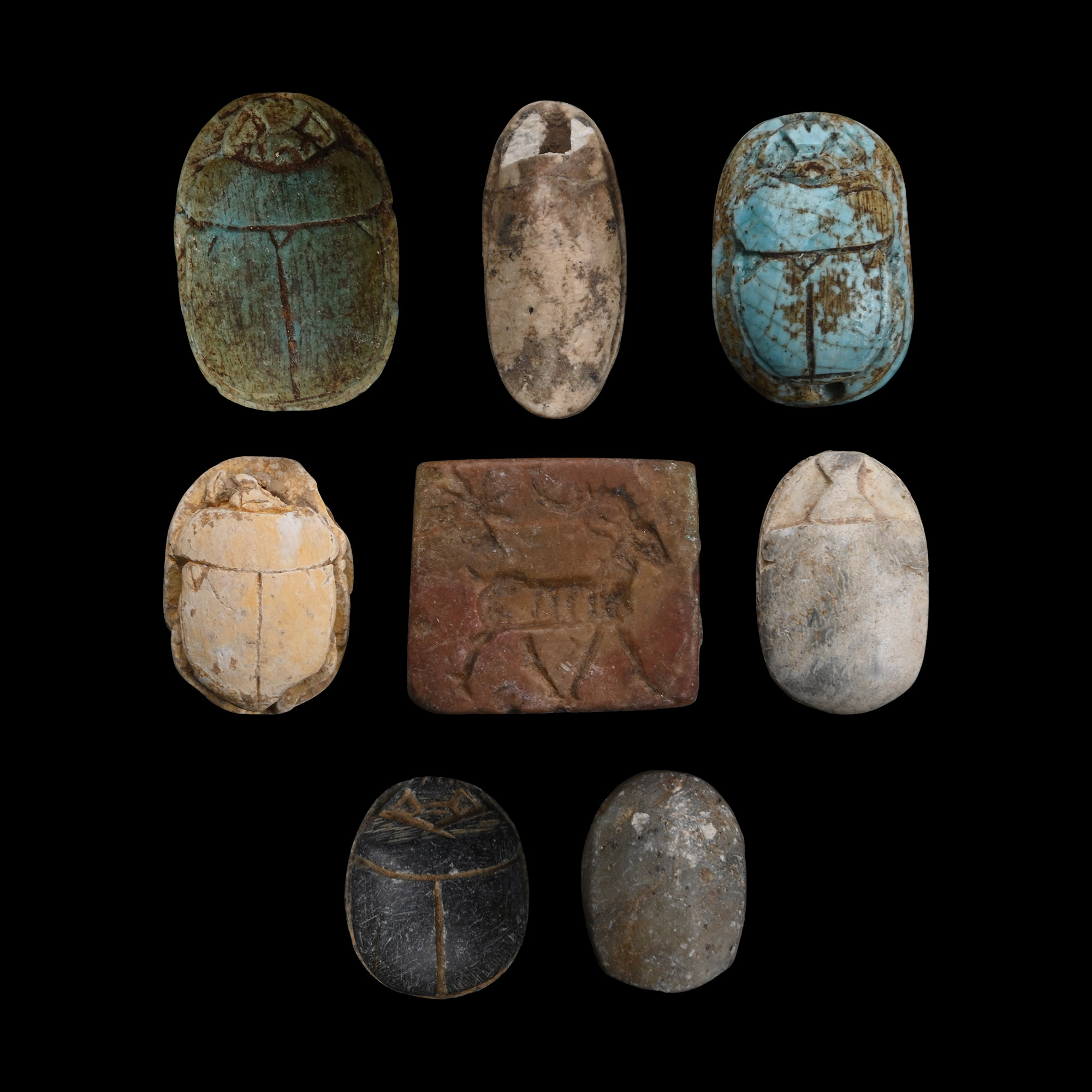
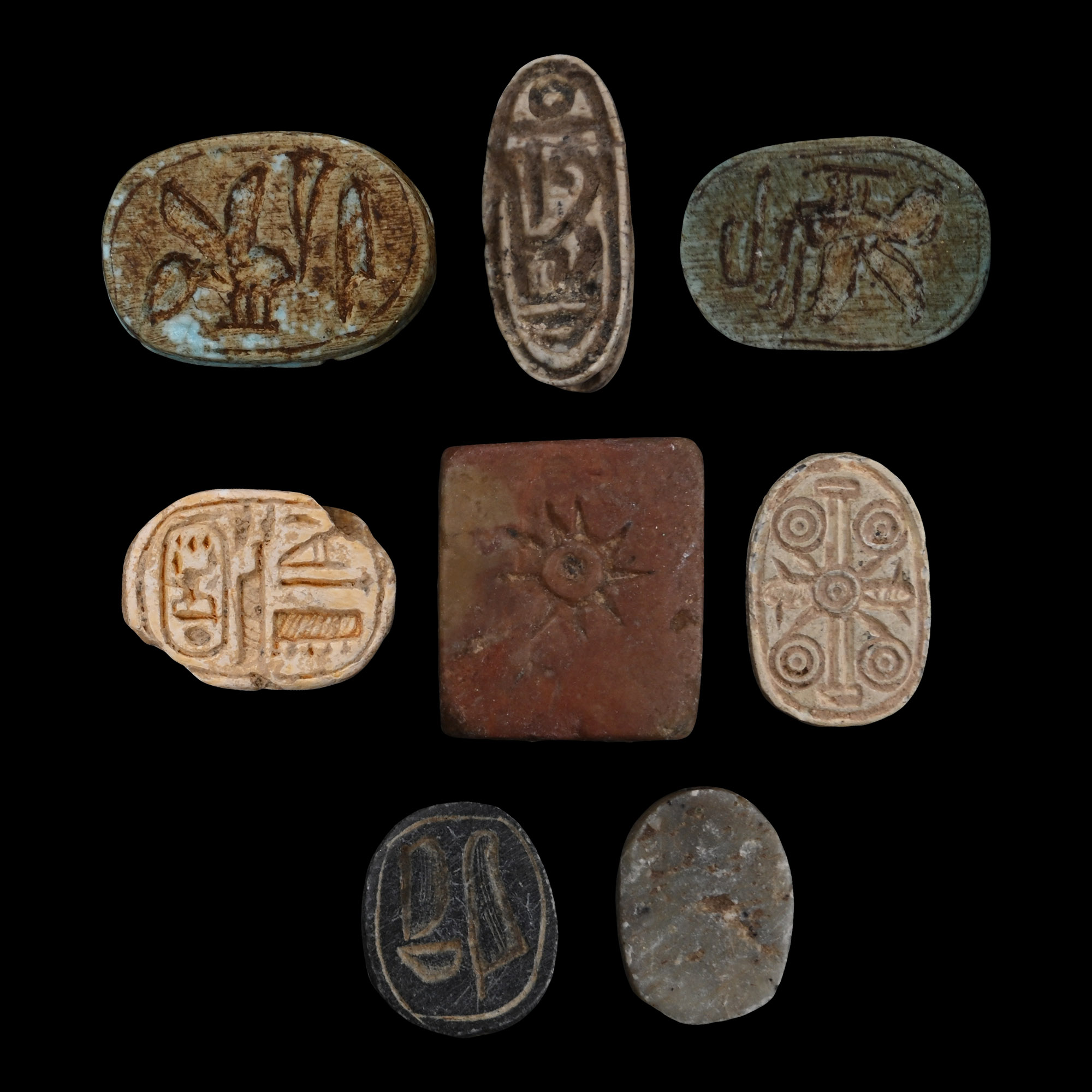
Egyptian Stone Scarab and Amulet Collection
HYKSOS PERIOD-LATE PERIOD, 1650-332 B.C.
1/2 - 3/4 in. (15.71 grams total, 13-19 mm).
Group consisting of scarabs, scaraboid and other types, some with hieroglyphs on the underside, including the cartouche of Amenhotep II (Akheperure) with the legend "Beloved of Amun". [8]
ProvenanceFrom the collection of a gentleman, acquired on the London art market in the 1990s.
CONDITIONTimeLine Auctions follows a vetting process to ensure the authenticity and legality of all items, reinforcing our commitment to integrity and responsible trading. Each antiquity, antique, and coin lot undergoes thorough examination by a vetting committee of at least ten external specialists, professional trade association members, scientists, and archaeologists: Our Vetting Process
AUCTIONS:
TimeLine is a leading auction house specialising in antiquities, ancient art, collectables, natural history, coins, medals, and books. Our auctions offer museums, collectors, historians, and enthusiasts the opportunity to acquire unique and historically significant pieces.
-
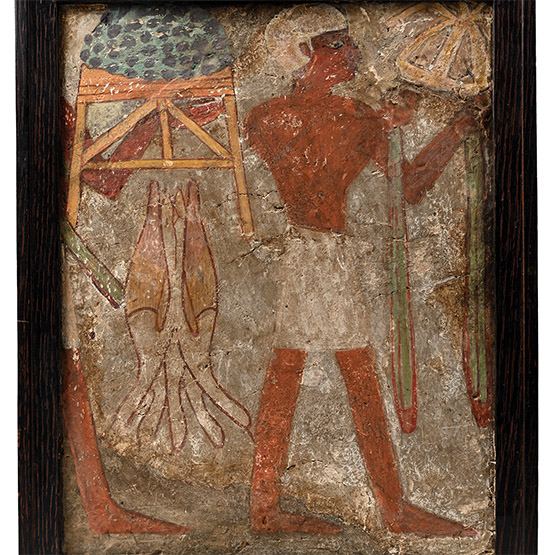
Egyptian Limestone Fresco with Servant Carrying Geese
New Kingdom, 1580-1077 B.C.Sold for (Inc. bp): £9,100
Rectangular frieze fragment with advancing figure in profile wearing a shendyt kilt holding up two poles in his raised hands; to his rear, part of a second figure with an openwork wooden frame (footstool) and other items; mounted in sturdy wooden frame with suspension rings to the reverse; surface has been extensively cleaned, restored, and repainted. 6.8 kg, 40.5 x 32.2 cm
Mounted in an early 20th-century wooden frame bearing a stamped inscription reading “Exposition Paris …” From the collection of L.V. (1950-1960), Paris, France. Collection of Monsieur X. (1931-2017), dispersed for the benefit of the Monaco Red Cross. Private collection, Europe. This lot has been checked against the Interpol Database of stolen works of art and is accompanied by a search certificate number no.13224-249307.
The servant is carrying geese, like in many other representations of the New Kingdom. Many portrayals of ducks and geese in ancient Egyptian art show the importance of the birds as food. Servants plucking geese are visible in the tomb of Nakht, in Luxor (1567-1320 B.C.), and in the famous tomb of Nebamun, at the British Museum, a fresco fragment shows workers standing in front of a gaggle of geese. -
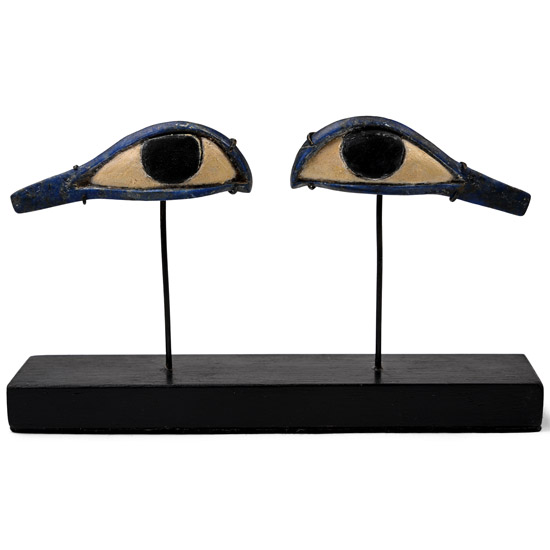
Egyptian Blue Glass Mummy Eye Pair
Late Period, 664-332 B.C.Sold for (Inc. bp): £2,340
Composed of overpainted white sclerae with obsidian irises, set into contoured blue glass lids with extending cosmetic lines; mounted on a custom-made display stand. 44.35 grams total including stand, 56 mm each
Property of a North American gentleman, London, UK, 1990-2010. This lot has been checked against the Interpol Database of stolen works of art and is accompanied by search certificate number no.13254-252260.
The eyes would have been applied to a mummy case. They were carefully bevelled and ground to fit the original mummy case. They could also have been used for the mummy masks. -
.jpg)
Egyptian Green Glazed Somtous Seated on Lotus Flower
Late Period, circa 664-332 B.C.Sold for (Inc. bp): £780
Modelled in the round, the nude seated figure of the child Somtous, with one hand to his lips and a prominent sidelock, emerging from a lotus flower; mounted on a custom-made stand. 39.76 grams total, 68 mm high including stand
Noriuchi Horiuchi, Tokyo, Japan, 1993. Private collection, London, UK.
The earliest attestations of the cult of Somtous, known as Sematawy in ancient Egyptian, date back to the New Kingdom, although it became particularly popular during the Late Period. Associated with Horus (Horsomtous), the symbol of the child emerging from the lotus represented the (re)birth of the sun god. Thus, Somtous was regarded as a life-giving amuletic symbol, sometimes even referred to as 'Sematawy the child who gives life.'
